EduNanny and the Civic Craft of Safe Joyful Infancy Across Singapore
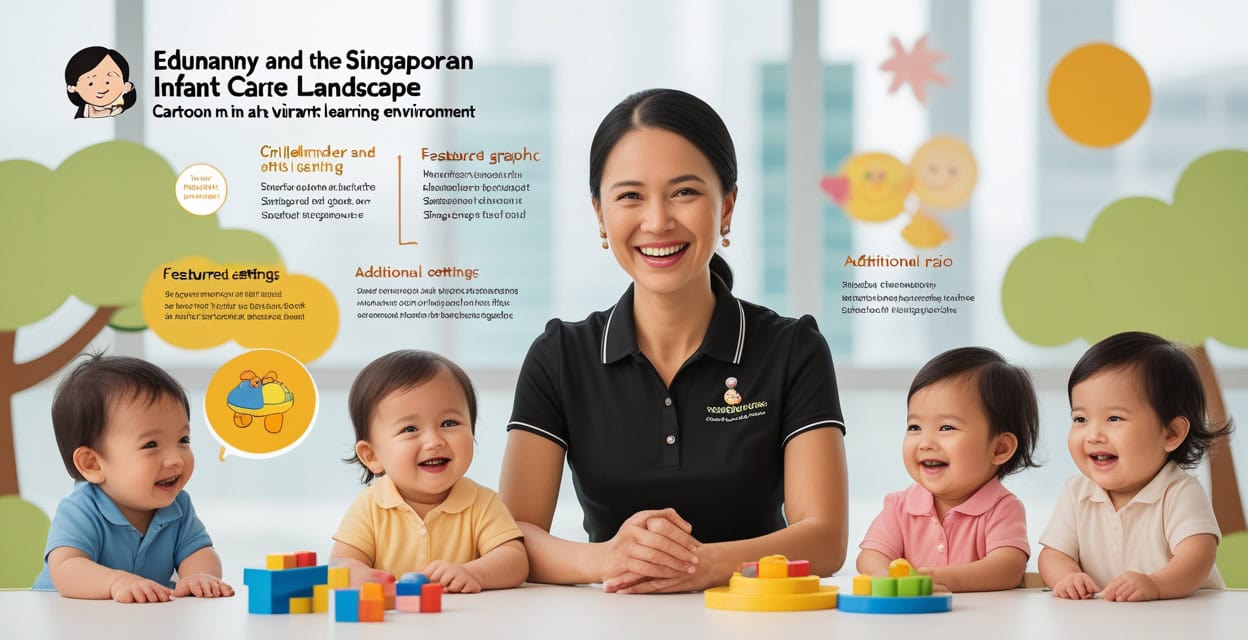
Introduction: EduNanny and the Singaporean infant care landscape
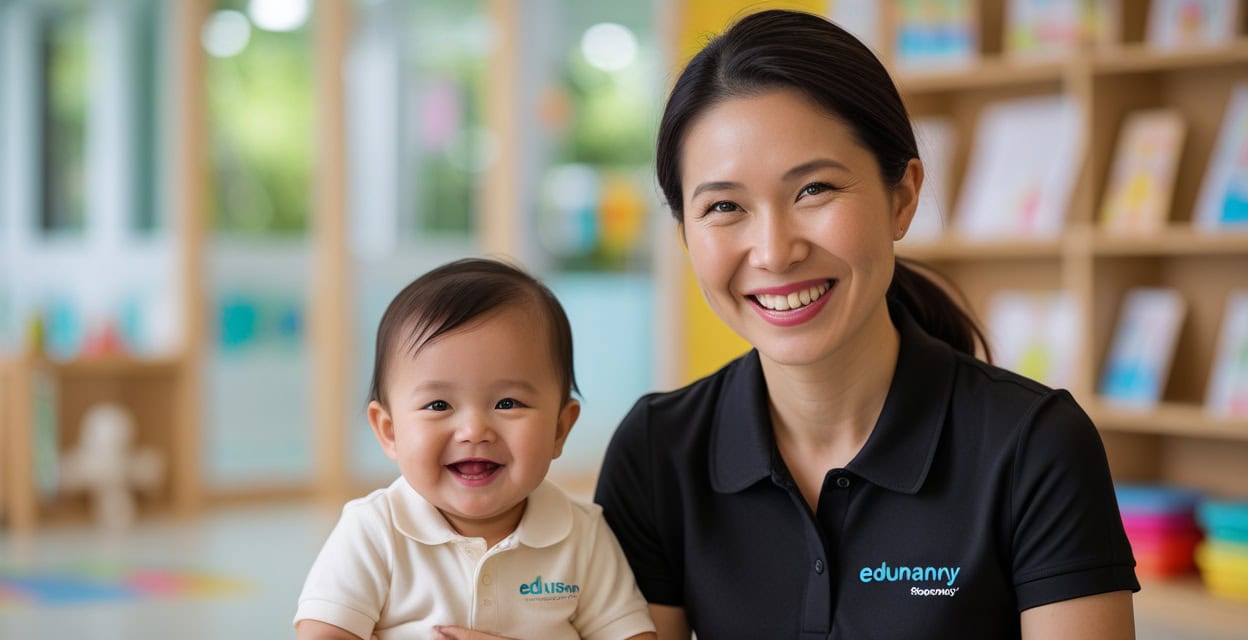
Good morning to families, caregivers, and communities who share the belief that the first thousand days shape a nation’s social character. EduNanny by BUTLER is built on that conviction: infant care done right is a public good, not merely a service. We anchor care in science and humanity—a seamless blend of evidence-based practice, heartfelt relationships, and everyday practicality that fits into Singapore’s urban rhythm. Our approach combines centre-based and home-based care across the island, offering parents choices that align with work, commute, and family life while upholding a calm, curious, connected beginning for every child.
What makes EduNanny distinct is not only the plan, but the promise: a clear, reliable standard for infant care. We maintain an excellent 1:3 infant ratio, design modern, safe spaces that respect the body and mind, and provide secure, parent-viewable CCTV with privacy-by-design. We operate Monday to Friday, 7am to 7pm, and strive for affordability—starting from $33/day—supported by CDA/Baby Bonus. This is a National Social Initiative within the ECDA Childminding Pilot, aligned with a Maximum Employment Mandate that elevates neighborhood caregivers as true professionals. In short: we are a standard of care, not merely a place to drop off a child.
This article translates that vision into practical, actionable guidance for parents and caregivers. It expands the speech you heard into an editor’s field guide for early childhood care—what to look for, how to participate, and how to foster growth, safety, and joy in the earliest days of a child’s life.

The Listening Triangle: child, caregiver, environment
The child’s cues and rhythms
Infants communicate with breath, gaze, reach, and turn. Observe how a caregiver welcomes a child by name, reads a moment’s cue, and offers a pace that matches readiness. Practical tips for parents and educators include:
- During drop-off, note the child’s eye contact, posture, and ready signals (moving toward a caregiver’s arms, reaching for a familiar toy, or seeking to be held).
- Document daily rhythms—meal times, nap windows, and play pauses—to anticipate needs and reduce stress for both child and caregiver.
- Provide a simple language framework you and the caregiver use at home and in care—names for feelings, actions, and rhythms—to support continuity across environments.
The caregiver’s attuned response
Attuned responses name feelings, modulate pace, and offer just-right support. This is not about hovering; it is about presence that says, “I see you, I hear you, I’m here.” Practical practices include:
- Offer calm, brief verbal cues paired with gentle touch during transitions—“Let’s take a breath together,” or “You’re safe here.”
- Match pace to the child’s tempo; slow down during moments of distress and avoid over-stimulation during play.
- Record reflective notes after key interactions to track development and share meaningful updates with families.
The environment’s gentle invitation
The space invites exploration while ensuring safety. Considerations include low shelves, natural materials, and thoughtful lighting and airflow. Actionable steps for caregivers and parents include:
- Organize spaces with sightlines that allow supervision without intruding on a child’s autonomy.
- Use natural textures and open-ended toys that encourage experimentation, rather than single-solution toys.
- Keep routines predictable—consistent sequence of activities, and clear, gentle transitions between activities.
In practice, the Listening Triangle makes every diaper change a dialogic moment, every bottle an opportunity for co-regulation, and every reach a rehearsal for agency. It aligns with Vygotsky’s scaffolding, Bowlby’s secure base, Erikson’s trust, Montessori’s prepared environment, Pikler’s respectful care, Froebel’s play, and Malaguzzi’s hundred languages—all in the flow of daily care.
Safety as choreography, not just compliance
Spatial intelligence and design
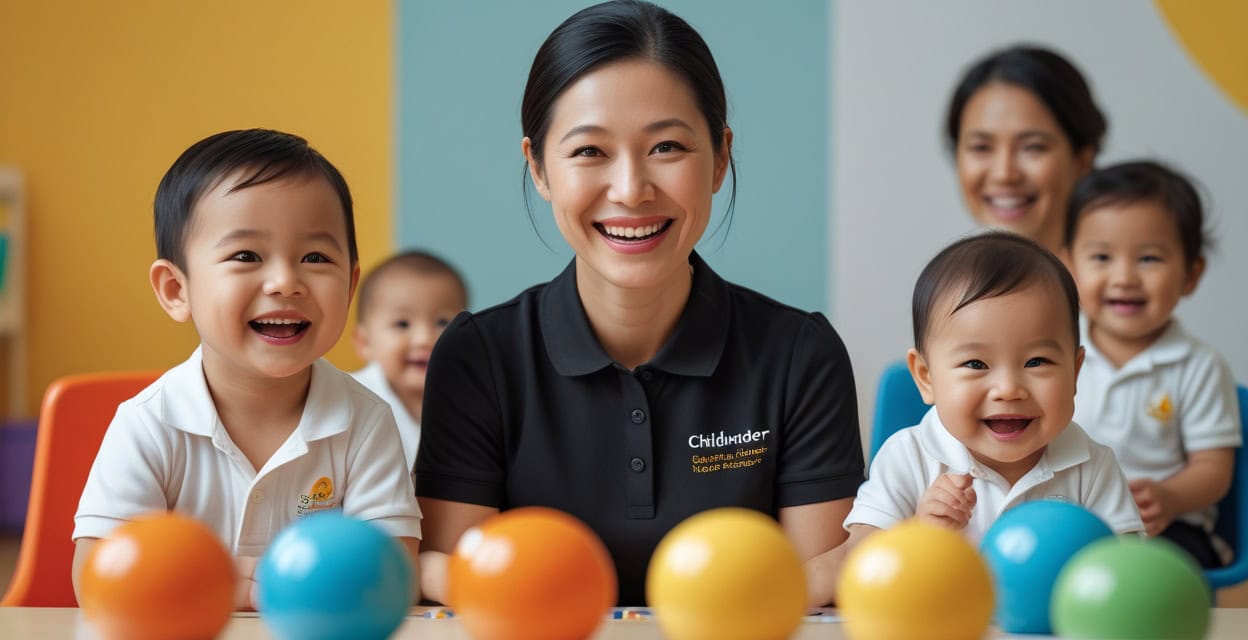
Safety is a daily practice embedded in design, not a checklist applied after the fact. Practical measures include:
- Rounded-edge furnishings, slip-resistant floors, and low-height storage to minimize risk while enabling independence.
- Mesh-protected windows and unobstructed sightlines so caregivers can supervise with ease and babies can explore safely.
- Clear pathways and uncluttered spaces that reduce tripping hazards and support smooth transitions between activities.
Process integrity and routines
Reliability comes from deliberate processes, not paperwork alone. Implement these routines:
- Arrival identity checks and wellness screening that respect privacy while maintaining safety.
- Safe sleep routines and consistent feeding and medication verification to prevent errors.
- Incident response protocols practiced regularly, with debriefs that translate lessons into everyday practice.
Transparent technology with privacy at the core
Secure CCTV provides visibility for families without intruding on children’s focus. Best practices include:
- Pre-planned camera zones that prioritize care visibility while protecting private spaces.
- Restricted access, encryption, and regular audits to safeguard data.
- Consent-based participation with ongoing communication about how footage is used and stored.
Safety strategies should meet regulatory expectations—and then stretch beyond them. For EduNanny, safety is the calm confidence that allows infants to learn and parents to work with peace of mind.
Development in small steps, all day long
Developmental growth through daily routines
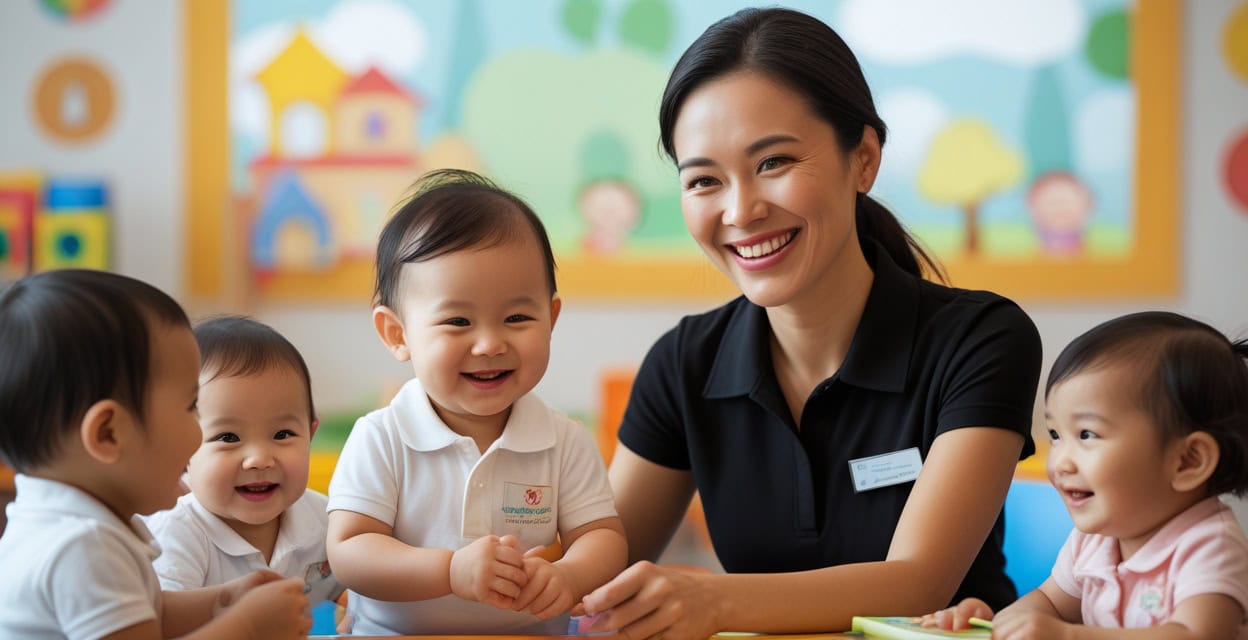
Infants learn not in isolated lessons but through loops of activity, play, and care. Grounded in Froebel’s emphasis on play and Spock’s emphasis on warm common sense, EduNanny designs development into everyday moments:
- Motor growth: Prioritize floor time and spontaneous movement before structured equipment use. Encourage tummy time, supported sitting when ready, and safe, natural movement that respects each child’s timetable.
- Language emergence: Engage in eye-level narration, mirror babbles, and name emotions as they arise—“You’re excited; you found the soft edge.”
- Social learning: Use micro-turn-taking games, sportscasting during peer interactions, and shared songs to establish rhythm, predictability, and joy.
- Executive function roots: Introduce simple routines with clear beginnings, middles, and ends—“touch, turn, taste, pause”—to cultivate focus, memory, and self-regulation from infancy onward.
Development-by-design in practice
Turn these ideas into everyday habits:
- Natural, unhurried transitions between activities, with caregiver commentary that validates the child’s experience.
- Documented observational notes that translate into parent updates—visible progress without overwhelming detail.
- Home–care continuity: share cues, routines, and milestones with families to reinforce learning across settings.

Joy as a design constraint
Designing happiness into care
Joy is not mere entertainment; it is a well-regulated nervous system and real agency in a safe world. Applyjoyful design through:
- Calm environments: gentle lighting, warm wood tones, quiet corners, and soft pathways to help babies organize their senses.
- Predictable rhythms: steady routines and smooth transitions supported by the 1:3 ratio that minimizes crowding and stress.
- Open-ended materials within boundaries: materials that invite exploration while caregiver presence supports secure exploration.
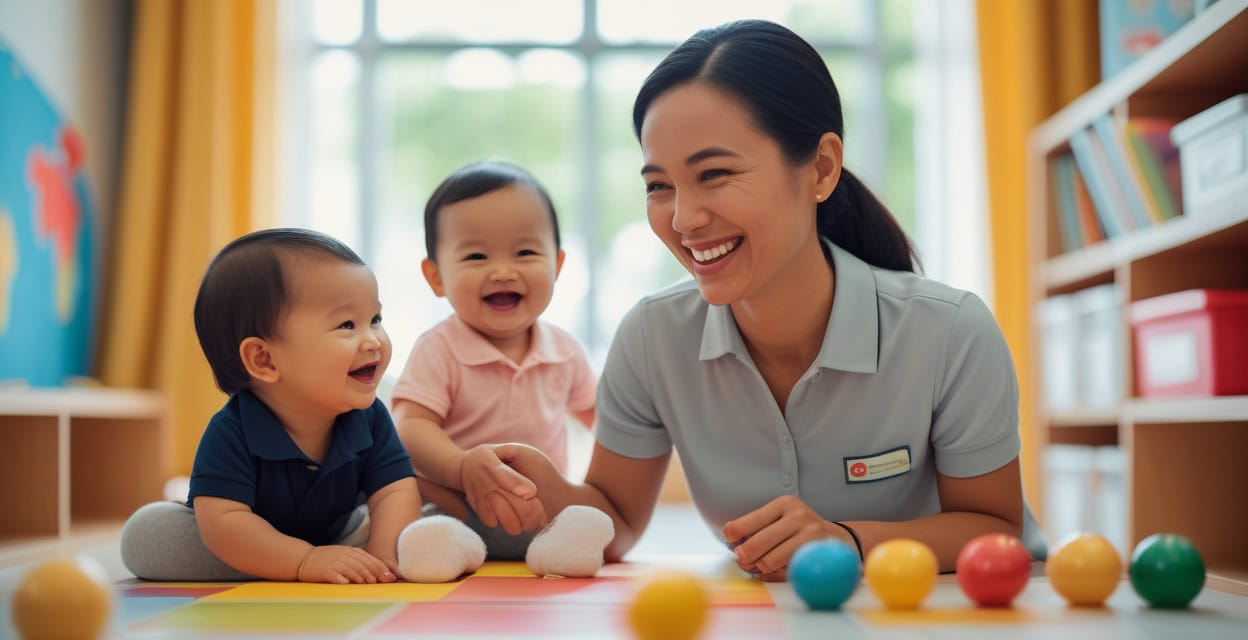
When joy is integrated into design, distress moments shorten, recovery accelerates, and curiosity returns. This is education-by-design, not hope-for-the-best improvisation.
Childminding as a civic craft
A professional network for a thriving neighborhood
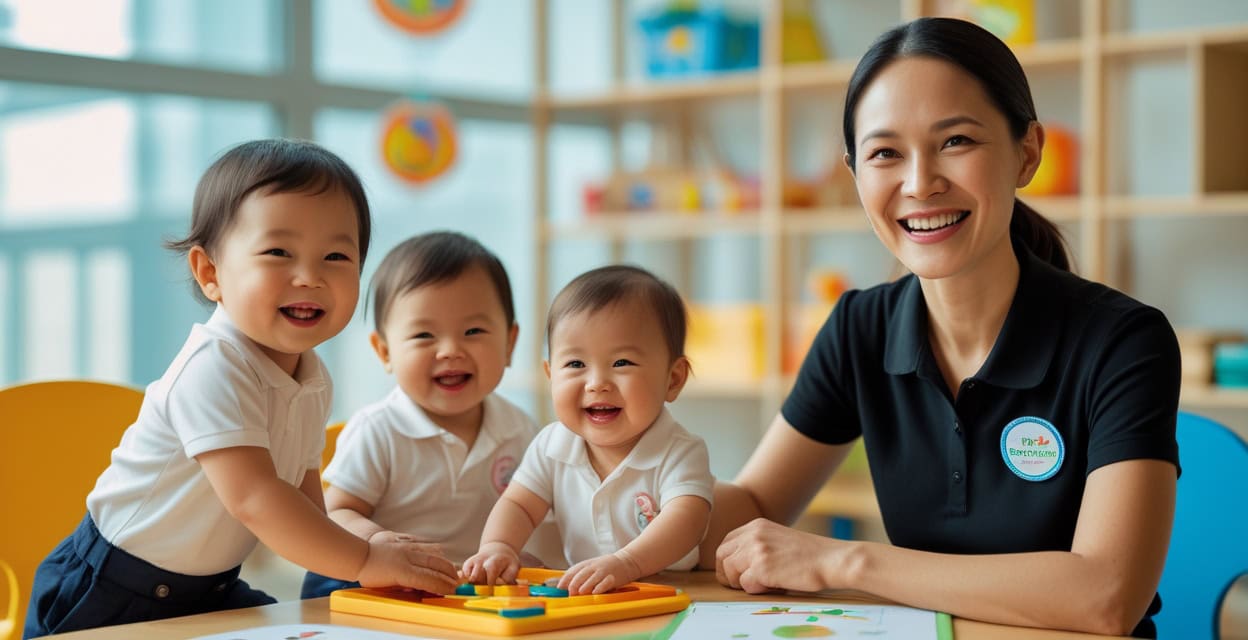
Care work is social infrastructure. EduNanny treats childminders as skilled practitioners who carry cultural memory and future promise in every gesture. As a National Social Initiative within the ECDA Childminding Pilot, we:
- Provide rigorous training and mentorship in attunement, safety choreography, observational documentation, and family partnership.
- Offer career ladders and a Maximum Employment Mandate that creates dignified, stable work in every neighborhood.
- Link families to nearby options—centre-based or home-based—so care becomes part of the neighborhood’s daily rhythm, not a distant service.
This approach dignifies caregivers as essential civic workers and anchors early care in the social fabric of Singapore’s communities. It is how a city grows kinder at scale.
What parents can expect—clear, dependable, Singapore-ready
- Availability and access: Monday to Friday, 7am to 7pm, islandwide placement across community and home premises; you can choose Centre-Based or Home Base Childminding.
- Ratio and staffing: Excellent 1:3 infant ratio; trained childminders with ongoing coaching; supervision support for care teams.
- Design and transparency: Modern layouts with safety-by-design; secure,parent-viewable CCTV; straightforward daily communications.
- Flexibility and formats: Centre-based, home-based, and distance support including virtual check-ins, tele-consults, and guidance for travel days.
- Practical affordability: Options from $33/day, with fees payable by CDA/Baby Bonus and transparent billing policies.
- Public purpose: Part of the ECDA Childminding Pilot and a broader national effort to raise standards, widen access, and strengthen employment.
Why this matters—now
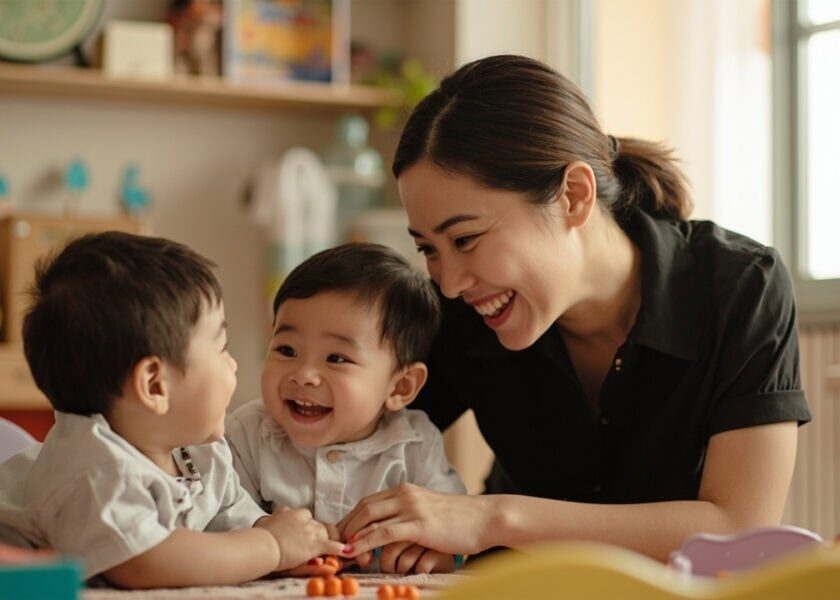
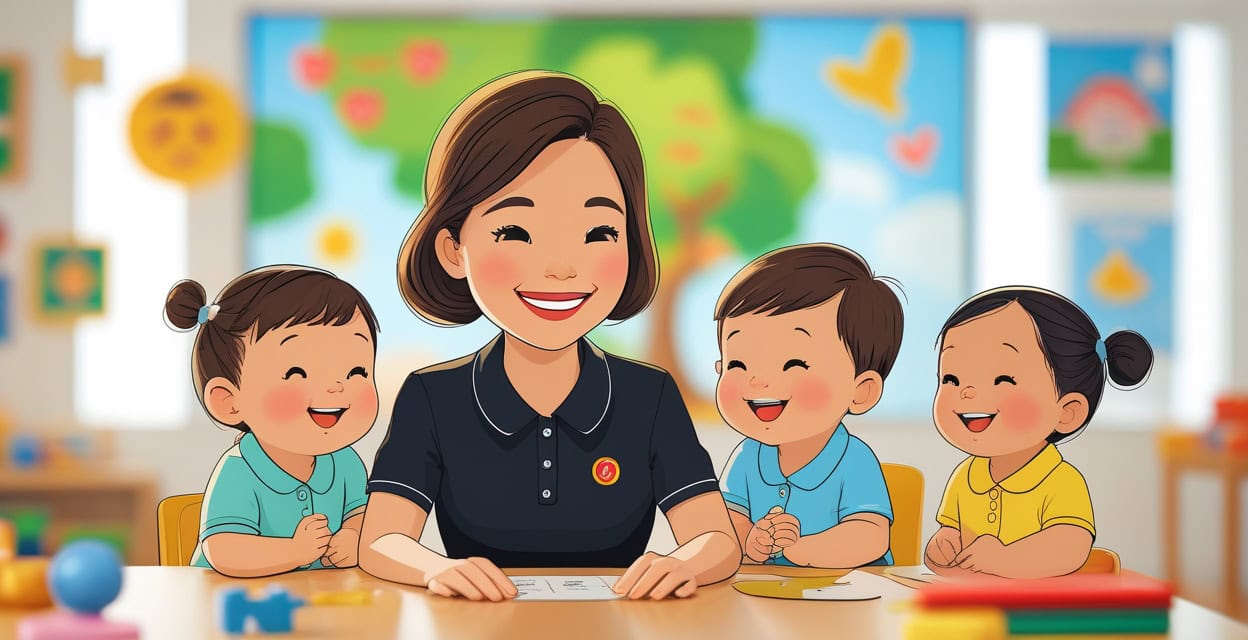
Imagine an ordinary morning where a caregiver greets three infants by name, waits for eyes to meet, and offers hands. One child leans in; another lingers with a parent; the third laughs and explores a soft mat. Nothing spectacular happens in a single moment, and yet this quiet choreography embodies a constellation of ideas: Bowlby’s secure base, Erikson’s trust, Montessori’s respect, Vygotsky’s scaffolding, Pikler’s patience, Froebel’s playfulness, Malaguzzi’s listening, and Spock’s calm. EduNanny operationalizes these theories in real daily work—so a city raises itself one greeting at a time.
With this approach, families gain the confidence to plan their days without constant worry. Caregivers gain the professional pride of a practiced craft. Neighbors gain a neighborhood where early care is woven into daily life, not segregated from work and community. This is why EduNanny exists—and why it is more than a program: it is a civic practice that builds trust, calm, and curiosity from the very first days.
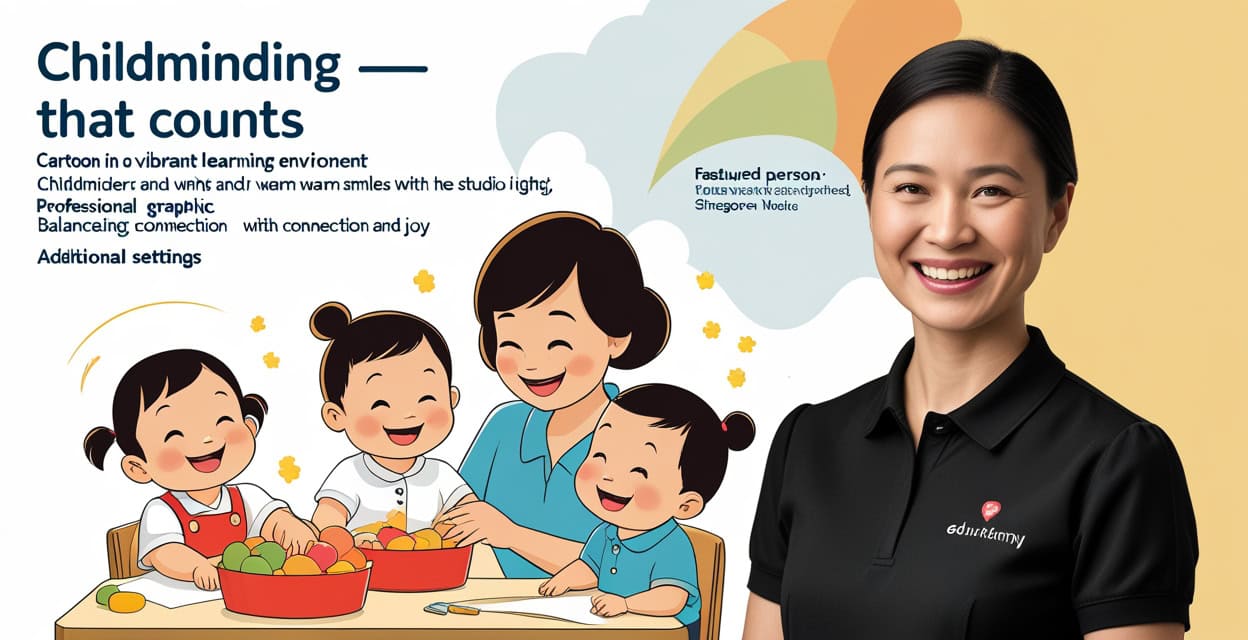
Conclusion: Childminding that counts—who, what, when, where, how
- Who: Singapore’s infants and families; professional childminders honored as essential civic workers; supervisors and leaders accountable for standards.
- What: Centre-Based Childminding, Home Base Childminding, and distance supports that are safe, transparent, developmental, and joyful—anchored by the 1:3 infant ratio and modern, safety-minded layouts with parent-viewable CCTV.
- When: Consistently, Monday to Friday, 7am to 7pm—reliability that lets parents plan and infants settle into secure rhythms.
- Where: Islandwide, in community and home premises—close to transport, to work, to grandparents, and to life as families live it.
- How: Listening-first pedagogy, safety choreography, development-by-design, joy as a constraint, transparent technology, and affordability that keeps care accessible (from $33/day, CDA/Baby Bonus). All within the ECDA Childminding Pilot and guided by a Maximum Employment Mandate.
The philosophy and purpose EduNanny offers to parents is simple and steadfast: your child is not one of many; they are one of one. Your workday should not be built on worry; it should be built on trust. Your neighborhood should not be a place you pass through; it should be a place that helps you raise your child. EduNanny’s mission is to translate promises into practice—hour by hour, note by note, milestone by milestone.
If you are a parent, we invite you to visit, observe, and ask questions. If you are a caregiver, we invite you to train, to grow, and to be recognized for your craft. If you are an employer, we invite you to partner so your teams can work with peace of mind. And if you are a neighbor, we invite you to welcome the gentle hum of early care as part of Singapore’s everyday strength.
We are EduNanny by BUTLER. We believe excellence is a posture, safety is a choreography, and joy is a design constraint. Together, let us make Singapore a place where the smallest hands discover a world that is steady, kind, and ready for them.
Thank you.
SEO keywords: [#keyword1, #keyword2, #keyword3, #keyword4, #keyword5]
Ready to Experience Excellence?
Transform Your Family’s Journey
Discover Singapore’s leading infant care and childminding services. Expert guidance for your little one’s first thousand days.