Near Home Care for Singapore Infants A Science Based Path to Calm Joyful Development with EduNanny
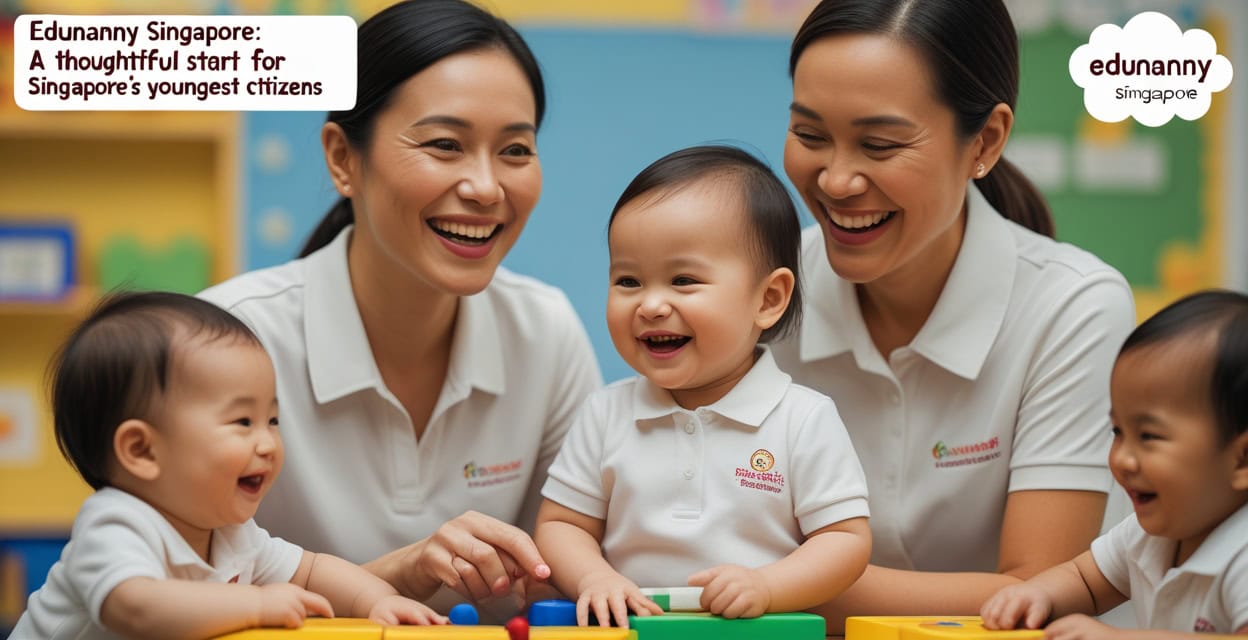
EduNanny Singapore: A Thoughtful Start for Singapore’s Youngest Citizens
Good evenings, families, caregivers, neighbors, and friends of Singapore’s youngest citizens. This article expands the speech into a practical, editor-grade guide for parents and caregivers: how EduNanny translates development science into near-home care that is safe, joyful, and profoundly respectful of every child’s pace. Built on the wisdom of Montessori, Pikler, Bowlby, and Erikson—and aligned with Singapore’s unique rhythms of commute, shifts, grandparents, and daily work—EduNanny offers a clear, actionable pathway to high-quality infant care that you can trust, near your home and in your community.
What is EduNanny?
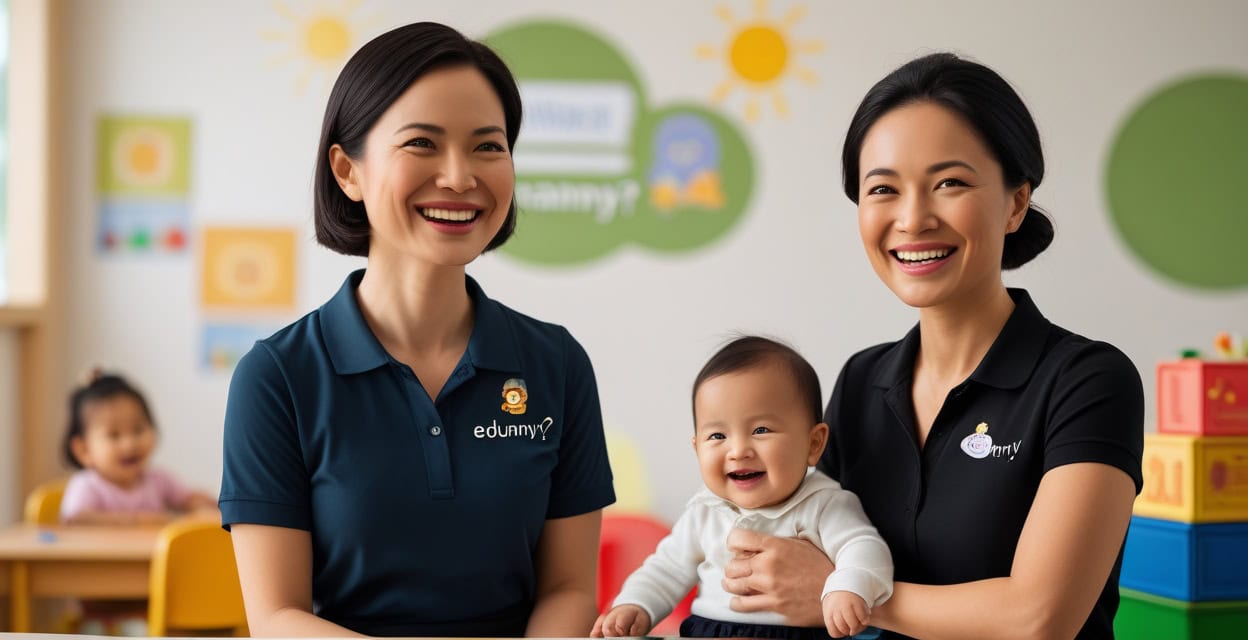
EduNanny is a practical promise: professional childminding built to Singapore’s standards and pace. It blends evidence-based pedagogy with the lived realities of families to create near-home care that is accessible, accountable, and emotionally supportive for infants and their families.
- Centre-based and home-based options, Monday–Friday, 7am–7pm, islandwide. We meet families where they live and work, offering flexible formats in both community and home premises.
- Ultra-low 1:3 infant ratio. A low caregiver-to-child ratio protects presence, calm, and safety, enabling frequent, sensitive “serve-and-return” interactions.
- Modern layouts with sightlines and clean air. Spaces designed for visibility and air quality, supporting infant-led movement and caregiver responsiveness.
- Privacy-respectful CCTV for transparent oversight. Technology paired with clear privacy standards creates trust without compromising intimacy of care.
- Affordability from $33/day, with CDA/Baby Bonus where eligible. Quality care should be accessible as a civic good, not a luxury.
- A flexible pathway: centre-based, home-based, and distance support. Families can choose the model that best fits their life stage and needs, with expert guidance available remotely where needed.
- A national, socially-minded initiative—EduNanny by BUTLER. Aligned to Singapore’s goals for safe starts, workforce participation, and local job creation under a maximum employment mandate.
- Compliance and accountability: ECDA-aligned pilot parameters. EduNanny meets the regulatory requirements to bring structure, safety, and accountability to near-home care.
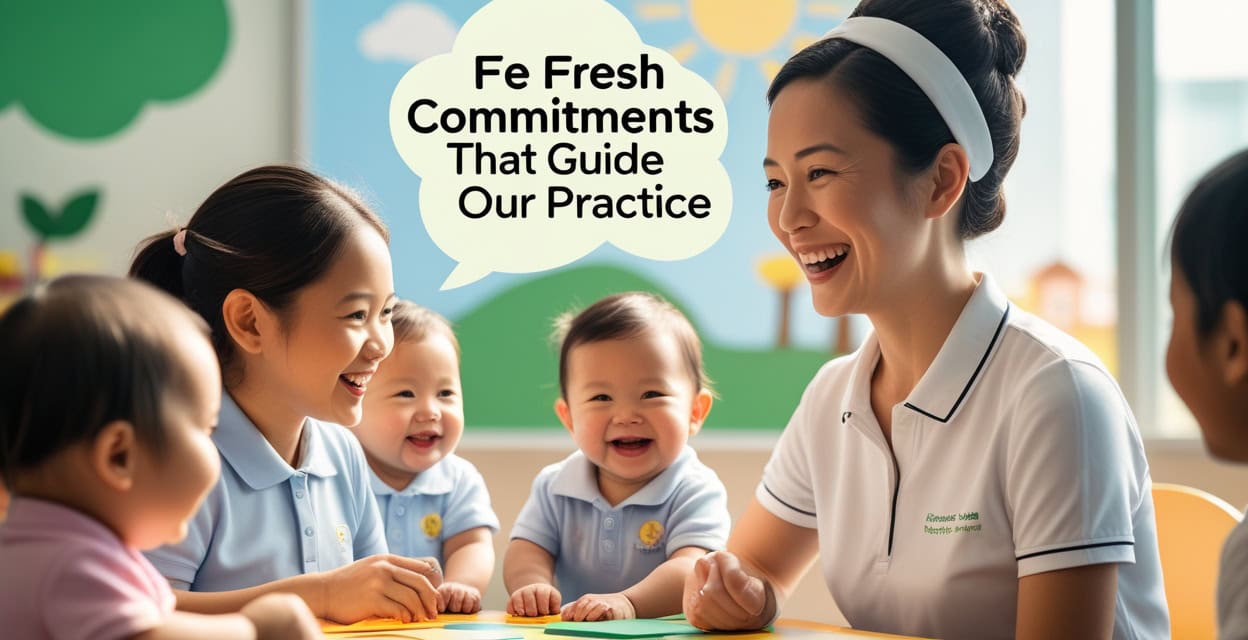
Five fresh commitments that guide our practice
Our practice rests on five commitments designed to translate science into everyday care. Each commitment is paired with practical actions you can observe and leverage as a parent or caregiver.
- The Ground-Level Science: Pedagogy you can see, touch, and trust
- Free movement before milestones: Infants are encouraged to move on firm, open floors with safe space, not padded train tracks. Layouts keep pathways clear and surfaces uncluttered to promote autonomous exploration.
- Micro-scaffolding: Growth happens in small, responsive steps. We practice “one-more-step” coaching—one more reach, one more sound, one more social glance—without rushing development.
- Language embedded in care: Every routine—nappy changes, feeds, burps—becomes a moment to narrate, name, and notice, weaving language into daily care rather than reserving it for “circle time.”
- Curiosity first, toys second: Open-ended materials invite sustained concentration, problem-solving, and joy; simple objects become portals to exploration and language learning.
- Safety as a System: Three circles of protection
- Circle One — The environment: Safe sleep by design, defined activity zones, daily checks for light and air, hazard-free paths, and childproofed layouts that reduce risk.
- Circle Two — Professional practice: Rigorous hand hygiene, bottle labeling and sterilization, incident-prevention routines, emergency drills, and consistent mealtime and naptime protocols. Every shift begins with a readiness check; every day ends with a safety debrief.
- Circle Three — Oversight and trust: Transparent privacy practices, unannounced internal audits, clear incident reporting, and alignment with ECDA requirements. Safety is culture, not just compliance.
- The Rhythm Engine: Development through predictable, loving routine
- Predictable beats, flexible tempo: A stable arc—arrival, exploration, feeding, rest, outdoor moments when possible, and reflective handover—while honoring each infant’s cues.
- Primary caregiving: One core caregiver builds a secure base by knowing your child’s signals, sleep windows, and comfort rituals.
- Nutrition with dignity: Feeding as a relationship—eye contact, slow pacing, and responsive pauses; supportive of breastfeeding plans and safe bottle practices with equal respect.
- Everyday science of smiles: Tracking well-being indicators (settling time, engagement, appetite, sleep quality) and adjusting the day accordingly.
- Joy as a Vital Sign: Measuring happiness with intention
- The Calm-Play-Comfort index: Regularly observe and record calm body tone, engrossed play, and quick comfort after distress to monitor attachment and regulation.
- The 15-minute scan: Brief caregiver check-ins throughout the day to prevent buildup of distress and to maintain connection.
- The friendship of routine: Greeting rituals, song rituals, and farewell rhythms that create a sense of safety and belonging.
- The Purpose of the Childminder: Craft, calling, and community
- Nation-builders: Childminders shape neural architecture through attention, empathy, patience, and curiosity—every interaction is civic work.
- Professional pathways: Structured training, mentorship, reflective practice circles, and advancement routes from assistant to lead to trainer—dignity at work, dignity in care.
- Maximum employment mandate: Neighborhood-based hiring and upskilling that stabilizes families and supports local economies.
- Family partnership as standard: Daily handovers, secure digital updates, and monthly conferences keep home and care aligned.
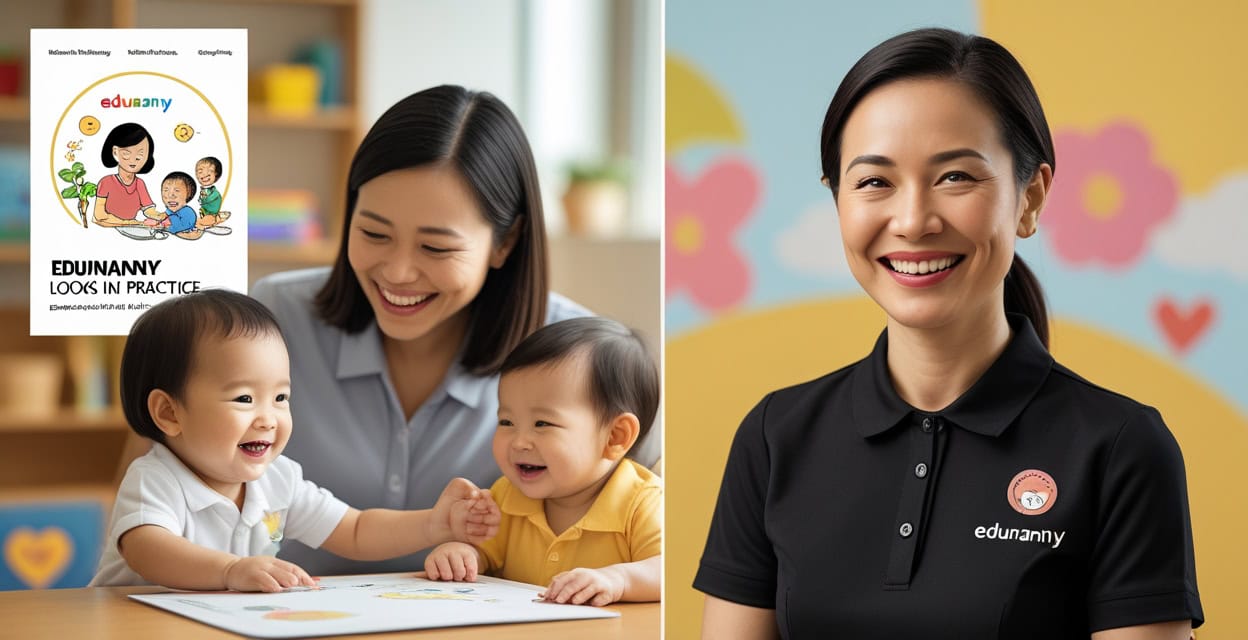
How EduNanny looks in practice: a sample Monday
Near-home care is about predictable, enriching routines that families can observe and replicate. Here is a practical snapshot you might see in a day at EduNanny:
- 7:05am — Gentle arrival: Shoes off, warm greetings, a note about last night’s sleep. The infant’s primary caregiver begins with calm arms and a familiar song to ease transition.
- 8:30am — Floor exploration: Infants explore with age-appropriate materials. Caregivers kneel at eye level, naming actions and emotions to build vocabulary and social awareness.
- 10:15am — Feeding as conversation: Slow, attentive feeding with eye contact, brief pauses for cues, and respectful language that honors breastfeeding plans and bottle practices alike.
- 11:30am — Rest in rhythm: Safe sleep routines, quiet environments, and familiar comfort cues that support secure sleep patterns.
- 2:00pm — Outdoor air or window-view nature talk: Fresh air, movement, and early science talk—pointing, naming, and gentle exploration of the outdoor world.
- 6:10pm — Handover as partnership: Two-minute briefing for families, including naps, feeds, play themes, and one home activity to try, ensuring continuity of care and home-life integration.
Why near-home childminding matters
EduNanny emphasizes care that lives where families live. This approach matters for whom, what, when, where, and how:
- Who: Infants from birth to three, working parents, grandparents who help, and childminders who carry a craft forward.
- What: Safe, regulated, relationship-based care delivered in small groups that protect attention and joy.
- When: The first thousand days, a period of rapid neural growth and foundation-building for lifelong health and learning.
- Where: Across Singapore—in community and home premises—woven into daily life, anchored in local neighborhoods.
- How: A 1:3 ratio; trained, mentored caregivers; sightline-rich spaces; privacy-respectful CCTV; routines that dignify care; and transparent partnerships with families and regulators.
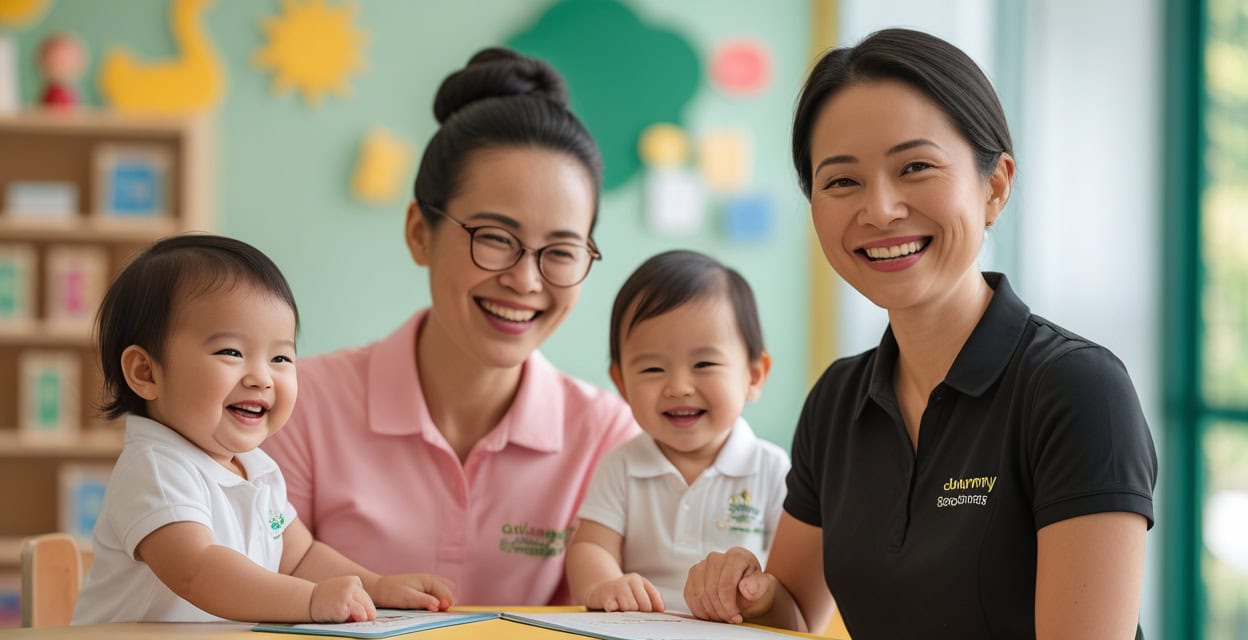
The philosophy and purpose of EduNanny Childminding
- Attachment first: A secure relationship is the engine of all learning.
- Autonomy with assurance: Infants explore freely within safe boundaries; development is not rushed or restrained.
- Culture as comfort: Home languages, family songs, and familiar foods create belonging and identity.
- Safety by design: Safety is engineered, trained for, and accounted for in every routine and environment.
- Equity through access: Center-based, home-based, and distance options with consistent hours and affordable pricing, making high-quality care within reach.
- Community uplift: EduNanny as a national social initiative aligns care quality with job creation and parental workforce participation.
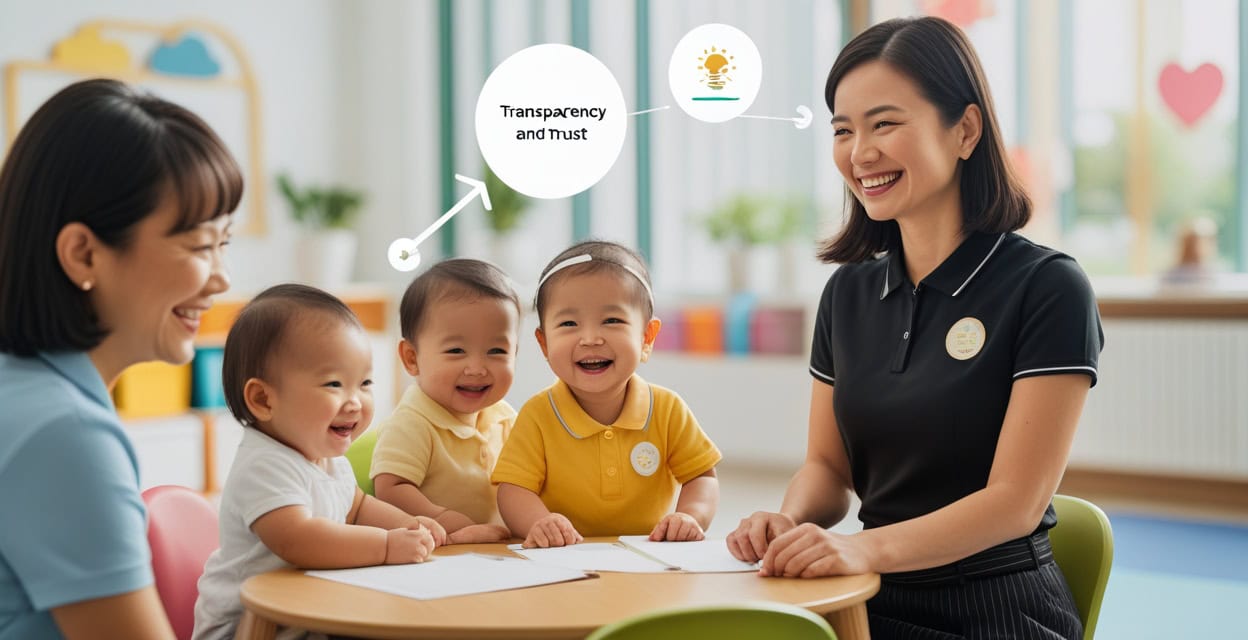
A note on transparency and trust
Innovation CCTV is not surveillance for its own sake; it is assurance with respect. We pair technology with clear privacy standards and human judgment to ensure safety without compromising the dignity of care. Distance childminding offers professional guidance to families who wish to care at home—virtual coaching, safety checks, and tailored routines—to keep learning vibrant wherever baby rests.
An invitation
If you believe, as we do, that the first years are not a waiting room but a launchpad, we invite you to see how EduNanny works. Walk the light-filled rooms. Observe a 1:3 pod settling into play. Listen to the quiet language of care that says, “You matter. You are safe. You can try.”
Details for families
- Availability: Monday–Friday, 7am–7pm, islandwide Singapore.
- Formats: Centre-Based Childminding, Home-Based Childminding, and Distance support.
- Ratio: 1 caregiver to 3 infants.
- Cost: Affordable from $33/day; fees payable by CDA/Baby Bonus where eligible.
- Oversight: Privacy-respectful CCTV, modern layouts, daily safety routines, and alignment with ECDA regulations and pilot parameters.
- Learn more or register: EduNanny.com and Childminding.EduNanny.com.
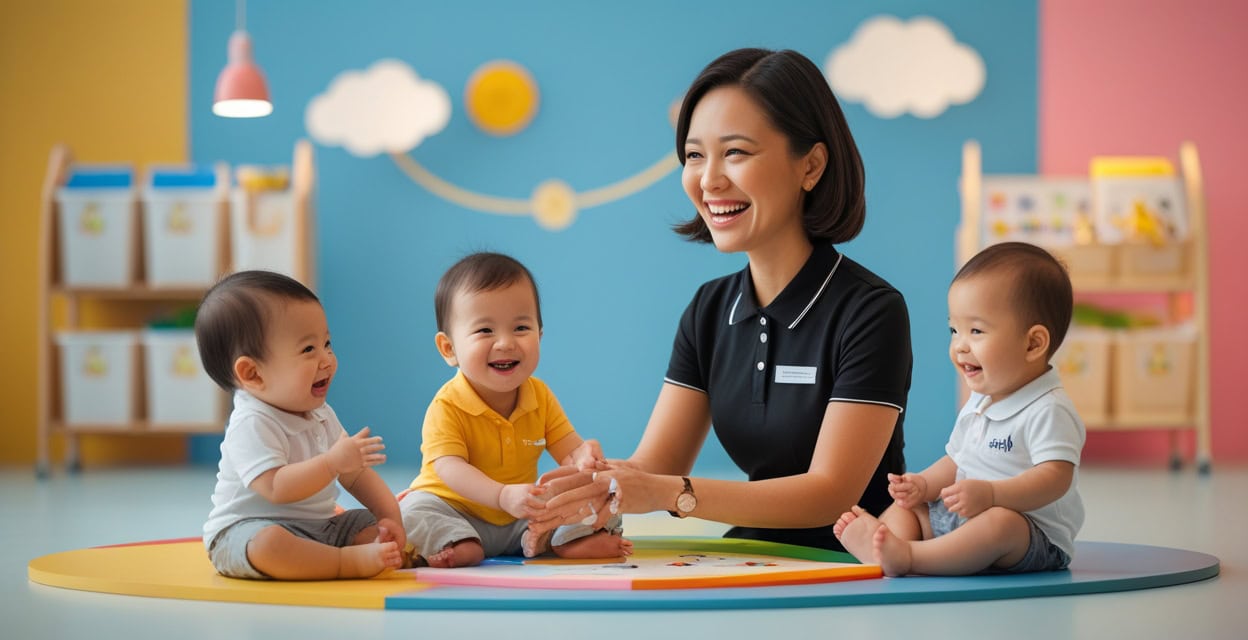
Transparency, trust, and ongoing partnership
EduNanny emphasizes ongoing collaboration with families and regulators. Practical steps for families include:
- Ask about the incident reporting pathways and how safety debriefs are shared with parents.
- Request a tour of the space and observe the 1:3 pod in action during different times of day.
- Discuss feeding plans, including breastfeeding support, bottle practices, and any dietary restrictions or cultural rituals.
- Inquire about the teacher or caregiver’s professional development plan and mentorship opportunities there.
- Understand how distance support works for home-based care—what virtual coaching looks like and how safety checks are conducted remotely.
Closing
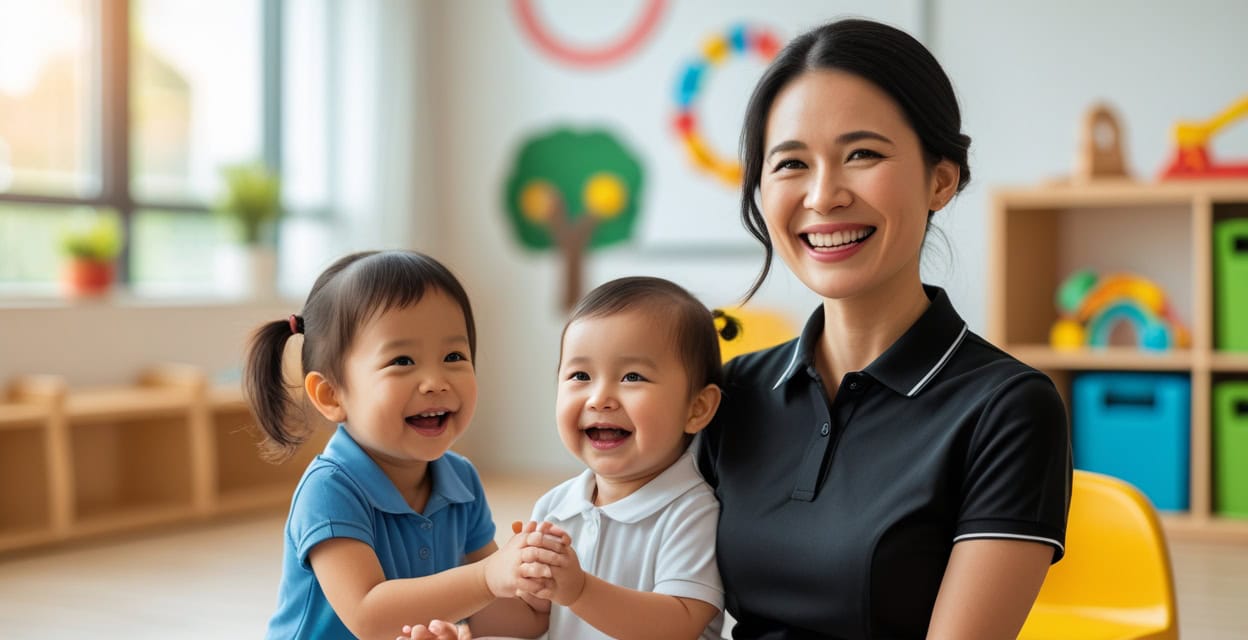
In every pod, on every floor mat, and inside each tiny, trusting glance, Singapore’s tomorrow is learning to breathe, to notice, and to belong. Childminding is not background noise to economic life; it is the score that directs how children learn to be human. EduNanny’s purpose is simple and exacting: to make the most important minutes of the day—the infant minutes—calm, safe, and full of meaning. This is how we cradle families. This is how we honor caregivers. This is how we build leaders, five seconds at a time.
Thank you.
Conclusion
EduNanny Singapore offers a structured, evidence-informed approach to early childhood care that respects the science of development while honoring the realities of family life. By centering near-home care, maintaining a low 1:3 ratio, embedding safety as a system, and partnering transparently with families, EduNanny translates theory into everyday practice. Parents can use these principles to evaluate care options, advocate for their child’s needs, and participate actively in their child’s learning journey. Caregivers gain professional pathways that uplift communities and strengthen the workforce across Singapore. If you’re seeking a care model that treats infants as capable movers and curious thinkers, EduNanny presents a compelling, practical option worth exploring with your family.
If you’re ready to learn more, visit EduNanny.com or sign up for a tour of a nearby EduNanny pod. Your child’s first years deserve nothing less than thoughtful, safe, joyful, and future-focused care.
[#EduNanny, #InfantCareSingapore, #NearHomeCare, #EarlyChildhoodDevelopment, #SingaporeChildminding]