The Attentive Minute and the Near Home Promise for Safe Joyful Infancy in Singapore
Introduction: A Clear Promise for Singapore’s Families, Caregivers, and Communities
EduNanny is a project born from a simple, powerful belief: when an infant is cared for with
intelligence, consistency, and tenderness, families breathe easier, neighborhoods grow closer, and a nation grows stronger. This article expands on our vision, pedagogy, and public purpose—and offers practical, actionable guidance for parents, caregivers, and communities who want to partner with EduNanny to support the youngest learners in Singapore.
What is EduNanny?
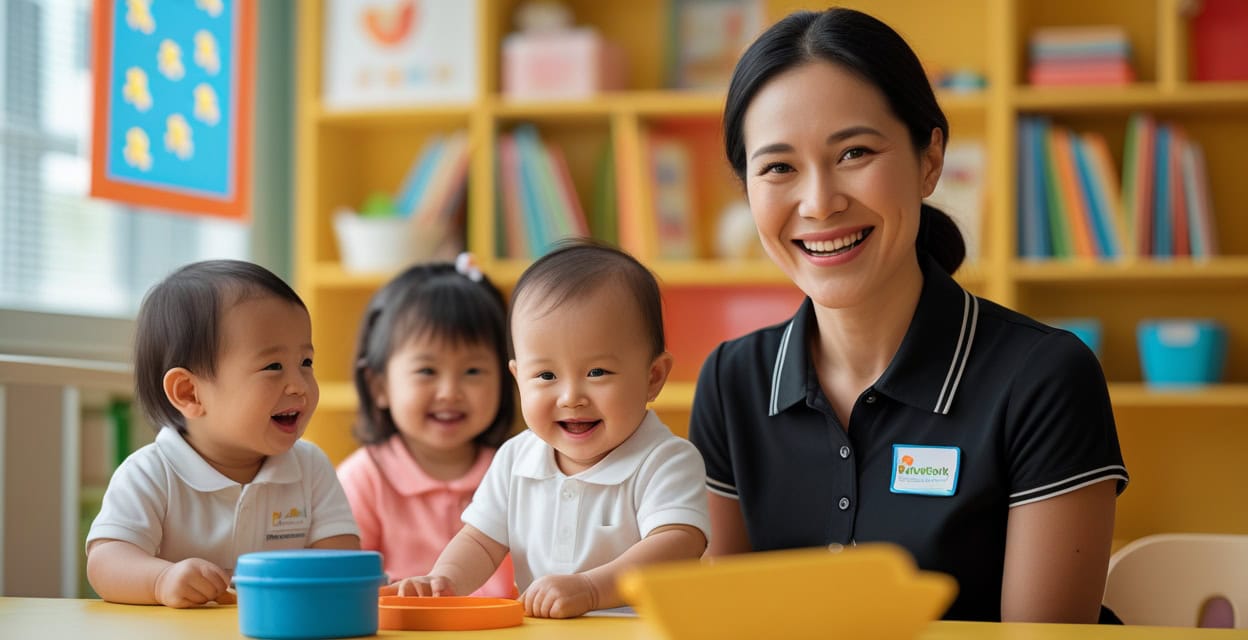
EduNanny operates as Singapore’s centre-based, home-based, and distance-support childminding service. Our hours run 7am to 7pm, Monday through Friday, islandwide, designed to keep care close to families while aligning with the latest science of early development. We uphold a three infants to one caregiver (1:3) ratio so every moment can be observed, interpreted, and responded to with precision and warmth. Our environments feature open sightlines, natural materials, and calm soundscapes, layered with transparent CCTV for trust with parents.
Key features include:
- Centre-based, home-based, and distance-support options to fit diverse family needs
- Open, evidence-informed environments designed for infant observation and safety
- Transparency through CCTV for authorized parents; privacy-respecting practices
- Participation in the ECDA Childminding Pilot; fees eligible for Baby Bonus/CDA
- Maximum Employment Mandate to create quality, dignified jobs for trained childminders
- Affordability with a starting price from $33/day
EduNanny is also a national social initiative—an ecosystem designed to be reliable, accountable, and accessible to all Singaporean families. Our aim is to embed high-quality childminding into the fabric of everyday life, so families can work with confidence and children can grow with consistency.
Topic One: The Attentive Minute—A Pedagogy of Micro-Moments
Development begins at birth and unfolds through micro-moments that build language, self-regulation, and secure attachment. Our pedagogy centers on attunement: reading the infant’s tiny cues—gaze, breath, finger splay, leg movement—and responding with just-enough support. This micro-attunement is only possible with a 1:3 ratio: it is not a luxury, it is the basic instrument of care.
What this looks like in practice
- Pause before acting: A caregiver waits a beat to interpret the infant’s signal—eye contact, a smile, a gurgle—before lifting or guiding. Trust is reinforced in seconds, not hours.
- Care episodes as learning labs: Feeding, diapering, and settling are designed as opportunities for language development, motor planning, and self-regulation rather than mere tasks.
- Uninterrupted, meaningful play: Infants explore on safe, low surfaces; materials are chosen to invite discovery and self-directed time to maneuver, rather than placing infants in positions beyond their current abilities.
Practical guidance for parents at home
- Set aside short, predictable routines (e.g., wake, feed, play, nap) and narrate what you’re doing to name actions and sensations for your child.
- Use simple language during daily activities. For example, during diaper changes: “We’re wiping fresh and clean; you’re choosing which toy to hold.”
- Offer a few open-ended play choices (two or three options) to invite initiative without overwhelm.
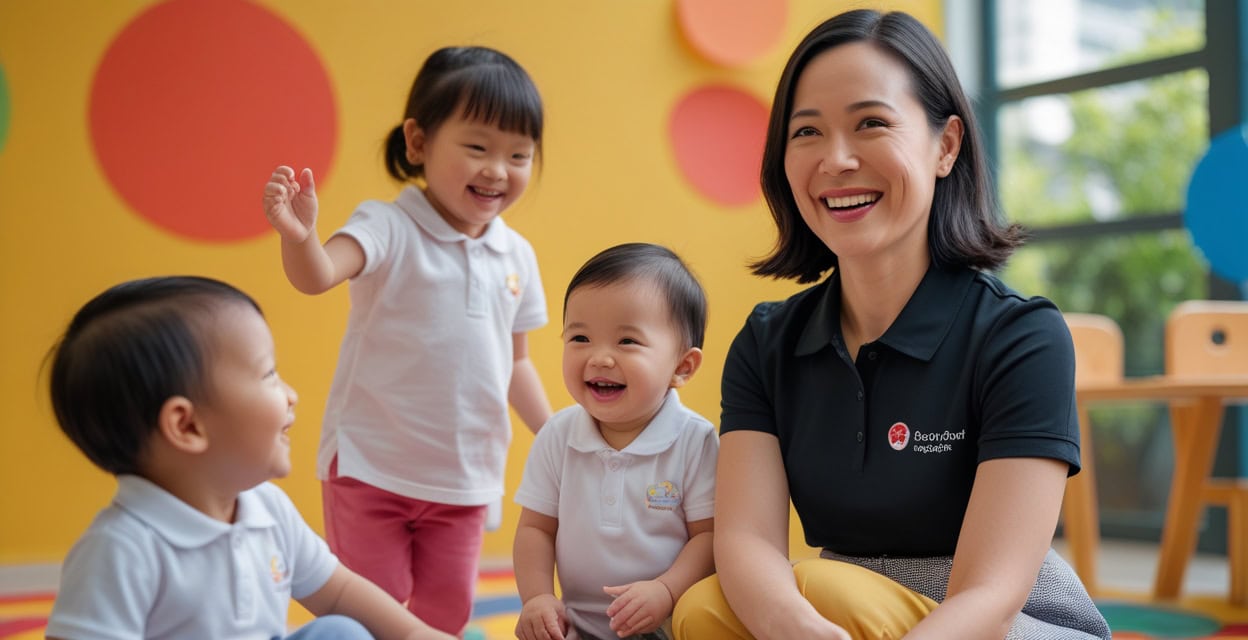
Topic Two: Safety as an Ecosystem—Not a Checklist
Safety is not a single policy; it is a culture practiced daily. It is the architecture of rooms, the choreography of routines, and the humility to stop, check, and correct when needed. Our safety ecosystem includes environments designed for infants, sleep practices by design, hygiene with intention, trained people, and privacy-respecting CCTV that builds trust.
Elements of the safety ecosystem
- Infant-centric environments: rounded corners, secured furniture, quality air, non-toxic materials, soft color palettes, and natural light supporting circadian rhythms
- Safe sleep by design: individual cots, firm mattresses, no loose bedding, consistent sleep logs, visual checks, and environment optimized for temperature and light
- Hygiene with intention: explicit hand hygiene rituals, scheduled surface sanitation, proper milk handling, and clear illness-exclusion guidelines
- Trained staff and practiced drills: CPR/first aid certification, child protection pathways, emergency egress plans, and timely incident reporting
- Innovative CCTV: real-time visibility for authorized parents, reflective staff practice, and privacy-respecting use that strengthens trust
Safety insights families can apply at home
- Establish a simple daily safety routine: check play areas for small hazards, ensure furniture is stable, and keep choking hazards out of reach.
- Practice safe sleep habits consistent with professional guidelines: back-to-sleep, minimal bedding, and a quiet, dark room for naps.
- Document and share concerns with your caregiver promptly—clear communication prevents risks from escalating and supports continuity of care.
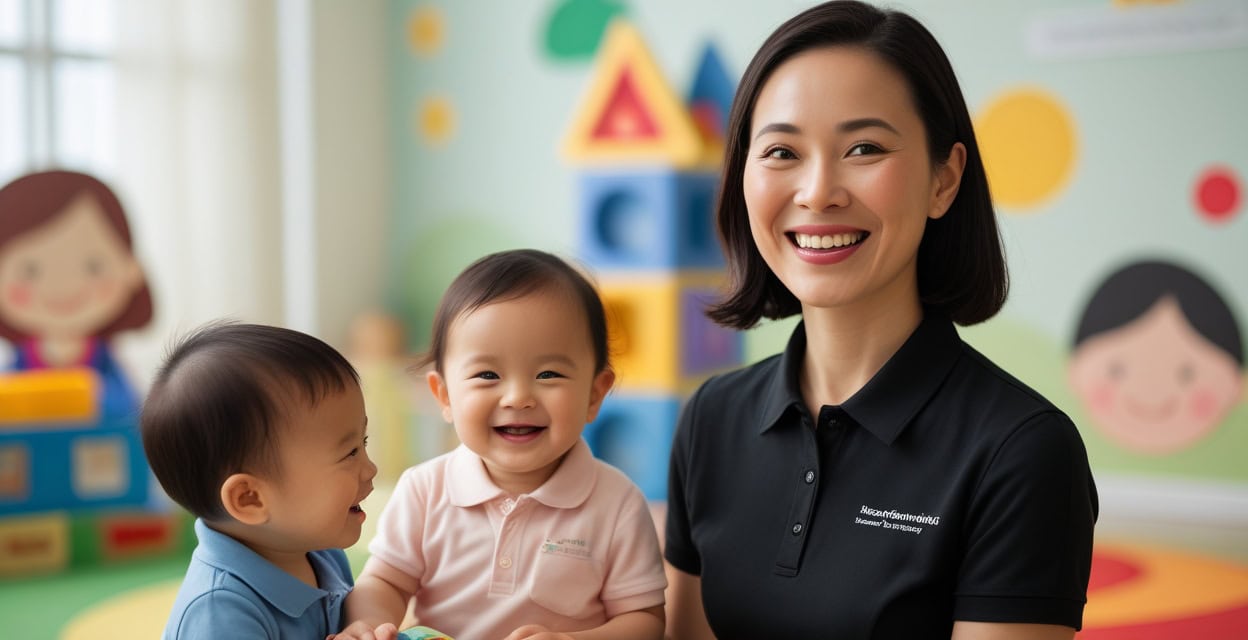
Topic Three: The Arc of Development—From Sensation to Meaning
Infant development follows a trajectory from sensation to meaning, interpreted through the lenses of Piaget, Vygotsky, Froebel, and Malaguzzi. At EduNanny, the caregiver’s role is to translate scientific insights into everyday practice, weaving together sensation, exploration, language, and social interaction into meaningful experiences.
Developmental framework in our settings
- Sensory invitations: curated textures, weights, and sounds (wooden rings, cloth squares, soft rattles, culturally familiar objects) that encourage grasping, mouthing, shaking, and exploring.
- Language in context: naming what the child sees and does, turning daily activities into language opportunities (e.g., “You’re lifting the cup with your left hand; the water is cool.”)
- Scaffolding in the zone of proximal development: wait for initiation, then supply the next small step to sustain growth—slightly altering speed, distance, or material.
- Documentation that dignifies early thought: photos, short notes, and transcripts that reveal infants’ choices; parents see patterns, caregivers refine practice, and the child’s competencies are honored from the start.
Practical activities for each setting
- Home-based: Homelike routines with deliberate zoning for play, rest, and meals to reinforce security and predictability.
- Distance support: Live coaching for families at home, with check-ins and individualized routines to maintain learning rhythms even when a child is not in our physical space.
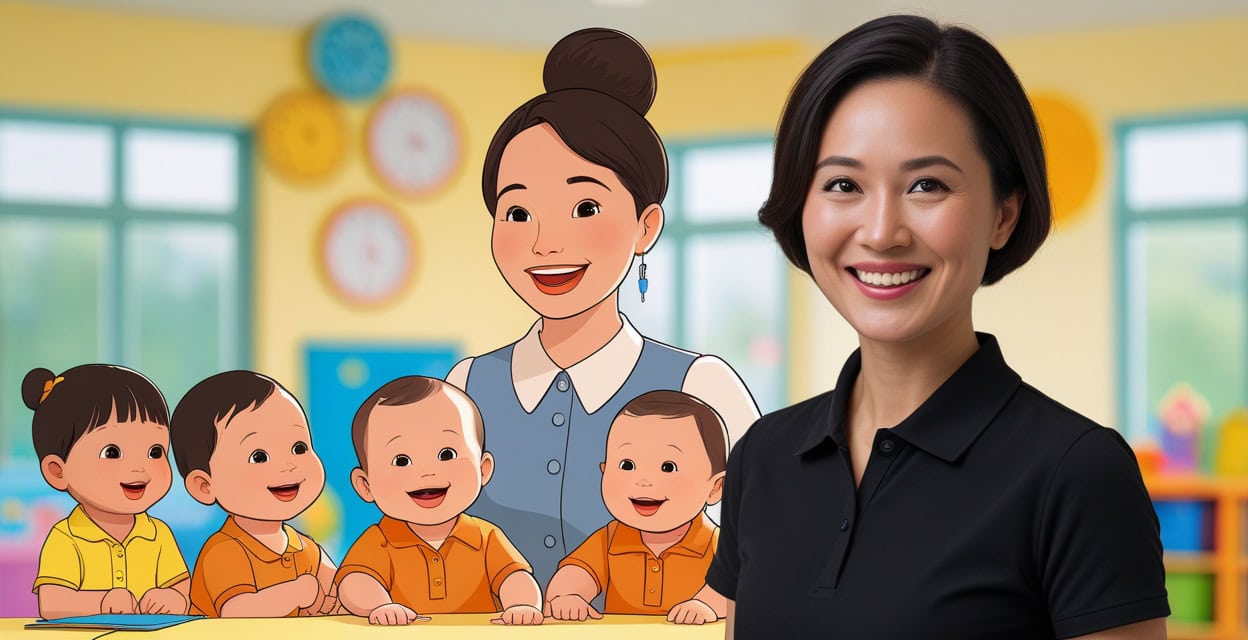
Topic Four: Happiness, Belonging, and the Measures That Matter
Joy is not defined by noise or novelty; it is the felt sense of being understood and secure. Infants express happiness through relaxed bodies, alert eyes, social bids, and deep engagement. We measure wellbeing with the same seriousness as feeding and sleep, using simple, meaningful indicators.
How EduNanny cultivates happiness
- Predictable daily cadence: unhurried arrivals, narrated caregiving, gentle transitions, and respectful departures.
- Stable caregiving relationships: primary carer assignments within the 1:3 ratio to ensure familiar faces across the day.
- Culture and belonging: songs, stories, and languages from the child’s world to make culture feel like home—Malay, Mandarin, Tamil, and English rhythms woven into daily life.
- Simple wellbeing metrics: engagement spans, stress cues and recoveries, appetite consistency, sleep depth, initiations of play, and social referencing. Parents receive concise, meaningful updates that support understanding rather than overwhelm.
Practical guidance for fostering happiness at home
- Maintain a predictable routine with gentle transitions—preview what’s coming next to reduce surprises.
- Offer culturally resonant songs and stories to help your child feel seen and connected to their world.
- Document moments of joy (e.g., a favorite toy, a smiling interaction) and share them with your caregiver to strengthen partnership.
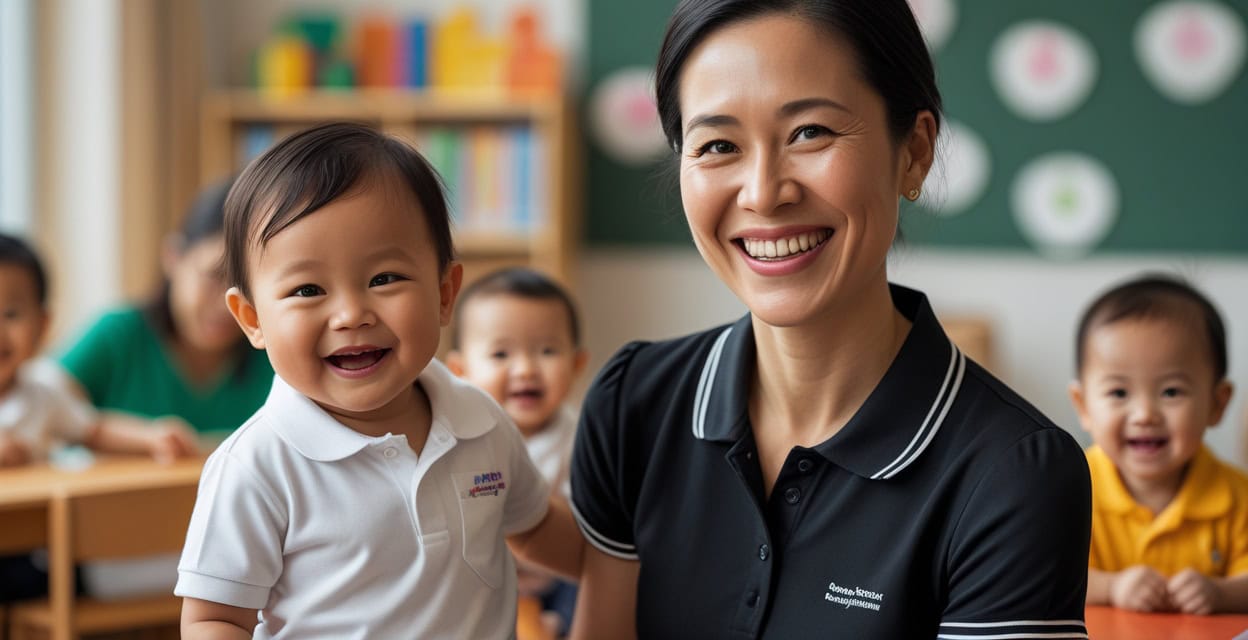
Topic Five: The Civic Purpose of Childminders—A Promise Beyond the Doorstep
A childminder is more than a caregiver in a room; she or he is a civic professional who enables parents to work with confidence, supports infants during their most impressionable years, and weaves safety and learning into ordinary hours. EduNanny views childminding as public infrastructure—reliable, respected, and ready when families need it.
EduNanny’s national commitment
- Locate care near families across Singapore—centre-based, home-based, and distance support—to shrink commutes and grow family time.
- Make high-quality care affordable from $33/day, with Baby Bonus/CDA eligibility to promote equity and access.
- Provide dignified jobs with training, mentoring, and clear career ladders—the Maximum Employment Mandate for Singaporeans in this essential profession.
- Set standards and invite transparent scrutiny—innovative CCTV, open communications, and a culture of continuous learning to sustain trust.
What families can do to partner effectively
- Visit EduNanny facilities or rooms with your child; ask about the 1:3 ratio in practice, daily routines, and safety protocols.
- Review daily updates and sample documentation to understand how learning is captured and shared.
- Ask about the privacy protections around CCTV and how data is stored, accessed, and used.
- Engage in distance-support check-ins to extend learning at home—co-create routines that reflect your child’s unique culture and needs.

What Families Can Expect—At a Glance
EduNanny offers a clear, parent-facing package of care designed around reliability, learning, and accessibility. Here is what families can expect when they choose EduNanny:
as the baseline, not the upsell. : modern layouts, curated materials, purpose-built infant rooms. : intimate settings with careful zoning, consistent routines, and community roots. : live coaching, secure digital check-ins, and personalized routines to extend learning at home. : trained carers, rehearsed emergency protocols, safe sleep routines, and hygienic operations. : 1:3 infant ratio, attentive micro-moments, individualized play plans, and meaningful documentation. : part of the ECDA Childminding Pilot; advancing family stability and quality employment for Singaporeans.
Enrolling and Partnering with EduNanny: Practical Steps for Parents
Choosing childminding is a partnership. Here are practical steps to engage EduNanny effectively:
- Schedule a guided visit to a centre-based site or a home-based minder to observe routines, safety practices, and caregiver-child interactions.
- Ask to see sample daily notes and a typical weekly plan—look for consistency, language-rich interactions, and individualized play plans.
- Request a home-distance coaching kickoff to align at-home routines with in-care practices for continuity.
- Review safety policies, including safe sleep guidelines, hygiene rituals, and incident reporting processes.
- Discuss payment options, subsidies, and how Baby Bonus/CDA can apply to your family’s needs.
Conclusion: Why Childminding Matters—Who, What, When, Where, and How
Infants, families, and childminders together form a social fabric that underpins a thriving nation. The who is simple: infants, their families, and the trained professionals who translate need into nurture. The what is a precise, warm, and developmental practice—three infants to one caregiver, modern environments, safety rehearsed, and learning woven into every caregiving act. The when is every ordinary hour of the week—Monday through Friday, 7am to 7pm—because reliability is the quiet hero of family life. The where is close to home, islandwide—centre-based hubs, licensed home-based settings, and digital distance support—so every family can choose a blend that fits their season of life. The how is an ecosystem of safety, a pedagogy of micro-moments, a culture of transparency, and an ethic of public service—affordable, accessible, and accountable.
EduNanny’s philosophy is clear and ambitious: every infant deserves care worthy of their potential; every parent deserves partners they can trust; and every neighborhood deserves the dignity of reliable, high-quality childminding. We believe excellence belongs everywhere—in the centre and in the flat, in the morning feed and the afternoon nap, in the recorded observation and the shared smile. The first relationships a child experiences are not merely private blessings; they are public goods. If this vision resonates, we invite you to walk our rooms, meet our minders, and ask the hardest questions you have. Because in the attentive minute, futures are formed—and in Singapore, we intend to make every minute count.
Learn more or enroll at EduNanny.com and Childminding.EduNanny.com.
Conclusion: Why Childminding Matters—Who, What, When, Where, and How
Infants, families, and childminders together form a social fabric that underpins a thriving nation. The who is simple: infants, their families, and the trained professionals who translate need into nurture. The what is a precise, warm, and developmental practice—three infants to one caregiver, modern environments, safety rehearsed, and learning woven into every caregiving act. The when is every ordinary hour of the week—Monday through Friday, 7am to 7pm—because reliability is the quiet hero of family life. The where is close to home, islandwide—centre-based hubs, licensed home-based settings, and digital distance support—so every family can choose a blend that fits their season of life. The how is an ecosystem of safety, a pedagogy of micro-moments, a culture of transparency, and an ethic of public service—affordable, accessible, and accountable.
The philosophy and purpose of EduNanny are simple and ambitious. We believe that every infant deserves care worthy of their potential; that every parent deserves partners they can trust; and that every neighborhood deserves the dignity of reliable, high-quality childminding. We believe that excellence belongs everywhere—in the centre and in the flat, in the morning feed and the afternoon nap, in the recorded observation and the shared smile. We believe that the first relationships a child experiences are not just private blessings; they are public goods. If this vision speaks to you—if you want your child to meet caregivers who see more, say less, and support exactly enough; if you want safety you can verify, learning you can witness, and joy you can feel—come talk to us. Walk our rooms. Meet our minders. Ask us the hardest questions you have. Because in the attentive minute, futures are formed. And in Singapore, we intend to make every minute count.
Learn more or enroll at EduNanny.com and Childminding.EduNanny.com.
SEO keywords: [#earlychildhood, #childminding, #Singapore, #infantdevelopment, #EduNanny]