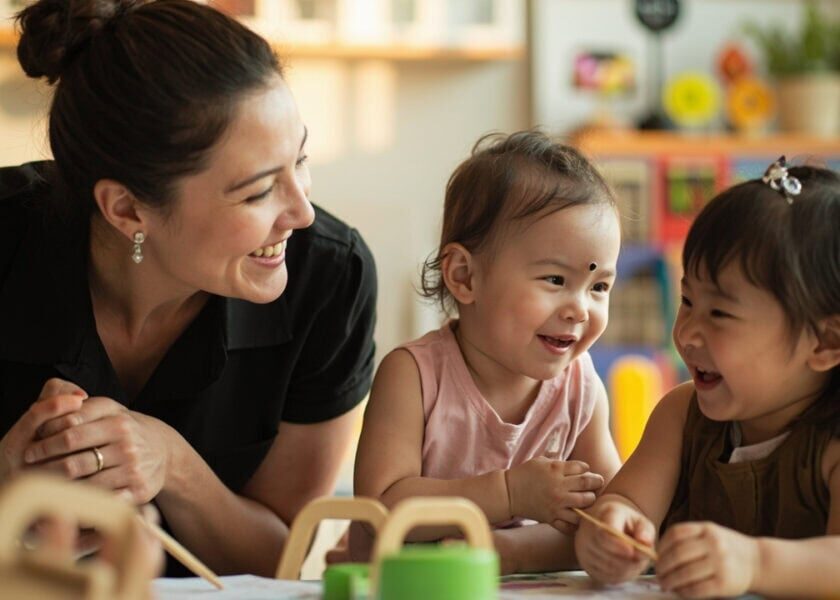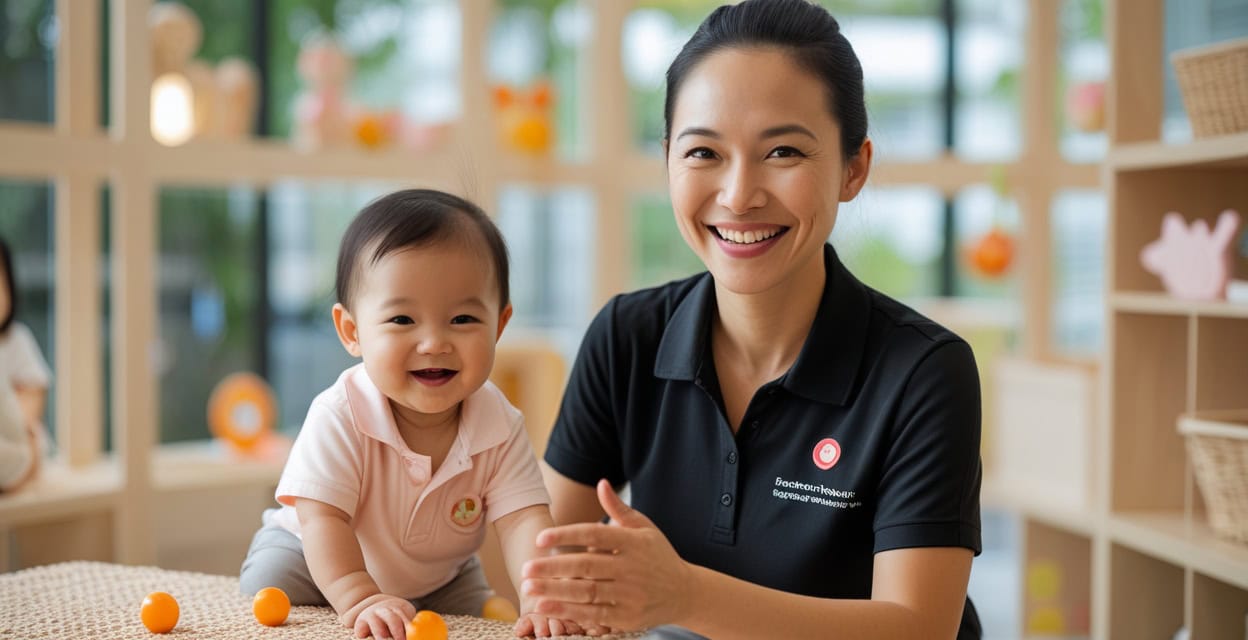
Attunement by Design and the Near Home Promise for Safe Joyful Infancy in Singapore
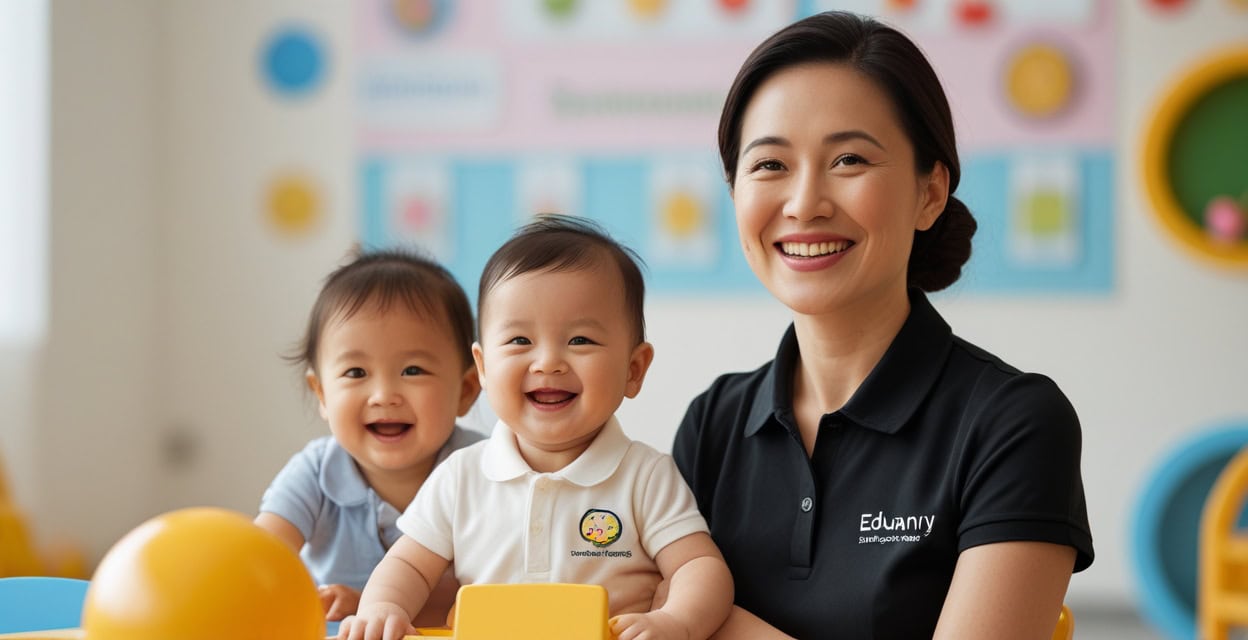
Introduction: EduNanny’s Promise for Singapore’s Youngest Citizens
EduNanny by BUTLER embodies a civic-minded, science-led movement dedicated to Singapore’s youngest citizens and to the parents who love them. Drawing on the wisdom of Montessori and Pikler, informed by Piaget, Vygotsky, Erikson, and Bowlby, and grounded in modern safety science, EduNanny translates theory into everyday care—whether in neighbourhood hubs, centre-based spaces, home-based settings, or via distance support that meets families where they are. This is care designed to be practical, principled, and profoundly human: near enough to whisper, strong enough to carry.
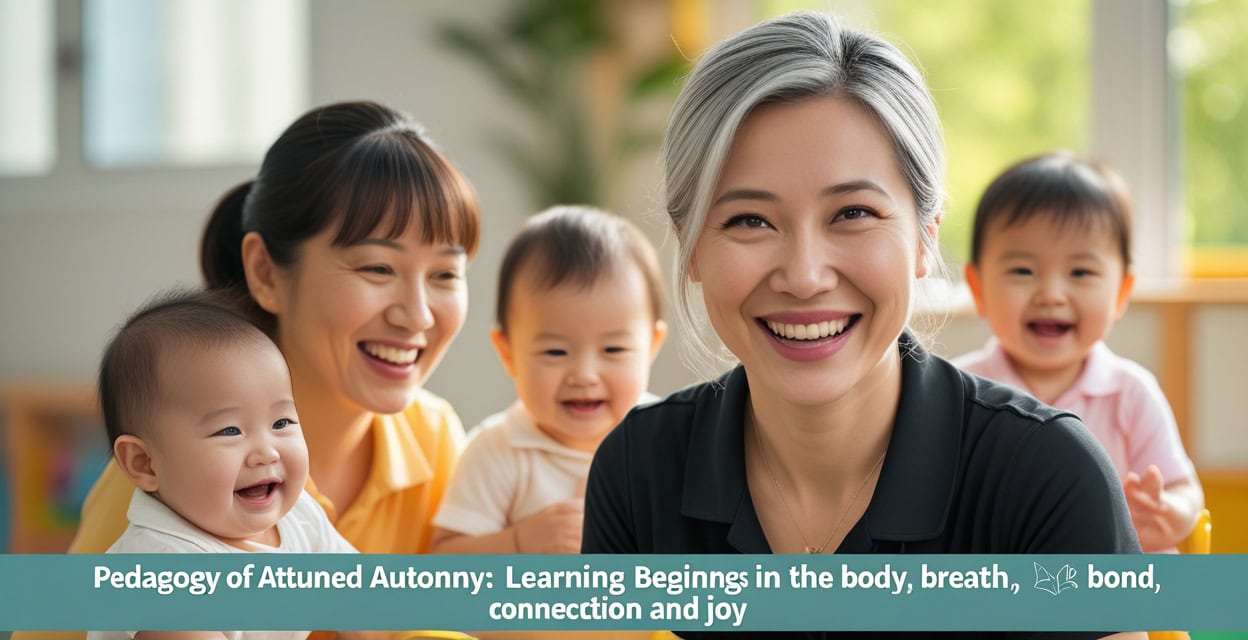
1) Pedagogy of Attuned Autonomy: learning begins in the body, the breath, and the bond
Care as Curriculum
Care routines are not interruptions to learning; they are the learning itself. Feeding, diapering, and sleep are opportunities to develop agency and trust. Actionable practices you can adopt include:
- Narrate actions as they happen: “I’m going to pick you up now,” or “Let’s wipe your hands together.”
- Use prepared environments with low, open shelves and diverse tactile materials to invite exploration without overwhelm.
- Involve infants in simple choices to foster co-agency, such as offering two safe cloths and asking which to use.
Attunement at a 1:3 Ratio
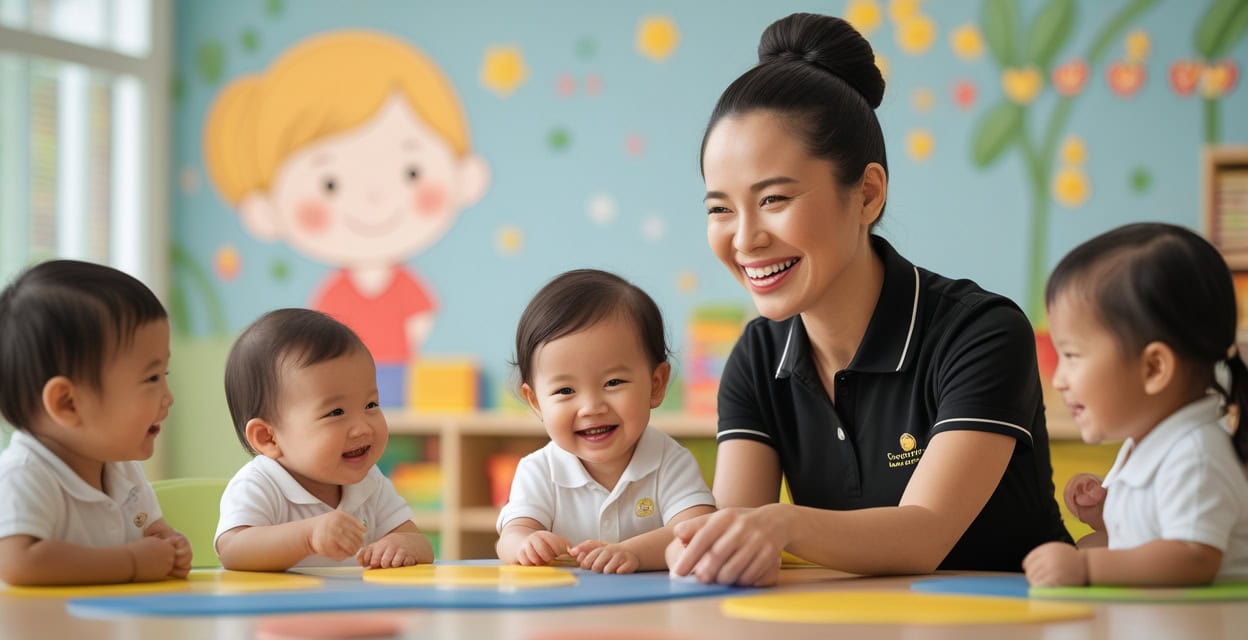
A close educator-to-child ratio enables observation of micro-signals and rapid, gentle response. Practical tips for families and caregivers include:
- Monitor subtle cues like gaze shifts, breath changes, and body tension to adjust pace and approach.
- Plan flexible routines that adapt to each child’s tempo, ensuring calm transitions rather than rushed moments.
- Document gentle breakthroughs (a new sound, a new gesture) to reinforce learning moments.
Environment as the Fourth Teacher
The surroundings teach as much as the adult. Consider these design principles for home or centre spaces:
- Natural light, uncluttered zones, and accessible materials encourage safe exploration.
- Rotation of affordances aligns with developmental windows (grasping, tummy-time, pull-to-stand stages, and language-rich nooks).
- Quiet corners and predictable routines create reliable spaces for self-regulation.
2) Safety by Design, Not by Chance
Architecture, Routines, and Sleep
Safety is built into every layer—from physical space to daily habit. Actionable steps include:
- Install rounded edges, secure gates, high-visibility sightlines, and firm sleep surfaces with no loose bedding.
- Regular calm emergency drills and clear handover protocols reduce anxiety for both families and educators.
- Daily sanitation cycles and health checks ensure a clean, health-conscious environment.
Health, Hygiene, and Handover
Health and hygiene are shared responsibilities with a sacred sense of trust. Practical practices include:
- Strict bottle preparation protocols and allergy management tailored to individual children.
- Transparent, privacy-respecting CCTV usage that builds trust without compromising dignity.
- Faithful documentation of health observations and handover notes to families.
Transparency with Dignity
Transparency isn’t a gimmick; it’s a framework for trust. Families should be able to observe care practices while educators feel professional, supported, and valued.
3) Development as a Rhythm: relationships set the pace
Secure Attachment as Daily Practice
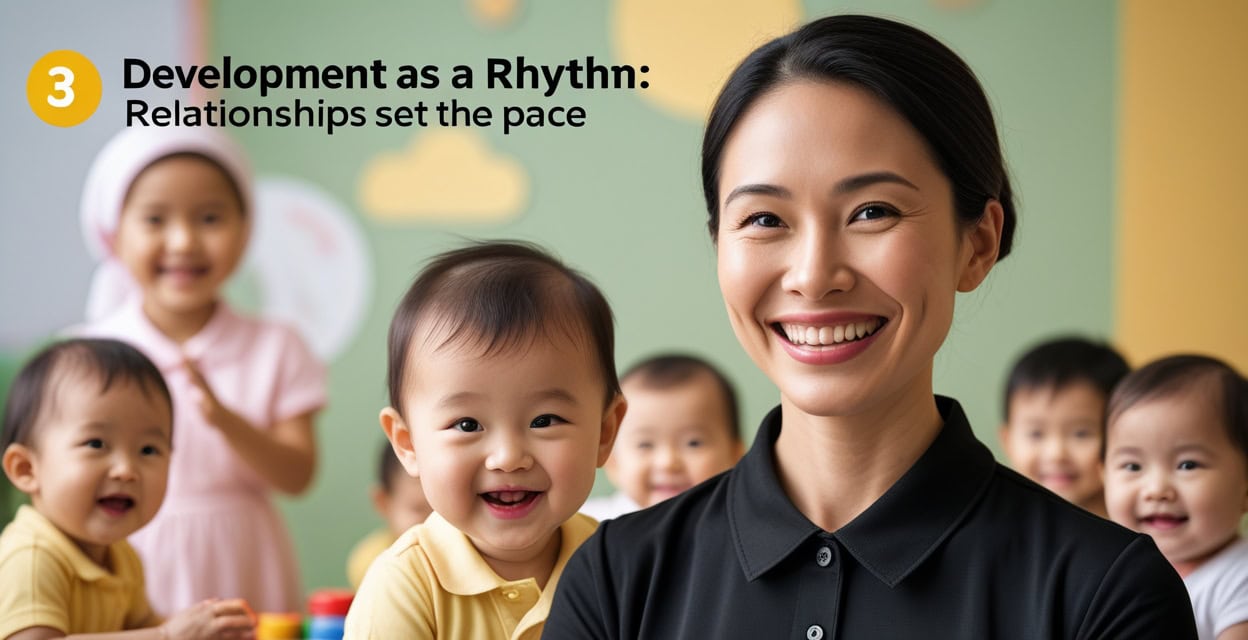
Secure attachment serves as the highway of development. Daily rituals that foster trust include predictable routines, warm co-regulation, and responsive language. Actionable ideas:
- Use calm, consistent cues to signal transitions and soothe a child before changes in activity.
- Incorporate responsive vocal play—turn-taking babble, face-reading, and shared gaze to build language foundations.
- Provide a stable “nervous system tutor” in the form of a calm educator who helps the child self-regulate over time.
Language, Movement, and Play
Language development emerges through everyday interactions. Practices include:
- Rich narration during routine activities and stretches of joint attention around objects and experiences.
- Movement opportunities as a right: supervised floor time, safe cruising spaces, and open-ended play.
- Documentation as a bridge home—secure photos, milestone notes, and daily observations shared with families.

4) Happiness as a Vital Sign
Tracking Joy, Not Just Milestones
Joy is a measurable indicator of well-being. Use these indicators to refine care:
- Observe the child’s response to arrival: bright eyes, relaxed posture, and ease of separation from caregiver.
- Recognize that quiet, focused play can be as meaningful as active play.
- Respect each child’s sleep rhythm within a predictable daily schedule to support restoration and pruning of the brain.
Quiet Curriculum and Rest
Balance active and quiet moments to nurture attention and curiosity:
- Provide calm, sensory-rich activities that invite concentration without overstimulation.
- Offer flexible rest periods tailored to each child’s needs, ensuring rest supports growth and learning.
- Engage families as co-authors of happiness through daily check-ins and culturally respectful routines.

5) The Purpose and Profession of Childminding
Childminders as Civic Educators
Childminders hold the first public trust a child knows. Actionable commitments include:
- Recruit for heart, train for skill, and retain with clear career paths that recognize care as a profession.
- Embed reflective practice: regular mentoring, debriefs, and learning from both incident-free days and near-misses.
- Forge strong partnerships with families to calibrate aims and adapt care to evolving circumstances.
Community, Policy, and Purpose
A well-designed system places pods near homes, strengthens local bonds, and nurtures resilience in everyday life. Practical steps include:
- Develop neighbourhood-based pods to reduce commute stress and support family routines.
- Implement a unified quality framework across centre-based, home-based, and distance care for consistency.
- Align with national initiatives to ensure that care grows with employment opportunities and public trust.
How EduNanny Makes Care Better Here, in This City We Love
- Proximity that protects: near-home placement to minimize separation stress and shorten commutes.
- A simple, unified system: one standard across centre-based, home-based, and distance care with a single quality assurance framework.
- Radical transparency, sensibly done: innovation CCTV and modern layouts are designed to build trust while safeguarding privacy.
- Affordability with integrity: from $33/day, with CDA/Baby Bonus integration to broaden access to quality care.
- Hours that honour working families: Monday to Friday, 7am–7pm, islandwide to support real-life schedules.
- A public purpose: ECDA Childminding Pilot participation as a pathway to scalable, evidence-based care and national impact.
A Day, Seen Through the Infant’s Eyes
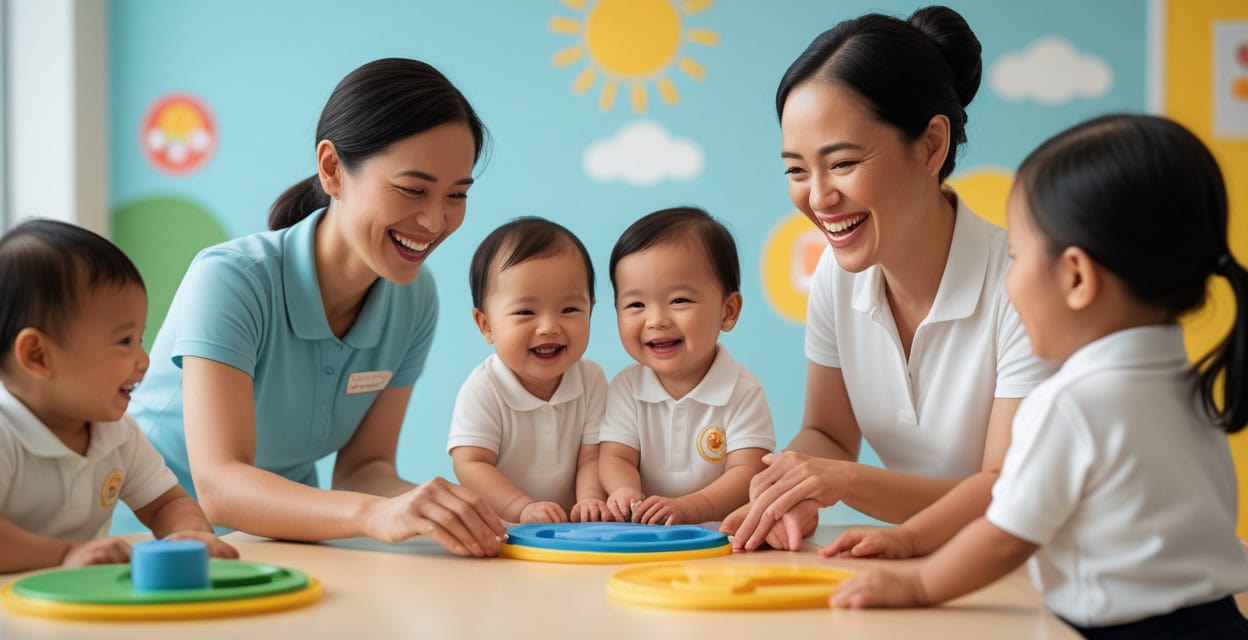
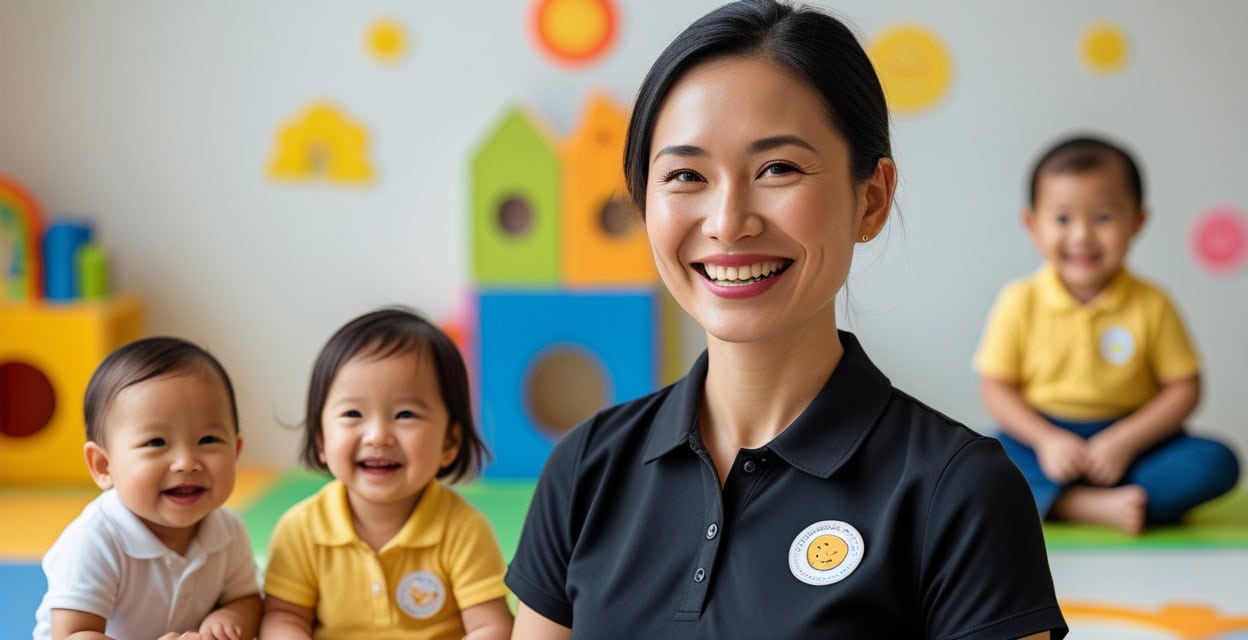
Morning light reveals a familiar caregiver greeting with a quiet hello. A bag is checked, a calm handover is shared. The infant explores a soft mat with safe, engaging objects—rolling, crinkling, shimmering—while the educator notices a glance away and responds with patience. A routine song before sleep, a soft smile after waking, and a shared moment at feed time—taken turns with the spoon and the voices. The infant is never rushed or parked; they are seen, they belong, and their story travels home in a warm report. This is science made tender: consistent, responsive, and deeply human.
The Practical Benefits, Clearly Stated
- Excellence and quality at scale across Centre-Based and Home-Based locations, with Distance support as needed.
- Convenience that meets modern lives: islandwide access, in community and home premises, Monday–Friday, 7am–7pm.
- Safety you can see: innovation CCTV, modern layouts, rigorous protocols, and an ultra-low 1:3 infant-to-educator ratio.
- Affordability that opens doors: from $33/day, with CDA/Baby Bonus integration.
- A purposeful pathway: EduNanny by BUTLER participating in the ECDA Childminding Pilot, advancing a National Social Initiative with a Maximum Employment Mandate.
- Start here: EduNanny.com and Childminding.EduNanny.com for easy access to information, tours, and Q&A.

Why Childminding Matters: Who, What, When, Where, and How
- Who: Infants whose brains grow rapidly, parents who balance duties and devotion, and childminders who provide the first sense of society with care and trust.
- What: Trustworthy care that is safe, developmentally rich, and emotionally attuned—where care is curriculum and routines support growth.
- When: The first thousand days—the critical window for secure bonds, consistent routines, and joyful exploration that lays the foundation for attention, language, resilience, and empathy.
- Where: Near home in spaces that reflect Singapore’s neighbourhoods—belonging is spatial as well as social.
- How: Through science-informed standards, careful ratios, reasonable hours, and family partnerships that honor cultural practices and individual needs.

Our Philosophy and Purpose
EduNanny treats infancy as both intimate and public—belonging to families and, in a profound sense, to the nation. Cradling a child well upholds Singapore’s future. Excellence must be shareable: a replicable model across centre-based, home-based, and distance care ensures that safe, joyful, and developmentally rich experiences are not limited by postcode. We recruit, train, and mentor with national seriousness, embedding transparency in our core design rather than bolting it on.
To the Parents, Childminders, Policymakers, and Partners
To parents: your child’s first community should feel like an extension of your embrace. To childminders: your craft is nation-building in soft shoes. To policymakers and partners: help us keep care near, keep ratios low, keep standards high, and keep doors open to every family who needs them.
Let us make a simple, audacious commitment: in Singapore, no infant’s day should be too long, too loud, or too lonely. With EduNanny, it won’t be.
Begin Your Journey
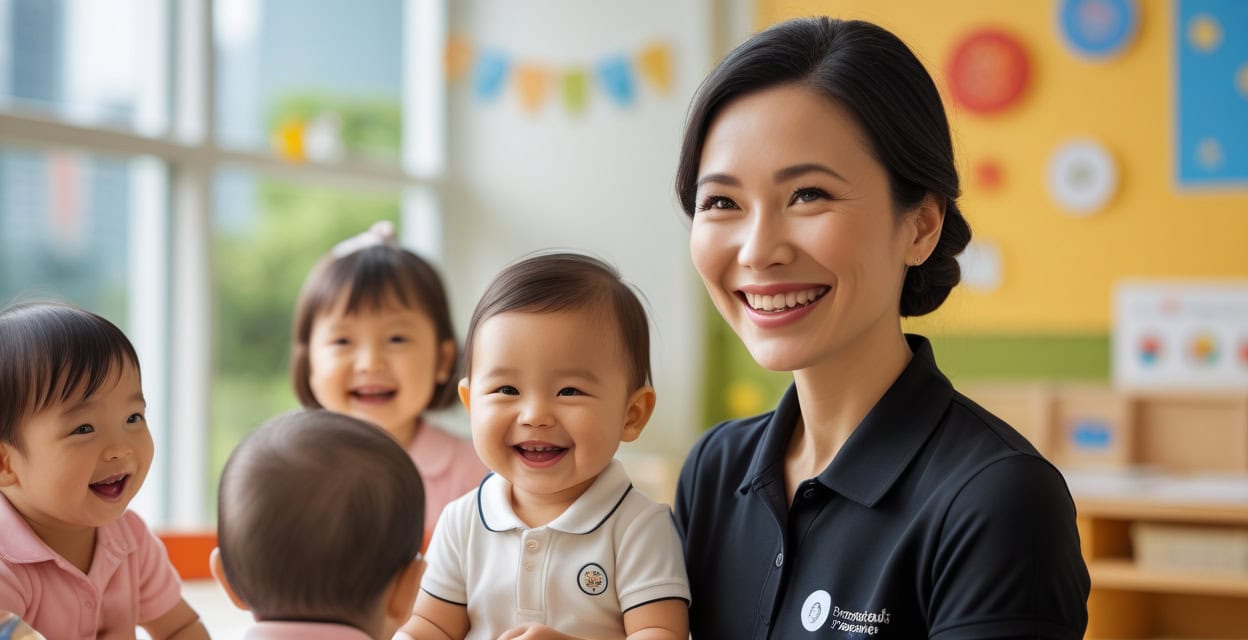
Start exploring today: visit EduNanny.com or Childminding.EduNanny.com. Tour a centre, meet a home-based educator, and ask the hard questions. Bring your hopes; we will bring our standards. Together, we will turn tiny moments into lifelong confidence—near enough to whisper, strong enough to carry.

Conclusion
EduNanny envisions childcare as a public undertaking that blends proximity, pedagogy, safety, and happiness into a coherent system. By aligning attuned autonomy, safety-by-design, developmental rhythm, joy as a metric, and a profession with public purpose, EduNanny offers a pathway to high-quality infant care that is scalable, transparent, and accessible. This is care that respects families, safeguards children, and strengthens communities. Begin your journey with us today and invest in a future where every infant’s day is purposeful, peaceful, and full of possibility.
Begin your journey with EduNanny today: EduNanny.com and Childminding.EduNanny.com.
Together, we turn tiny moments into lifelong confidence—near enough to whisper, strong enough to carry.
SEO keywords at the end: [#early-childhood-development, #infant-care, #pedagogy-of-attuned-autonomy, #safety-in-childminding, #EduNannySingapore]