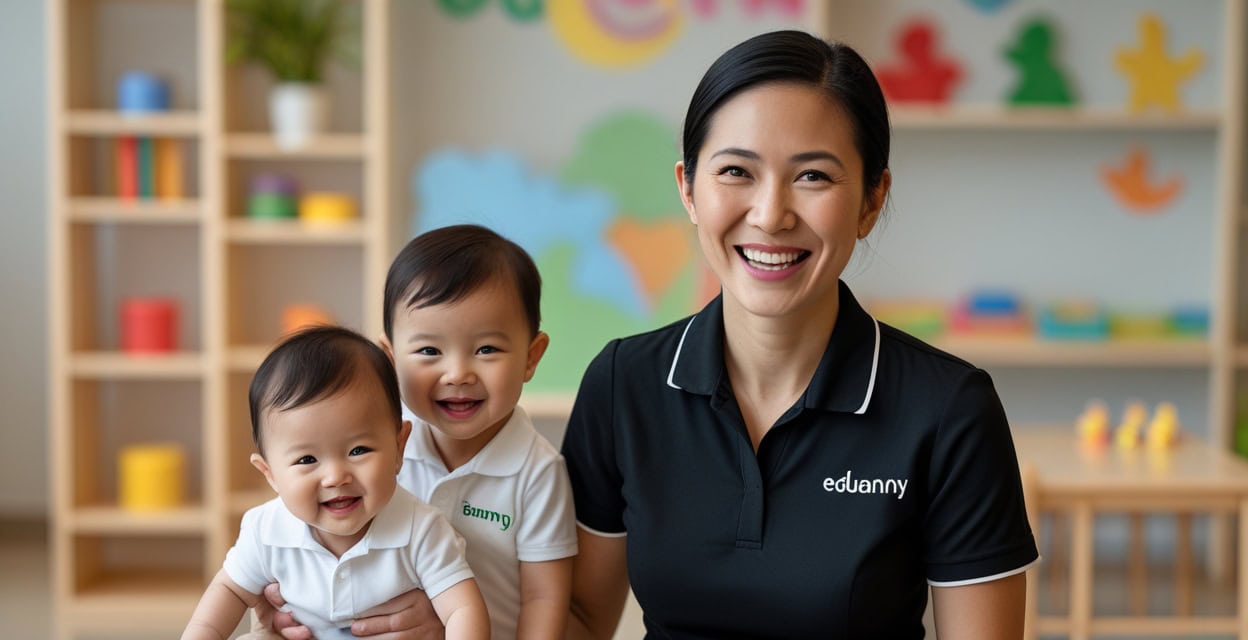
EduNanny A Living Blueprint for Safe Joyful Infancy Across Singapore

EduNanny: Redefining Infant Care for Singapore’s Future
Friends, families, partners, and every Singaporean who believes our future begins in the quiet courage of a child’s first year—good day. EduNanny is a new standard of infant care and childminding crafted at the meeting point of science, heart, and civic purpose. Guided by the wisdom of Montessori, Piaget, Vygotsky, Froebel, Malaguzzi, Bowlby, Pikler, Spock, and Erikson, our daily practice turns ideas into reliable, life-changing routines. This article deepens that vision with practical, actionable guidance for parents and caregivers alike.

Why EduNanny is Needed in Singapore Today
Singapore’s first thousand days set trajectories for lifelong learning, health, and social harmony. EduNanny exists to make infant care practical, accessible, and humane—rooted in robust science and real-world deployment. Our centre-based and home-based offerings, plus distance support, meet families where they are. With a 1:3 infant ratio, safety and presence are real, not rhetorical. We operate Monday to Friday, 7am–7pm islandwide, in spaces designed for safety, calm, and curiosity. Transparency through privacy-respecting CCTV, digital journals, and open parent–caregiver communication sustains trust. And affordability from $33/day, with CDA/Baby Bonus support, ensures access is a right, not a privilege.
In practice, EduNanny is a public-spirited, nation-building model: elevating standards, expanding access, and creating meaningful employment at scale. The result is a community where families feel seen, children feel secure, and caregivers feel valued.
Five Core Pillars of EduNanny Practice
1) The Attuned Triangle: Mind, Body, Bond
Education begins with attunement—watching, naming, and responding to an infant’s cues while letting the child set the tempo. This is Pikler’s respectful pace in action, paired with Vygotsky’s guided support.
- Mind: Engage with language at the edge of the child’s focus. Label sounds, textures, and feelings. Example: during tummy time, narrate: “You’re reaching for the block—that’s a stretch!”
- Body: Honour movement as learning. Provide safe floor time, free limbs, and unhurried transitions to build strength and coordination before instruction.
- Bond: Treat trust as curriculum. Keep consistent caregivers and predictable rhythms; when wobble occurs, repair with warmth and calm.
Actionable home practices for parents
- Establish a daily rhythm with a predictable sequence (wake, feed, play, nap, cuddle), so babies anticipate what comes next.
- Use “eye-level moments”: kneel to the baby’s view, make eye contact, and narrate the moment (e.g., “Look at your toes moving!”).
- Rotate sensory experiences gently—soft fabrics, safe textures, and varied sounds—to expand the child’s curiosity without overload.
2) Safety by Invitation, Not Interruption
Safety is not merely a set of rules; it is design that invites wise choices. We practice “safety-forward” design: clear sightlines, soft edges, easy-to-clean materials, and hygienic routines that are visible and easy to understand.
- Caregivers are trained to prevent before prohibiting. Materials are placed at reachable heights to encourage self-directed exploration while minimizing risk.
- Transparency matters. Privacy-respecting CCTV in designated areas supports training, reflection, and parent trust, not surveillance fear.
- Daily, weekly, and monthly audits focus on real risks: safe sleep, bottle safety, sanitation cycles, choking hazards, and emergency readiness.
Practical tips for families
- Design a baby-safe play space at home: low shelves, sturdy mirrors, rounded-edge furniture, and easy-to-clean flooring.
- Adopt a “safe-choice” routine: always bring small objects to test if they’re within reach; teach the infant to pause and roll away from hazards.
- Use simple CCTV-informed routines at home (where appropriate) to review a care event with your caregiver in real time, guiding improvements together.
3) Developmental Micro‑Moments: Five Seconds That Grow a Lifetime
Our educators harness micro-moments—short, focused, high-impact interactions that shape neural pathways without overwhelming the child.
- Language: Pause after a sound, repeat once, add a new word (e.g., “Baa—sheep! Look at the sheep.”).
- Motor: Present a reachable object, wait, celebrate when the reach happens; gradually increase distance as skill builds.
- Emotion: Mirror the baby’s feeling, name it, and guide gentle regulation (breathe together).
- Social: Practice simple turn-taking with a toy; smile, wait, then return it, reinforcing reciprocity.
At home, weave micro-moments into everyday routines:
- During diaper changes, narrate sensations and provide a comforting touch to maintain connection.
- While feeding, pause to read baby cues—whether they want more, less, or a break—and respond with a calm pace.
- In play, alternate between independent exploration and guided activity to balance autonomy with support.
Educational impact: these tiny exchanges reinforce attention regulation, early language development, social reciprocity, and problem-solving skills—foundations that Piaget would call assimilation and accommodation, and Erikson would frame as trust and initiative. We simply call it Tuesday—repeated every day.
4) Joy Architecture: Designing Calm Curiosity
Space is a teacher. Our rooms are designed to reduce noise, minimize visual clutter, and create distinct zones for rest, play, and care. Natural light, warm neutrals, and tactile materials invite exploration without overstimulation.
- Material rotation keeps engagement high; use fewer, higher-quality objects to deepen focus and reduce frustration.
- Sleep environments are quiet, darkened, and consistently arranged to cue rest; feeding spaces are calm, intimate, and unhurried.
- Calm brain, curious mind: we align the nervous system to permit wonder and robust learning gently.
Home guidance for parents to support joy architecture
- Create a simple play corner with a few safe objects of varying textures; rotate weekly to sustain interest.
- Establish a consistent nap routine that respects the child’s daytime readiness cues, gradually normalizing a 60–90 minute rest window as they grow.
- Limit background distractions during playtime (soft lighting, quiet music optional) to encourage focused exploration.
5) The Civic Childminder: Purpose, Profession, Partnership
A childminder is a civic professional, not a backup option. Our training blends attachment science, infant pedagogy, hygiene mastery, and family partnership skills, with ongoing coaching and reflective practice.
- This pilot is a national social initiative designed to raise standards, expand capacity, and create dignified employment for caregivers.
- Partnership with parents is daily and actionable: digital notes, photos, and milestone updates; co-design of routines; respect for family cultures.
- Measurement focuses on infant well-being, caregiver consistency, parent trust, and meaningful learning progress—not just occupancy.
Guidance for families navigating the partnership
- Set up a regular communication channel with your EduNanny team (daily journals, weekly updates, milestone chats).
- Share your values and routines early—feeding preferences, sleep cues, cultural practices—to ensure seamless continuity between home and care.
- Participate in coaching cycles or video reflections if invited; use these as opportunities to align practices and strengthen trust.
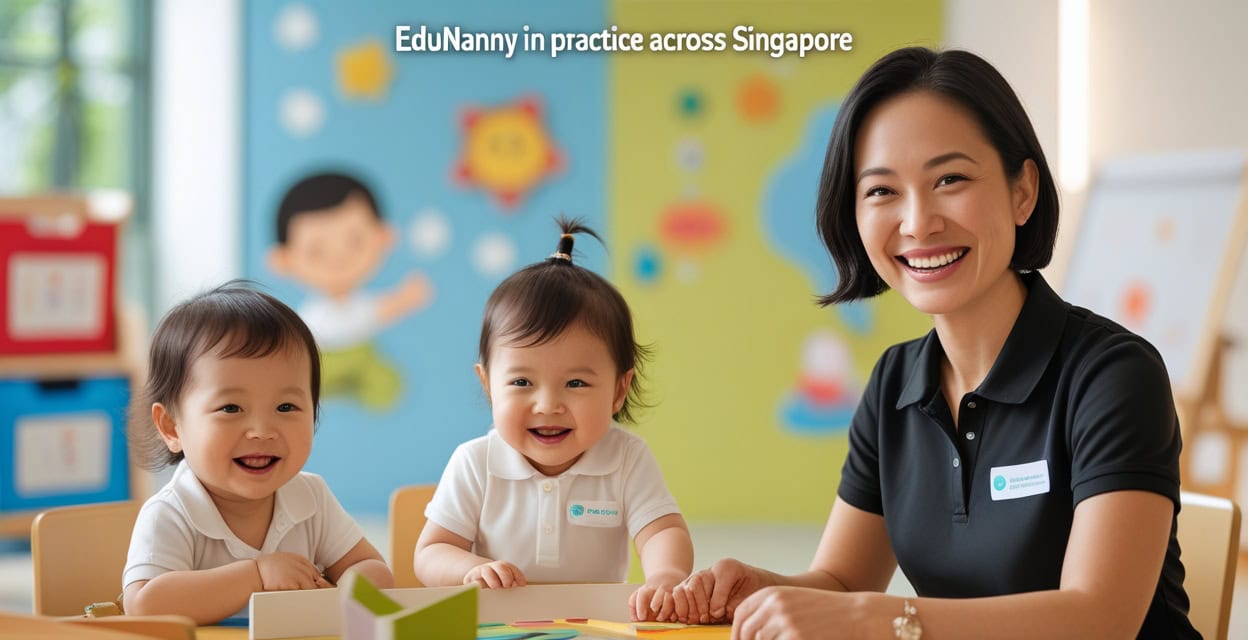
EduNanny in Practice Across Singapore
EduNanny offers a spectrum of options to meet diverse family needs while maintaining core standards of care and safety.
: Centre-based childminding in purpose-built hubs, home-based childminding in intimate neighbourhood settings, and distance support for flexible coverage. : Monday to Friday, 7am–7pm, islandwide. : 1:3 for infants to enable real attunement and unhurried care. : Privacy-respecting CCTV for accountability; digital daily journals; simple family communications. : Fees from $33/day, CDA/Baby Bonus eligible, with transparent pricing. : EduNanny by BUTLER participates in the ECDA childminding pilot to raise national standards and dignity for caregivers.

Five Questions Parents Often Ask (And Clear Answers)
- Will my child be safe? Yes—safety is designed in, trained for, audited, and debriefed with humility and openness. It is a culture, not a checkbox.
- Will my child be known? Yes—1:3 presence ensures your child’s cues guide daily routines, with names pronounced and stories learned.
- Will my child learn? Yes—through play, routine, and meaningful relationships at the edge of readiness, with progress celebrated in every small step.
- Will I be included? Yes—parents are the experts on their child. We listen, co-design, and align care with your values.
- Can my work and life fit together without guilt? Yes— islandwide access, predictable hours, transparent communication, flexible options, and genuine partnership.
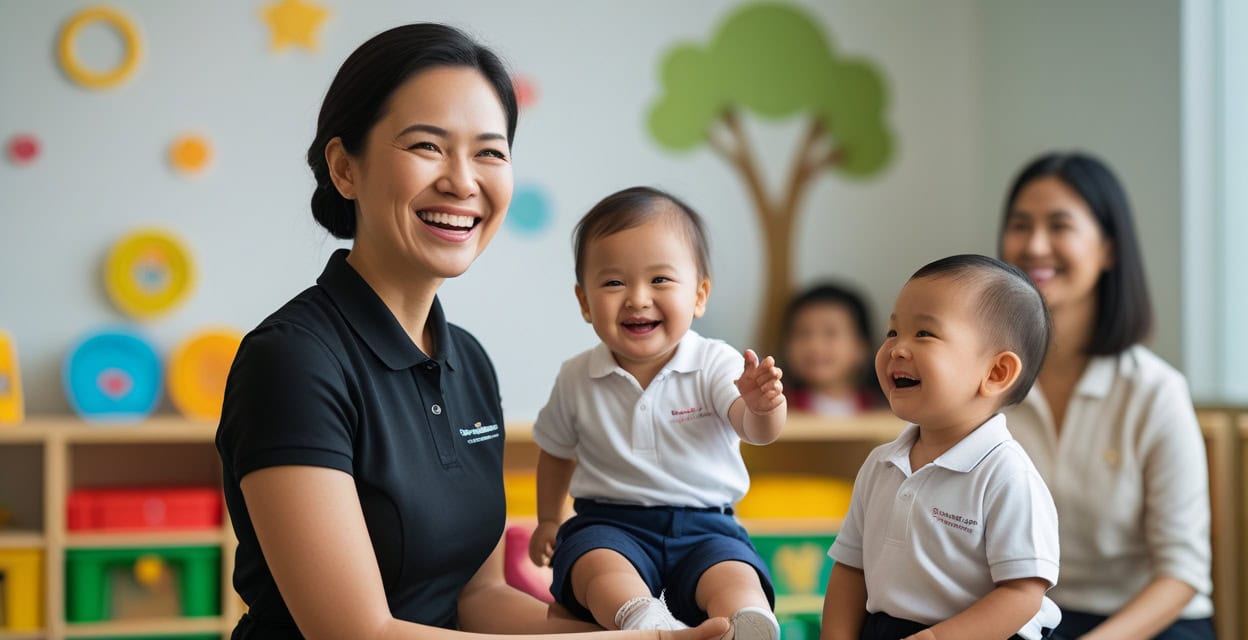
Happiness, Regulation, and the Everyday
In infancy, happiness is not mere entertainment; it is regulation. A calm, curious baby is a happy baby. We pursue happiness through rhythms—timely sleep, responsive feeding, balanced play, and patient, warm caregiving. We don’t chase novelty; we curate meaning through daily rituals and trusted routines.
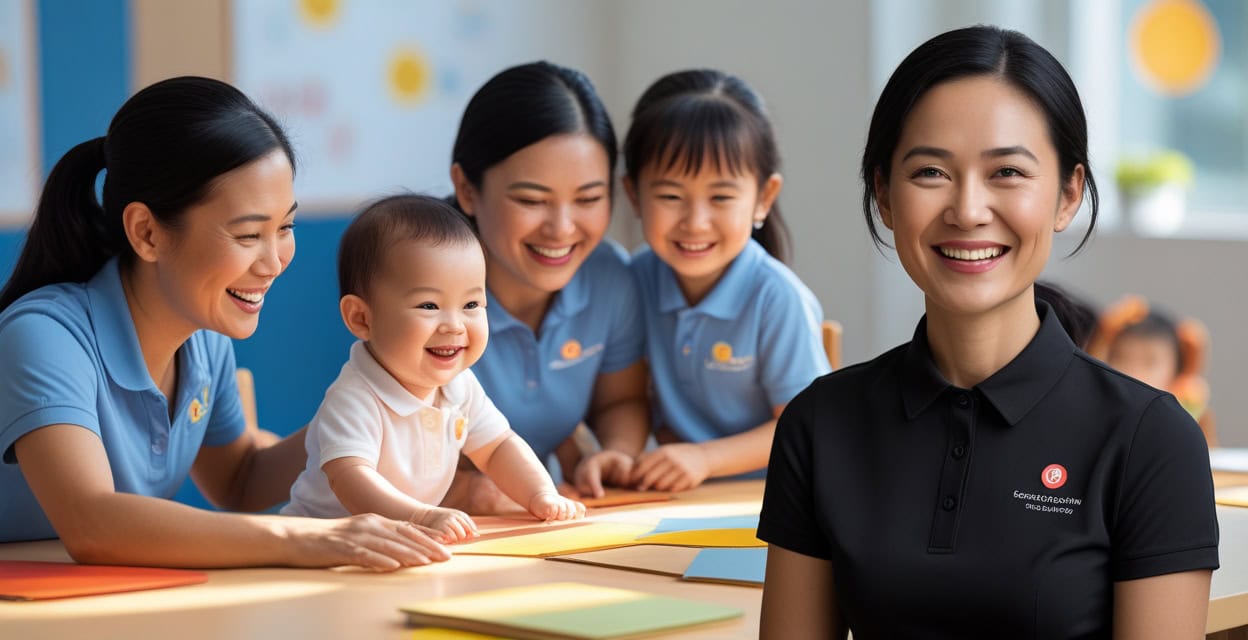
To our caregivers: your work is nation-building in slow motion. Every greeting at 7:02am, every diaper change turned into a conversation, every nap protected from interruption—these are acts of public good. You deserve training, respect, and a clear path forward. EduNanny’s emphasis on professional dignity is a promise to you and to families.
Partnership, Policy, and Community
To policy partners and community leaders: childminding is not private convenience; it is public capability. By expanding high-quality, neighbourhood-based care with strong ratios and clear standards, we reduce family stress, support workforce participation, and nurture the executive functions that power tomorrow’s innovators and neighbours.
To grandparents and extended family: your presence is irreplaceable. EduNanny complements, not competes with, family rhythms and cherished traditions. We honour the rituals that make a child feel at home in the world.

EduNanny in a Sentence, with a Singaporean Spirit
We are a public-spirited, science-led, human-centered childminding model that delivers excellence through small ratios, thoughtful design, and intimate partnership with families—affordably, accessibly, and with integrity.

Where and When We Serve
Across Singapore—with centre-based hubs and home-based settings within communities, reachable and reliable. Hours: Monday to Friday, 7am–7pm; predictable rhythms families can count on. Who works: trained childminders supported by coaches, connected to a professional community, accountable to families, and aligned with national quality objectives. How we keep our promise: bind practice to evidence, measure well-being, notice in five-second windows, and use technology to lift transparency and learning, never to replace warmth.

Conclusion: A Reflective Call to Action
Greatness in early care is not loud; it is consistent. It is measured in the soft confidence of a baby who reaches, waits, and tries again. It is built in rooms where adults kneel to eye level and listen. It is sustained by a profession treated with dignity and a public that understands: when we hold our infants well, we hold our future well.
Parents, if you seek care that feels like a deep breath—a place where safety is visible, joy is gentle, and learning is woven into ordinary moments—explore EduNanny. Visit EduNanny.com or Childminding.EduNanny.com. Ask about centre-based, home-based, and distance options near you. Discover affordability from $33/day and pay with your CDA/Baby Bonus. Experience our modern layouts, meet the childminders who will know your child’s laugh, your feeding preferences, and your hopes.
In closing, EduNanny is ready to welcome you—close to where you live, close to how you hope, and close to who your child is becoming.
Call to action: Explore your options, join the EduNanny community, and help shape a Singapore where every child’s first thousand days are supported with dignity, science, and heart.
[#earlychildhood, #infantcareSingapore, #childdevelopment, #Singaporeeducation, #EduNanny]