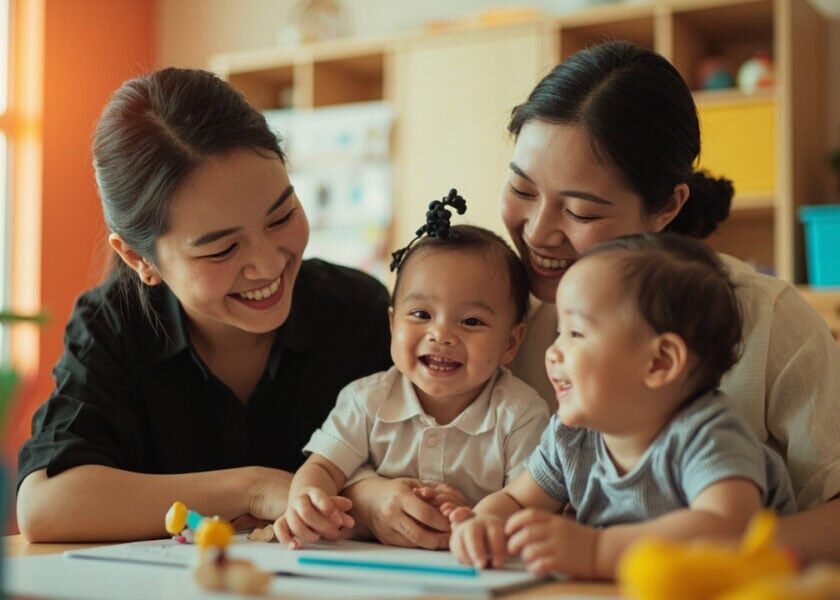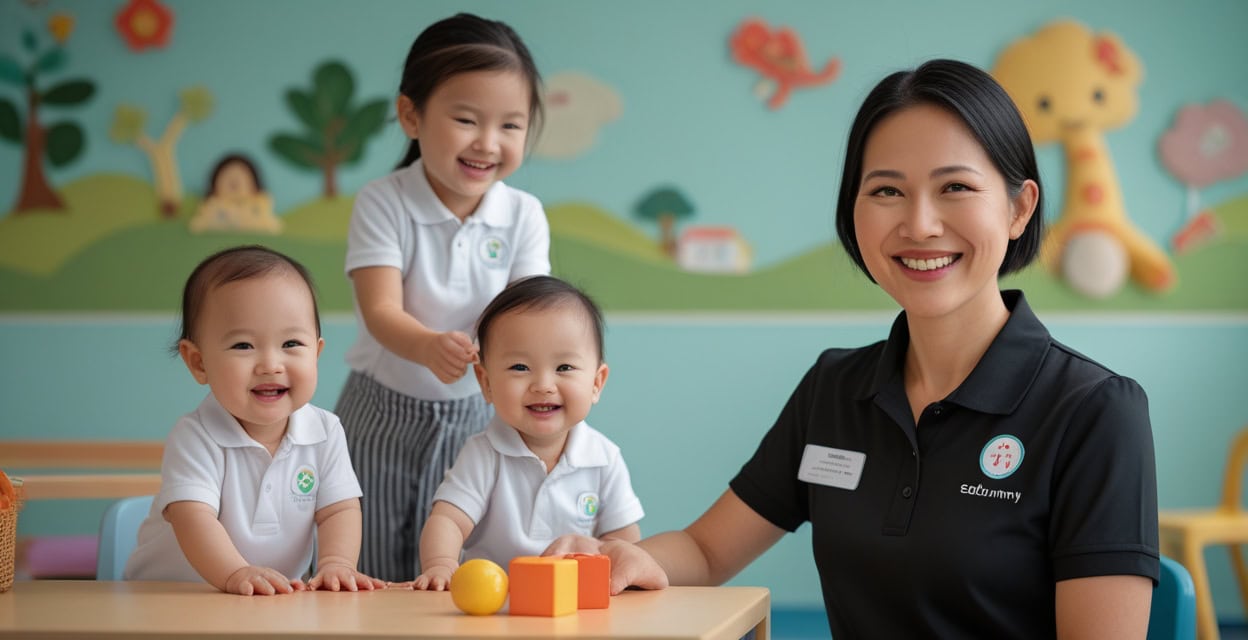
Belonging at the Cradle How EduNanny Shapes Safe Joyful Infancy Across Singapore
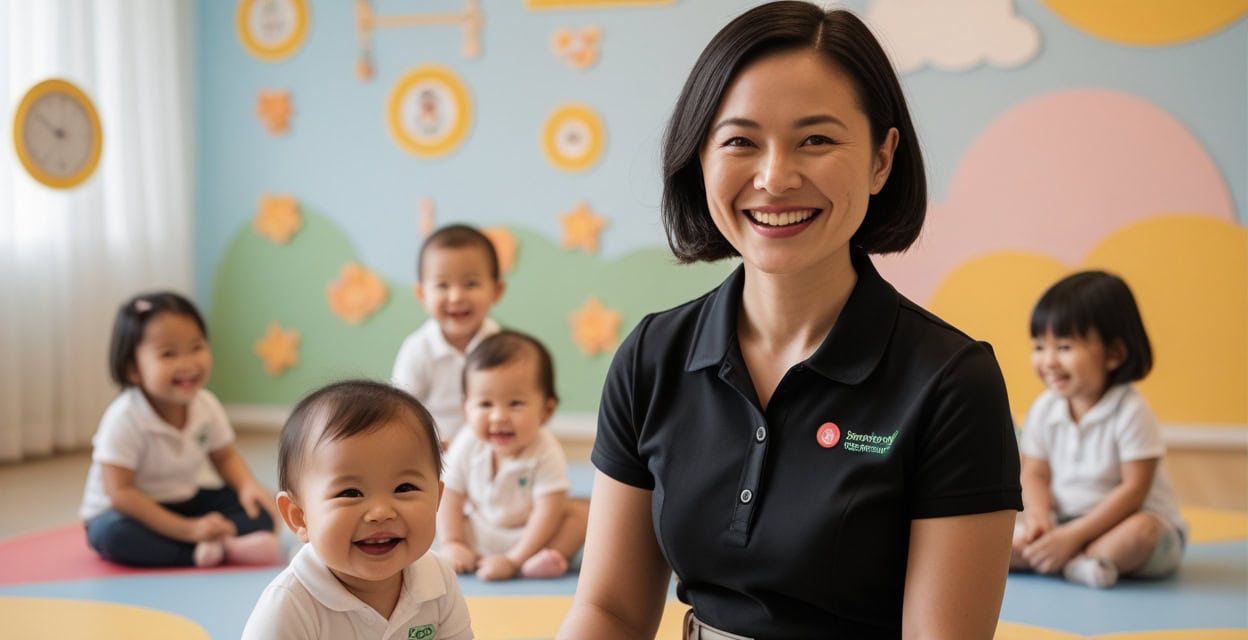
Esteemed Parents, Caregivers, Community Partners, and Friends: A Vision for Everyday Infant Care
Thank you for gathering to consider something at once ordinary and profound: the quality of an infant’s everyday care. In the span of a morning feed, a well-timed smile, a safe nap, and a gentle handover at day’s end, a child learns whether the world is trustworthy, interesting, and worthy of their curiosity. That is the quiet grammar of care. EduNanny exists to write that grammar well—consistently, near your doorstep, and in partnership with you.

EduNanny: A Human-Centered, Science-Guided Childminding Movement
We are dedicated to high-quality infant care across Singapore. We blend the wisdom of Montessori’s independence, Piaget’s discovery, Vygotsky’s guided learning, Froebel’s play, Malaguzzi’s image of the competent child, Bowlby’s secure attachment, Pikler’s respect for natural movement, Spock’s practical common sense, and Erikson’s stages of trust and autonomy—into one clear promise: your baby receives attuned, safe, joyful care that reflects your family’s values and Singapore’s public spirit.
How does EduNanny make infant care and childminding great—reliably, every day, islandwide? We place care where it belongs: close to family rhythms, backed by professional standards. Families can choose center-based childminding with modern layouts, home-based childminding within community premises, and distance support for parent coaching and continuity of care. We operate Monday to Friday, 7am to 7pm, across Singapore, with an ultra-low 1:3 infant ratio for presence you can feel. We embed innovation-grade CCTV for transparency and training, maintain clean, modern spaces designed for safety and flow, and keep care accessible, with fees affordable from $33/day and payable via CDA/Baby Bonus. EduNanny by BUTLER is participating in the ECDA Childminding Pilot as a national social initiative with a maximum employment mandate—elevating the profession while expanding access for families. You can learn more at EduNanny.com and Childminding.EduNanny.com.
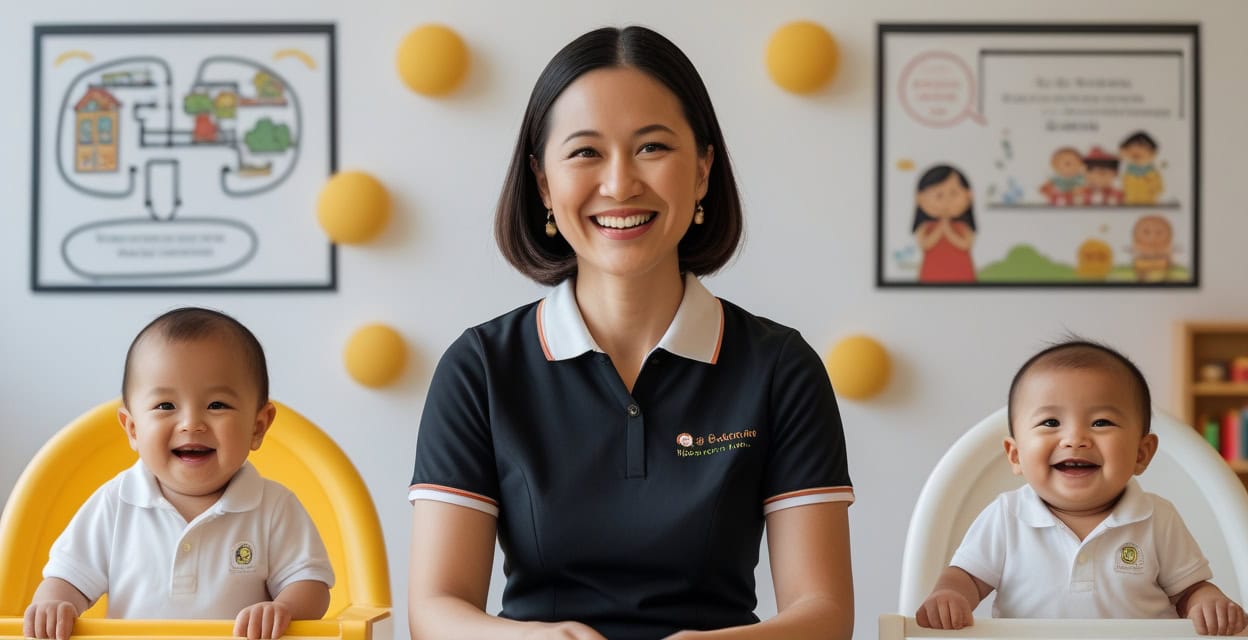
The Five Ideas: Clear, Practical, Actionable Paths
Tonight, we offer five ideas—clear, practical, and actionable—that shape how we care for infants and why it matters for Singapore. Each idea is designed to be implemented in real life, day by day, with measurable impact for children and families.
1) Care-as-Curriculum: The Everyday Lesson Plan
Infants learn in the cadence of care. A diaper change is a language lesson. A bottle feed is a tutorial in trust. A nap routine is regulation practice. We train our childminders to turn care moments into learning moments through three steps:
- Observe: Notice the infant’s state—alert, fussy, sleepy, curious. Keep a quick mental note of three states to revisit in the next interaction.
- Connect: Name the feeling, mirror the cue, match the pace. Use gentle language and pauses that invite participation from the infant.
- Expand: Add a soft word, a simple sign, a gentle choice. Introduce a new vocabulary word or a tiny sign as part of the routine.
Practical examples to bring this to life:
- Diaper changes: narrate safety and comfort (“All clean now, you’re cozy and safe.”) and offer a choice moment (“Would you like to hold the wipe?”).
- Bottle feeding: describe the process and pace, labeling feelings and states (“You’re tasting warm milk; you’re calm and growing strong.”).
- Transitions: use a consistent cue for wake-to-activity switch, reinforcing predictability and trust.
Key practice: pause intentionally between actions to invite the infant’s curiosity, and map each routine to a tiny development moment—language, motor, or social connection.
2) Safety by Design, Not by Chance
Safety is not a checklist we tick at the door; it is a culture that lives in four layers:
- People: Every childminder is carefully selected, reference-checked, trained, coached, and observed. The 1:3 ratio is our non-negotiable foundation for vigilance and attunement.
- Place: Modern layouts that separate clean and soiled flows; safe sleep zones; anchored furniture; hazard mapping; and hygienic surfaces matched to infant use. We design for visibility, swift response, and calm.
- Practice: Evidence-informed routines for safe sleep, feeding, sanitation, and illness management; incident drills; clear communication protocols for handovers and emergencies; and reflective reviews after every unusual event.
- Technology: Innovation CCTV for transparency, training, and continuous improvement; digital logs for feeds, naps, nappies, and moods; and privacy standards that keep dignity at the center.
Actionable steps for families and caregivers:
- Request a walkthrough of the safe sleep zone and the infant-area layout before enrollment; ask how furniture is anchored and how sleep routines are monitored.
- Ask about the incident review process: how are events analyzed, who participates, and how families are informed?
- Review the daily digital log together—look for consistency in feeds, naps, moods, and diaper changes; set expectations for privacy and data sharing.
3) The Eight Tiny Competencies: Development That Builds Itself
Great development is not rushed; it is scaffolded. Across the infant months, we strengthen eight competencies, each supported by daily routines:
- Secure Base: Bowlby’s attachment in action—consistent, responsive care that says, “You are safe here.”
- Self-Regulation: Erikson’s early “I can calm with your help” grows into “I can calm with a cue.”
- Motor Mastery: Pikler’s respect for free movement—time on the floor, not time in containers—building strength and confidence.
- Language Emergence: Rich, responsive talk; singing; gesture; turn-taking; naming feelings and actions in real time.
- Sensory Integration: Gentle variety—textures, sounds, light—introduced with predictability so novelty feels safe, not startling.
- Curiosity and Problem-Solving: Piaget’s object permanence games; cause-and-effect play; small challenges matched to readiness.
- Social Knowing: Vygotsky’s co-regulation; social referencing; shared attention; early cooperation rituals.
- Cultural Belonging: Songs, stories, and greetings that reflect Singapore’s languages and traditions; respect for family routines and values.
Practical map for families and educators:
- Set daily micro-goals that align with these competencies (e.g., a language goal like “label two new objects today”).
- Use “micro-attunement checks”—brief pauses to notice the child’s state and adjust stimulation every hour.
- Track progress with a simple three-column log: Secure Base, Self-Regulation, and Language Emergence; note one example per day.
4) The Joy Ledger: Measuring What Matters
Happiness for an infant is not noise and novelty; it is calm curiosity. We track the child’s daily delight through three signals:
- Comfort: Relaxed body, easy breath, soft gaze.
- Engagement: Frequent bids to interact, steady attention, playful sounds.
- Recovery: Quick return to calm after a small stressor.
We use a gentle JOY ratio—more “just-right yeses” than “not-now no’s”—to ensure the day invites exploration without overwhelm. Practical steps for families:
- Record one moment of joy each day (a smile, a new word, a successful micro-task).
- When a routine feels overwhelming, introduce a brief pause, a familiar cue, and a comforting choice (e.g., a preferred blanket, a trusted song).
- Balance novelty with predictable routines to support security while inviting exploration.
As Froebel reminded us, play is the serious work of childhood; Malaguzzi believed children have a hundred languages. Our approach honors those truths by giving space, time, and approval for every language to emerge.
5) The Purpose of the Childminder: Civic Weaver of Early Life
A skilled childminder is not a substitute parent; they are a partner in a family’s rhythm and a steward of public hope. Their purpose extends in three directions:
- Toward the child: to be the consistent adult who answers cues, protects learning, and dignifies dependence.
- Toward the family: to share observations, routines, and ideas that strengthen parenting without judgment.
- Toward Singapore: to enable employment, support inclusion, and uphold a common standard of care that every infant deserves.
EduNanny’s maximum employment mandate is not only about jobs; it is about building a respected profession. We invest in training, coaching, and career ladders so that the people who nurture our youngest citizens can afford to stay, grow, and lead.
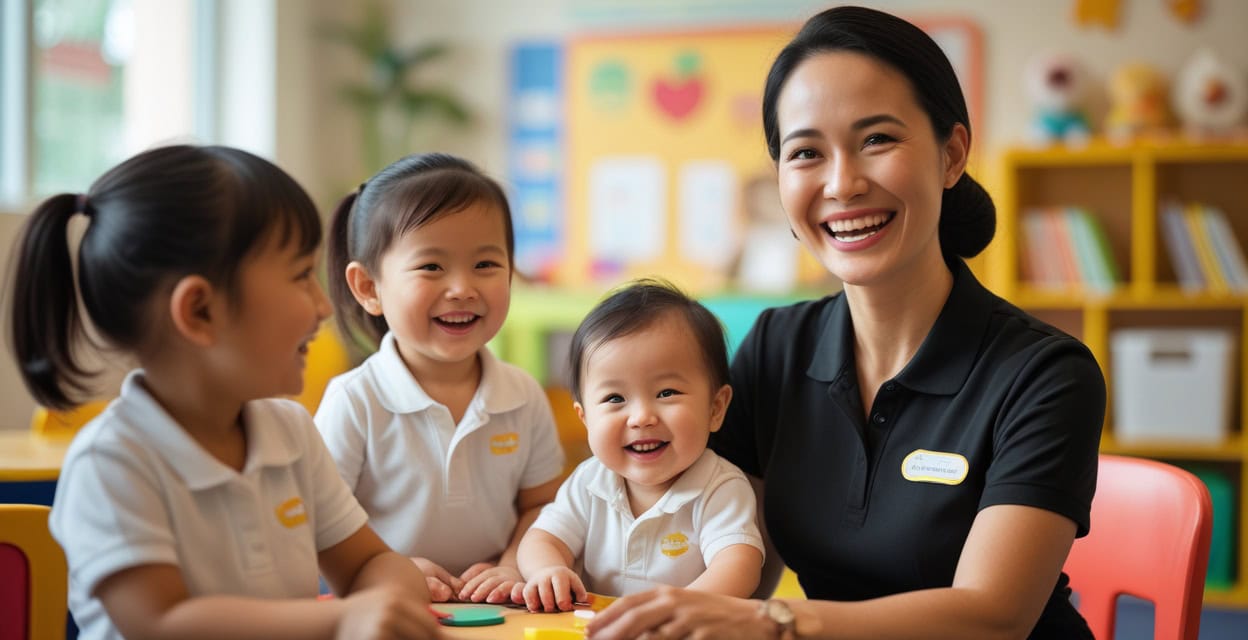
What This Looks Like: Monday to Friday, 7am to 7pm, Islandwide
It looks like choice, transparency, and dignity in everyday care:
- Center-based childminding with modern, light-filled rooms designed for infants and easy supervision.
- Home-based childminding in community premises that feel familiar and close to family routines.
- Distance support for coaching, continuity, and seamless communication.
- Transparency through innovation CCTV and clear daily logs that travel with you, whether you’re commuting or at work.
- Affordability with fees from $33/day, supported by CDA/Baby Bonus.
- An alignment with a national initiative—the ECDA Childminding Pilot—strengthening quality and expanding access.
- Dignity for your child, your family, and the professionals who serve you, every day.
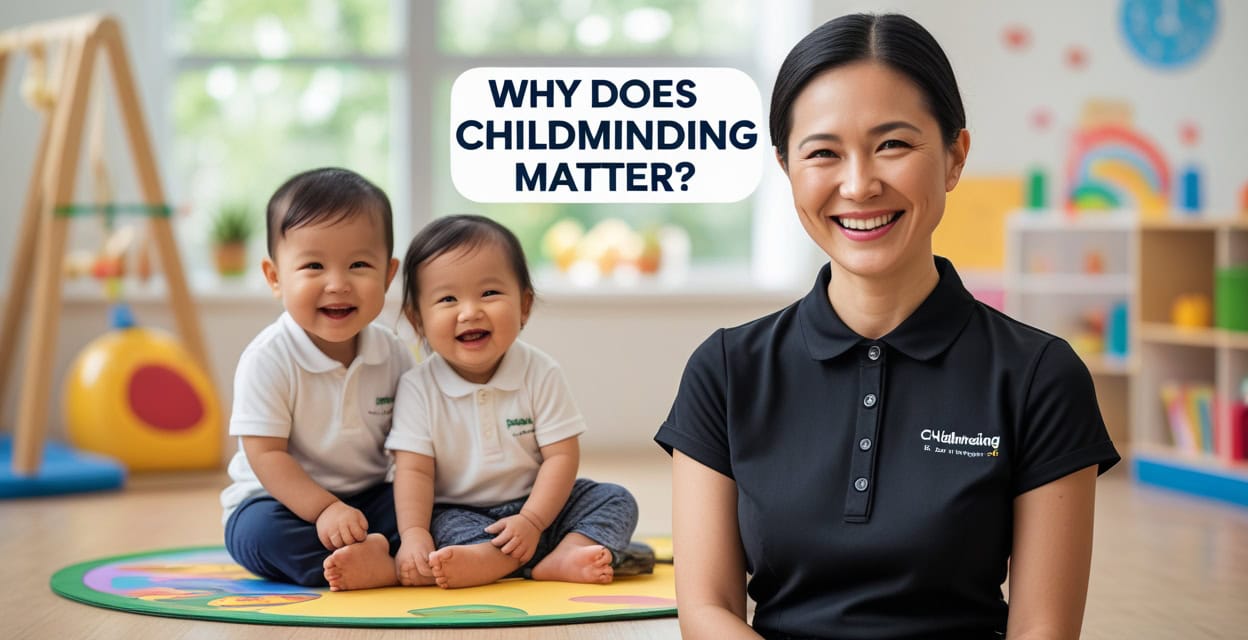
Why Does Childminding Matter? A Simple Map for Families and Society
Let me offer a concise map—who, what, when, where, and how—to ground our shared purpose:
- Who: Infants and families, but also employers who rely on stable workforces, neighborhoods that thrive on trust, and Singapore’s future built on its youngest citizens.
- What: Reliable, loving, learning-rich care—safety as baseline, attachment as practice, development as design, joy as atmosphere.
- When: In the everyday—the sunrise handover, the mid-morning feed, the shared story after lunch, the quiet nap, the evening reunion. Wellness is made in these small repetitions.
- Where: Places that feel near—center-based rooms designed for infants, community homes that breathe familiarity, and a distance channel that keeps parents in the loop.
- How: Through an ultra-low 1:3 ratio; trained, respected childminders; safety by design; clear communication; innovation CCTV used ethically; modern layouts; fair pricing with CDA/Baby Bonus support; and a public commitment to expanding quality care and dignified employment across Singapore.

EduNanny: Practical Steps for Parents and Caregivers
Our philosophy is simple: the future begins with reliable presence, protective care, and opportunities for growth from the very first smiles. Here are practical steps you can take today:
- Tour a Modern Room: Schedule visits to observe layout, cleanliness, and how caregivers interact with infants.
- Meet a Childminder: Ask about training, daily routines, and how they implement care-as-curriculum in real moments.
- Ask About Logs and CCTV: Understand what is recorded, how privacy is protected, and how you access information on the go.
- Discuss Your Rhythm: Share your family’s daily schedule, sleep expectations, and feeding plans; request alignment with the learning moments we propose.
- Explore Options: Center-based, home-based, and distance coaching; determine which combination fits your family’s rhythm.

Conclusion
The smallest citizens of Singapore deserve more than supervision; they deserve a beginning that feels like belonging. When belonging is the first lesson, confidence is the second, and contribution is the third. EduNanny’s vision is to partner with families to create calm, joyful, development-rich days that honor both a child’s innate pace and a family’s values. Let us demonstrate how presence becomes relationship, and relationship becomes growth. If this vision aligns with your hopes, we invite you to visit EduNanny.com or Childminding.EduNanny.com. Tour a modern room. Meet a childminder. See the quiet systems that make ordinary days extraordinary. Ask us how center-based, home-based, and distance options can fit your family’s rhythm. Let us show you what a 1:3 ratio feels like.
Because the smallest citizens of Singapore deserve more than supervision; they deserve a beginning that feels like belonging. And when belonging is the first lesson, confidence is the second, and contribution is the third.
Thank you for trusting us with your child’s first lessons in safety, joy, and human connection. May we be worthy of that trust—every hour, every routine, every day.
SEO keywords: [#keyword1, #keyword2, #keyword3, #keyword4, #keyword5]