Cradling a Nation with EduNanny Near Home 1 to 3 Infant Pods Redefining Singapore First Thousand Days
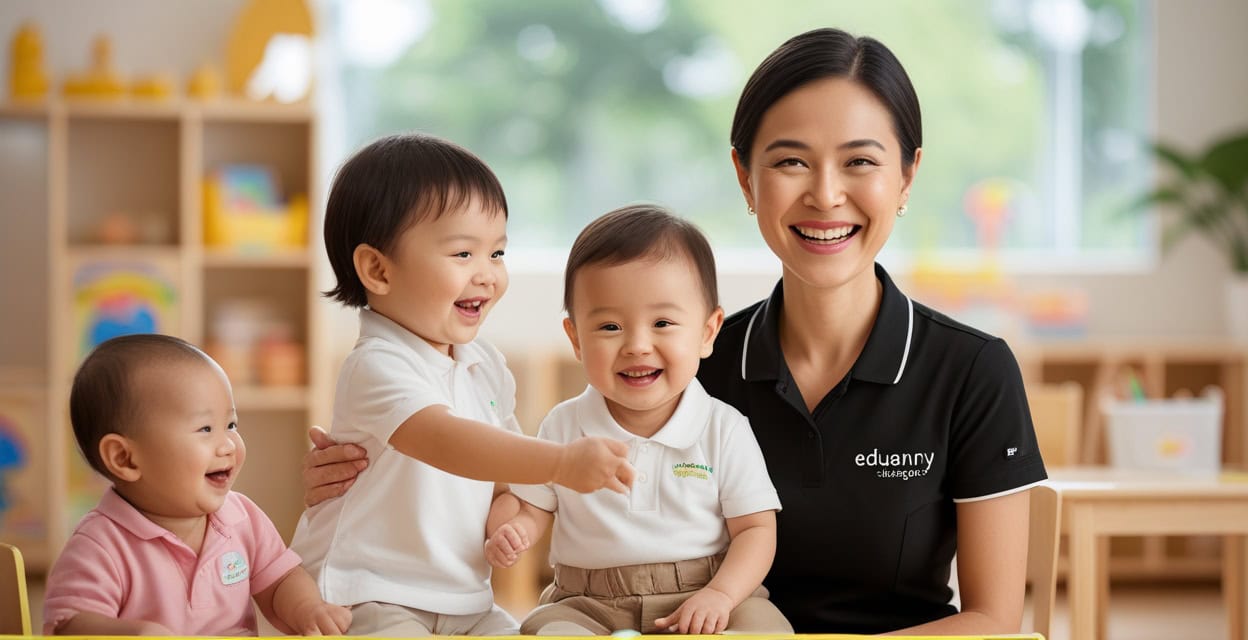
EduNanny Singapore: A Professional Movement for Infant Care
Good evening, Singapore. This is an EduNanny advocate offering a simple promise: infancy can be calmer, safer, more joyful, and more human when care is close, relationships are deliberate, and practice is anchored in science with a public purpose. EduNanny is more than a program—it is a movement designed for a city on the move and a nation with its heart at home. The following article expands on that vision with practical guidance for parents, caregivers, and families who want to raise confident, curious, and resilient children.
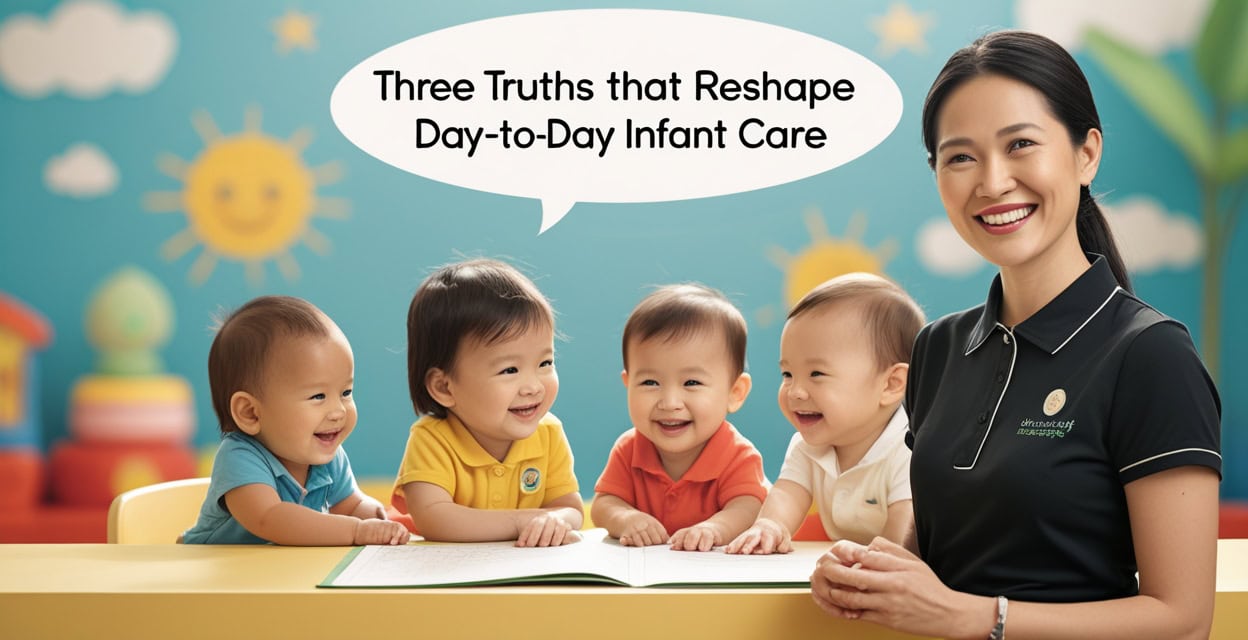
Three truths that reshape day-to-day infant care
Truth 1: Infants thrive on a primary relationship
Guiding principle: one trusted adult who knows the infant’s cry, quiet, and curiosity accelerates trust and learning. Practical steps for families and caregivers:
- Matchmaking a caregiver: Seek a single primary caregiver who demonstrates consistent responsiveness during a trial period of 2–4 weeks. Observe how they respond to cues (fussing, rooting, eye gaze) and how they narrate care.
- Patterned responsiveness: Encourage a daily rhythm where one caregiver anchors the infant’s world—feeding, soothing, and play—so the infant experiences predictability and safety.
- Family participation: Create a shared “attachment map”—a simple chart of the infant’s cues, preferred soothing methods, and daily routines that families and caregivers review weekly.
Truth 2: Safety is culture and design
Safety must permeate every moment, space, and ritual. Practical guidelines you can implement today:
- Yes-spaces: Create gentle, hazard-free zones with low-height furniture, soft lighting, and clear walkways. Remove clutter that traps tiny feet or hides cords.
- Safe sleep and environment: Follow principles such as back-sleep for naps, barrier-free sleep areas when appropriate, and room-to-room checks every 15–30 minutes during sleep periods in shared spaces.
- Standardized checks: Implement sterile bottle preparation, double-verification for medications (if any), and clear escalation protocols for fevers or symptoms. Maintain an up-to-date infant health log shared with families.
- Transparency with dignity: Use CCTV and digital logs as oversight tools to protect safety while preserving the infant’s dignity and privacy. Families should feel comfortable with viewing options and caregiver focus on the child.
Truth 3: Development is a rhythm
Small moments, well held, compound into lifelong confidence. Practical routines:
- 90-minute arc: Active exploration, gentle feeding, and unforced rest form a predictable cycle. Adjust to each infant’s pace and cues.
- Floor-time play: Provide safe surfaces, low-toy shelves, and a treasure basket with items that encourage reaching, tracing, and coordination.
- Co-regulation windows: Pair singing, humming, and steady rocking with predictable rhythms to help infants self-regulate and settle.
Five fresh lenses for a modern, humane infant-care practice
1) The Three-Seat Circle: Why 1:3 is an engine for learning, language, and trust
Implementing a 1:3 model isn’t just a ratio—it’s an approach that accelerates development. Actionable insights:
- Set up a calming circle: A low chair, three infant seats, and a single caregiver who maintains eye contact and responds to all three infants’ cues within seconds.
- Attuned language: Narrate actions, label emotions, and model turn-taking in real time—“I see you’re reaching; I’ll help you reach first,” “Your turn to babble now.”
- Early language through shared attention: Use shared gaze to point to objects, name them, and encourage vocalization and imitation. Track progress with short daily notes on new sounds, gestures, and smiles.
- Outcomes to monitor: frequency of vocalizations, duration of joint attention, and the infant’s ability to initiate interactions with a caregiver.
2) Safety by design, safety by ritual: Making the invisible visible
Turn safety into a routine that families can feel:
- Hazard mapping: Create a checklist of each space’s potential hazards, review weekly with families, and update as infants grow and learn new skills.
- Safe routines: Implement explicit routines—safe bottle handling, tidy changing areas, and end-of-day handoffs that emphasize calm transitions.
- Data-informed care: Use simple digital logs to flag recurring concerns (e.g., sleep disturbances, feeding intolerance) and share with families for early intervention.
- Privacy-forward tech: If using CCTV, ensure private viewing options and consent processes; never substitute human presence with screens in harm-reducing or soothing roles.
3) The Language of Touch and Time: A caregiving sequence that teaches the world
Montessori and Pikler-inspired care can become a language infants understand and internalize:
- Narrated care: Describe actions during changing and feeding, e.g., “I’m lifting you slowly; you’re safe.”
- 90-minute arc in practice: Plan activities with tactile, visual, and auditory experiences that align with the infant’s alertness and fatigue signals.
- Exploration windows: Offer floor time with soft, sensory-rich materials to stimulate motor planning and body awareness.
- Co-regulation scripts: Gentle lullabies or rhymes paired with slow rocking when signs of distress appear, gradually guiding infants toward self-regulation.
4) Micro-rituals that build macro-resilience
Small rituals yield big outcomes in belonging and happiness:
- Warm welcomes and predictable goodbyes: A consistent routine reduces separation stress and strengthens attachment.
- Turn-taking and play routines: Simple games that model sharing and delay of gratification—peekaboo, passing a soft ball, or rolling a toy back and forth.
- Documentation as storytelling: Capture moments with brief notes or photos that show growth—reaching for a toy, tracking a voice, or comforting with humming.
- Joyful data for families: Share “learning moments” with parents—e.g., “today your child extended their reach toward a rattle and paused to listen to a song.”
5) The Civic Childminder: A professional neighbor with a public mission
Childminders are more than caregivers; they are community anchors. Practical guidance for families and communities:
- Community-centered care: Choose providers who partner with families, support siblings, and model respectful caregiving across generations.
- Professional pathways: Advocate for dignified roles with ongoing training, fair wages, and clear career advancement to attract Singaporeans to care work.
- Public trust and transparency: Regular open days, parent feedback loops, and consistent quality standards that raise the entire neighborhood’s childminding.

What a day looks like, and why it matters
- 7:00–7:30: Arrival and settling. Gentle hellos, family updates, sensory start.
- 7:30–9:00: Floor-time exploration. Tummy time, grasp-and-release, visual tracking, songs.
- 9:00–10:30: Feed, change, rest. Narrated care; sleep in a safe cot; reflective observation rather than constant interference.
- 10:30–12:00: Language and music window. Rhymes, picture talk, finger plays; support for home languages through shared activities.
- 12:00–2:00: Feed, change, rest. Documentation and parent updates.
- 2:00–4:00: Outdoor or indoor sensory play; peer observation where feasible.
- 4:00–6:00: Calm close. Individual 1:1 time and a comfortable goodbye ritual.
- 6:00–7:00: Late pickups and unhurried transitions.
These rhythms protect naps, prevent overstimulation, and honor the infant’s pace—allowing fast brain growth through calm, consistent experiences.
How families experience EduNanny
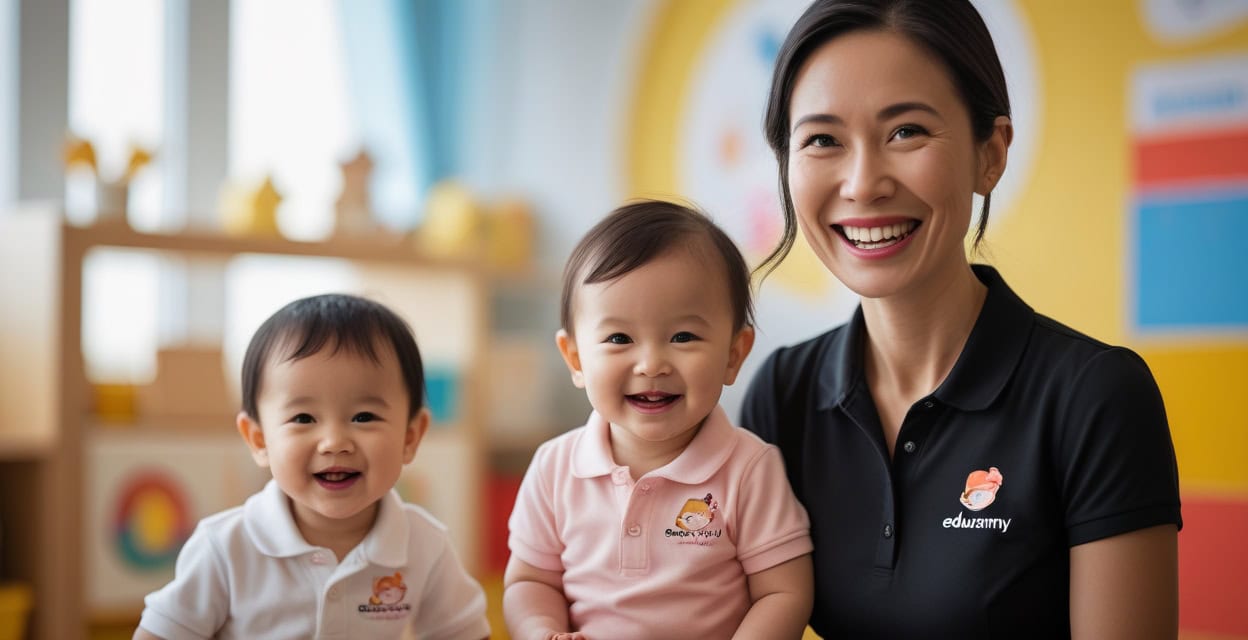
- Centre-Based or Home-Based options: Both designed with modern layouts, natural light, and safe materials to support infants’ development.
- Near-home convenience: Availability from 7am–7pm, Monday to Friday, islandwide, with proximity to MRT and neighborhoods for ease of access.
- Connected care: Live CCTV viewing options, daily journals, and mindful messaging that prioritizes care over noise.
- Predictable costs: Programs starting around $33/day, with CDA/Baby Bonus eligibility where applicable.
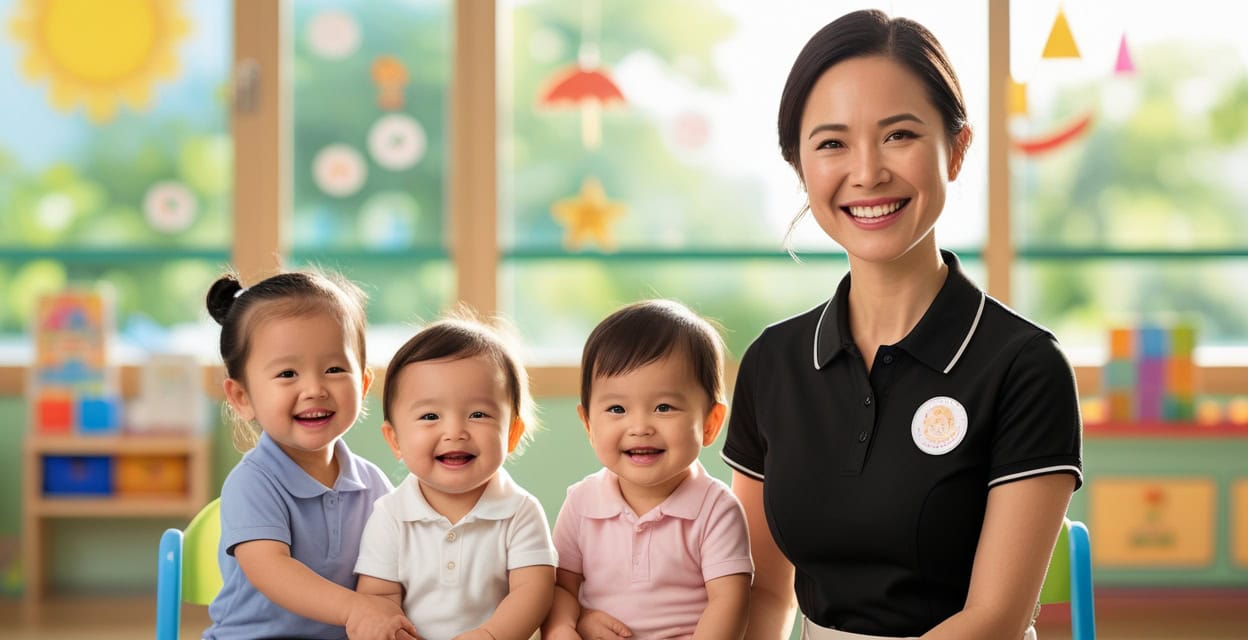
- Trust through ratios and training: A 1:3 infant ratio, trained staff, clear escalation pathways, and a culture of questions and reflection.
Why this matters now
The first thousand days lay a national foundation. Attachment theory shows that early trust anchors courage later in life. Developmental science demonstrates how hands-on discovery shapes thinking. Relationships, guided by careful pedagogy, become the engine of resilience and lifelong learning. EduNanny translates this canon into everyday practice—close to home, affordable, and backed by a standard that a nation can sustain.

A brief word on technology and dignity
- Technology as an ally: CCTV provides accountable transparency and digital records support pattern recognition and parent collaboration.
- Maintaining humanity: Technology should create space for eye contact, touch, song, and silence, not crowd it out.
- Privacy protection: Transparent policies, opt-in viewing, and careful data handling preserve dignity and trust.
What parents tell us they value most
- The unbroken line of trust from door to caregiver.
- The knowledge that a caregiver truly knows their child.
- The quiet professionalism—steady care without drama.
- The joy of returning home to a calm, curious baby.

Concluding remarks: Who, what, when, where, and how childminding matters
- Who: Every infant in Singapore, across income levels, with caregivers who choose care as a calling.
- What: Professional, near-home childminding that blends safety-by-design, attachment-first practice, and developmentally rich days at a 1:3 ratio.
- When: Monday to Friday, 7am–7pm—providing reliability for working families.
- Where: In community and home premises islandwide—center-based and home-based—so distance is short and continuity is long.
- How: Through rigorous training, calm routines, transparent operations, dignity-driven innovation, and a partnership with parents centered on the infant’s well-being.
The philosophy and purpose we carry
EduNanny believes that the smallest hands deserve the strongest standards and the softest hearts. We exist to turn everyday care into a formative curriculum of safety, curiosity, and belonging. We operate as a public promise: no child’s first days rushed, loud, or lonely; every family accessing quality without island-wide barriers; caregivers respected as professionals whose quiet presence shapes a nation.

Next steps for parents and caregivers
If you are a parent, begin with exploration: visit EduNanny.com or Childminding.EduNanny.com, review Home-Based and Centre-Based options near you, and schedule conversations with lead childminders. If you are a caregiver at heart, consider joining a movement that treats this work as the dignified profession it is. This is not merely care—it is nation-building through the everyday acts of listening, touching, and guiding.
In the end, infant care is not just about who watches a baby. It is about who sees them. EduNanny sees each child as a person of equal dignity today, and as Singapore’s tomorrow. With your partnership, we will keep that promise—one safe cot, one three-seat circle, one calm, curious infant at a time.
Thank you.
SEO keywords: [#EduNanny, #InfantCareSingapore, #1to3Ratio, #SafetyByDesign, #EarlyChildhoodDevelopment]