EduNanny Singapore A New Standard for Infant Care and Childminding Built on Attunement and Safety by Design

EduNanny Singapore: A New Standard for Infant Care and Childminding
Based on a vision of precision, trust, and heart-led care, EduNanny reimagines how Singapore cares for its youngest citizens. This article expands the core speech into an in-depth guide for parents, caregivers, and partners, offering practical, actionable insights, real-world EduNanny practices, and clear steps families can take to partner effectively with childminders and centres.
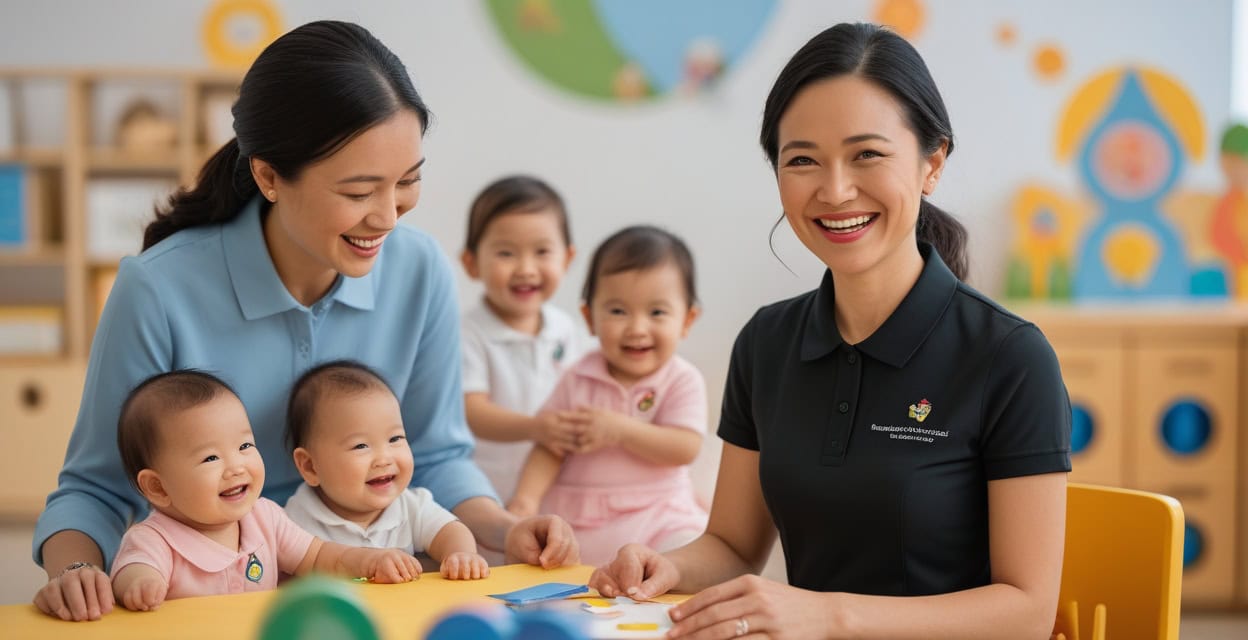
The Attuned Curriculum: Small Moments as the Big Idea
Learning begins in the subtle exchanges that happen in ordinary days. Our attuned curriculum treats every routine as a learning moment and every caregiver as a capable co‑teacher. Here’s how to apply this in daily life:
- Care as Curriculum in Action: Turn nappy changes into language moments. Narrate the process gently, name sensations, and respond to cues (e.g., a wriggle or gaze). Tip for parents: prepare a 2‑minute language routine you can repeat with your child at home, reinforcing vocabulary used by EduNanny caregivers.
- Duets and Turn-Taking: Feeding and caregiver‑child interactions become back‑and‑forth conversations. Practical step: during meals, pause to invite the infant to “offer” a bite or a sip; acknowledge each attempt with warm smiles and brief verbal encouragement.
- Floor Time and Free Movement: Spaces are designed for safe exploration—rolling, reaching, and cruising with dignity. Actionable idea: create a small “movement corner” at home with a short mat, a low mirror, and soft textures to mirror the learning environment.
- Soft Language and Naming Feelings: Narration helps internal organisation. Practice at home by labeling your child’s emotions during daily routines (e.g., “You look curious about that toy—let’s explore it together.”).
- Documentation with Purpose: Observe first, interpret second, act third. Families can request a brief weekly summary that highlights observed cues, proposed next steps, and how the plan aligns with the child’s current interests.
- Example Week Plan (Centre/Home Adaptable):
- Monday: sensory exploration with natural textures; caregiver demonstrates a simple object‑cue game.
- Tuesday: language rhythm—rhymes during diaper changes and feeding time.
- Wednesday: joint attention activities with a caregiver and infant, using shared book time.
- Thursday: movement invitation—safe crawling or cruising paths; parent note on home practice.
- Friday: reflection and social play within the pod to foster early peer connection.
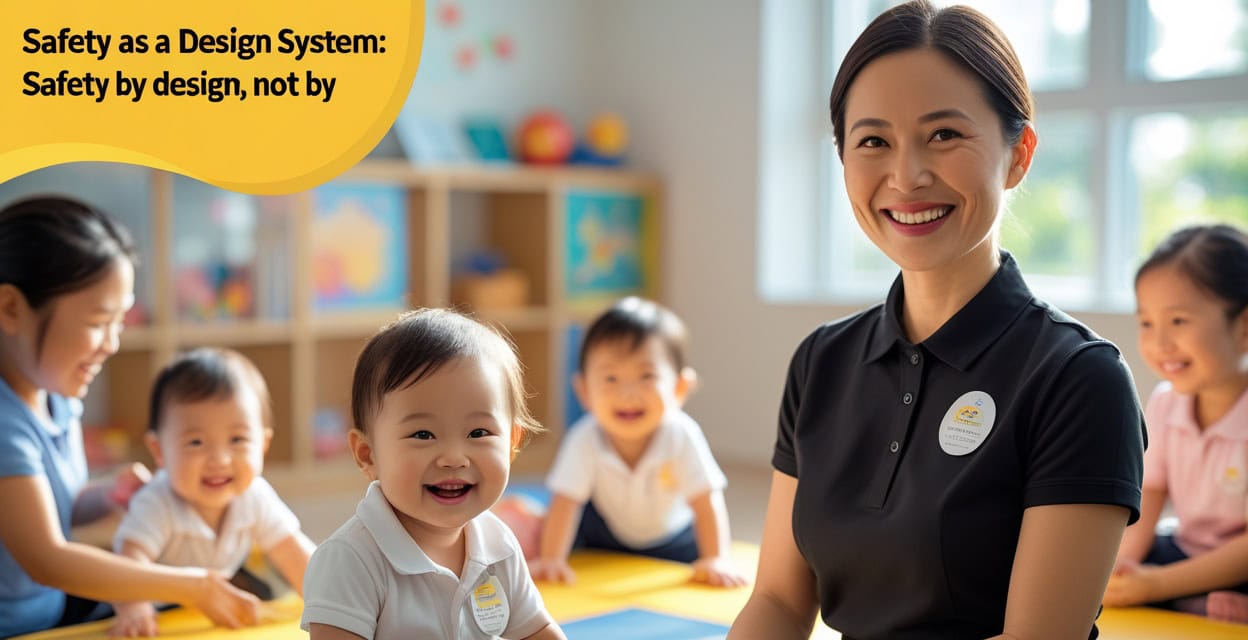
Safety as a Design System: Safety by Design, Not by Poster
Safety at EduNanny is an integrated system that protects without compromising development. It’s a design principle applied to space, practice, and culture.
- Layout and Zoning: Modern spaces separate sleep, feeding, and play zones while maintaining sightlines. At home, replicate this by designating quiet corners for rest, a safe play area, and a feeding nook with minimal clutter.
- 1:3 Infant Ratio: The standard ensures attention isn’t compromised. What families can expect: consistent response times, individualized caregiving, and less crowding during transitions.
- Transparency through Opt‑in CCTV: Real‑time visibility supports trust and reflective practice. Practical tips: discuss privacy preferences with caregivers, determine which areas are viewable, and use updates to engage in co‑planning with the care team.
- Sleep Safety as Habit: Firm mattresses, no loose items, safe sleep positions, and regular ventilation checks. Home practice: maintain a consistent sleep routine at home to reinforce patterns learned in care settings.
- Hygiene without Hindering Development: Emphasize handwashing, toy rotation, and outdoor time that suits weather and air quality. Actionable approach: create a simple at‑home hygiene checklist to synchronize with the caregiver’s routine.
- Emergency Readiness: Regular drills, updated evacuation maps, staff trained in infant CPR, and post‑incident reviews for learning. Family involvement: ask for periodic safety debriefs and contribute questions for improvement.

Whole-Child Development: Deep Skills Built Quietly
EduNanny prioritizes core developmental capabilities over checklists, building secure foundations for lifelong growth.
- Attachment Security: Each infant has a primary caregiver within their pod to encode consistent cues and comfort. Home practice: maintain a predictable care routine to reinforce secure attachments outside the centre.
- Core Capacities Over Milestones: Focus on motor planning, joint attention, early problem solving, and sound awareness. Practical activity: play simple cause‑and‑effect games with safe objects to build problem‑solving joy.
- Sensory Diet Done Right: Balance warm light, natural textures, soft acoustics, and movement invitations. Home tip: create a daily sensory moment (e.g., a soft cloth, a woodrattle, and a gentle lull) to support regulation.
- Inclusion as Normal: Preemies and children with different abilities are integrated into the environment from day one. If you have a child with special needs, partner with EduNanny to co‑design adaptations and monitor progress collaboratively.
- Early Screening and Timely Referral: Track development closely and partner with families for prompt support when needed. Questions to discuss with your caregiver: what screenings are in place, what red flags to watch for, and how to access early intervention services if concerns arise.

Joy and Wellbeing: The Emotional Climate We Promise
Happiness emerges from predictable, responsive care and the feeling that a child’s needs are seen and met.
- Predictable Days and Gentle Transitions: Reducing cortisol supports curiosity and learning. Home strategy: maintain familiar routines, especially around meals, bath, and nap times, even when away from the usual environment.
- Danger of Glitter Culture: True wellbeing is about reliable care, not constant novelty. Focus on steady warmth, patient support, and moments of quiet pride in small achievements.
- Mood‑Centered Check‑Ins: Short wellbeing reads help caregivers respond to emotional cues. Parents can request simple mood checklists to mirror home observations (e.g., “How ready is your child for play?”).
- Celebrating Everyday Wins: First grasp of a spoon, a shared joke, or making a new friend are milestones of joy. Capture and share these moments with families through short, thoughtful updates.

The Profession: Professionalising Childminders with Training, Mentorship, and Dignity
EduNanny elevates childminding into a respected career—coached, continuously learning, and close to communities.
- Structured Training: Infant development, safeguarding, responsive caregiving, and family partnership are core modules. Action item for families: ask about training certificates and specific competency areas when evaluating a caregiver or centre.
- Mentorship and Reflective Practice: Regular mentoring sessions and reflective practice help caregivers grow and improve. Suggestion for parents: request periodic reflective notes from caregivers and discuss future growth plans during reviews.
- Maximum Employment Mandate: Bringing dignified jobs near home strengthens communities and reduces turnover. Home practice for families: support career continuity by sharing flexible scheduling needs and family routines with the care team.
- Accountability with Compassion: Transparent audits, coaching, and reporting keep quality visible. Practical step: review quarterly performance dashboards together with the care team and ask for examples of improvements implemented after audits.

A Day in the Life: A Snapshot of a Tuesday in Toa Payoh
Imagine three infants arriving to warm, eye‑level greetings. One is teething, another discovering toes, and a third easing into a longer nap. Caregivers greet each child by name, share a quick parent update, and begin a flexible day plan. The room blends soft mats, floor‑level mirrors, and curated toys that invite exploration. After feeds, two infants move through gentle motor activities, a third enjoys a supervised walk under shade. Real‑time updates arrive on phones; a brief video captures a triumphant grasp, then nap times align with safety sightlines. The day ends with a calm, engaged goodbye—every interaction conveying: I see you, I value you, I will be here. This is the standard of excellence EduNanny aims to deliver every day.

Why Singapore Needs EduNanny Now
Several converging forces make this moment right for EduNanny’s model:
- Pace and Commute Realities: Shorter travel times mean more energy for development‑focused interactions in early months.
- Trust through Transparency: Opt‑in CCTV, strong safety protocols, and a transparent cadence of updates create observable trust between families and caregivers.
- Access and Flexibility: Centre‑based and home‑based options with distance support widen opportunities for families with varying schedules and transport needs.
- Ecosystem Growth and Dignity: The National Social Initiative and the Maximum Employment Mandate scaffold a sustainable early‑care sector that values caregivers as professionals while supporting families.

Brief Benefits Snapshot
- Excellence and quality as baseline for all families, not optional upgrades.
- Centre‑Based and Home‑Based options with Distance support for parents.
- Convenient hours: Monday–Friday, 7am–7pm, islandwide Singapore.
- 1:3 infant ratio across settings to ensure presence and responsiveness.
- Innovation CCTV with modern layouts for transparency and safety.
- Affordability from $33/day; fees payable by CDA/Baby Bonus.
- EduNanny as a National Social Initiative under ECDA, led by BUTLER.
- Simple enrollment and information at EduNanny.com and Childminding.EduNanny.com.

Concluding Call: Who, What, When, Where, How—and Why It Matters
Who: Infants who deserve steady eyes and sure hands; parents who deserve partnership; childminders who deserve a respected profession.
What: Childminding that is rigorous in safety, gentle in tone, and purposeful in every routine.
When: From the first months onward—foundations form before memories do.
Where: Modern centres and approved homes across Singapore, close to where families live, learn, and work.
How: With a 1:3 promise, attuned pedagogy, safety by design, real‑time transparency, and affordability that opens the door rather than guards it.
Why: Because earliest relationships wire resilience, empathy, and confidence—the human qualities a future‑ready Singapore cannot outsource.
Parents, your child’s first learning environment is not a classroom. It is a relationship. EduNanny exists to make that relationship spacious, safe, and joyful—and to place it within reach of every household.
Join us. Visit EduNanny.com or Childminding.EduNanny.com. Walk our modern layouts. Meet the caregivers who will know your child’s cues as well as you do. Ask to see how transparency works, how plans are personalised, how we honour your routines at home. Enrol for a schedule that matches your life—Centre‑Based, Home‑Based, or with Distance support alongside your family care.
Let’s give Singapore’s youngest the gift that changes everything: not more noise, not more rush, but more presence. In the quiet competence of a 1:3 pod, futures take root. And in the everyday beauty of respectful care, a city keeps its promise.
[#EduNanny, #EarlyChildhoodCare, #SingaporeChildcare, #InfantDevelopment, #1to3CareRatio]