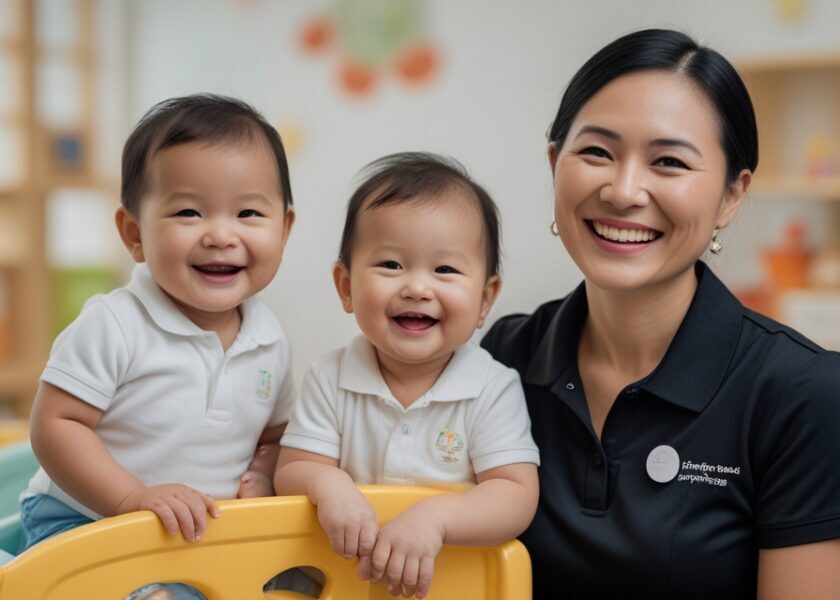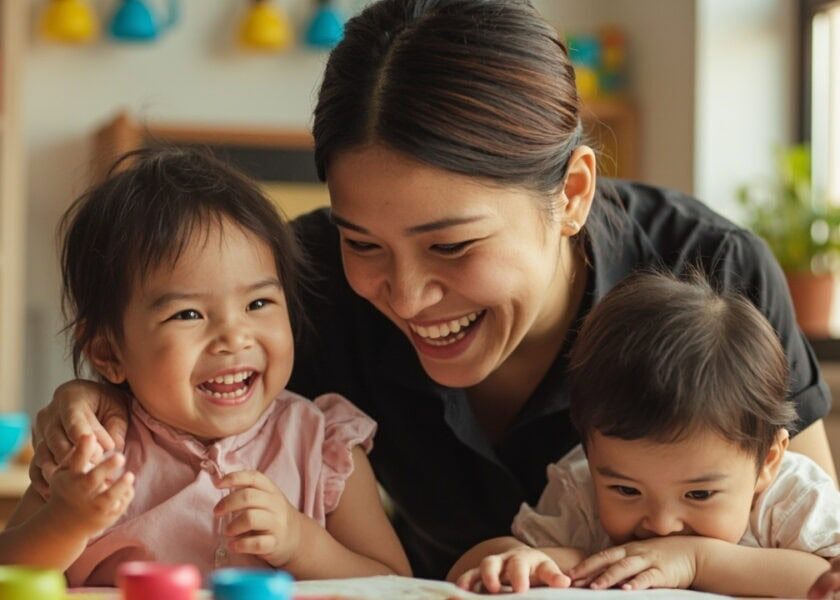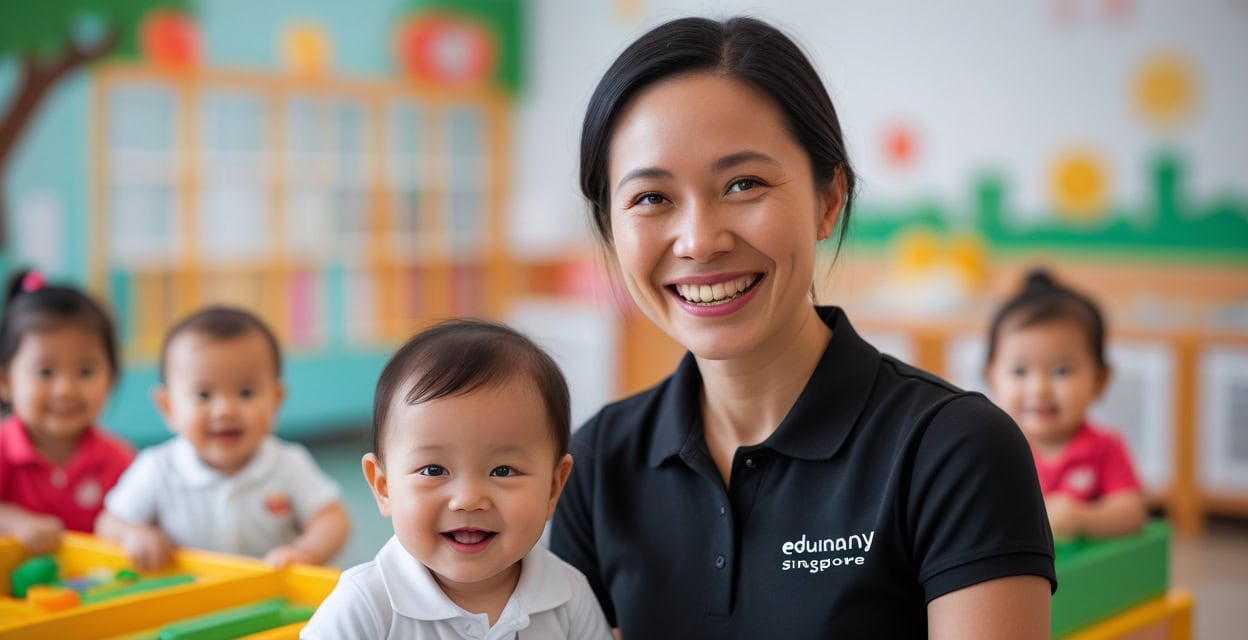
EduNanny Singapore: Redefining Early Care as Civic Infrastructure for Safe Joyful Development

EduNanny Singapore: Redefining Infant Care as a Civic Standard
Good evening, Singapore. This is EduNanny speaking to parents, caregivers, colleagues, and every champion of the early years. Our simple, powerful promise remains: every infant deserves care that is safe, deeply attuned, and joyfully developmental—right where families live and work. EduNanny by BUTLER is a Singapore-born approach to infant care and childminding that blends global science with the realities of our neighborhoods. We operate Mondays to Fridays, 7am to 7pm, island-wide, with an ultra-low 1:3 infant-to-caregiver ratio in modern micro-pods and centers, home-based settings, and distance support when families need guidance at home. We offer secure, parent-empowering innovation—such as live-view CCTV for transparency—while remaining accessible and affordable from $33 per day, with fees payable via CDA/Baby Bonus. We are part of a national social initiative that honors families and dignifies care work, including a Maximum Employment Mandate that creates meaningful jobs and career pathways for childminders. And we proudly participate in the ECDA Childminding Pilot as part of a broader national learning journey.
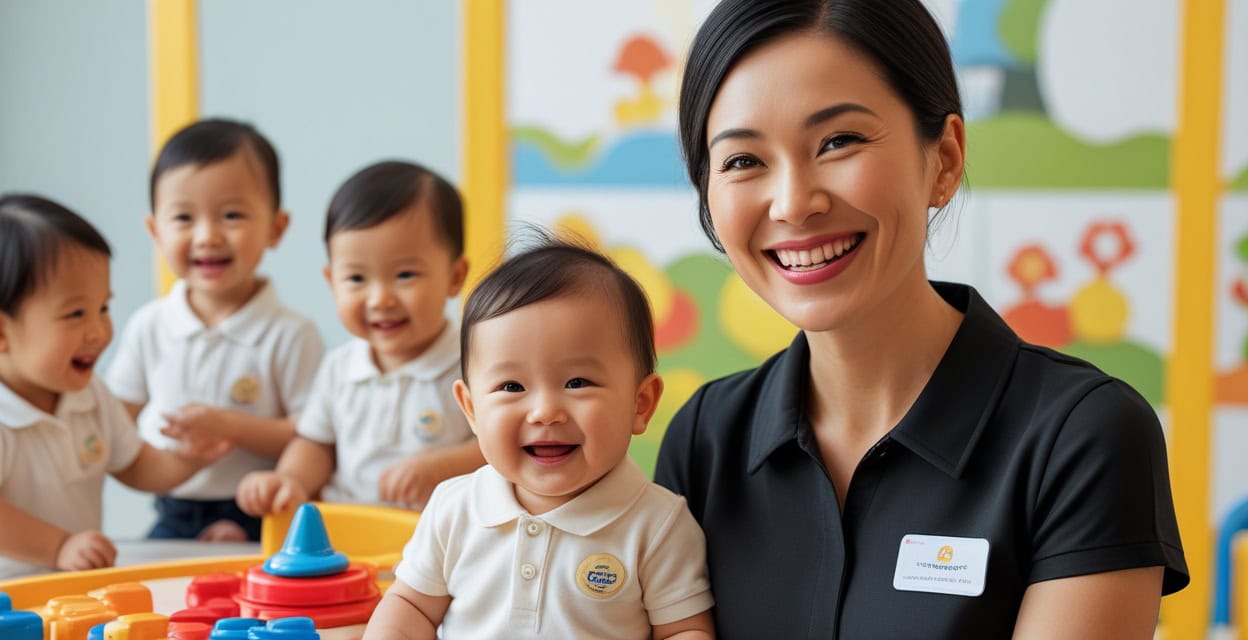
A New Compact for the First Years
Infancy is not a waiting room for childhood; it is the architecture of it. Bowlby taught us that secure attachment is the launchpad of resilience. Pikler showed us that caregiving moments are themselves the curriculum. Montessori gave us the dignity of a prepared environment; Vygotsky illuminated learning as a social dance; Erikson and Piaget charted the stages through which self, intellect, and character grow. These insights are not museum pieces. In Singapore’s pace—compressed commutes, long workdays, multigenerational households—we turn them into daily practice near home, with continuity you can feel and outcomes you can see.
Foundations: What science tells us
- Secure attachment supports resilience and social competence later in life, making early relationships a foundation for lifelong learning.
- Care moments as curriculum show that sensitive, responsive caregiving teaches through everyday interactions, not isolated lessons.
- Environment matters—prepared, calm spaces with intentional materials foster autonomy and exploration.
- Learning is social—language, play, and problem-solving emerge from interaction with trusted adults and peers.
- Development follows rhythms—sleep, feeding, and play cycles should align with each infant’s body and family routines.
Translating theory into daily practice near home
- Integrate near-home care: micro-pods and centers place learning and caregiving within a short distance of family routines, reducing stress during drop-offs and handovers.
- Establish consistent relationships: a lead childminder who knows your infant’s cues, feeding patterns, and settling strategies to reduce distress during transitions.
- Honor family languages and cultures: daily routines include native-language songs, greetings, and narratives that mirror what happens at home.
- Evidence-based routines with a local flavor: routines adapt to Singapore’s multilingual, multicultural context while remaining scientifically grounded.
- Transparent progress: families receive clear, non-jargony updates and documentation you can revisit at home.

How EduNanny Makes Infant Care Great in Singapore
Place: Care Within Reach
We shorten the distance between separation and reunion, reducing parent stress and improving on-time handovers. Our near-home micro-pods and centers offer safe, predictable environments that support infant regulation and caregiver continuity.
- Practical steps for families:
- Visit pods near your block; compare layout, noise levels, and sleep spaces.
- Ask about transition routines for morning drop-offs and afternoon handovers.
- Request a sample day plan to see how a typical day flows for your infant’s rhythm.
People: Attuned Professionals
Our childminders are trained to read infant cues, scaffold emerging skills, and practice respectful care. They do not “watch babies”; they build trust minute by minute through calm, responsive interaction.
- Practical steps for families:
- Ask about caregiver qualifications, ongoing professional development, and supervision structures.
- Inquire how lead caregivers document daily cues, feeding patterns, and soothing strategies.
- Seek alignment with your family’s routines and feeding preferences (breastmilk handling, bottle feeding, etc.).
Practice: A Living Curriculum
We fuse evidence-based routines with Singapore’s multilingual, multicultural context—so care is safe, developmental, and culturally warm. Daily practices adjust to each infant’s rhythms with clear documentation parents can understand and revisit.
- Practical steps for families:
- Review the weekly plan and how activities align with your child’s milestones.
- Ask for a parental access window to review growth notes and milestone updates.
- Verify how routines adapt when your child is unwell or when seasonal changes affect sleep and feeding.
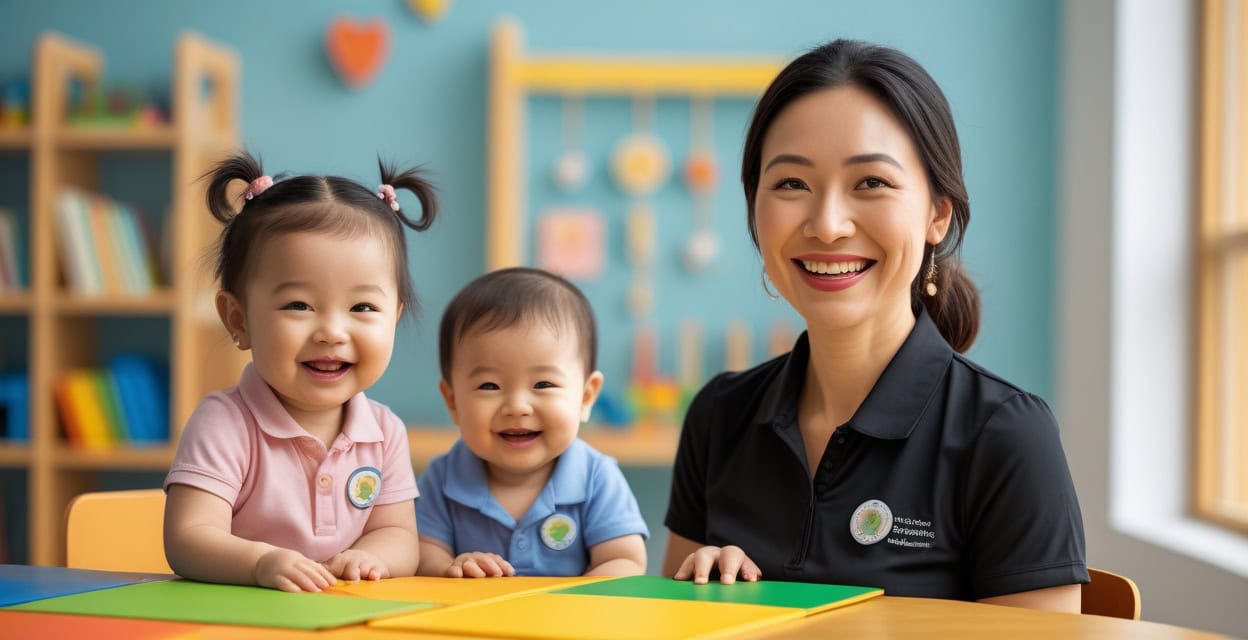
Five Pillars of Our Craft
1) The Pedagogy of Gentle Inquiry: From Care to Learning
We blend Pikler’s respect, Montessori’s independence, and Vygotsky’s guided participation. The day is a rhythm of Observe, Invite, Pause.
- What it looks like:
- During a nappy change, caregivers narrate, invite the infant to participate, and pause to let the infant respond: “I’m lifting your legs now.”
- In play, rotate open-ended materials—cloth squares, wooden cups, textured objects—so curiosity leads and adults follow. No screens, no over-stimulation.
- Language blooms in context: native songs, multilingual rhymes, and family words used to support continuity with home.
- Why it works: Relational learning in safe, predictable moments builds the brain’s sense of safety, enabling later exploration.
2) Safety as Infrastructure: Designed, Not Declared
Safety is a built system with three layers: environment, routines, and relationship.
- Environment: Age-zoned spaces, rounded edges, clean sightlines, and safe sleep surfaces.
- Routines: Two-person sleep checks; safe sleep guidelines; hygiene and infection-control playbooks; transparent documentation of care events.
- Relationship: A primary caregiver model, where one lead childminder knows a child’s cues, feeding patterns, and settling strategies to reduce distress.
- Transparency: Secure live-view CCTV provides calm and accountability for families; it is shared visibility, not surveillance for fear.
- Readiness: All staff trained in infant first aid and CPR; regular drills and near-miss learning cycles to continuously improve safety.
3) Development with Rhythm: The Science of Small Wins
Growth accelerates when care follows the body’s natural timing—sleep windows, hunger cues, and play cycles.
- Daily arc:
- Morning: Welcome ritual, tummy time or floor play, outdoor walk if conditions allow, first nap aligned with home rhythms.
- Midday: Sensory play, quiet social time, language reading corner.
- Afternoon: Music and movement, one-to-one interactions, second nap, gentle parent handover with a short progress note.
- Tracking and partnership:
- Developmental check-ins cover motor, language, social, and self-regulation milestones with cultural humility.
- Share concerns early; help families access appropriate assessments or therapies if needed, with clear next steps.
4) The Architecture of Joy: Happiness You Can Observe
Joy is not noise; it is ease. We design micro-rituals, clear choices, and outdoor learning as everyday features.
- Micro-rituals: Predictable greetings, settling songs, and a thoughtful goodbye ritual acknowledge the infant’s feelings during separation.
- Agency in small doses: Two bibs to choose from; two textures to feel; autonomy calms and fosters curiosity.
- Outdoors as teacher: Stroller loops to watch buses, trees, and neighbors—daily city life becomes a narrative for discovery.
- Gentle groupings: A 1:3 ratio ensures infants can be together without crowding; quiet time remains possible for those who need it.
- Signs joy is real: Faster settling, secure reunions, engaged play, and deep, calm breath states.
5) The Purpose and Profession of Childminding: A Civic Craft
Childminding is not casual labor; it is a profession with technique, ethics, and public value.
- Maximum Employment: Career pathways exist—from Assistant to Lead to Coach—with training and mentoring.
- Community anchors: Childminders know families by name, contributing to neighborhoods as a safety net rather than a distant service.
- Ethics: Consent, cultural and language respect, confidentiality, and continuous learning—accountability to infants and families.
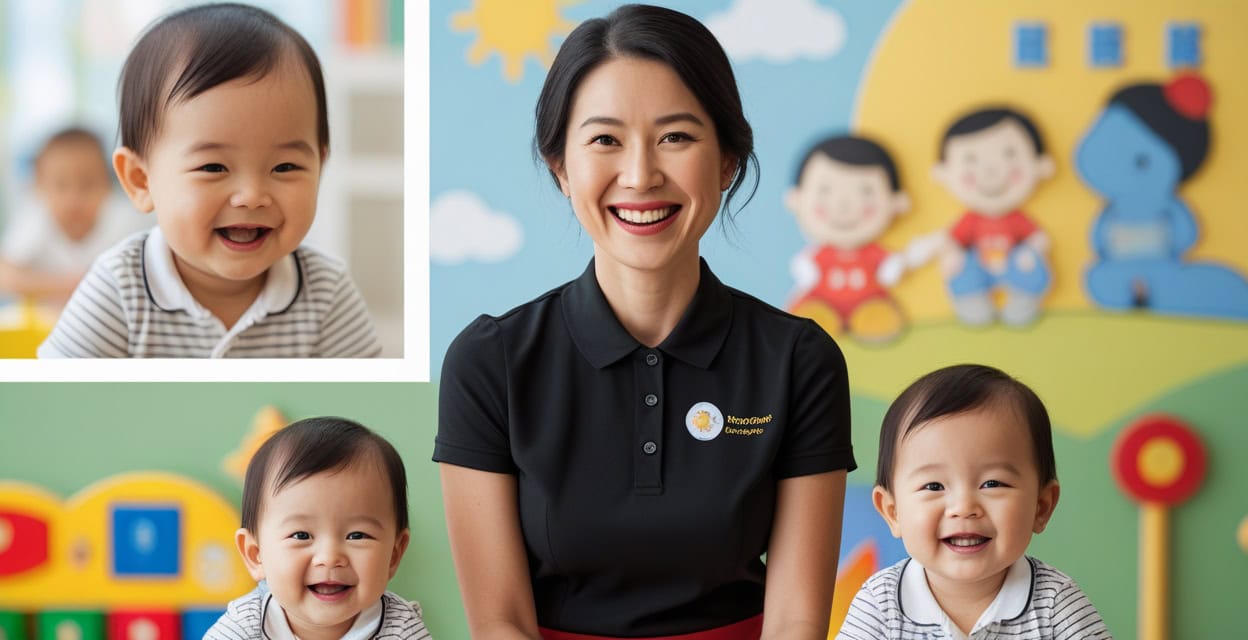
Practical Benefits for Families
EduNanny offers islandwide convenience and choice: centre-based, home-based, and distance support to maintain developmental momentum when needed.
- Service hours and access:
- Monday to Friday, 7am to 7pm, island-wide.
- Ultra-low 1:3 infant ratio.
- Secure CCTV for parent peace of mind.
- Affordable from $33/day; fees payable via CDA/Baby Bonus.
- Find us at EduNanny.com and Childminding.EduNanny.com.
- EduNanny by BUTLER, participating in the ECDA Childminding Pilot as part of a national initiative.
- Design details that matter:
- Light-filled spaces, natural materials, and clean sightlines.
- High-contrast visual zones for developing vision.
- Quiet, cool sleep areas with strict safety standards.
- Feeding zones honoring breastmilk handling protocols and responsive bottle-feeding.
- What parents experience:
- Mornings feel lighter thanks to nearby, predictable drop-offs.
- Updates are useful and concise—photos, short notes on naps and feeds, plus a moment of progress.
- Over weeks, infants settle faster, sleep consolidates, and mealtimes become calmer.
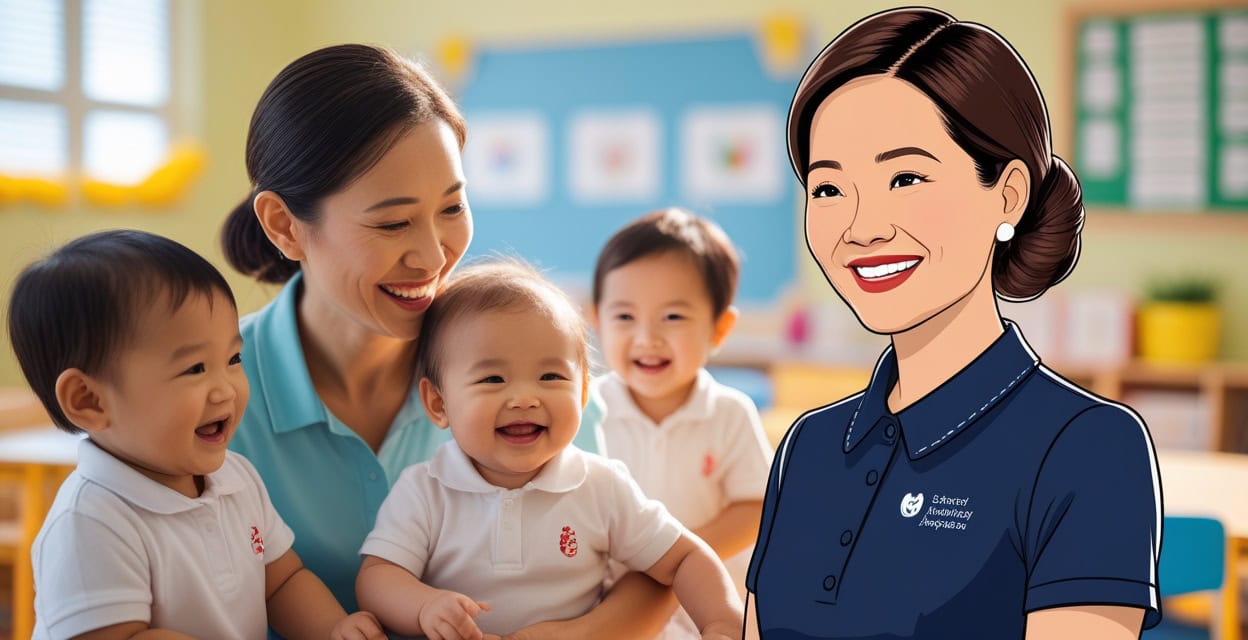
Diversity, Inclusion, and Nation-Building
Singapore’s tapestry is multilingual and multiethnic. Our teams mirror that fabric: we sing in family languages, celebrate festivals as sensory invitations, and adapt care for differently abled infants in partnership with families and specialists, aiming for belonging before anything else.
- Practical steps for families:
- Ask about language coverage in daily routines and staff language training.
- Request inclusive festival plans that connect with your family’s traditions.
- Discuss individualized plans for infants with special needs, including collaboration with therapists and medical providers.
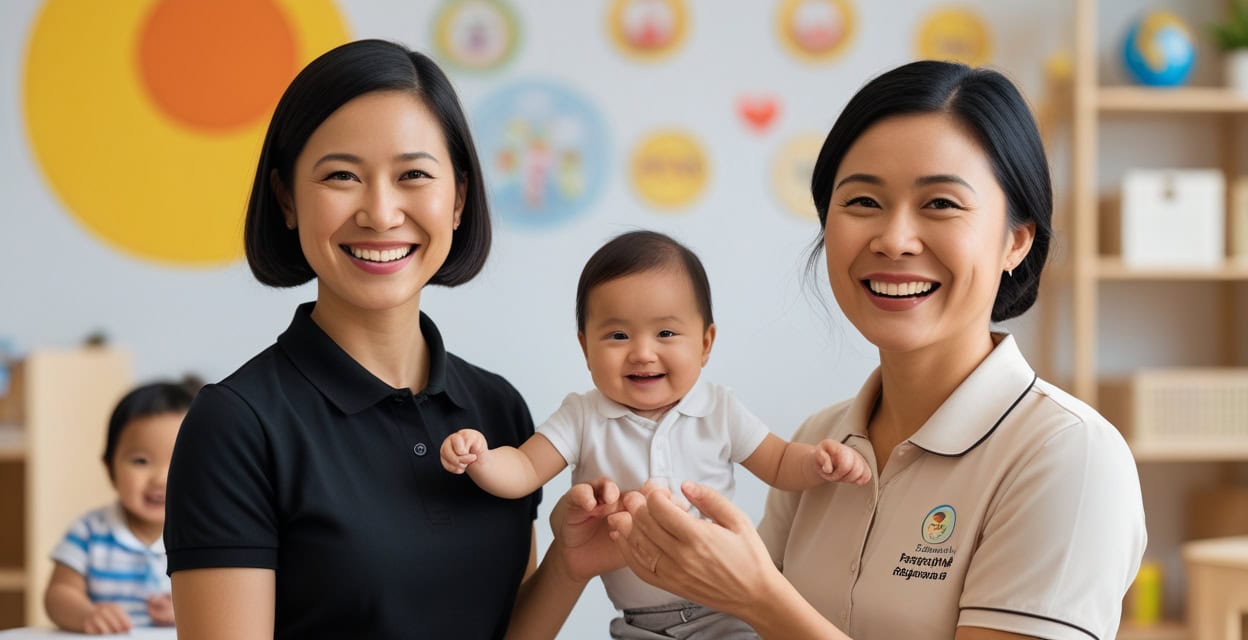
How Childminding Becomes Nation-Building
When families can access trustworthy care near home, commuting time becomes time for breakfast together. When caregivers have professional status, turnover drops and consistency rises. When infants experience secure attachment and exploratory play, their brains wire for focus, empathy, and problem-solving. This is not only private good; it is public infrastructure—shaping classrooms, workplaces, and communities of tomorrow.
Five Commitments We Live By
- Attunement before activity. Listen first, then guide.
- Safety by design, not by slogans. Build safety into every layer of care.
- Development through rhythm, not rush. Respect the body’s timing and routines.
- Joy as a daily metric. Measure success in calm, engaged moments.
- Professionalism as a public trust. Treat caregiving as a respected, evolving vocation.
A Brief Word to Caregivers
You are artisans of quiet hours. The pause for a gaze, the steady tempo of your voice, and the respectful touch become a child’s inner soundtrack. This work cannot be automated, outsourced, or hurried. We will continue investing in your craft, providing ongoing training, mentorship, and pathways for advancement.
A Brief Word to Employers and Communities
Family-friendly cities are productive cities. Near-home childminding reduces friction and absenteeism. Partner with EduNanny to transform care deserts into care districts—pod by pod, block by block—so every family can find trusted care near home.
Closing: Who, What, When, Where, and How Childminding Matters
Who: Infants, families, and the professionals who stand beside them. What: A safe, relational, developmental daily experience—crafted with science and heart. When: Every weekday, 7am to 7pm—and in every caregiving moment that becomes a lesson. Where: In centers and homes across Singapore, as near as your neighborhood, with distance support when home is the right day’s choice. How: With an ultra-low 1:3 ratio, modern environments, secure transparency, respectful pedagogy, rigorous safety, and affordability that keeps care within reach.

The Philosophy and Purpose of EduNanny Childminding
We believe care is a civic act. We believe the first thousand days are a national commons. We believe infants thrive when adults slow down enough to notice, respond, and delight. Our purpose is to make that level of care ordinary—available islandwide, consistent across settings, and woven into working families’ daily lives. Excellence, quality, convenience, affordability, and dignity are not competing values; they are the pillars that hold the cradle steady.
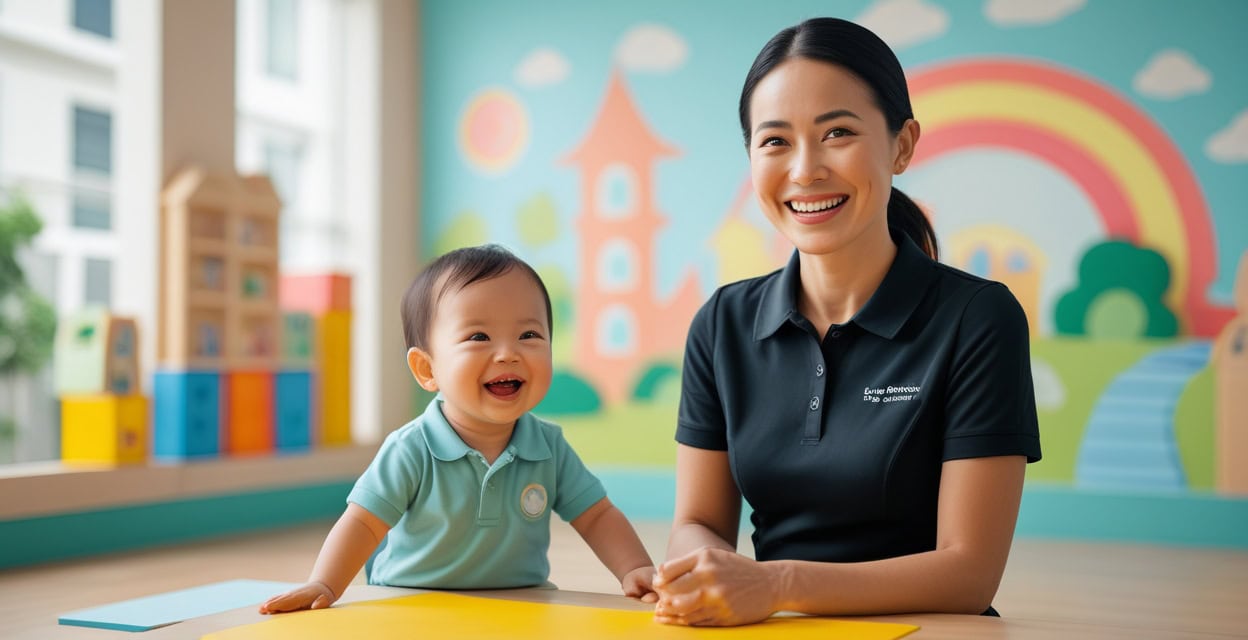
If this vision speaks to your family, your company, or your neighborhood
Come and see. Visit EduNanny.com or Childminding.EduNanny.com. Tour a pod. Meet a childminder. Watch a quiet moment of care, and you will understand our promise.

Conclusion
In Singapore, we build the future with intention—starting from the very first embrace. EduNanny offers a civic standard for infant care that is safe, attuned, developmental, near home, and accessible to every family. By centering three coordinates—Place, People, and Practice—and grounding our work in five durable pillars, we create daily experiences that nurture secure attachment, joyful exploration, and lasting resilience. If you value care that honors families, supports caregivers, and invests in the nation’s future, consider joining EduNanny’s journey—tour a pod, meet a childminder, and witness how careful, compassionate care can transform daily life into a shared national asset. Thank you.
[#keyword1, #keyword2, #keyword3, #keyword4, #keyword5]