A Living Curriculum for the First Thousand Days in Singapore with EduNanny Attunement Safety and Joy

EduNanny Singapore: A Living Curriculum for the First Thousand Days
Good evening, friends, families, and fellow builders of tomorrow. This long-form article translates a bold public vision into practical guidance for parents, caregivers, and communities. EduNanny is a childminding movement and service designed to make safety, attunement, and joyful inquiry a reliable daily experience for Singapore’s infants. The goal: healthier communities, stronger families, and futures that open through consistent, high-quality early care.

I. The pedagogy of attunement and inquiry
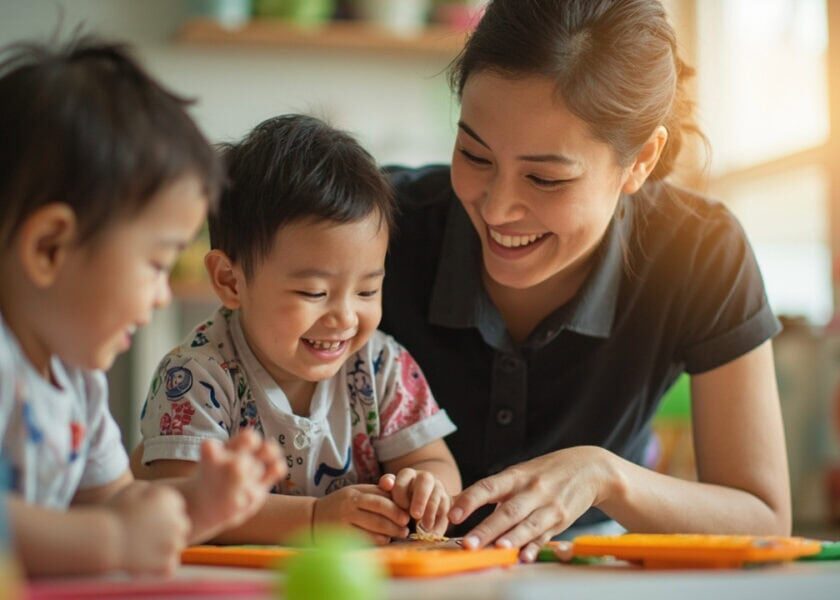
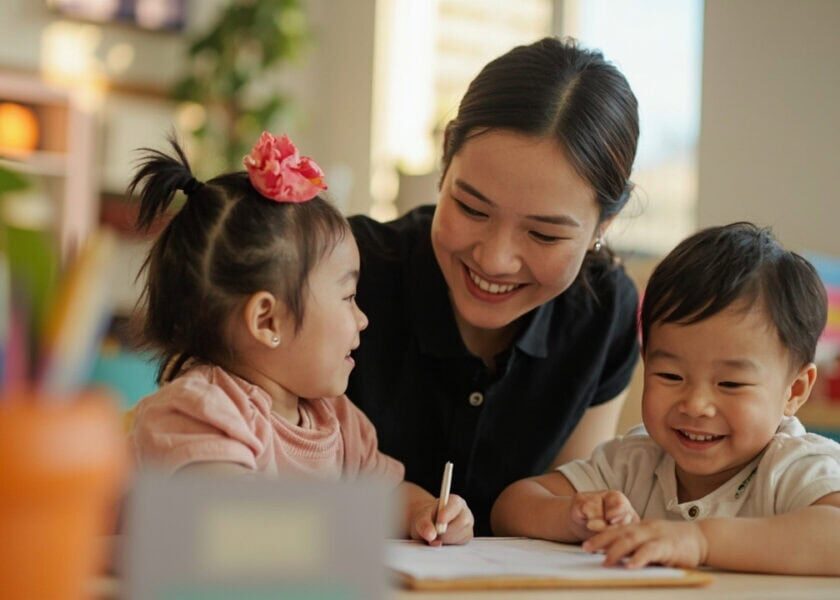
At EduNanny, pedagogy begins not with a lesson plan but with a human plan: one steady, responsive adult for each small circle of three infants. This ratio is a precondition for brain-building, allowing caregivers to notice micro-cues that drive development. Here is how we translate science into daily practice.
- From Montessori: Respect for the child’s agency and a prepared environment that invites self-initiation. Create calm, accessible spaces with accessible materials tailored to each infant’s stage.
- From Pikler: Unhurried care routines—diapering, feeding, sleep—as moments of learning and relationship, not chores to rush.
- From Vygotsky: The zone of proximal development—offer challenges just beyond mastery, with a warm hand nearby to scaffold.
- From Bowlby and Ainsworth: The secure-base principle—reliable comfort expands curiosity and exploration.
We call this a living curriculum: tiny experiments all day long, co-authored by caregiver, child, and family culture. The outcomes are not rote skills but durable capacities—attention, self-regulation, persistence, and delight in discovery.
II. Safety by design, not by chance
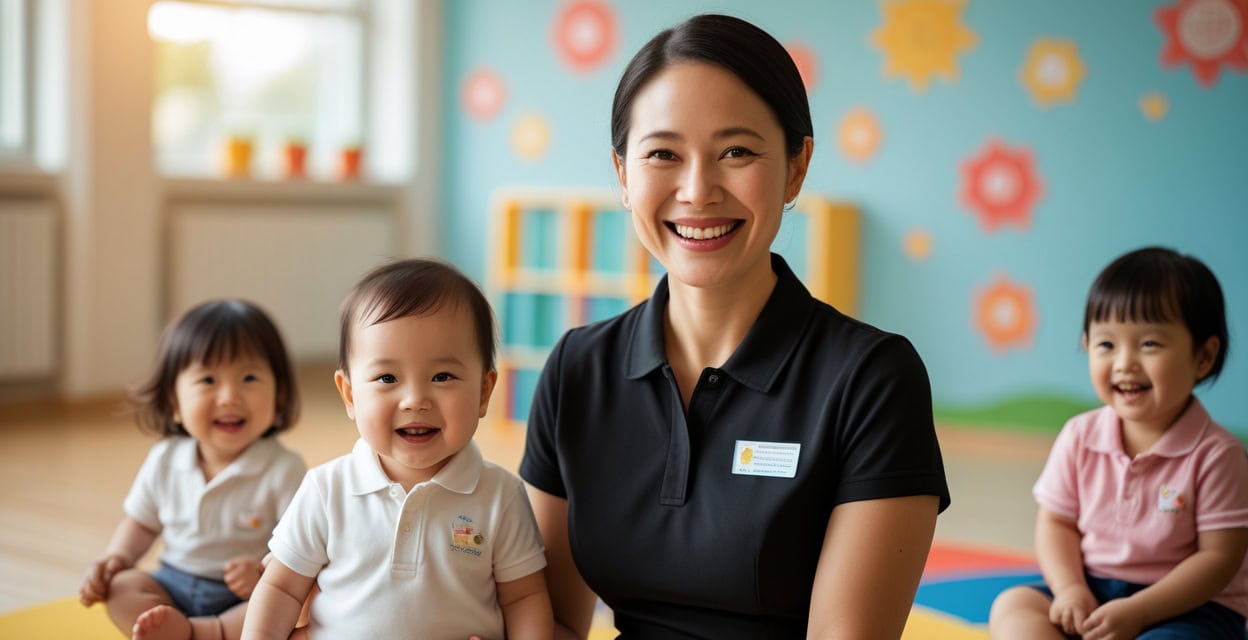
Safety is the architecture of trust. At EduNanny, safety is systematic, layered, and visible—embedded in every routine, space, and decision.
Space
Modern layouts, low visual clutter, soft corners, and predictable pathways facilitate supervised exploration. Settings may be centre-based or home-based but harmonized to one standard.
Sleep
Firm, flat surfaces; supine sleep; individual sleep logs; environmental monitoring for temperature and light; no loose items; frequent checks. Consistency supports regulation and restorative development.
Hygiene and health
Strict hand hygiene; bottle and food protocols; daily wellness screens; toy rotation and sanitation cycles; incident drills and documentation. Prevention reduces illness and supports steady learning momentum.
Supervision
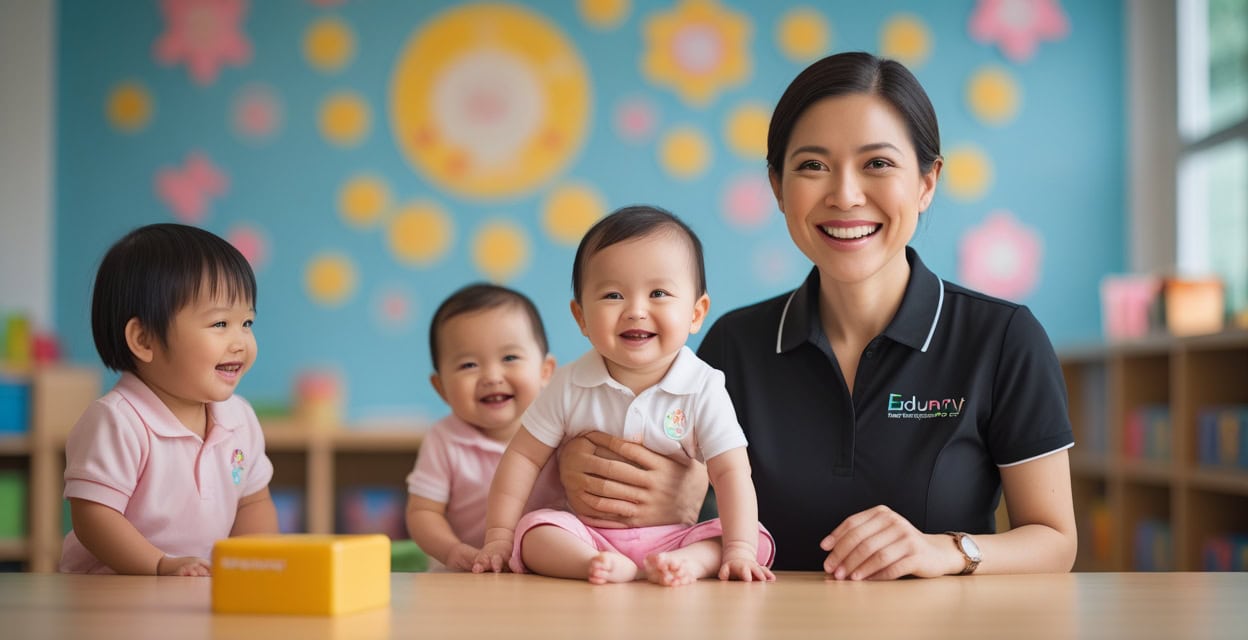
A true 1:3 infant ratio—never aspirational, always scheduled. Relief coverage protects caregivers’ breaks without compromising infant safety.
Arrival and handover
Secure identity checks; digital timestamping; consent-based photo/video policies; calm transitions that prioritize infant regulation and family trust.
Nutrition
Responsive feeding; paced bottle techniques; cultural and medical needs honored; allergen protocols enacted and reviewed.
Technology and transparency
Innovation CCTV provides trustworthy visibility for parents, paired with daily digital journals and milestone notes. Transparency earns confidence and supports family involvement.
Accountability
Clear escalation pathways; monthly safety reviews; independent spot checks; open-door communication with families. Safety is a living standard, not a moment in time.
Safety is not the absence of risk; it is the presence of readiness. In practice, this means caregivers who can move at infant speed and respond at adult caliber.
III. Development as a micro-curriculum of the first thousand days
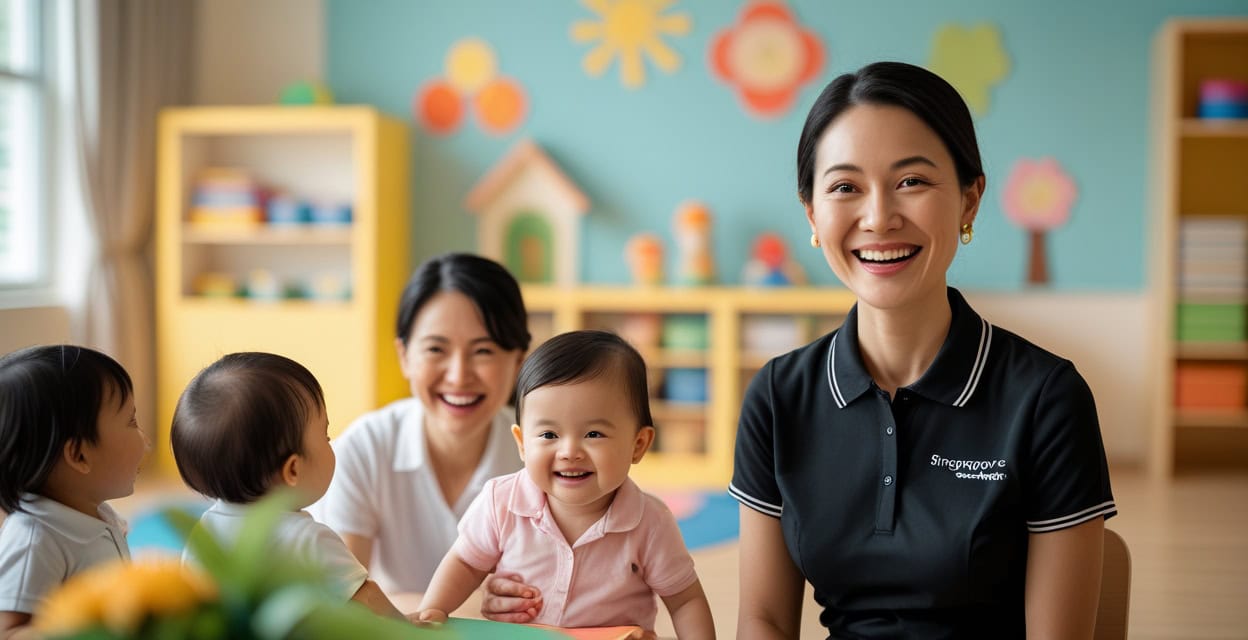
Development follows the routes people take in daily life. Each infant’s path is unique, but four reliable avenues support growth when nurtured intentionally:
- Sensorimotor mastery: Floor time, grasping and releasing, kinaesthetic play, and free movement that respects readiness over rushing milestones.
- Language bloom: Conversational caregiving, singing, caregiver narration of routines, bilingual songs and stories, and infant-safe books within reach—language as relationship, not performance.
- Social-emotional growth: Serve-and-return interactions, shared attention moments, and modeling simple feeling words; coaching the art of waiting, turn-taking, and repair.
- Emerging executive function: Short sequences (first we wash hands, then we eat), gentle choices (this cloth or that cloth?), and predictable rhythms that cultivate impulse control and memory.
This is not “teaching” in the schoolish sense. It is the slow composting of strong neural networks through attuned repetition, joyful challenge, and ample rest.

IV. Joy as a governance metric
We measure what matters. Happiness is not a soft add-on; it’s a core quality indicator woven into governance and daily practice:
- Climate checks: Daily observation of affect—contented, alert, engaged—and gentle adjustments to overstimulation or fatigue.
- Rhythm integrity: Routines that adapt to each baby’s cues, not just the clock, supporting regulation and predictability.
- Play equity: Every infant’s interests sampled daily; no child consistently last to be picked up or first to be put down.
- Parent partnership: Tiny stories sent home—“Today she found her toes and laughed”—so parents feel included, not excluded.
When happiness is a governance metric, care systems become resilient—able to withstand busy days, staff turnover, or weather disruptions, while staying grounded in children’s needs.
V. The purpose and dignity of childminding
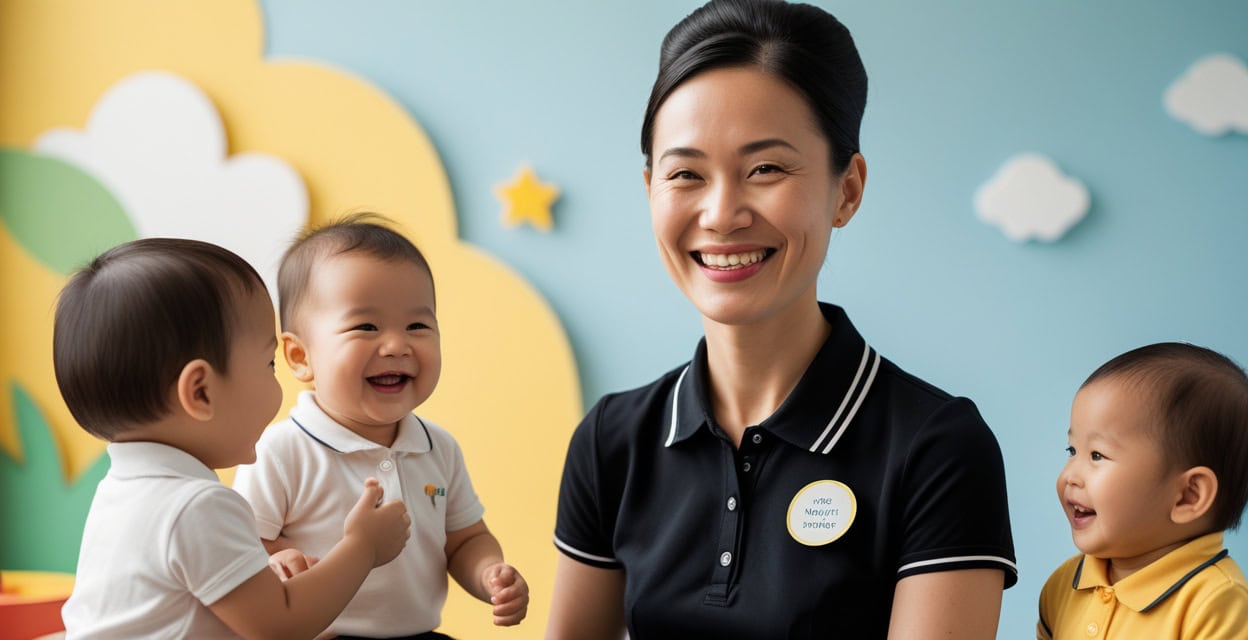
To mind a child is to guard a threshold: the crossing from dependence into capability. In Singapore, where community and innovation converge, childminding can do three things at once:
- Protect the present: Provide infants with safety, attunement, and joy today.
- Propel the future: Build attention, language, and emotional regulation that predict later learning and wellbeing.
- Uplift livelihoods: Professionalize a care workforce with real training, career pathways, and pride in practice.
EduNanny advances this triple purpose as a National Social Initiative with a Maximum Employment Mandate—opening dignified jobs close to home, with standardized training and coaching, aligned with the ECDA Childminding Pilot’s public promise. Our approach integrates centre-based, home-based, and distance-supported care to fit Singapore’s real schedules and real homes.

A day in the life
Picture a Tuesday in a typical EduNanny setting. A caregiver arrives early, sets a calm, clean space, and reviews each infant’s notes. The day unfolds with intention and nuance:
- 7:00–7:10am: Arrival, calm handover, and a quick mood check for each infant.
- 7:10–9:00am: Teething comfort, slowed morning pace for a teething infant, and a language-rich mealtime with clear narration.
- 9:00–11:00am: Engaging floor time for a crawling infant with a prepared space that invites safe exploration and sensory play.
- 11:00–12:00pm: Rest and quiet time with individual sleep logs and environmental controls tuned to regulate sleepiness.
- 12:00–2:00pm: Lunch with paced feeding, cultural food choices honored, and bilingual storytelling for language growth.
- 2:00–4:00pm: Social play, turn-taking prompts, and a group activity that models simple problem-solving and collaboration.
- 4:00–5:30pm: Pick-up preparation; a concise story of strength for each infant and a plan for tomorrow in the family journal.
- 5:30–7:00pm: Quiet transition and targeted guidance for parents returning home—ensuring continuity of routines and expectations.
In EduNanny, the child’s day is described as ordinary excellence—reproducible, auditable, human.
Family partnership, made practical
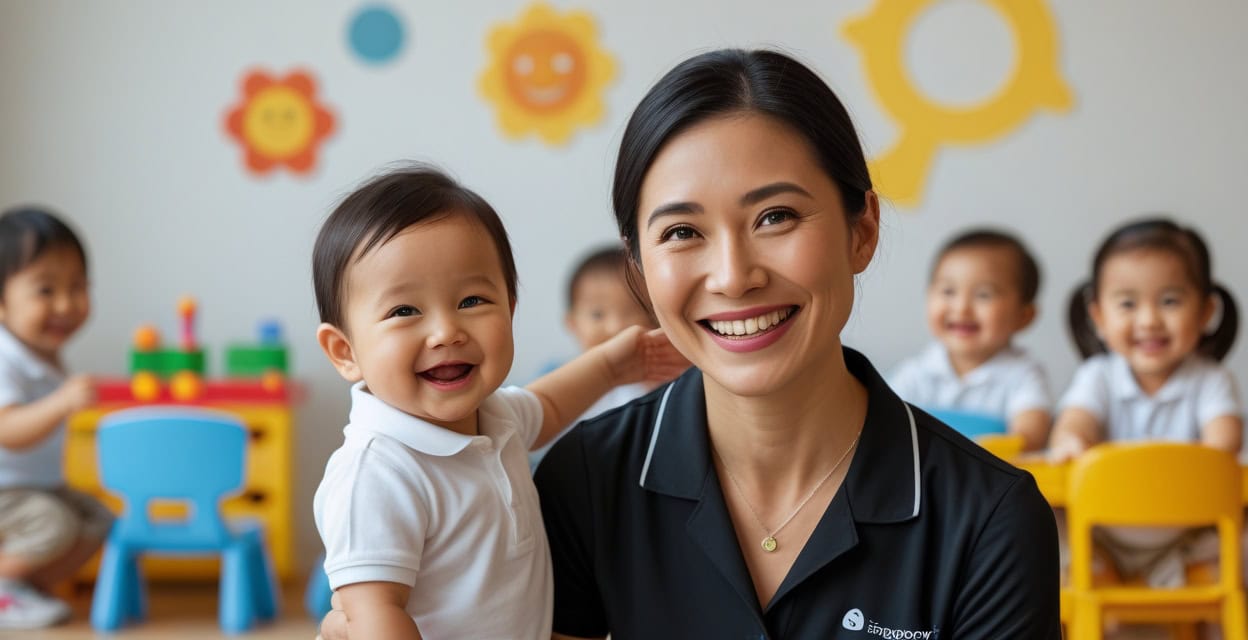
- Communication: Daily digital logs; weekly check-ins; monthly developmental snapshots; always-on messaging for quick clarifications.
- Culture and language: Family rituals welcomed—songs, words, comfort practices; respect for feeding choices and cultural foods.
- Continuity across settings: Centre-based and home-based options unified by the same standards; distance support for transitions or sick days; one philosophy, many doors.
- Financial clarity: Affordable from $33/day; CDA/Baby Bonus accepted; transparent fee schedules; no surprises.
Benefits at a glance
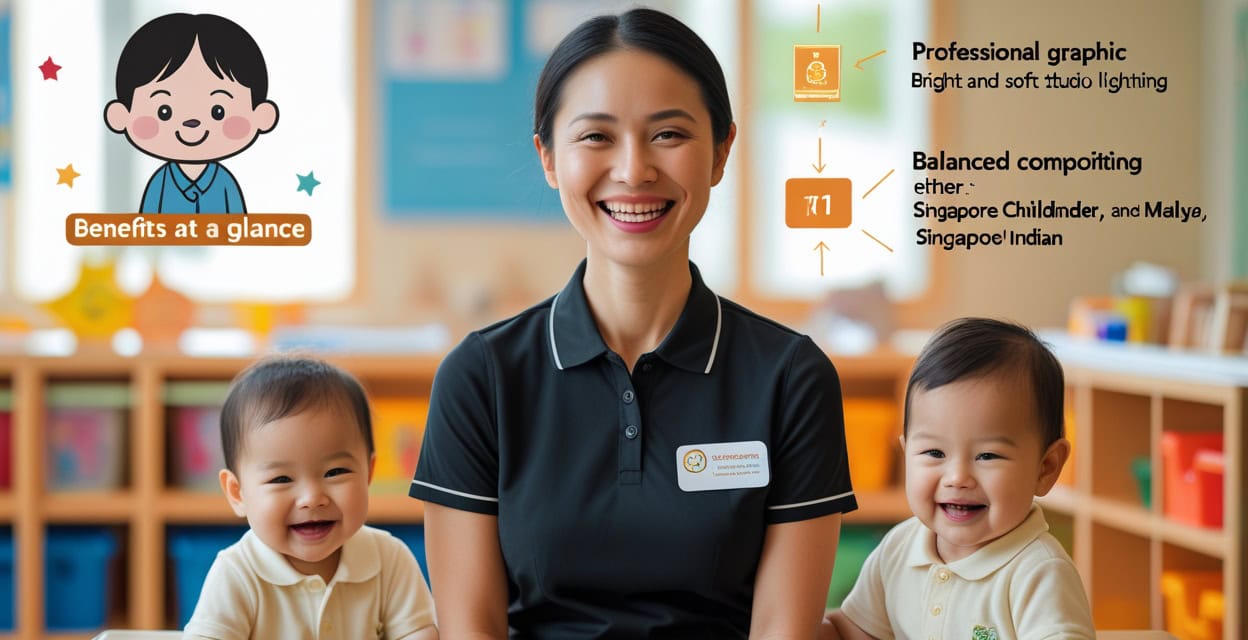
- Excellence and quality as the baseline, not a boast.
- Centre-based, home-based, and distance-supported options to fit every family rhythm.
- Convenience and reliability: Monday to Friday, 7am to 7pm, islandwide Singapore.
- Ultra-low 1:3 infant ratio for true attunement.
- Innovation CCTV for trustworthy transparency.
- Modern, child-centered layouts in community and home premises.
- EduNanny by BUTLER, aligned with the ECDA Childminding Pilot as a National Social Initiative with a Maximum Employment Mandate.
- Affordability from $33/day, with fees payable by CDA/Baby Bonus.
- Learn more or enrol at EduNanny.com and Childminding.EduNanny.com.
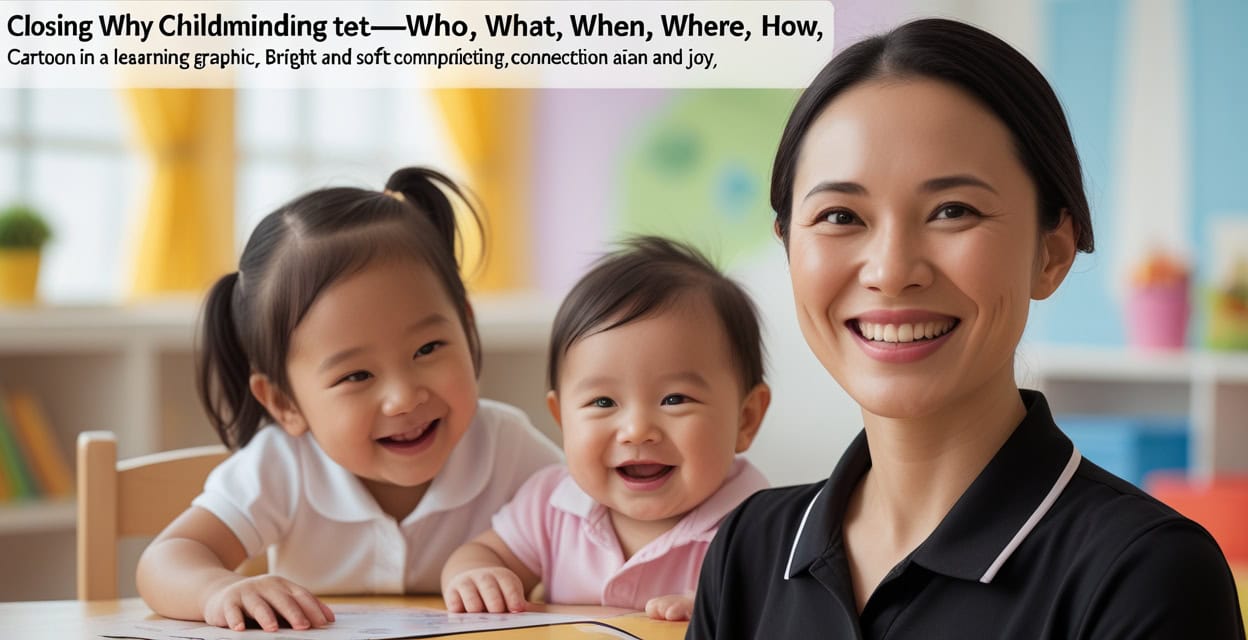
Closing: Why childminding matters—who, what, when, where, how
Who does childminding serve? Infants first, then parents, then neighborhoods—and, ultimately, the nation shaped by these early bonds. What does great childminding do? It transforms safety into curiosity, routine into learning, and care into capability. When does it matter most? Every day, especially in the first thousand days when the brain grows fastest. Where should it happen? Close to families—in centres, in homes, and with distance support when needed—so care integrates with daily life. How does EduNanny deliver it? Through a 1:3 ratio enabling attunement; a safety system that is rigorous and kind; a living curriculum that grows with each infant; professional caregivers who are respected and supported; transparent technology that builds trust; and operations designed for Singapore’s real schedules and real homes. Our philosophy is simple and demanding: presence before program, safety before speed, relationship before routine—so that, in time, children can stand secure enough to reach for the extraordinary. Our purpose is civic as much as personal: to weave a fabric of dependable, dignified care across the island, one small circle at a time.
If this vision resonates—if you want your child’s days to be safe, joyful, and developmental; if you want clarity, convenience, and fairness; if you want care that respects culture and science in equal measure—then we invite you to walk with us.
Visit EduNanny.com or Childminding.EduNanny.com. Talk to us about centre-based or home-based care near you. Ask about the ECDA Childminding Pilot, affordability from $33/day, CDA/Baby Bonus, our Monday–Friday 7am–7pm promise, innovation CCTV, and how we train and support our caregivers. Ask us anything—trust grows in the light.
Conclusion
EduNanny offers a practical, scalable model for nurturing the most formative years of a child’s life. By combining a deliberate pedagogy of attunement, safety-by-design, a micro-curriculum of development, and a governance framework centered on joy, we create environments where infants thrive and families feel supported. The first thousand days become Singapore’s finest public work—safe, joyful, and human. If you are a parent, caregiver, or policymaker, consider how this living curriculum could fit your community. Join us in turning daily care into lasting capability—and in turning potential into everyday possibility.
Learn more or enroll today at EduNanny.com and Childminding.EduNanny.com. Together, let’s nurture the next generation with presence, safety, and relationship at the heart of everyday care.
SEO keywords: [#keyword1, #keyword2, #keyword3, #keyword4, #keyword5]