
EduNanny Near Home Pods A Fresh Standard for Safe Joyful Infant Care in Singapore December 2024 to December 2027

EduNanny Infant Childminding: An Islandwide Commitment to Safe, Joyful Early Care
Good evening, families of Singapore, partners in care, and every parent who has ever packed a small bag with big hopes. EduNanny Infant Childminding is an islandwide service designed for the tiniest citizens and the greatest responsibility we share. We have been appointed by ECDA as one of three operators in the national Childminding Pilot for Infants, running from 1 December 2024 to 31 December 2027. Our pledge is simple and steadfast: safe, joyful, developmentally rich care in intimate neighbourhood settings—close to your home, aligned with your workday, and anchored in best‑in‑class standards.
The promise in a sentence: certified childminders, caring for one to three infants at any time, in home‑based or community micro‑hubs, Monday to Friday, 7am to 7pm; affordable from $33 per full day (10 hours, before GST), CDA/Baby Bonus accepted for subsidised hours of care. We call it small circles with big purpose—and tonight, I’ll show you why it matters.

Topic 1: Attachment is the first curriculum
From Bowlby to Erikson, we know that trust, predictability, and sensitive caregiving set the stage for all later learning. EduNanny’s 1:3 ratio is engineered for attunement—one professional caregiver noticing your child’s cues, narrating their world, and responding with warmth and precision.
We practice respectful care inspired by Emmi Pikler: unrushed feeds, eye‑level diapering with consent language, unhurried transitions. Infants are not managed—they are met.
Montessori’s prepared environment is reimagined for babies: low, open shelves; natural materials; simple, purposeful toys; safe freedom of movement. Curiosity is honoured without overstimulation.
Vygotsky’s insight—learning thrives in relationship—lives in our day: rich language, face‑to‑face play, and gentle scaffolds matched to each infant’s readiness.
- 1:3 ratio fosters attunement: one caregiver, up to three infants, ensuring responsive interactions and timely cueing.
- Respectful care: undivided attention during feeds, gentle, consent‑based diapering, and calm transitions.
- Environment designed for exploration: natural materials, intuitive layouts, and safe paths for movement.
- Language‑rich routines: everyday narration like “I see you reaching for the toy” to support early communication.
- Individual readiness: activities and pacing matched to each infant’s development, avoiding overstimulation.

Topic 2: Safety is not a checklist; it’s a system
We build safety as a living system, not a one‑time checklist:
- People: Every EduNanny childminder is trained in infant first aid and basic infant care, certified and background‑checked, with ECDA extending checks to household members who have regular access in home‑based settings.
- Places: Our community micro‑hubs and childminders’ homes are assessed for cleanliness, hazards, and infant‑safe design. Community spaces are equipped with CCTV; in home settings, CCTV during care hours is available where families and childminders agree, balancing transparency and privacy.
- Policies: No‑sick‑child policy during group hours; clear guidance on symptoms, return‑to‑care timelines, and, when needed, medication administration protocols aligned with ECDA expectations.
- Practice: Ultra‑low density, ultra‑low ratios reduce contagion risk and allow vigilant supervision. Incident management is codified: clear reporting lines, timely responses, and transparent follow‑up.

Topic 3: Development grows in rhythms, not rush
Routine is the quiet teacher. Consistent nap windows, responsive feeding, time on the floor for free movement, songs and stories, and outdoor pram strolls (weather and venue permitting) form a daily arc that supports regulation and secure exploration.
Motor milestones are supported through safe, open movement rather than propping devices. Tummy time becomes discovery time.
Language blooms through constant narration, turn‑taking babble, and naming feelings: “You’re reaching… you’re curious,” “That sound surprised you—let’s slow down together.”
- Sample daily rhythm for a typical EduNanny infant day: 7:00 arrival and handover; 7:15 feeding; 8:00 floor time with guided exploration; 9:00 sensory play; 10:00 outdoor stroll or garden time; 11:00 nap; 12:30 lunch; 14:00 gentle activities; 15:30 story time; 16:00 caregiver check‑in and snack; 17:30 pickup.
- Age‑appropriate milestones: for 4–12 months—rolling, reaching; for 12–18 months—cruising, first words.
- Observation as compass: caregivers track cues, sleep quality, and emerging interests to tailor play and routines.

Topic 4: Joy and calm as the climate of care
Happiness for infants looks like soft eyes, steady breathing, and a body that feels safe to explore. We cultivate that climate: gentle lighting, predictable adults, and materials that invite focus rather than frenzy.
- Sensory richness is intentional: warm water play, textured fabrics, quiet music, birdsong from an open window—micro‑experiences that expand the world without overwhelming it.
- Families are partners in joy: your home routines and preferences inform our care, keeping babies’ days coherent and comforting.
- Calm routines: predictable handovers, consistent caregiver presence, and mindful transitions to support self‑regulation.

Topic 5: The vocation of childminding—dignity, skill, and public purpose
Childminding is not “informal care.” It is a profession that bridges home and community, turning neighbourhoods into nurturing ecosystems.
- Under the ECDA Pilot, EduNanny advances a national social mission: safe, reliable infant care that is nearby, affordable, and excellent—while creating meaningful employment for trained local caregivers. Our commitment is maximum opportunities for certified childminders and maximum confidence for parents.
- We hold ourselves to centre‑grade expectations in small, human‑scaled environments: modern, uncluttered layouts; hygiene protocols; and a culture of reflection and improvement.
- Career pathways: ongoing training, peer support, and mentorship to elevate the skill and professional status of childminders.

Why EduNanny makes infant care work in Singapore
Near you, not just near a map pin: Home‑based and community micro‑hubs across the island reduce commute stress and strengthen continuity for baby and parent.
- The workday matters: Subsidised blocks of care during typical working hours—half‑day (5 hours) at $16.50 and full‑day (10 hours) at $33.00 before GST, Monday to Friday, 7am to 7pm, excluding public holidays. CDA/Baby Bonus may be used for subsidised hours.
- Trust by design: 1:3 infant ratio, ultra‑low density, certified and background‑checked childminders, infant‑safe environments, and CCTV in community spaces (with optional home CCTV by agreement).
- Quality without compromise: Relationship‑first pedagogy, centre‑grade practices in micro settings, modern layouts, and continuous training.

What we offer at a glance
- Ultra‑low ratio: 1:3 infant care constellations
- Ultra‑low density: calm spaces designed for safety and focus
- Certified EduNanny childminders: trained in infant first aid and basic infant care, with background checks
- CCTV: standard in community hubs; offered in home settings by mutual agreement during care hours
- No sick child policy: to protect all infants, with clear return‑to‑care guidance
- Formats: home‑based childminding and community micro‑hubs with centre‑grade standards
- Hours: Monday–Friday, 7am–7pm, islandwide (subsidised blocks within these hours)
- Affordability: from $33 per full day (10 hours) and $16.50 per half day (5 hours) before GST; CDA/Baby Bonus accepted for subsidised hours
- Convenience: neighbourhood locations, consistent caregivers, and simple scheduling
- Governance: part of the ECDA Childminding Pilot (Dec 2024–Dec 2027), aligned to national quality and safety requirements

Clarity on eligibility and arrangements
- Who: Singapore Citizen infants aged 2 to 18 months, not concurrently enrolled in ECDA‑licensed infant care centres
- Where: childminders’ homes or community spaces (services at parents’ homes are outside the Pilot’s scope)
- When: subsidised hours in half‑day or full‑day blocks, Monday to Friday, 7am–7pm, excluding public holidays
- Beyond the workday: Parents who need care outside subsidised hours may discuss additional arrangements at regular operator rates

How it feels for your child, day to day
- Warm hellos, unhurried caregiving, and a caregiver who learns your infant’s rhythms
- Floor‑based exploration, songs and stories attuned to your baby’s pace
- Clear handovers with you—what they ate, how they slept, what delighted them
- A small, steady circle of familiar faces, where safety and curiosity coexist

How to enrol—simple and personal
- 1) Visit https://edunanny.com/edunanny-ecda-childminding-service/ and fill up the form, or enquire via WhatsApp using the link on the page.
- 2) Receive a response from our EduNanny Concierge Team.
- 3) Confirm your appointment for a site visit (home‑based or community micro‑hub).
- 4) Enrol—choose half‑day or full‑day blocks and the number of days per week that fit your family.
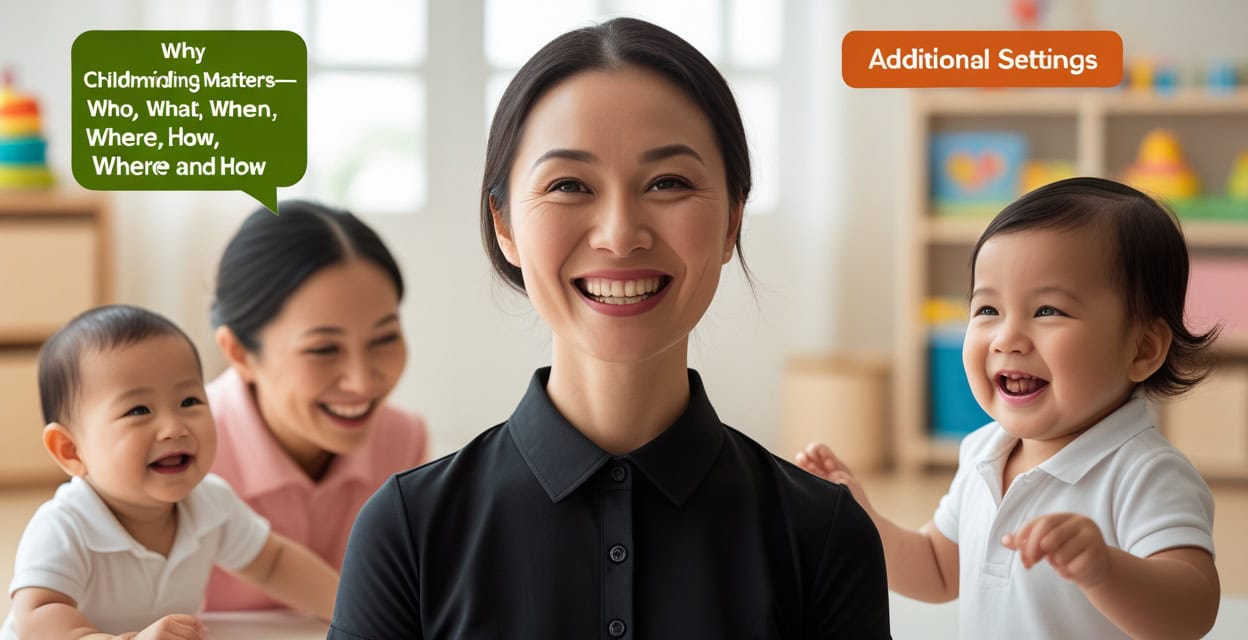
Closing: Why childminding matters—who, what, when, where, how
Who: Infants who need consistency; parents who need reliability; childminders whose skill and heart are a public good.
What: Ultra‑low‑ratio care that turns everyday routines into secure attachment and learning.
When: During the hours that sustain working families, without stretching babies beyond their natural rhythms.
Where: In neighbourhood homes and community micro‑hubs that feel personal—and are held to professional standards.
How: Through trained people, thoughtfully prepared places, clear policies, and a national framework that keeps services safe, affordable, and accountable.
EduNanny’s philosophy is simple: small numbers, deep attention, big outcomes. We honour infants as competent learners, parents as first teachers, and childminders as trusted professionals. Together, we are building not just care slots, but a culture of dignity, safety, and delight in the earliest months of life.
On behalf of EduNanny by BUTLER, thank you for the privilege of caring for your little ones, for believing that quality should be close to home, and for helping us lift a national standard—one calm, curious, well‑held baby at a time.
Conclusion: A call to action for families
EduNanny invites families to explore, ask questions, and enroll in a model of infant care that prioritises attachment, safety, development, and dignity. Visit our pages to learn more, arrange a space‑by‑space tour, and begin your child’s small circle with big possibilities today.
[#infantcareSingapore, #childmindingSingapore, #ECDApilot, #attachmentbasedcare, #homebasedchildcare]