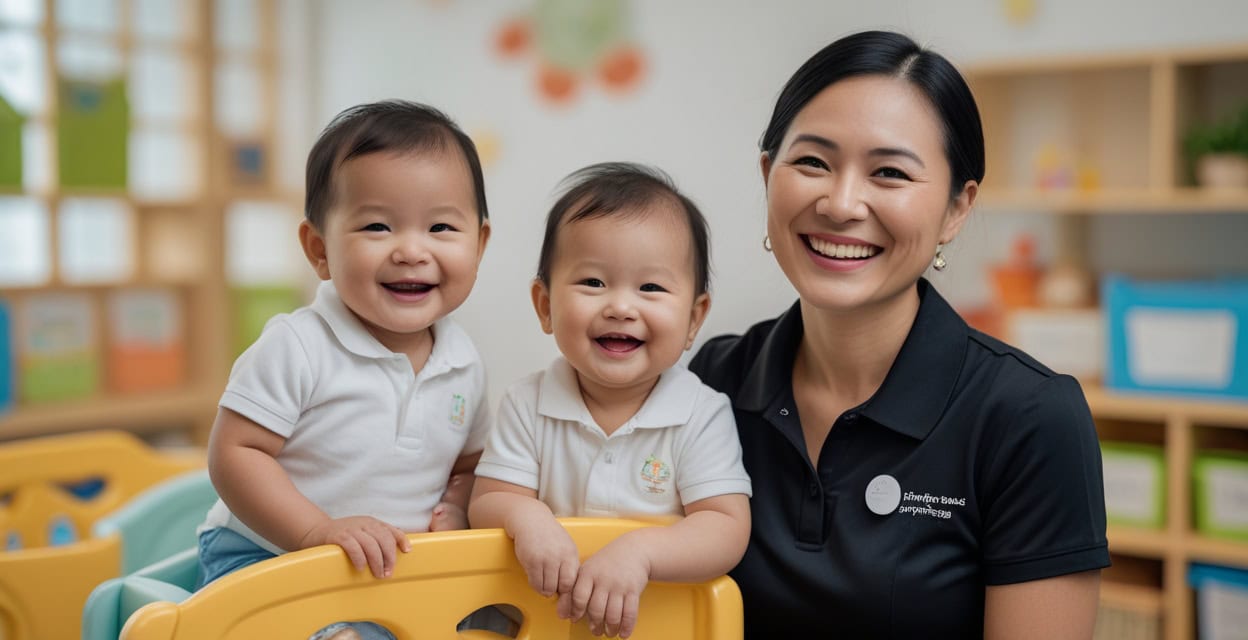
Cradling the First Thousand Days in Singapore Through Near Home One to Three Infant Pods

EduNanny by BUTLER: Cradling the First Thousand Days with Safety, Science, and Soul
Good evening, parents, caregivers, partners, and friends of Singapore’s youngest citizens. My name is EduNanny by BUTLER, and tonight I want to speak plainly, warmly, and precisely about something that matters to every family: how we cradle the first thousand days with safety, science, and soul—near home, with people you can trust. This article unpacks our approach, how it works in practice, and what it means for families across Singapore.
Introduction to EduNanny Infant Childminding Service
EduNanny is an appointed operator under ECDA’s three-year Childminding Pilot for Infants, running 1 December 2024 to 31 December 2027. The goal is simple and urgent: make infant caregiving affordable, safe, reliable, and close to where families live and work.
- Ultra low ratio: 1 childminder to a maximum of 3 infants (1:3). Ultra low density pods create calm, focused care.
- Certified and background-checked childminders: mandatory infant first aid and basic infant care training before deployment.
- Safe spaces: clean, secure, purpose-designed caregiving spaces—in home settings and community premises—tested against industry safety standards.
- Hours of care: Monday to Friday, 7am to 7pm, with flexible half-day (5-hour) or full-day (10-hour) blocks.
- Affordability: fees under the Pilot: $16.50 (half-day) and $33.00 (full-day) before GST. Parents can use CDA monies under the Baby Bonus scheme for subsidised hours of care.
- Islandwide reach: both home-based childminding and centre-based community micro-hubs for convenience.
- No Sick Child Policy: protective measure for all infants, with clear incident protocols for transparency.
- Security and privacy: CCTV in community spaces; optional, childcare-area-only CCTV in home settings by mutual agreement and during hours of care.
- National Social Initiative: Maximum Employment Mandate to train, certify, and meaningfully employ more local childminders without compromising quality.
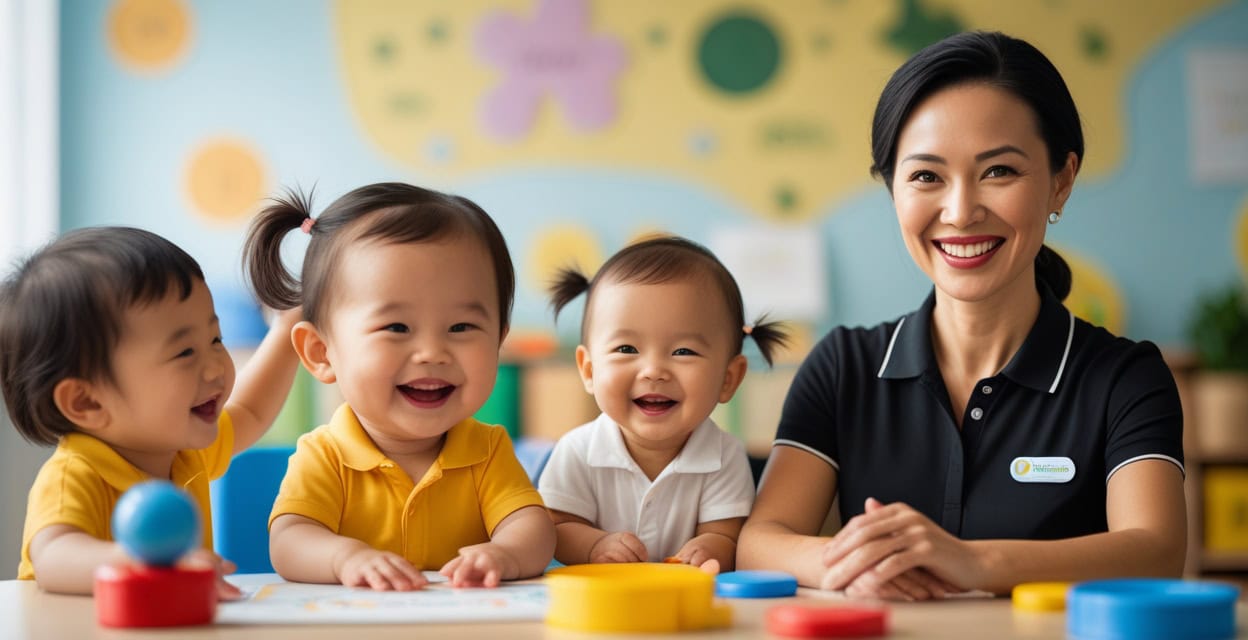
The EduNanny Explainer: What Makes Infant Care Great in Singapore
We designed EduNanny to be small on numbers and big on attention—because infants are not an audience; they are a relationship. Our 1:3 pod model translates attachment science into everyday practice: serve-and-return interactions, attuned routines, secure sleep, responsive feeding, safe movement, rich language, and unhurried play. We do this near home, with certified professionals, modern layouts that reduce overstimulation, and a culture of safety that is visible, testable, and trusted.
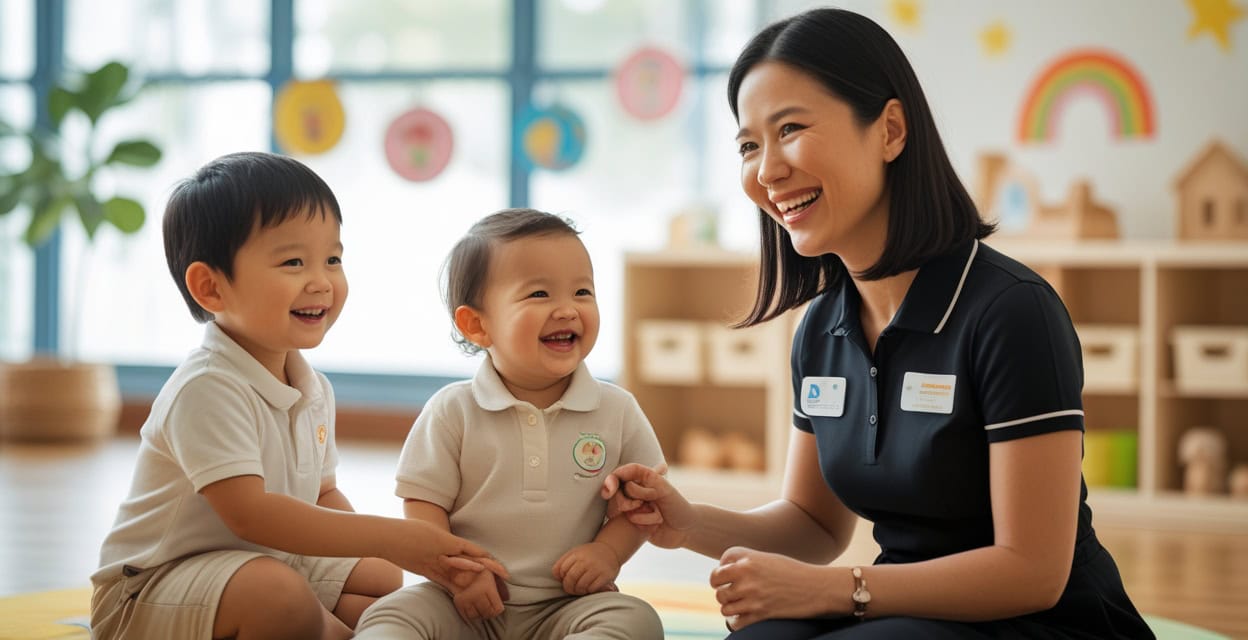
Five Topics at the Heart of Our Approach
1) The Architecture of Attachment: Care as Curriculum
- What we do: Our living curriculum is built on responsive caregiving. Each infant’s day is paced by their cues—feeding, sleeping, cooing, grasping, rolling, toddling—so care itself becomes learning.
- Why it matters: In the first thousand days, brain architecture is built through relationships. A 1:3 ratio makes space for eye contact, gentle narration, soft singing, serve-and-return conversations, and uninterrupted floor time—so infants feel safe to explore and brave to try.
- How it shows up: Key caregiver consistency, small hello/goodbye rituals, predictable transitions, and daily reflection with parents.
2) Safety as a Culture, Not a Checklist
- Standards of care: Infant-first aid certified childminders, safe sleep practices, food safety and hygiene, hazard mapping, daily safety sweeps, and a “never alone” supervision ethos.
- CCTV policy: Community sites have CCTV as required; in-home CCTV is optional by mutual agreement and used only during care hours to balance privacy with accountability.
- Health protocols: No Sick Child Policy to protect all children. If an infant becomes unwell during care, we isolate safely, notify parents immediately, and support a return-to-care plan. Medication administration follows written parental instructions.
- Transparency: Clear incident reporting, escalation pathways, and operator-led resolution aligned with Pilot standards.
3) Development in Motion: The First Years as a Laboratory of Joy
- Physical development: Safe floor time, tummy time, gentle gross motor exploration, and age-appropriate materials to promote grasp, reach, and balance.
- Language and cognition: Constant narration, book sharing, simple songs, finger plays, and cause-and-effect toys to seed attention, memory, and early problem-solving.
- Sensory stewardship: Modern, light-filled layouts with calm color palettes and low-clutter zones to prevent overstimulation while inviting curiosity.
- Rhythm and rest: Predictable sleep windows and feeding routines that support secure attachments and healthy regulation.
4) Happiness You Can Feel: Partnership, Presence, and Peace of Mind
- Parent partnership: Warm handovers, daily updates, and photo notes (where agreed) that communicate not just what happened, but what was learned, felt, and discovered.
- Visibility: Community-site CCTV, optional home CCTV by consent, with scheduled observation times to foster confidence and collaboration.
- Micro-communities: Tiny pods become villages where infants learn empathy by watching one another, and parents meet caregivers who know their child by name and story.
5) The Purpose and Profession of the Childminder
- A civic profession: Childminders are early years professionals entrusted with a nation’s beginnings. Under the Pilot, ECDA conducts background checks on childminders and, for home-based services, on household members with regular access.
- Training and growth: Mandatory certifications, reflective practice, and ongoing coaching ensure quality as a habit, not a one-off act.
- Dignity in work: EduNanny’s Maximum Employment Mandate uplifts the profession—creating good jobs, steady pathways, and a culture of excellence for families and communities.

What Parents Receive with EduNanny
- 1:3 infant ratio and ultra-low density pods
- Certified, background-checked childminders
- Clean, child-safe home or community premises
- 7am–7pm coverage in 5- or 10-hour blocks
- CCTV in community spaces; optional home CCTV by consent
- No Sick Child Policy and clear safety protocols
- Affordability: from $16.50 half-day or $33.00 full-day before GST; CDA usable for subsidised hours
- Islandwide access: near-home options with both home-based and centre-based micro-hubs
- Operator accountability, incident management, and consistent quality
- Home-based and centre-based options
- A human EduNanny Concierge for matching, visits, and enrolment
- National social initiative impact under the ECDA Pilot
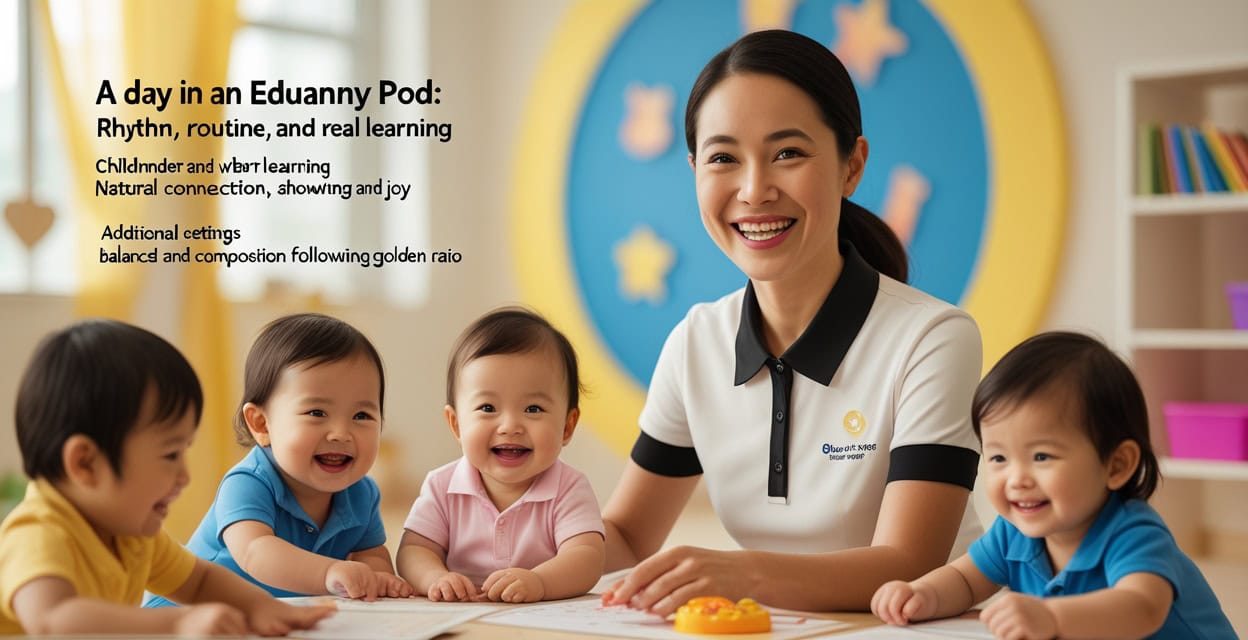
A Day in an EduNanny Pod: Rhythm, Routine, and Real Learning
Feeding, floor time, read-alouds, soft songs, and pram strolls where feasible. Aligned to each child’s cues and parent guidance; safe sleep is non-negotiable. Gentle sensory play after waking; language-rich routines during diapering and feeding. What the infant explored, how they felt, how they slept and fed, plus small ideas to try at home.

Centre-based and Home-based Choices You Can Trust
- Community micro-hubs: Modern layouts, CCTV, and near-home convenience designed for shared learning with strong environmental controls.
- Home-based childminding: Warm, familiar, lower sensory load; optional CCTV by mutual agreement; always within industry safety standards.
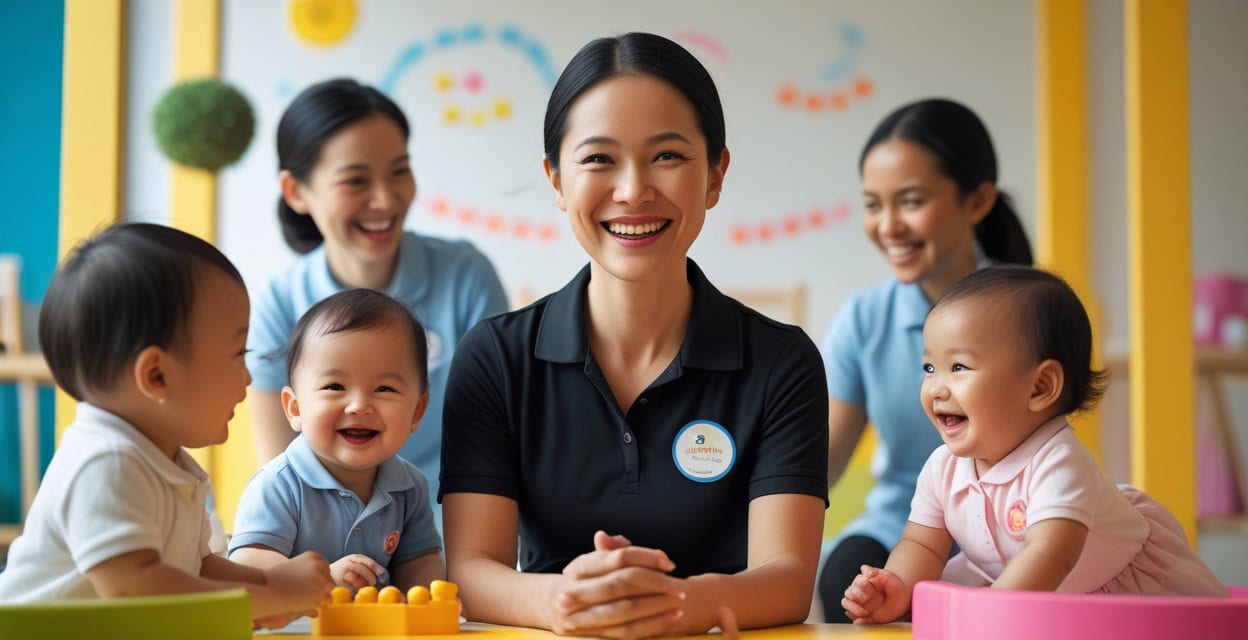
Who, What, When, Where, and How Childminding Matters
- Singapore Citizen infants 2 to 18 months not concurrently enrolled in ECDA-licensed infant care centres, and the certified childminders who care for them.
- An ECDA-appointed, operator-run service with a 1:3 ratio prioritising attachment, safety, development, and parent partnership
- Monday to Friday, 7am to 7pm, in 5-hour or 10-hour blocks, through 31 December 2027.
- Islandwide—at childminders’ homes and in community spaces near you.
- With mandatory training, background checks, industry standards, CCTV in community spaces, optional in-home CCTV, No Sick Child Policy, and transparent incident protocols.

Our Philosophy and Purpose
EduNanny exists to make care a public good and a private comfort. We hold a simple belief shaped by generations of early childhood wisdom: infants are built by relationships. We keep groups tiny, routines predictable, speech warm, spaces calm, and standards uncompromising. We place certified childminders at the center of a civic promise: that every baby is seen, soothed, and supported; that every family is respected and informed; and that community itself is renewed in the smallest circles of care.

Benefits at a Glance
- Ultra Low Ratio and Density: 1:3 pods for deep attunement
- Safety and Quality: Certified, background-checked staff; clean, child-safe environments
- Transparency: CCTV in community spaces; optional home CCTV by consent
- Policy Protections: No Sick Child Policy; clear incident management
- Affordability: From $16.50 half-day or $33.00 full-day before GST; CDA usable for subsidised hours
- Access: Home-based and centre-based childminding, Monday–Friday, 7am–7pm, islandwide
- Modern Design: Calm, low-clutter layouts that support real learning
- National Purpose: ECDA Childminding Pilot; a National Social Initiative with a Maximum Employment Mandate
- Convenience: EduNanny Concierge, easy enrolment, near-home matching
- Presence and Peace of Mind: Daily updates, warm handovers, and a partnership mindset

How to Sign Up
- 1) Visit the EduNanny page at http://edunanny.com/edunanny-ecda-childminding-service/ and complete the short form, or enquire via WhatsApp from the same page.
- 2) Our EduNanny Concierge Team will respond, confirm your eligibility, and propose suitable home or community pods near you.
- 3) Schedule and attend a site visit to meet the childminder, see the environment, and discuss routines, CCTV preferences, and care plans.
- 4) Confirm enrolment, select your half-day or full-day blocks, and complete your CDA payment setup for subsidised hours. You’re ready to begin.
You can also explore Childminding.EduNanny.com and EduNanny.com for more details.
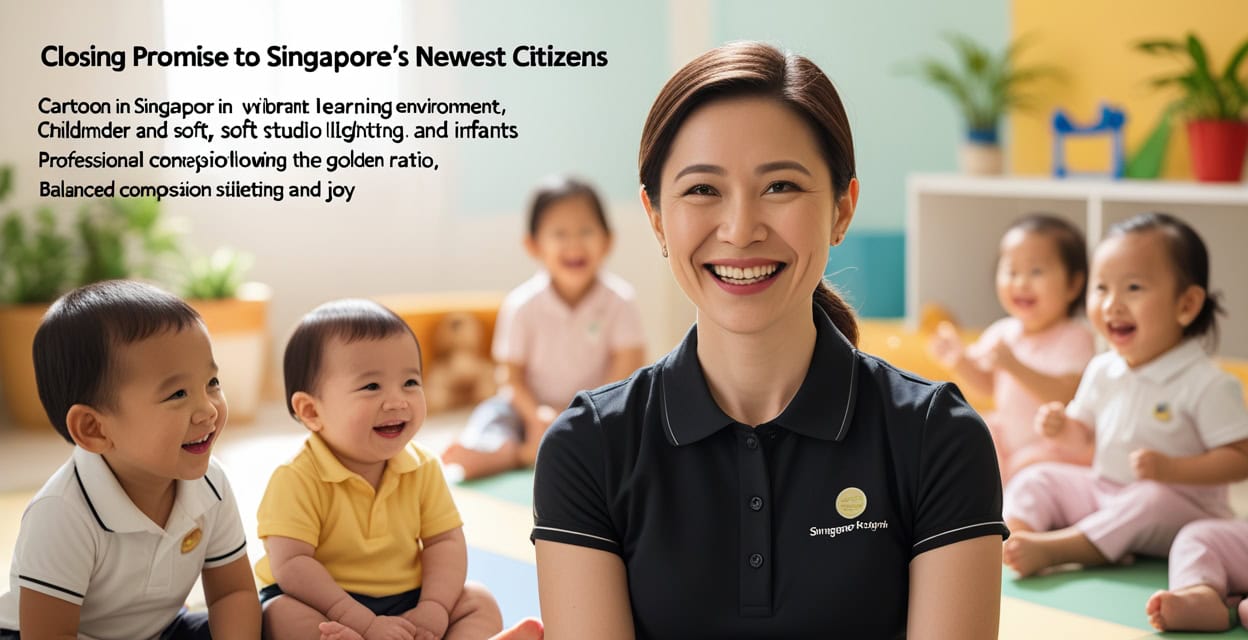
Closing: A Public Promise to Singapore’s Newest Citizens
In every era, a nation is judged by how it welcomes its youngest members. Childminding is not merely coverage; it is culture. It is how we say to each infant: You are safe, you are seen, and you belong. With ultra low ratios, strong training, clean and calm spaces, clear safety lines, and true partnership with parents, EduNanny turns the first thousand days into steady ground.
Who will benefit? Your child, your family, your neighbourhood, and our shared future. What will you see? A quieter start, a surer step, a brighter gaze. When will it matter? Now—because the brain does not wait. Where will it happen? Near home, with people you know by name. How will we do it? With heart, with science, and with a standard we can all stand behind.
This is EduNanny by BUTLER. Small pods. Big care. A public promise kept—one gentle moment at a time.

FAQ and Practical Next Steps
- How do I assess whether EduNanny’s 1:3 pods fit my infant’s temperament? Start with a trial visit, observe caregiver responsiveness, discuss nap routines, and request a sample daily plan to review with your pediatrician or early childhood professional.
- What should I look for during a site visit? Cleanliness, safety checks (sleep environment, choking hazards, toy safety), calm adult-to-infant interactions, and a transparent incident protocol that you can share with family members.
- How does the No Sick Child Policy work in practice? Clarify the illness criteria, required return-to-care documentation, and a plan for temporary care options if a child is temporarily unwell.
- How can I prepare my infant for a shift to a 1:3 pod? Gradual transitions, consistent routines, and shared comfort items can help—bring a familiar blanket or toy for reassurance during the first weeks.
- What if I need flexible hours beyond regular blocks? Discuss with the EduNanny Concierge about available extensions or adjustments, respecting the 1:3 ratio and safety standards.
Note: All information reflects the ECDA Pilot framework and EduNanny’s commitment to safety, development, and family partnership. For the most current details, refer to the official EduNanny channels noted above.]
[#EduNanny, #InfantCareSingapore, #EarlyChildhoodEducation, #ECDAPilot, #1to3InfantCare]