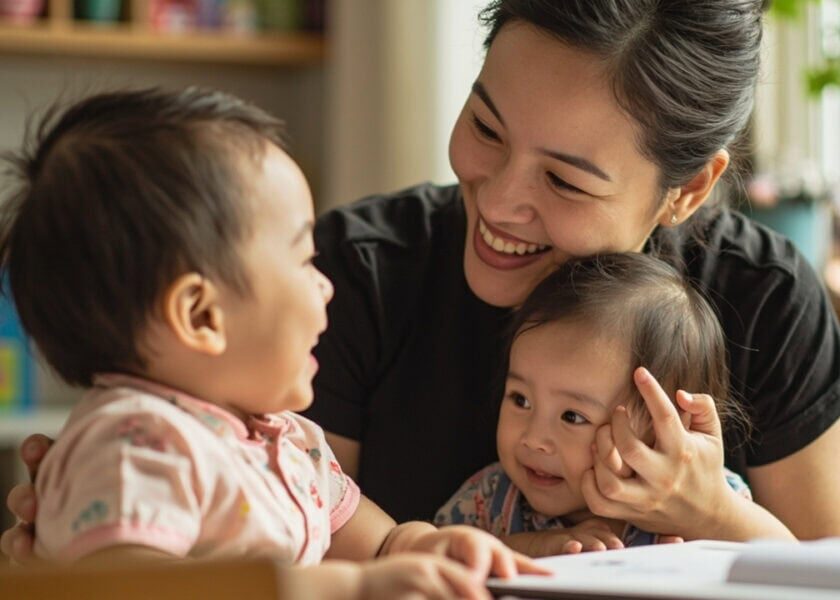
Small Circles Big Futures EduNanny Near Home Pods December 2024 to December 2027 Singapore First Thousand Days

Introduction: Why EduNanny exists
In every culture and across every era, one truth endures: infancy is not a waiting room for life; it is life. It is the time when trust is wired, curiosity awakens, and the body learns the language of safety and joy. EduNanny was created for this very moment. We blend the wisdom of Montessori’s respect, Piaget’s discovery, Vygotsky’s guided growth, Froebel’s play, Malaguzzi’s “hundred languages,” Bowlby’s attachment, Pikler’s gentle caregiving, Spock’s common-sense warmth, and Erikson’s first task—trust—into a Singaporean model that is practical, accountable, and profoundly human.
EduNanny Infant Childminding is part of ECDA’s national Childminding Pilot for Infants (1 December 2024 to 31 December 2027), alongside fellow appointed operators. Under this pilot, Singapore Citizen infants aged 2 to 18 months can receive near‑home care in childminders’ homes or in community spaces, with an intentionally ultra‑low ratio of one childminder to a maximum of three infants at any one time. The pilot keeps care affordable, safe, and reliable for working families, Monday to Friday, 7am to 7pm, excluding public holidays.
What makes EduNanny different
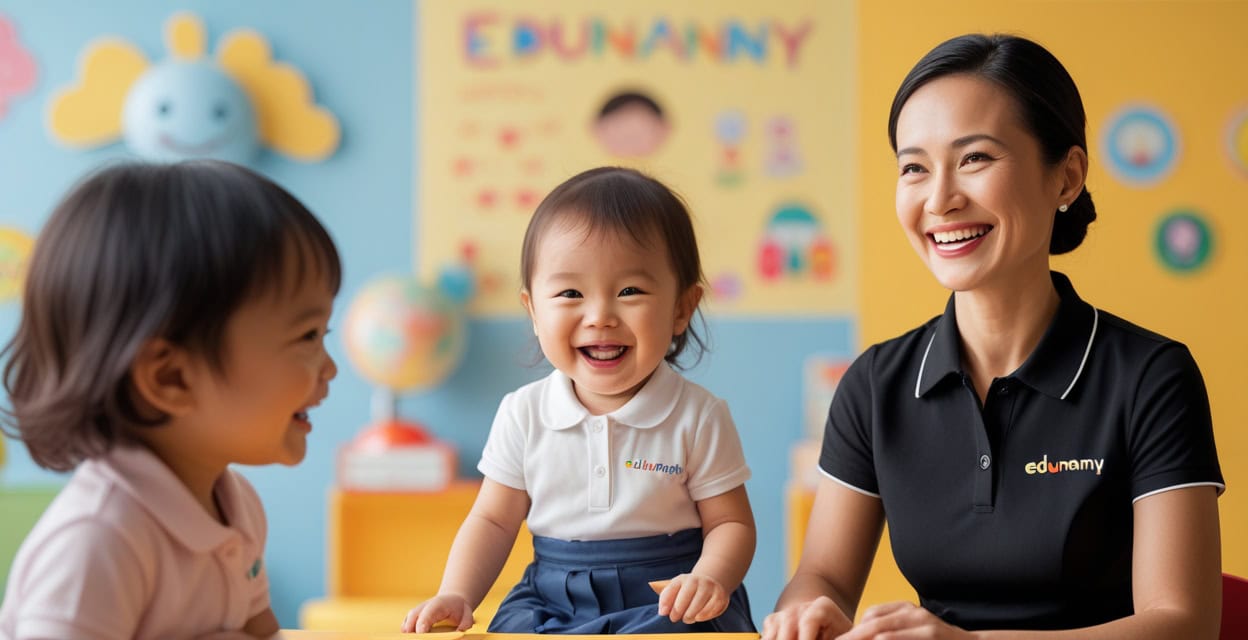
We designed EduNanny around a simple principle: infants flourish in tiny, well‑held circles of care. Our micro‑pod model is small on purpose—ultra low density and ultra low ratio—so that every infant is known, attuned to, and responded to in real time. We blend national standards with a living, human‑centered practice:
- Safety: Certified, background‑checked EduNanny childminders; infant first aid and basic infant care training; food safety know‑how; home and community environments assessed for child safety; incident protocols that are clear and transparent.
- Visibility and trust: CCTV provided in community spaces in line with pilot requirements, and encouraged in home settings during care hours for caregiving areas to support transparency while respecting household privacy.
- Affordability and access: Government‑subsidised fees during working hours—half‑day (5 hours) at $16.50; full‑day (10 hours) at $33.00 before GST. Parents may use Child Development Account (CDA/Baby Bonus) to pay during subsidised hours.
- Health and hygiene: A firm no‑sick‑child policy to protect tiny pods; clean, well‑ventilated spaces; rigorous hand‑hygiene and sanitisation routines.
- Choice and convenience: Near‑home childminders and community premises across Singapore; Monday–Friday, 7am–7pm; options tailored by days per week and care blocks.
- A social purpose: As an appointed operator in a national initiative, EduNanny’s internal maximum‑employment mandate aims to train, uplift, and professionalise childminders, growing meaningful local jobs while serving families islandwide.
Four pillars of our infant pedagogy and care
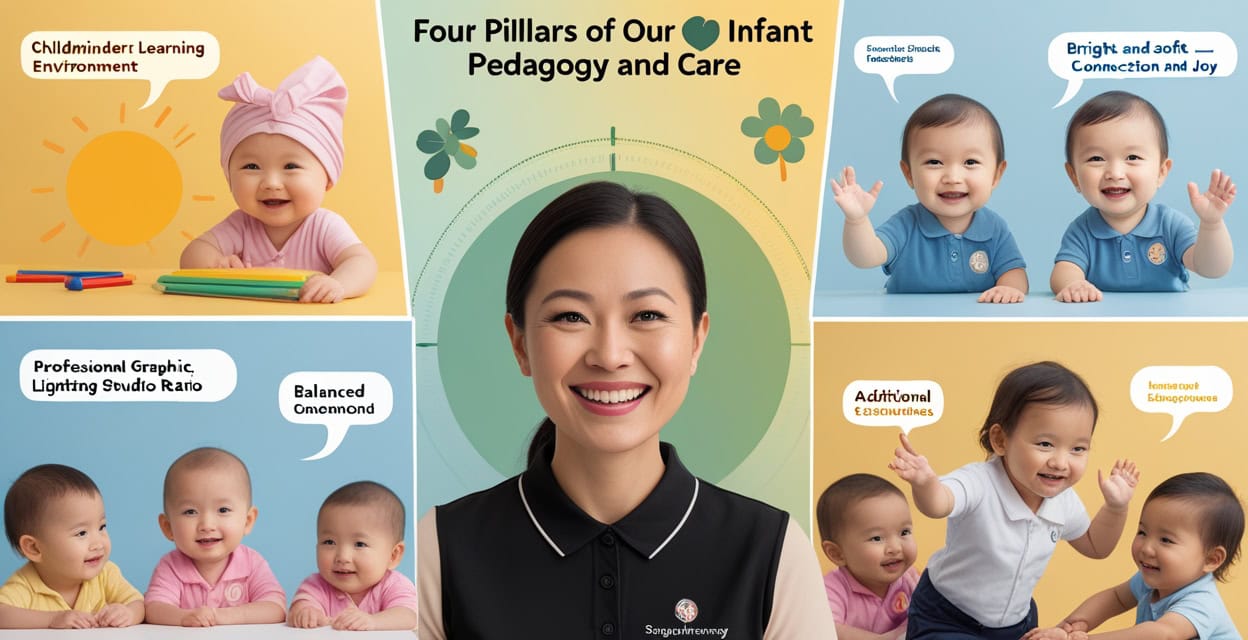
1) Attachment-first practice: the science of trust
Our first promise is a secure base. One consistent childminder per pod learns your infant’s cues—sleepy sighs, feeding rhythms, the difference between a protest and a plea. We practice “attuned routines”: care moments such as diapering, feeding, and settling become micro‑lessons in dignity and communication. We narrate what we’re about to do, follow your baby’s tempo, and wait for tiny signals of readiness.
Actionable ideas for parents:
- Establish a simple daily routine at home (wake, feed, play, rest) and share a one‑page cue sheet with EduNanny caregivers.
- Use a consistent phrase before transitions (e.g., “Time to settle for a nap now”) to help your baby anticipate and regulate.
- Ask the caregiver to maintain a small daily diary of mood, sleep, and feeds to reinforce home rhythms.
Outcome: calmer infants, steadier sleep, and faster regulation after upset. Trust becomes the daily experience of being safe and seen.
2) A development blueprint that is small, specific, and sensory
Piaget reminds us the sensorimotor world is built with hands, mouths, and eyes. Our micro‑pods curate just‑right stimulation: high‑contrast visuals for younger infants; soft graspers, nesting cups, crinkle cloths, and treasure baskets for older infants. Vygotsky’s guidance prompts “serve‑and‑return” conversations and supported exploration. Montessori informs our space layout—floor time on open mats, low shelves, safe materials within reach so babies learn independence within borders.
Practical home play ideas:
- Provide a daily rotation of safe, age‑appropriate materials (e.g., a soft fabric, a set of teething rings, a mirror) to spark exploration.
- Offer guided turn‑taking games with clear adult cues to scaffold early communication.
- Balance sitter time, tummy time, and supported standing with gentle prompts to reach new skills at the infant’s pace.
3) Safety is culture, not a checklist
We embed safe sleep routines (firm cot or playpen, back position, no loose bedding), feverish care decisions, and consistent hygiene practices. We maintain soft boundaries that respect both infant needs and family routines. Our CCTV approach supports training, quality assurance, and parent peace of mind while safeguarding privacy.
Key routines you can reinforce at home:
- Consistency in sleep environment: keep a similar temperature, lighting, and noise level during nap times.
- Vigilant, gentle handling during feeding and transitions to reduce startle responses.
- Documented emergency contacts and a clear plan for illness management that aligns with home routines.
4) Joy as a developmental accelerant
Froebel and Malaguzzi remind us that play and expression are the curriculum. We sing names, mirror babbles, read faces, and celebrate tiny victories. Micro‑rituals—morning greetings, calm transitions, outdoor time when possible—make happiness a daily, predictable experience. Joy is the safest classroom on earth.
Simple joy‑driven practices for families:
- Begin each day with a shared hello song or touchpoints between caregiver and infant to set a positive tone.
- Incorporate mini outdoor experiences, even a short stroll to a nearby park or balcony garden if possible.
- End the day with a winding‑down routine that cues sleep and offers secure, predictable closings to foster a sense of safety.
How EduNanny makes childminding work for Singapore families
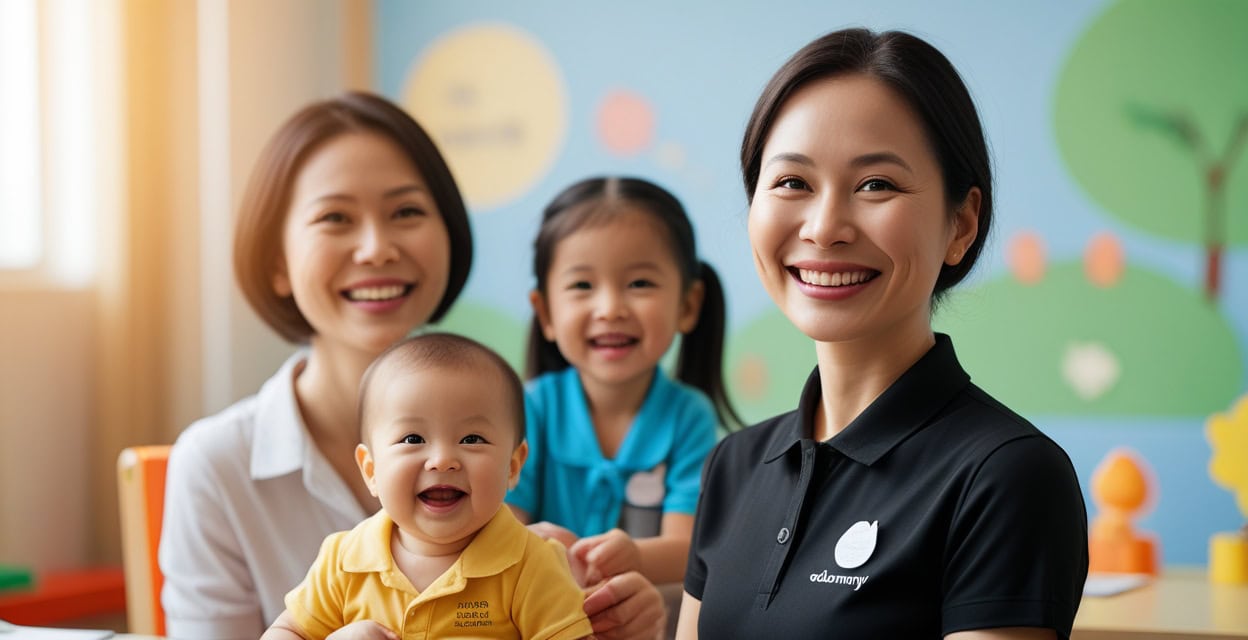
- Ultra‑low ratio care: 1:3 means more eye contact, faster response, safer handling, and steadier routines.
- Near‑home access: care in the childminder’s home or community premises reduces commute strain and keeps infants in familiar neighbourhood rhythms.
- Integrated oversight: ECDA conducts background checks extending to household members with regular access; EduNanny adds assessments, mentoring, and ongoing quality reviews.
- Transparent, fair pricing: Government‑subsidised hours and CDA/Baby Bonus options help families manage costs during subsidised times.
- Availability that matches working lives: Monday–Friday, 7am–7pm, with options for additional hours discussed directly with EduNanny at regular rates.
What a day in an EduNanny micro‑pod looks like
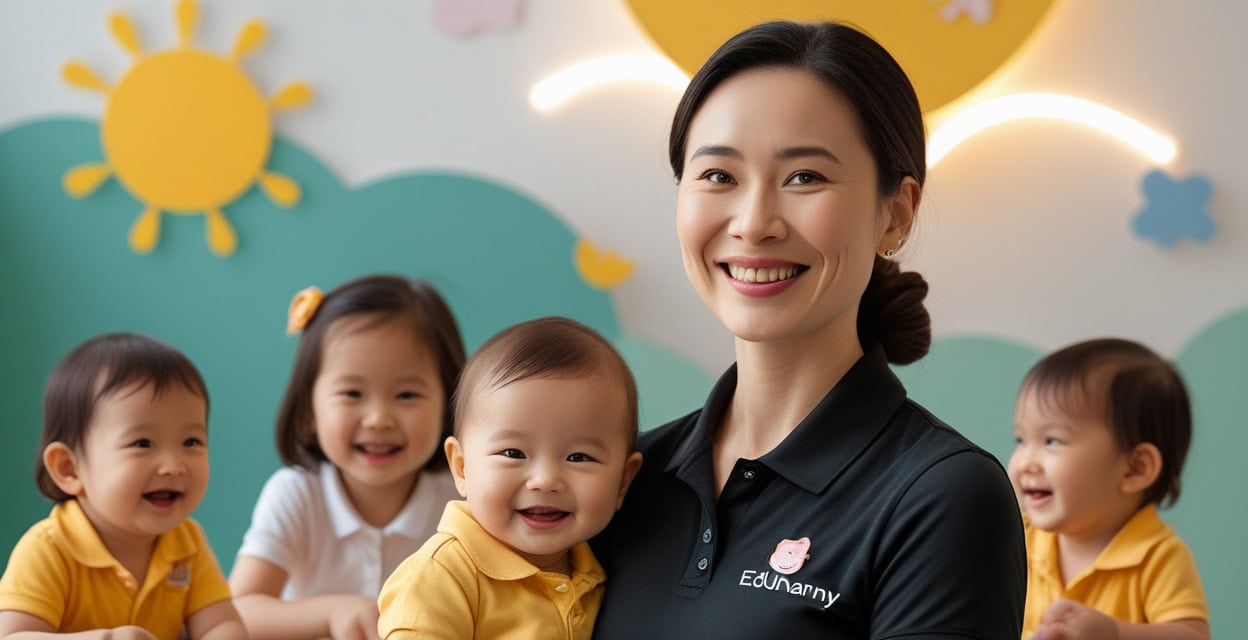
Arrival and attunement: Warm greeting, health check, hand hygiene. We note last feed, sleep, and mood from the morning.
Nourish and notice: Paced feeding; tummy time; name songs; cause‑and‑effect play; stroller time when appropriate and parent‑approved.
Sleep with safeguards: Individualised settling; safe sleep standards observed; quiet monitoring; sleep logs maintained.
Gentle growth: Floor exploration, grasp and release, early sound imitation, soft‑object permanence play.
Close the day: Calm transition, summary to parents—feeds, naps, diapers, highlights, and any observations to support home routines.

Key benefits at a glance
- Ultra Low Density, Ultra Low Ratio (max 1:3)
- CCTV provided in community spaces; encouraged/home‑appropriate visibility solutions
- Certified EduNanny Childminders; background‑checked; ECDA‑approved training
- No Sick Child Policy to protect all infants
- National initiative under ECDA’s three‑year Childminding Pilot
- Excellence, quality assurance, and continuous mentoring
- Home‑based and community‑based care near you
- Distance and convenience: available islandwide
- Affordable from $33/day (10 hours, before GST); half‑day $16.50 (5 hours)
- Monday–Friday, 7am–7pm
- Fees payable using CDA/Baby Bonus during subsidised hours
- Innovation in layout and routines designed for infant autonomy and joy
- EduNanny.com and Childminding.EduNanny.com for information and support

Five topics that matter—and how EduNanny advances each one
1) Safety as a relationship
Beyond gates and guards, safety begins with predictable, loving adults who read cues well. Our training turns supervision into attunement and risk prevention into everyday calm.
Practical steps for families:
- Ask about caregiver availability and how they handle daily safety cues (e.g., hunger, over‑tiredness, overstimulation).
- Request a short home safety assessment checklist from EduNanny during orientation to align spaces with infant needs.
2) Development without rush
We never hurry milestones. We prepare the environment, observe closely, and follow each infant’s readiness—because secure development is a sequence.
What to watch for at home:
- Provide opportunities for independent exploration in safe spaces and celebrate small steps (rolling, reaching, babbling).
- Track a simple milestone map and discuss progress with your caregiver each week.
3) Happiness as a right, not a reward
Joyful caregiving reduces stress hormones and opens the brain to learning. Our pods are quiet by design, playful by intention, and responsive by habit.
Tips to foster daily joy:
- Infuse play with social interaction: singing, mirroring facial expressions, and responsive pauses.
- Keep a predictable rhythm that provides a sense of safety and anticipation.
4) The purpose of childminders
Childminders are community educators and attachment builders. EduNanny trains and honors them as professionals whose daily craft safeguards Singapore’s future.
Parents can support this by:
- Asking about ongoing professional development plans for caregivers.
- Requesting clear communication channels for updates, concerns, and home routine alignment.
5) A civic promise fulfilled locally
The ECDA pilot is a national framework; EduNanny turns it into near‑home reality. When parents work with confidence and infants are cared for with dignity, a city grows both productive and kind.
How to contribute locally:
- Engage with care teams during site visits; share family values and routines to tailor the pod environment.
- Support continuous improvement by providing constructive feedback through formal channels.
Who, what, when, where, how—why childminding matters now
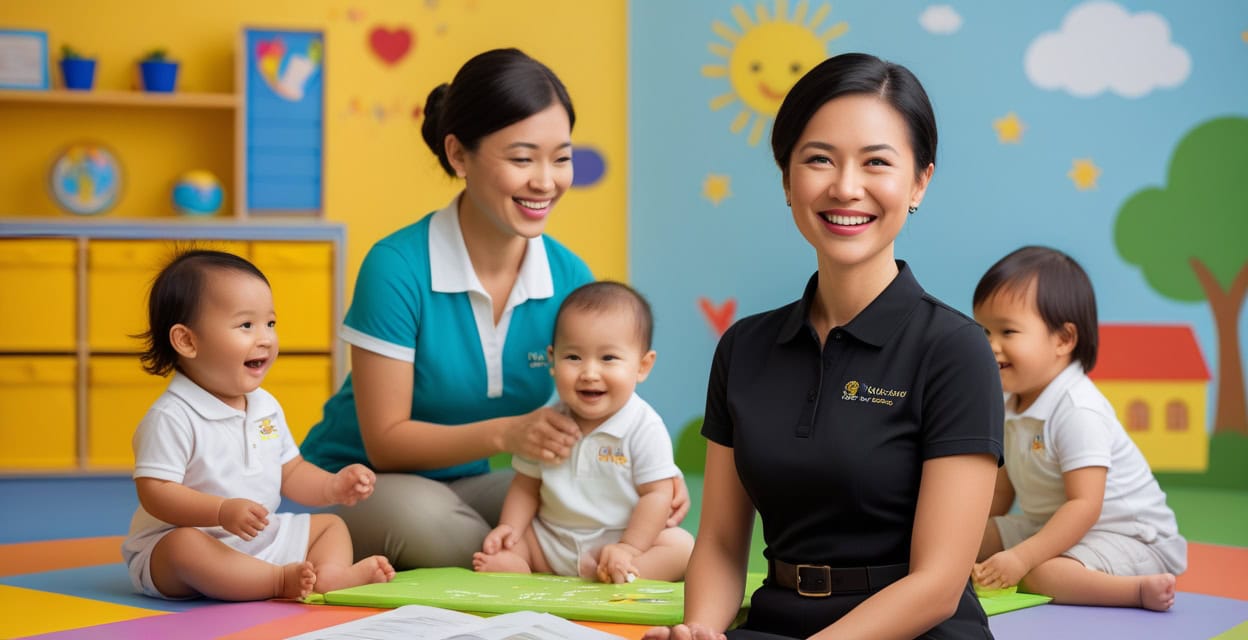
- Who: Singapore Citizen infants aged 2 to 18 months who need warm, reliable care in tiny circles of trust.
- What: Government‑subsidised infant childminding in 5‑hour or 10‑hour blocks, with a maximum of 1:3 ratio and professional oversight.
- When: Monday to Friday, 7am to 7pm, from 1 December 2024 to 31 December 2027.
- Where: In the childminder’s home or in community premises near you, with CCTV in community spaces and home‑appropriate visibility options.
- How: Through ECDA’s appointed operators—EduNanny by BUTLER among them—who recruit, train, support, and supervise certified childminders, and who partner closely with parents.

The EduNanny philosophy and promise
Our philosophy is simple: presence before practice, practice before program. When infants feel safe, they explore; when they explore, they learn; when they learn with joy, they thrive. The purpose of EduNanny is to dignify the first thousand days with care that is measurable in quality and immeasurable in love. We exist so that parents can work with peace of mind, childminders can grow as respected professionals, and infants can meet the world with trust and curiosity.
How to sign up
– Visit https://edunanny.com/edunanny-ecda-childminding-service/ to complete the form, or enquire via WhatsApp from our site.
– Receive a prompt response from the EduNanny Concierge Team.
– Confirm your appointment for a site visit to a childminder’s home or community pod.
– Enrol, align routines, and begin your child’s journey.
Closing
In a fast city, the smallest unit of progress is not a new building or a new app. It is an infant being held, fed, and spoken to with patience. EduNanny’s micro‑pods are small by design, because human growth is intimate work. With the ECDA Childminding Pilot, with trained and trusted childminders, with affordability that respects families, and with a pedagogy anchored in attachment and joy, we are building something larger than a service—we are building a culture.
To every parent here: your infant’s first thousand days are Singapore’s next fifty years. Let’s make them safe. Let’s make them joyful. Let’s make them count.
[#keyword1, #keyword2, #keyword3, #keyword4, #keyword5]