
Near Home 1 to 3 Infant Pods Pilot in Singapore December 2024 to December 2027 A Living Curriculum of Safe Joyful Attachment

Introduction: A Simple Idea with Profound Consequence
Good evening, parents, caregivers, partners, and friends of Singapore’s youngest citizens. This moment is about more than care; it is about shaping the arc of a life, one attentive moment at a time. When infants are cared for with precision, heart, and science—close to home and within circles of trust—we set the foundation for a future nation that is resilient, verbal, confident, and inclusive.
EduNanny Infant Childminding Service, appointed by the Early Childhood Development Agency (ECDA) under Singapore’s three-year Childminding Pilot for Infants, embodies this vision. From 1 December 2024 to 31 December 2027, we serve Singapore Citizen infants aged 2 to 18 months in ultra-low-ratio pods of one to three infants, Monday to Friday, 7am to 7pm. We operate islandwide, in carefully prepared home environments and in community micro-hubs designed with safety rigor and a pedagogy of responsive care.

EduNanny’s Foundational Principles
- Near-home simplicity: Dignified, reliable infant care within reach—minimizing cross-town commutes and long waits that outlast maternity leave.
- Ultra low ratios: A 1:3 infant ratio is not a luxury; it is the condition for true attachment, observation-based learning, and safe practice.
- Transparent trust: Certified, background-checked childminders; clear protocols; safety you can see with CCTV in community hubs and opt-in CCTV in home pods during care hours.
- Affordability with accountability: Government-subsidised hours in half-day (5-hour) or full-day (10-hour) blocks from $16.50 and $33.00 respectively (before GST), with the ability to use CDA funds under the Baby Bonus Scheme for subsidised hours.

The Five Fresh Lenses for Infant Care
1) The Attuned Triad: Attachment, Autonomy, and Attuned Adults
Infants learn primarily through relationships. EduNanny’s trained childminders read cues with sensitivity, not control outcomes. We embrace:
- Secure base care: Consistent primary caregivers within tiny pods build trust, reducing cortisol and supporting exploratory play.
- Gentle autonomy: Even the smallest hands deserve time to try—rolling, grasping, babbling—without rush. We scaffold effort, not just outcomes.
- Attuned pacing: Sleep, feeds, and play are individualized. We harmonize routines with evidence-based timing rather than enforcing a rigid schedule.
The daily rhythm becomes a feeling of being seen and valued—an atmosphere where a child feels capable and unhurried.
2) The Safety Ecology: Seven Rings of Protection
Safety is an ecosystem, not a checklist. EduNanny implements seven reinforcing layers:
- People: Certified EduNanny childminders with infant first aid, basic care, food safety, safeguarding modules; ECDA conducts background checks on childminders and, for home-based care, on household members with regular access.
- Spaces: Ultra-low density, modern layouts, age-appropriate zones, and hazard minimization aligned with industry standards.
- Ratios: A protected 1:3 infant ratio, ensuring real vigilance and responsive care.
- Health: No Sick Child Policy during pod hours, illness exclusion aligned to MOH/ECDA guidance; routine sanitization; safe bottle handling; and transparent incident protocols.
- Monitoring: CCTV in community spaces as required; opt-in CCTV in home-based pods during care hours with parent–childminder agreement to balance privacy and oversight.
- Routines: Safe sleep practices, safe transport handovers, and daily environment checks.
- Accountability: Incident reporting, operator oversight, and clear escalation pathways for parents.
Safety is a continuous practice—not a one-time promise.
3) The Micro-Pod Method: The Science of Small
Small pods yield large developmental dividends. In a 1:3 pod:
- Language flourishes with more conversational turns and responsive speech.
- Motor play is safer and smarter under active supervision and guided tummy time.
- Co-regulation becomes learnable; infants borrow calm and grow resilience through consistent attuned care.
- Observation informs tomorrow’s plan in real time; the Living Curriculum is responsive, not prescriptive.
Our approach treats daily care as a craft of noticing and responding—hour by hour, child by child.
4) Joy as a Metric
Happiness is an observable, improvable condition. Our Joy Indicators include:
- Warm starts: unrushed handovers and friendly greetings.
- Engagement: sustained attention, soft eye contact, relaxed babble.
- Emotional ease: quick repair after distress and readiness to explore again.
- Restorative sleep: safe sleep with smooth transitions and predictable comfort.
- Nourishment: calm, responsive feeding and healthy habits.
Daily reflections capture not just what was done, but how your infant felt during the day—turning care into meaningful growth.
5) The Civic Purpose of Childminding
Childminding is community infrastructure. Through the national pilot, EduNanny:
- Expands access: Centre-style community hubs and home-based pods near where families live and work.
- Elevates standards: A transparent, audited model parents can trust.
- Enables employment: Professional pathways for certified caregivers across Singapore—our commitment to dignified careers in care.
- Strengthens family rhythms: Flexible blocks within 7am–7pm on weekdays support working parents without eroding infant well-being.
What Parents Receive: A Clear View of Your Investment
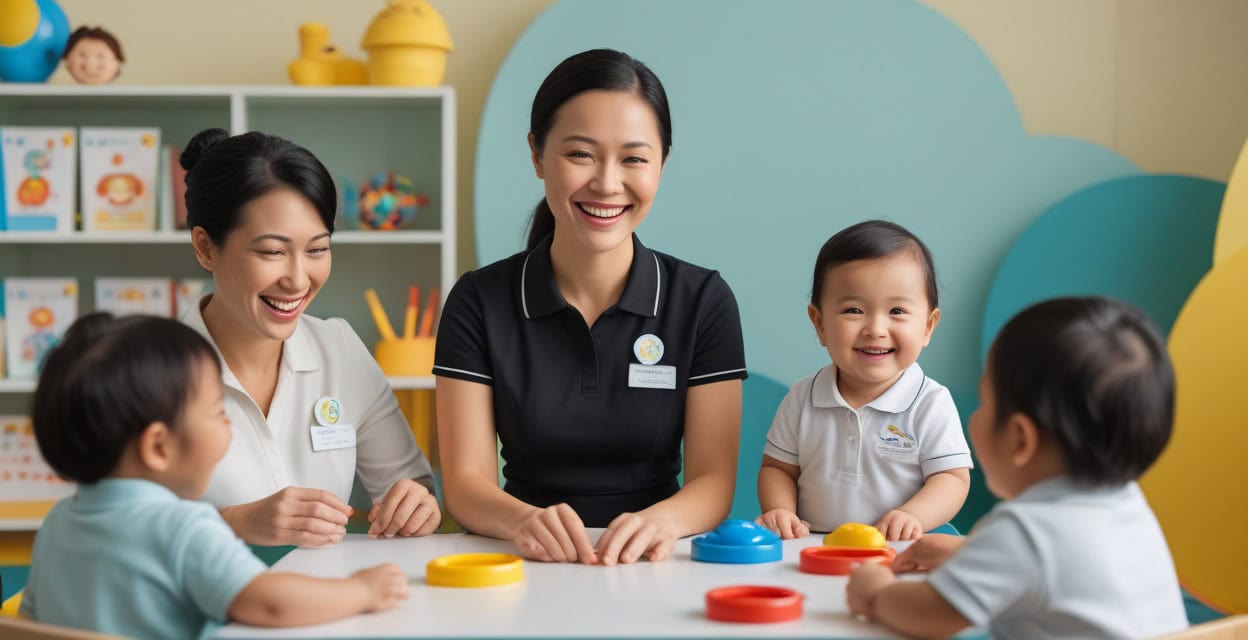
- Ultra-low density, ultra-low ratio pods (1:3).
- Certified, background-checked EduNanny childminders.
- Centre-style community hubs and home-based options.
- CCTV provided in community hubs; opt-in CCTV in home pods during care hours.
- No Sick Child Policy with clear illness exclusion to protect pods.
- Monday to Friday, 7am–7pm availability islandwide (excluding public holidays).
- Affordable government-subsidised blocks: Half-day 5 hours at $16.50, Full-day 10 hours at $33.00 (before GST).
- Fees payable via CDA (Baby Bonus) funds for subsidised hours; choose days and blocks weekly.
- Modern layouts, prepared environments, and a living curriculum of attuned care.
- A dedicated EduNanny Concierge for onboarding, site visits, and ongoing support.
- Operated by EduNanny by BUTLER under ECDA’s national Childminding Pilot.
A Day in an EduNanny Pod
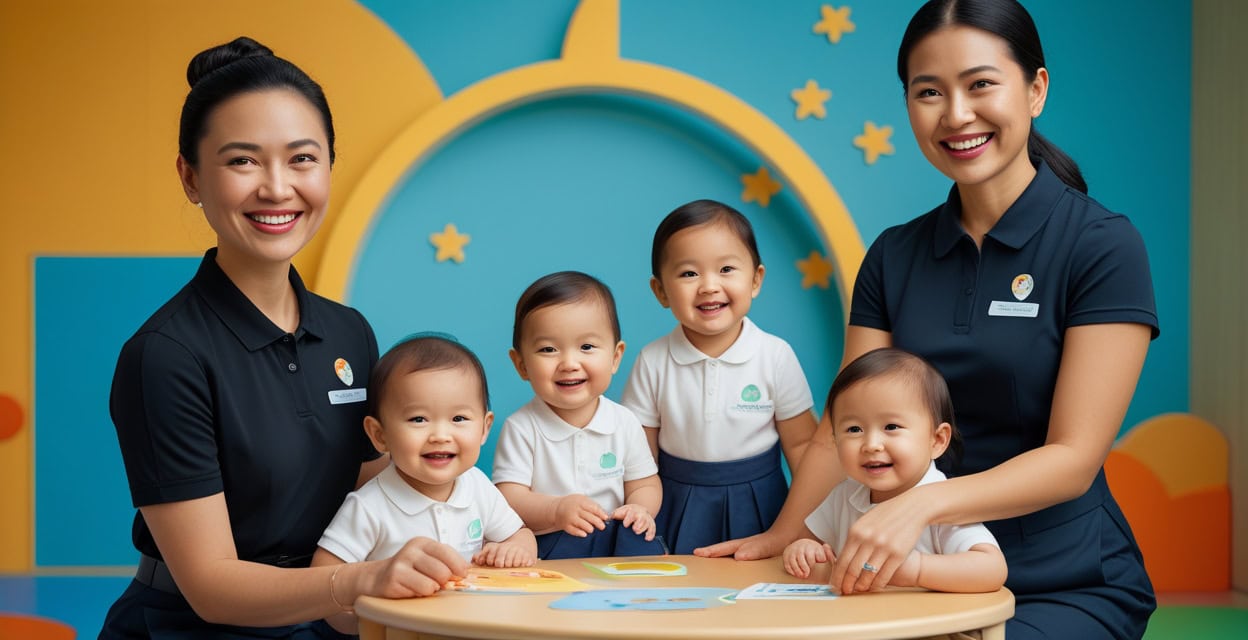
It begins with a warm hello, a brief handover, and a familiar caregiver who understands your infant’s sleep cues and feeding pattern. Tummy time is set to quiet music; a soft mirror invites neck strength and curiosity. Feeds are unhurried and responsive. Nappy changes are gentle conversations, not tasks. A morning nap unfolds in a safe sleep zone. After wake‑up, sensory play engages little hands with soft fabrics, rattles, and face‑to‑face interactions that build language. Lunch and cuddles lead into another rest. In the late afternoon, as parents arrive, we close the day with a simple ritual: what your child enjoyed, how they calmed, and what they discovered. Every detail is threaded into a shared narrative of growth.

The Signup Process
- Visit the EduNanny ECDA Childminding Service page: edunanny.com/edunanny-ecda-childminding-service/
- Share your preferences and infant’s profile through the provided form.
- Receive a response from the EduNanny Concierge Team.
- Confirm your site visit (home-based pod or community hub).
- Enrol and choose your schedule blocks (half-day or full-day, Mondays–Fridays).

Who, What, When, Where, and How: Why Childminding Matters Now
- Who: Singapore Citizen infants aged 2–18 months; parents who need safe, nearby, reliable care; certified childminders uplifted by a national initiative; EduNanny by BUTLER—appointed by ECDA for this Pilot alongside partner operators.
- What: Ultra-low-density, 1–3 infant pods grounded in safety, attachment, developmentally rich play, and joyful routines—transparent and affordable.
- When: Weekdays 7am–7pm, in subsidised half-day or full-day blocks, from 1 December 2024 through 31 December 2027 (excluding public holidays).
- Where: Islandwide across Singapore—in community hubs and home-based pods curated for safety and calm.
- How: Certified training, ECDA background checks, safety protocols, CCTV in community spaces and opt-in CCTV in home pods, no Sick Child Policy, and a living curriculum that personalises care daily.

Why Now: The Importance of Early Care
The first thousand days shape language, social skills, and resilience. When care is close to home, families experience reduced stress and greater continuity of attachment for infants. EduNanny’s model aligns with Singapore’s focus on high-quality early childhood development as a public good—supporting parents to work with confidence, while ensuring caregivers have meaningful, professional roles.
Practical Guidance for Parents: Maximising Value in 1:3 Pods
Preparing for a Transition to EduNanny
Begin the transition 2–3 weeks before starting. Create a simple scouting plan:
- Visit a pod or hub with your infant to observe routines, caregiver interactions, and safety measures.
- Introduce familiar objects (lovey, blanket, toy) to help comfort during handovers.
- Maintain a consistent home routine (sleep and feeding windows) to ease alignment with pod routines.
Partnering with Your Caregiver
Establish a shared rhythm and communication channel:
- Ask about daily notes and the living curriculum updates; request real-time adjustments when needed.
- Set up a mutual language for cues and signals your infant uses and responds to best.
- Agree on emergency contacts and illness protocols to ensure swift action if your child is unwell.
Home Routines That Support the Pod
Small adjustments at home compound the care in pods:
- Maintain predictable nap windows and soothing pre‑sleep rituals.
- Offer language-rich interaction at home—narrating actions and describing objects during play.
- Provide consistent feeding cues and routine, reinforcing attuned pacing.
Observation Tips for Parents
Become a learner of your child’s cues:
- Ask for daily reflections on what mattered most to your infant each day.
- Note moments of quick repair or calm after distress—these indicate strong attunement.
- Watch for signs of secure attachment: seeking caregiver comfort, relaxed transitions, and joyful interactions.
What to Ask During Onboarding
Use onboarding as a diagnostic for compatibility and safety:
- How are caregivers selected and trained for infant-first care?
- What are the precise illness exclusion criteria and sick-day policies?
- How is daily communication delivered, and what is the cadence of updates?
- What is the process for escalating concerns or incidents?
Safety and Health at Home
Extend EduNanny’s safety ethos to the home environment:
- Clear No Sick Child policy; minimize exposure to illness in shared spaces.
- Maintain clean feeding equipment and safe bottle handling routines.
- Ensure safe sleep practices accompany daytime routines, including appropriate sleep surfaces and positioning.

Conclusion
EduNanny blends heart and high standards to make early care a public good, a personal relief, and a professional path for caregivers. By placing infants in small pods near home, we nurture attachment, support development, and create community standards that families can trust. If you are a Singaporean parent seeking nearby, reliable, and developmentally rich infant care, consider the EduNanny model—where presence precedes program, safety precedes speed, and relationships precede routines.
Join us in building a circle of care that faces forward with confidence. For more information and to begin the signup process, visit the EduNanny ECDA Childminding Service page, or reach out to our EduNanny Concierge team for a personalised site visit and enrolment support.
[#EduNannySingapore, #InfantCareSingapore, #EarlyChildhoodSingapore, #1to3Pod, #SingaporeParents]