
EduNanny Redefining Infant Care in Singapore with Near Home Tiny Pods and Trust

EduNanny in Singapore: A Manifesto for Infant Care that Protects, Nurtures, and Connects
Distinguished parents, caregivers, and partners in the village it takes to raise a child, good evening. This article translates the vision shared on stage into a practical, professional, WordPress-ready guide for EduNanny’s approach to infant care in Singapore. It expands on what matters most for families: smaller, safer, wiser care that stays close to home, respects early development, and fits the rhythms of modern work and life. What follows offers actionable insights, real-world examples, and concrete practices you can apply as a parent, a future EduNanny family, or a community partner.

What makes EduNanny different—and why it matters now
EduNanny is built around a single, powerful idea: trust begins with the smallest possible unit—one certified childminder caring for up to three infants. This ultra‑low ratio and ultra‑low density model is both design and discipline. It aligns with decades of evidence across multiple developmental theories that babies thrive when signals are noticed promptly, rhythms are honoured, and relationships anchor exploration.
- Near-home care: Pods operate in community spaces designed like modern centers and in home settings that meet safety standards, ensuring proximity, continuity, and smoother transitions for families.
- Tiny groups: A 1:3 ratio keeps attention human, not hurried, enabling high-quality gaze, voice, and touch at every moment.
- Predictable days: Half‑day or full‑day blocks from 7am to 7pm support biological clocks, sleep, feeding, and play rhythms that align with parent work schedules.
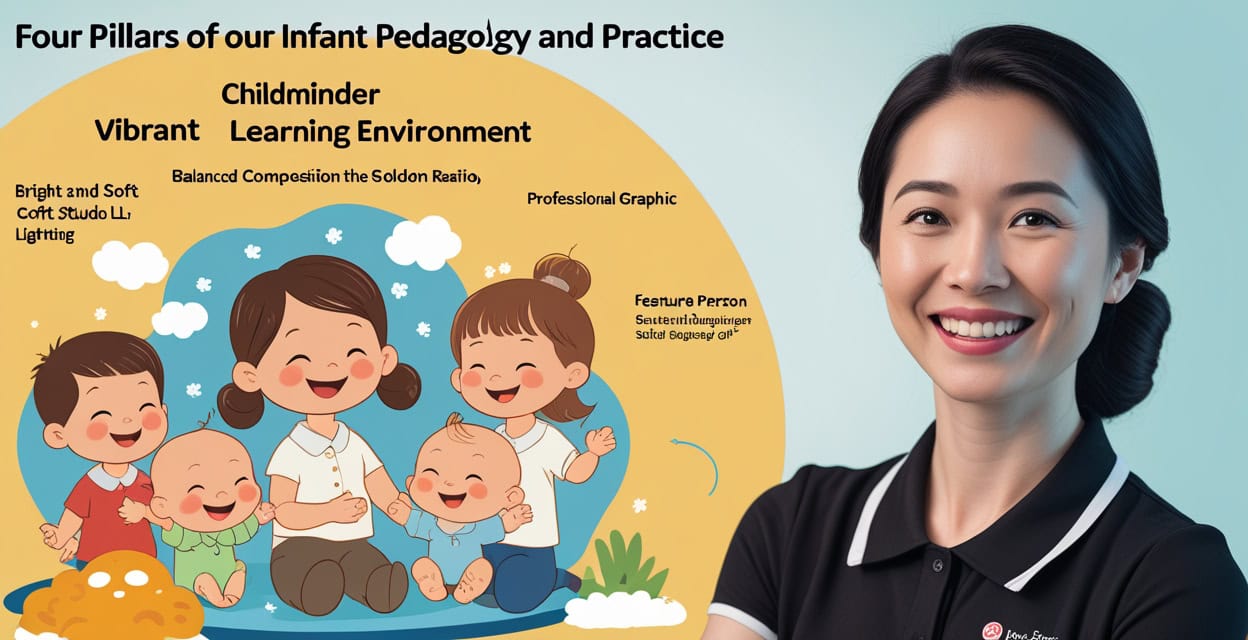
Four pillars of our infant pedagogy and practice
Our pedagogy is structured, but never rigid. It is anchored in relationship, observation, and collaboration with families. Below are the four pillars, with practical examples you can expect in daily EduNanny pods.
1) Attunement as curriculum
Education begins with warmth and precise responsiveness. Our childminders are trained to read cues in real time—early hunger signals, pacing feeds, daylong cues for fatigue, and the need for soothing. They narrate routines, mirror sounds, and provide unhurried floor time. This is the cradle version of scaffolding: every moment is an opportunity for trust and learning.
- Practical example: During a diaper change, the caregiver names the sensations and offers a choice: “Would you like to touch the soft cloth or look at the mobile while we clean your hands?”
- Practical example: During feeding, the caregiver uses paced feeding and language-rich narration: “You’re taking a long, slow sip. You’re listening to the world around you.”
2) Movement and the mindful body
Inspired by Pikler’s respectful movement approach, EduNanny spaces avoid rushed postures and forced seating. Caregivers prepare the environment, then let the infant lead, with ample supervised floor play and open-ended materials. Movement becomes a primary teacher—gross motor exploration as a laboratory of self-efficacy, and fine motor work as purposeful inquiry.
- Practical example: Instead of propping a baby to sit, the pod offers supported sitting and ample tummy time on safe surfaces, gradually extending reach and head control.
- Practical example: Open-ended materials—soft rings, simple boards, and safe mirrors—invite grasping, mouthing, and transferring as legitimate work.
3) Language as love made audible
Language is both comfort and cognition from day one. Childminders speak in full, musical sentences, name feelings, narrate sequences, and wait for responses. Books are treated as living objects—handled, mouthed, and enjoyed. Bilingual households are supported by maintaining home languages while building bridges to shared language experiences.
- Practical example: A language circle with songs, rhymes, and simple sign prompts to support early communication and cognitive development.
- Practical example: Daily “storytime moments” that connect a child’s current interests to a short, predictable book or object narrative.
4) Calm safety as the backdrop of joy
Joy arises in a predictable, safe environment. Our health and safety architecture—rigorous cleaning routines, hazard-reduction design, precise handovers, and clear incident protocols—eliminates fear and fosters curiosity. The result is a environment akin to Froebel’s kindergarden-in-miniature: a safe, nurturing garden for growing minds and bodies.
- Practical example: Clear sleep areas, separate play zones, and well-anchored furniture reduce risk while allowing infants to explore freely.
- Practical example: Structured handovers with concise, shared logs that keep families informed without cognitive overload.
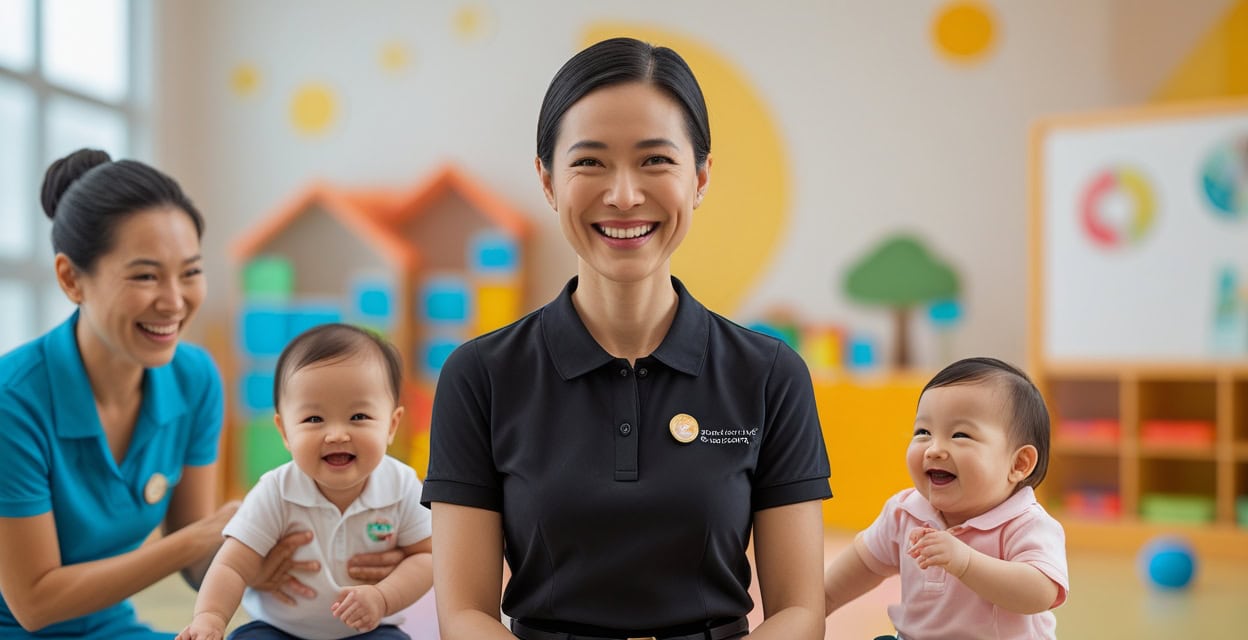
The safety architecture parents deserve
EduNanny’s safety framework is designed to give families confidence that their child is in capable, vetted hands. It blends rigorous procedures with transparent communication to create a trustworthy caregiving ecosystem.
- Background checks: ECDA conducts robust checks on childminders and, for home-based care, household members with regular access. EduNanny complements this with suitability assessments and ongoing supervision.
- Mandatory training: Before care begins, infant first aid, basic infant care, food safety, and safe sleep practices are completed, with ongoing coaching and skill refreshers.
- Transparency in monitoring: CCTV is installed in community spaces as required, with opt-in options for home-based CCTV during care hours. Arrangements for privacy are discussed transparently with families.
- No-sick-child policy: To protect the pod, unwell infants rest at home. If symptoms arise, a clear incident protocol guides isolation, parent notification, and safe handover to caregivers.
- Environment by design: Gated zones, socket covers, anchored furniture, clearly marked sleep and play areas, and standard hygiene routines keep infants safe while they explore.

A day in an EduNanny pod
Below is a representative day, illustrating how a well-structured schedule supports infants and families alike. Times are guidelines and adapt to each pod’s rhythms and the childminders’ professional judgments.
- 8:00 am — Handover is a conversation, not a clock punch. Feeding times, sleep windows, and overnight notes are exchanged. A familiar song closes the greeting.
- 9:00 am — Floor time: a basket of safe, simple objects invites mouthing and manipulation. The childminder narrates and engages each infant’s emerging interests.
- 10:30 am — Paced feeding and settling: gentle burping, careful diaper care with spoken respect, and soothing lullabies. Sleep surfaces are firm and clearly separated from play.
- 12:15 pm — Outdoor or balcony time: fresh air, shaded sunlight, and observation of nature or neighbors contribute to sensory learning.
- 2:00 pm — Language circle: song, book sharing, and gentle baby sign language strengthen communication foundations in a bilingual-friendly framework.
- 4:30 pm — Handover with log: a concise summary of feeds, sleep, diapering, play highlights, emerging interests, and a plan for tomorrow.

The professional purpose of a childminder
EduNanny’s childminders are professional stewards of attachment, health, and early learning. We recruit for heartset and train for skillset, emphasizing reflective practice, cultural humility, and true partnership with families.
- See and respond: Attuned caregivers notice cues and adjust care in the moment to support secure attachment.
- Hold and release: Caregivers provide a secure base that invites exploration while offering predictable containment for safety.
- Partner and align: Care plans are co-designed with families, respecting routines, culture, and family preferences.
- Document and improve: Logs, weekly reflections, and ongoing supervision drive continuous quality improvement.

Affordability that honours families and work
EduNanny participates in ECDA’s national Childminding Pilot (1 December 2024 to 31 December 2027) for Singapore Citizen infants aged 2 to 18 months who are not concurrently enrolled in ECDA-licensed infant care centres. Subsidised hours are available in half-day (5 hours) or full-day (10 hours) blocks, Monday to Friday, 7am–7pm, excluding public holidays.
- Fees before GST: Half-day 5 hours: $16.50; Full-day 10 hours: $33.00
- Subsidies: CDA/Baby Bonus eligible for subsidised hours; families choose days per week and hours per day according to needs.
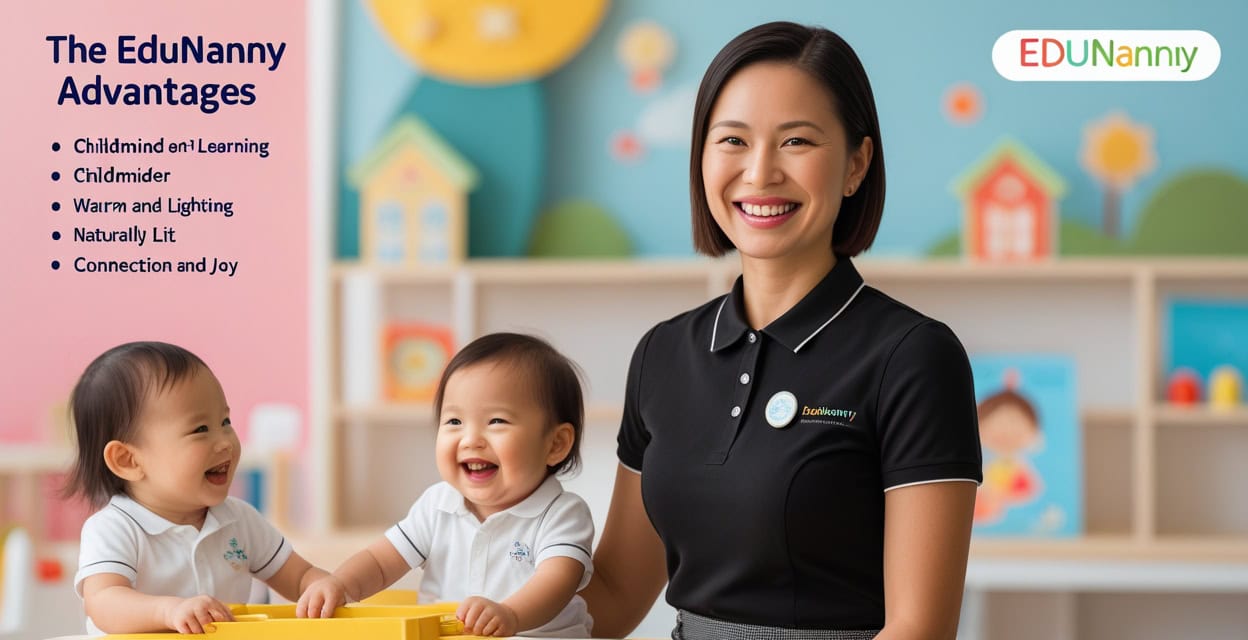
The EduNanny advantages at a glance
- Ultra‑low ratio 1:3 and ultra‑low density pods for calm, responsive care
- Certified EduNanny childminders with pre-care training
- ECDA background checks and suitability assessments
- Safe, well-designed environments in community spaces and homes
- CCTV in community premises; opt‑in home CCTV options
- No‑sick‑child policy and clear incident management
- Near-home convenience with islandwide coverage
- Transparent, affordable pricing with CDA/Baby Bonus support
- A national social initiative under ECDA Pilot, advancing quality and access
- Centre-style spaces and home-based options to fit family needs

How EduNanny makes infant care truly work in Singapore
EduNanny’s approach is designed to serve babies, parents, and communities alike. Here’s how it translates into daily life for families and for the broader ecosystem of care.
For babies
Small pods warp the scale of the world to a comprehensible level, enabling stronger attachments, rich sensorimotor play, and language-rich environments that respond to the infant’s own tempo.
- Consistent caregiving creates a secure base for exploration and resilience.
- Attuned routines support healthy sleep, feeding, and development across the first 1000 days.
For parents
Clear costs, near-home convenience, and professional accountability restore dignity to working parents. Regular updates and logs replace guesswork with dependable information about a child’s day.
- Subsidised hours reduce out-of-pocket costs without compromising care quality.
- Transparent handovers and documentation foster trust and ease transitions.
For communities
Small, well-run pods strengthen neighborhood ties and create dignified, meaningful employment for trained childminders. Community spaces evolve into local hubs of safe, joyful learning for infants and families.
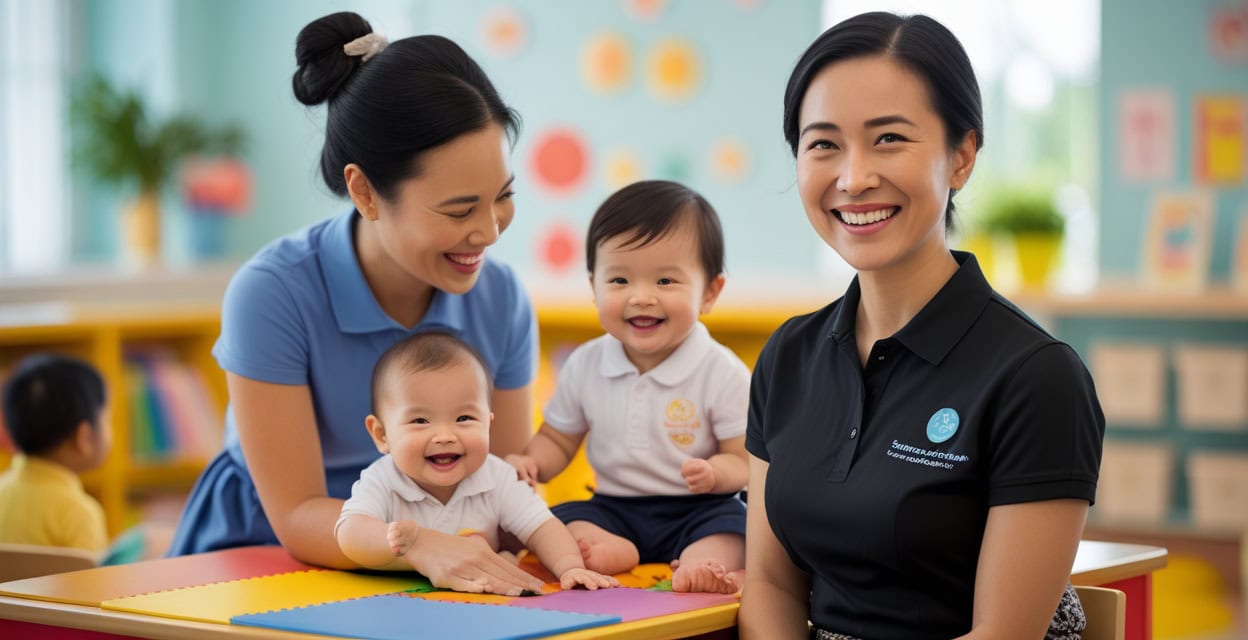
Who, what, when, where, and how—why childminding matters
- Who: Singapore Citizen infants aged 2 to 18 months and their families seeking relationship-based, near-home care during the early plastic period of brain development.
- What: Childminding in micro-pods of up to three infants per childminder, in homes or community spaces under ECDA’s Pilot, with strict safety and quality controls.
- When: Weekdays, 7am–7pm, in flexible half-day or full-day blocks to match the cadence of work and family life.
- Where: Islandwide, near home, in environments designed for safe sleep, free movement, and unhurried play.
- How: By pairing families with certified, background-checked childminders; enforcing health and safety standards; maintaining tiny ratios; using appropriate CCTV; and partnering with families daily.

Our philosophy and purpose
EduNanny believes safety without warmth is not enough; warmth without skill is not enough; and neither is enough without access. We braid safety, skill, and accessibility into a daily experience worthy of every child and workable for every family. We are inspired by Montessori, Erikson, Bowlby, Vygotsky, and Pikler, yet guided by the infants themselves—the smallest experts in the room.

How to get started
- Step 1: Visit the EduNanny ECDA Childminding Service page: edunanny.com/edunanny-ecda-childminding-service/
- Step 2: Fill out the inquiry form or reach out via WhatsApp on the page.
- Step 3: Receive a response from the EduNanny Concierge Team to discuss your needs.
- Step 4: Schedule and confirm your site visit (home-based or community space).
- Step 5: Enrol and meet your childminder, with ongoing support and supervision.

In closing
Parents, you do not need a village of miracles; you need a village that works. With ultra‑low ratios, rigorous safety, near‑home access, transparent fees payable via CDA/Baby Bonus, and a pedagogy that treats everyday care as the first classroom, EduNanny builds that village—quietly, deliberately, and with care. The first thousand days do not shout; they whisper. Let us be the ones who hear them—and answer, together.
Conclusion
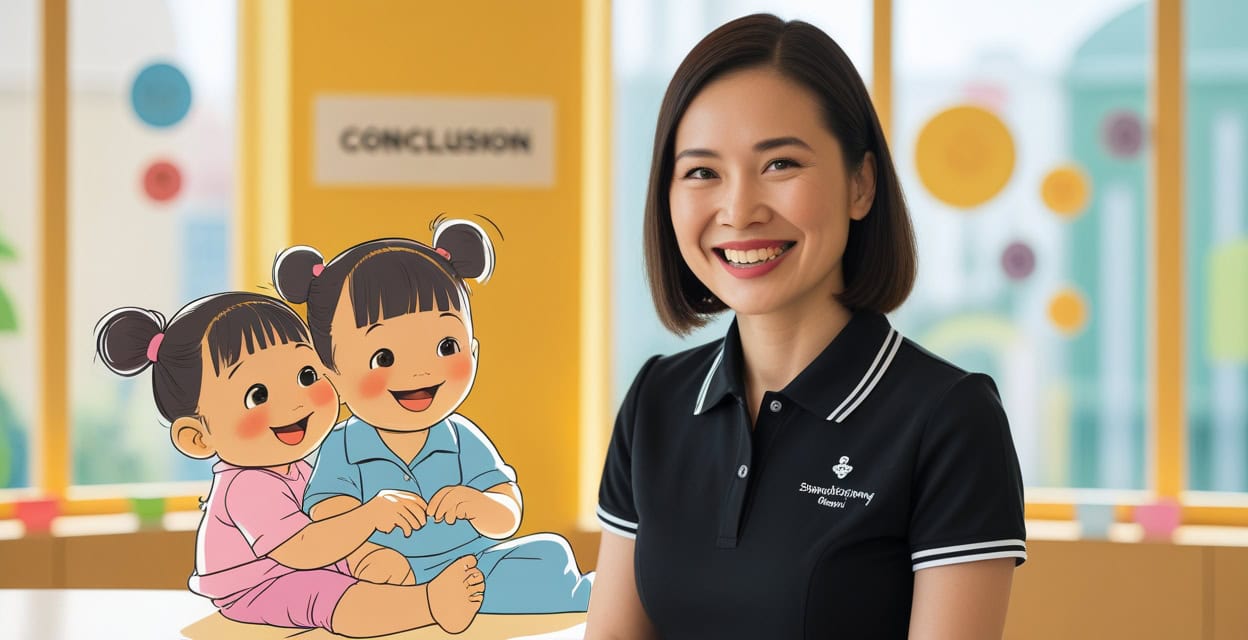
EduNanny offers a thoughtful, research-informed model for infant care in Singapore: tiny pods, professional childminders, safety as a core ritual, and strong partnerships with families. By aligning care with the infant’s biology and early learning needs, EduNanny helps babies form secure attachments, supports parents’ work and well-being, and strengthens communities through dignified, quality employment. If you seek care that is near home, affordable, and anchored in evidence-based practice, EduNanny provides a practical path forward. Consider engaging with our Concierge team to explore a trial, a visit, or enrollment—so your child can begin life in a carefully designed garden of attention, trust, and growth.
[#InfantCareSingapore, #EduNanny, #ECDAChildmindingPilot, #OneToThreeRatio, #First1000Days]