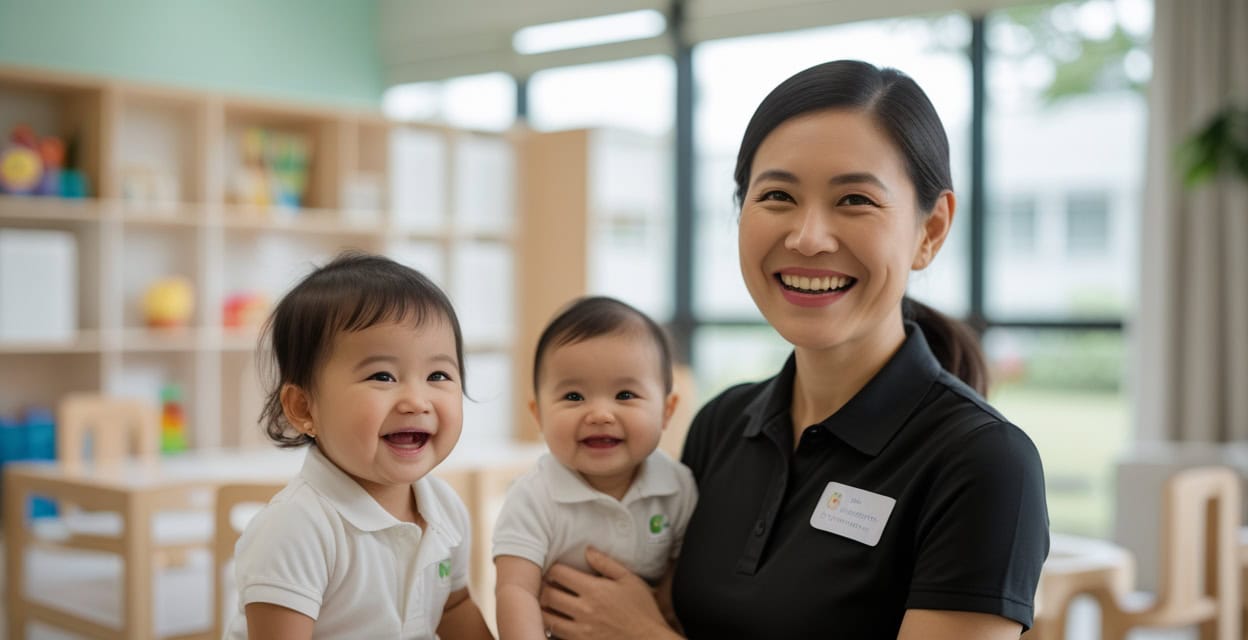
Tiny Circles of Care A Near Home 1 to 3 Infant Pods Redefining the First Thousand Days in Singapore

Introduction: A Simple Belief in Tiny Circles of Care
Good evening to parents, policymakers, neighbours, and the many quiet heroes who hold a baby and hold up a nation. I stand before you with a simple belief that echoes through every great early-childhood thinker—from Montessori’s calm respect for the child, to Piaget’s joyful science of discovery, to Vygotsky’s gentle scaffold of the zone of proximal development, to Bowlby and Pikler’s reverence for secure attachment: tiny, consistent circles of care change lives. EduNanny was founded to make those circles real, near home, and available to every Singapore family that needs them.
The EduNanny Infant Childminding Service: An ECDA‑Appointed Operator
EduNanny Infant Childminding Service is designed for Singapore Citizen infants aged 2 to 18 months who are not concurrently enrolled in ECDA‑licensed infant care centres. Our service operates Monday to Friday, 7am–7pm, islandwide, in home‑based and community‑based micro‑pods with an ultra‑low 1:3 infant ratio. It is simple, science‑led, and profoundly human. This is a disciplined, compassionate approach to care that recognises families as co‑educators in the child’s early development.

Topic 1: The Science of Small
Small Groups as Pedagogy
Small groups are not a luxury; they are pedagogy. A 1:3 ratio allows caregivers to read the infant’s signals with accuracy—knowing when to pause, when to feed, when a cry means fatigue, and how today’s cues differ from yesterday’s. In practice, this means:
- Caregivers track each infant’s unique rhythms and adjust activities accordingly, ensuring responsive interactions rather than scripted routines.
- Moments of sustained eye contact during feeding and soothing become opportunities for social learning and trust-building.
Attachment and Brain Development
Attachment builds the brain. Bowlby’s secure base concept becomes a daily practice: consistent caregivers who respond quickly, warmly, and predictably. Practical examples include:
- Consistent caregiver rotation is minimized; infants see the same familiar adults during the care day to reinforce trust.
- Caregivers document and reflect on each infant’s preferences, turning routine moments into opportunities for secure bonding.
Autonomy and Movement
Autonomy grows in safe freedom. Montessori guided us to prepare the environment so the child can choose; Pikler taught us to trust the child’s pace and uninterrupted movement. We apply both by:
- Providing uncluttered, safe spaces that invite exploration and independent movement within safe boundaries.
- Allowing self‑directed play with minimal intervention, while offering gentle prompts that respect the child’s tempo.
Social Cognition and Serve‑and‑Return
Thinking blossoms through serve‑and‑return. We narrate bottles and diaper changes, mirror babble, and scaffold curiosity moment by moment, turning daily care into social‑cognitive development. Examples include:
- Describing actions in real time: “You’re rolling over now. I see your leg move—nice work!”
- Encouraging joint attention during play with simple, interactive activities that invite the infant to participate.
Topic 2: Safety by Design, Not by Chance
Safety as Architecture and Habit
Safety is architecture and habit. Our spaces—home‑based or in community premises—are audited for cleanliness, hazards, and infant‑specific design. Practices include:
- Modern layouts with clear separation of play, sleep, and feeding zones.
- Dedicated safe sleep zones and unobstructed movement areas to minimise risk.
Background Checks and Trust
Background checks are non‑negotiable. ECDA conducts checks on all EduNanny childminders and, for home‑based pods, on those with regular access to the home. We add our own vetting and references to ensure stability and reliability.
Training and First Aid
Training is mandatory. EduNanny childminders complete infant first aid and basic infant care training before caring for infants; we refresh these skills regularly to reflect current best practices.
Privacy‑Respectful CCTV
CCTV is used thoughtfully. In community spaces, CCTV is installed to enhance safety. In home‑based pods, CCTV is available during care hours in caregiving areas with informed consent, balancing privacy and peace of mind.
Health Protocols
A No Sick Child Policy protects the pod. Clear guidance on return‑to‑care, with alternative arrangements coordinated by our Concierge, helps minimise transmission and protect vulnerable infants.
Transparent Incident Management
Incidents are managed transparently. Clear agreements, documented routines, and swift escalation pathways ensure issues are seen, owned, and resolved promptly.

Topic 3: Happiness Is Neuroprotective
Joy as a Neural Buffer
Joy is not fluff; it’s a neural buffer. Laughter, songs, and predictable rhythms support regulation, learning, and sleep. Practical steps include:
- Daily song routines and rhythmic clapping to reinforce breath regulation and comfort.
- Predictable nap cues backed by a gentle, soothing routine anchored to family rhythms.
Rhythm and Predictable Flow
Rhythm creates comfort. We follow a child‑led schedule within a gentle daily flow: feed, rest, explore; talk, sing, cuddle; move, pause, repeat. Examples:
- Consistent daily blocks for feeding, tummy time, and quiet cuddle time, with flexible adjustments for individual needs.
- Routine visual cues in the pod to help families understand the day’s rhythm at a glance.
Language Bath All Day
Language is nurtured continuously. Narration in warm, natural phrases—plus bilingual vocabulary when families prefer—fosters secure communication without pressure. Techniques include:
- Labeling emotions during interactions to build early emotional literacy: “You’re happy,” “That made you pout,” etc.
- Consistent use of descriptive language during routine tasks to expand vocabulary naturally.
Movement Freedom and Exploration
Movement builds body and brain. We promote supervised floor time and safe, device‑free exploration to support gross and fine motor development, balance, and confidence.
- Rotate age‑appropriate toys that encourage reaching, grasping, rolling, and crawling.
- Provide varied textures and safe obstacles to challenge motor skills within a secure setting.

Topic 4: A Pedagogy of Everyday Moments
Five‑Minute Pedagogies Embedded in Care
Micro‑interactions accumulate into meaningful growth. We implement five‑minute pedagogies embedded in everyday care:
- Co‑regulated Feeding: Eye contact, paced feeding, and responsive pauses that read hunger and fullness signals.
- Trustful Movement: Encouragement of safe milestones and gentle challenges that foster confidence.
- Emotional Labeling: Naming feelings to build early emotional literacy and self‑regulation.
- Sensory Literacy: Exposure to soft textures, natural light, and varied sensory experiences in a calm, non‑overstimulating environment.
- Secure Sleep Hygiene: Consistent sleep cues and safe sleep practices that support healthy rest patterns.
Documentation That Empowers Families
Families receive concise, useful updates—feeds, sleeps, diapers, and moments of delight—so parents can co‑author the child’s story. Practical examples include:
- Daily digital notes that highlight cues observed and responses provided by caregivers.
- Weekly summaries with small, actionable tips aligned with the family’s routines at home.

Topic 5: The Civic Purpose of Childminding
Near‑Home Care as Public Good
Near‑home care shortens the worry journey between a parent’s day and a child’s well‑being. It invites grandparents, neighbours, and community into a culture of shared care. We emphasise community resilience and local connection as essential pillars of national development.
Affordability and Subsidies
Under the ECDA Childminding Pilot, subsidised fees help ensure inclusion. The structure is straightforward and family‑friendly:
- Half‑day (5 hours): $16.50 before GST
- Full‑day (10 hours): $33.00 before GST
Hours: Monday to Friday, 7am–7pm, in flexible blocks. Parents may pay using Child Development Account (CDA)/Baby Bonus during subsidised hours.
Work and Dignity
As a National Social Initiative, EduNanny is committed to a Maximum Employment Mandate—training, certifying, and placing childminders in meaningful work that uplifts families and neighbourhoods. This approach recognises the dignity of caregiving as a professional vocation and a public service.

What Makes EduNanny Different
- Ultra Low Density, Ultra Low Ratio: Micro‑pods of up to three infants per childminder for true individual attention.
- Certified EduNanny Childminders: Trained in infant first aid and basic infant care, with ongoing professional development.
- Certified and Background Checked: ECDA checks plus our own screening and interviews.
- Safety Technology, Thoughtfully Used: CCTV provided in community premises and available in home‑based pods with consent during care hours.
- Modern Layouts and Prepared Environments: Designed for movement, calm, and infant‑led inquiry.
- No Sick Child Policy: Clear, fair, and protective of every infant’s health.
- Islandwide Convenience: Both Home‑Based and Centre‑Based (community) options near where families live and work.
- Flexible, Affordable Blocks: From $33/day (10 hours) or $16.50 (5 hours), before GST; Monday–Friday, 7am–7pm.
- Fees Payable by CDA/Baby Bonus: Subsidised hours supported by government schemes.
- Concierge Support: A dedicated EduNanny Concierge Team handles matching, onboarding, and daily communication.
- Innovation with Heart: Thoughtful use of CCTV, digital daily notes, and simple tools that never replace human presence.

How It Works Day‑to‑Day
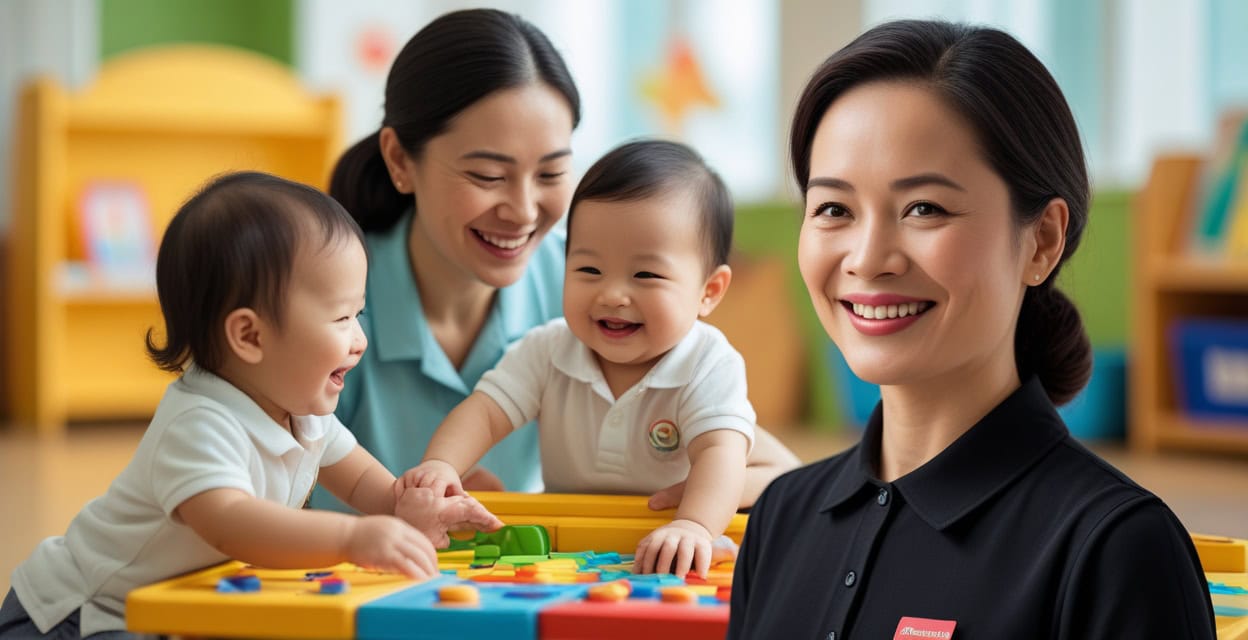
You’ll find one familiar caregiver who knows your infant’s cues and rhythms. You’ll see a space that invites discovery without over‑stimulation. You’ll feel the relief of predictable routines and transparent communication. You’ll observe a child who is calm, curious, and steadily growing in trust and competence.

Who, What, When, Where, How—Why Childminding Matters
- Who: Singapore’s youngest citizens, aged 2 to 18 months—held by trained, background‑checked childminders who are present and proud of their craft.
- What: Infant childminding that blends safety, attachment, and gentle pedagogy in tiny pods of three.
- When: Monday to Friday, 7am–7pm, in 5‑ or 10‑hour subsidised blocks throughout the ECDA Pilot (Dec 2024–Dec 2027).
- Where: Near home—in community premises with CCTV or in carefully assessed homes—with islandwide reach.
- How: Through ultra‑low ratios, prepared environments, consistent routines, and warm, science‑backed interactions that transform care into development.
- Why: Because a nation’s future is not written in textbooks; it is whispered in the first exchanges between an infant and a caregiver who sees them fully. EduNanny’s philosophy is safety that is felt, development that is lived, joy that is daily, and dignity that is shared among parents, childminders, and community.

The Benefits in One Glance
- Ultra Low Ratio 1:3 for infants
- Ultra Low Density micro‑pods
- CCTV provided in community premises; available in home‑based pods during care hours with consent
- Certified, background‑checked childminders; infant first aid and basic infant care training
- No Sick Child Policy to protect the pod
- Centre‑Based (community) and Home‑Based options
- Modern layouts and near‑home convenience; minimal travel distance
- Monday–Friday, 7am–7pm islandwide
- Affordable from $33/day (10 hours) or $16.50 (5 hours), before GST
- Fees payable by CDA/Baby Bonus during subsidised hours
- Part of a National Social Initiative under the ECDA Childminding Pilot
- EduNanny by BUTLER; service quality, excellence, and a dedicated Concierge
How to Sign Up Today
- Step 1: Visit the EduNanny ECDA Childminding Service page at the site: https://edunanny.com/edunanny-ecda-childminding-service/
- Step 2: Fill up the form or enquire via WhatsApp from the page (note: contact details are provided on site for privacy and security).
- Step 3: Receive a response from our EduNanny Concierge Team and schedule a site visit (home‑based or community pod).
- Step 4: Enrol, match with your childminder, and begin care.
- Step 5: Manage ongoing communication and adapt care plans as your child grows.
You can also learn more at EduNanny.com and Childminding.EduNanny.com.
In Closing
If Montessori gave us the prepared environment, Vygotsky the co‑regulating adult, Piaget the brave explorer, and Bowlby the secure base—then the childminder, in the EduNanny tradition, is the living bridge among them all. In a small circle of three, a nation finds its footing. In the quiet work of feeding, soothing, narrating, and delighting, Singapore’s future smiles back.
Join us. Let’s make the first thousand days safe, joyful, and beautifully close to home.
Sign‑up quick links: https://edunanny.com/edunanny-ecda-childminding-service/
EduNanny main: EduNanny.com
Family resources: Childminding.EduNanny.com

Conclusion
EduNanny is more than childcare; it is a civic act that recognises how early trust, expert caregiving, and a supportive community shape a nation’s future. By keeping care near home, reducing risks through safety‑forward design, and embracing a pedagogy of everyday moments, we empower families to nurture resilient, curious, and confident children. This is a blueprint for a society where every infant begins life with a secure base, every caregiver is valued, and every parent has a trusted partner in development. Let us commit to making the first thousand days safe, joyful, and deeply human—together.
[#keyword1, #keyword2, #keyword3, #keyword4, #keyword5]