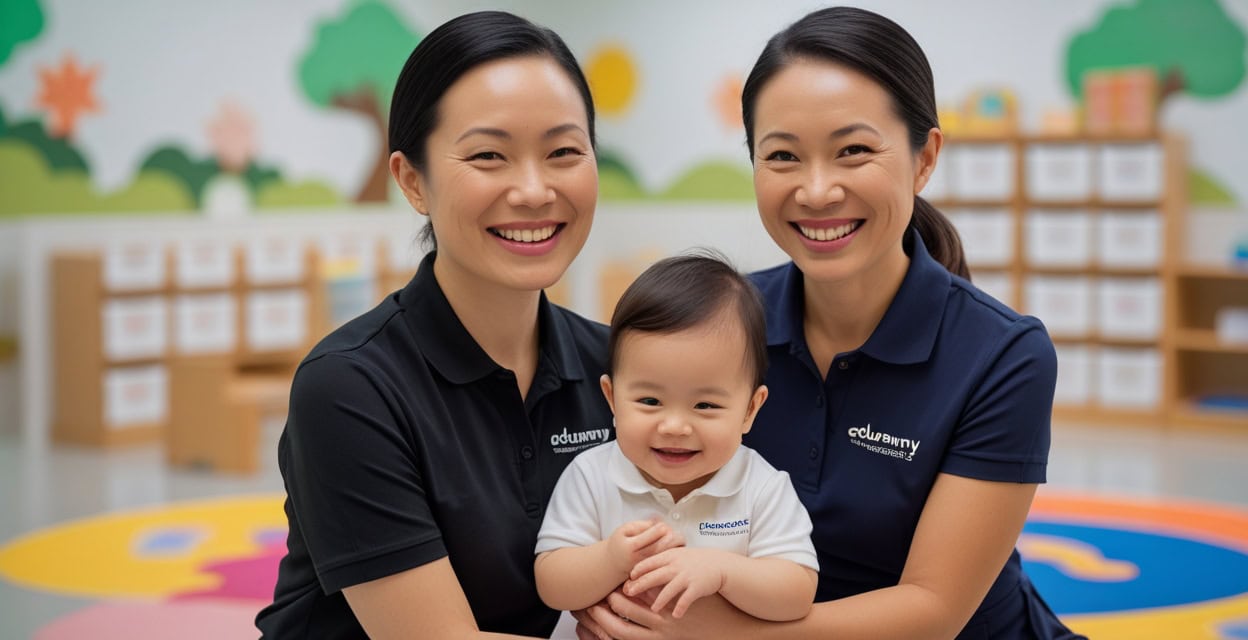
Near Home Bonds EduNanny Ultra Low Ratio Infant Pods for Singaporean Infants

Introduction: A Promise for Singapore’s Infants
Good day parents, grandparents, caregivers, community partners, and friends of Singapore’s youngest citizens. As an EduNanny infant care advisor, I offer a simple promise: when the smallest circle of care is strong, the whole city stands taller. EduNanny Infant Childminding Service was created to do exactly that—build intimate, expert-led care circles near home so every infant grows with safety, joy, and deep human connection. This article expands on how EduNanny works, what sets it apart, and how families can make the most of infant care in Singapore’s unique context.
What is EduNanny Infant Childminding?
EduNanny by BUTLER is an ECDA-appointed operator participating in Singapore’s three-year Childminding Pilot for Infants (1 December 2024 to 31 December 2027). We offer small-group infant care—one childminder for up to three infants—delivered either in the childminder’s home or in community premises islandwide. Our approach combines attachment-first pedagogy with modern safety practices, transparent operations, and family-friendly affordability. In short: we infuse early care science into the rhythm of everyday Singaporean life.

How EduNanny Makes Infant Care Work for Singapore
EduNanny was designed around five realities of Singaporean families. The result is a service that is:
- Ultra low density, ultra low ratio (1:3) for focused, responsive care.
- Islandwide access Monday to Friday, 7am to 7pm (excluding public holidays).
- Proximity-first care near home in community spaces or caregivers’ homes for convenience and安心 (peace of mind).
- Affordability from $33/day for full-day blocks before GST (and $16.50 for half-day blocks), with CDA/Baby Bonus subsidies during supported hours.
- Transparency and safety-forward practices with CCTV in community premises and mutual agreement on CCTV in home settings, balancing safety with privacy.
EduNanny is delivered by certified, trained, and background-checked childminders under a national initiative with clear quality standards. We bring modern safety culture and attachment-forward care into the home and community settings where families live and work.
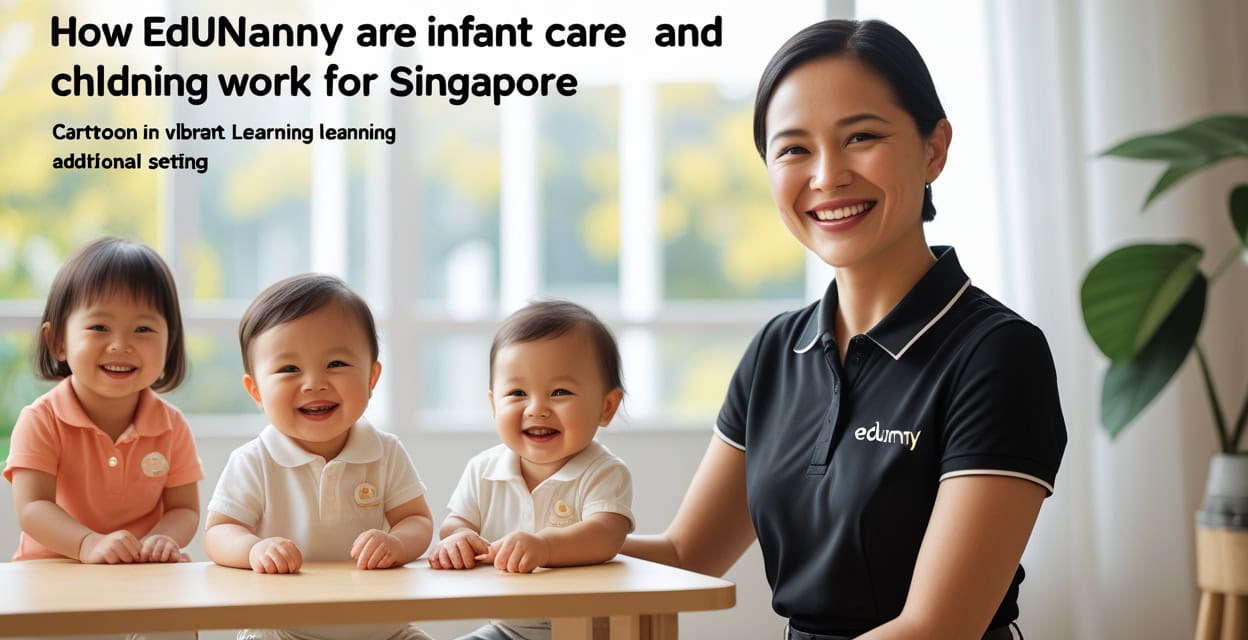
How EduNanny Makes Infant Care and Childminding Work for Singapore
We designed EduNanny around five realities that shape Singaporean family life—and we translate those realities into practical practice:
- Long workdays require dependable, near-home care options.
- Trust is earned through training, transparency, and consistent relationships.
- Proximity reduces commute time and stress for families and supports regular routines for infants.
- Science of early development informs daily activities, routines, and caregiver interactions.
- Dignified work ensures a high-quality, career-path approach for childminders, strengthening the local economy and community.
Key design outcomes include ultra-low density, islandwide access, near-home settings, and a governance framework anchored by ECDA standards and the Baby Bonus/CDA subsidy channels.
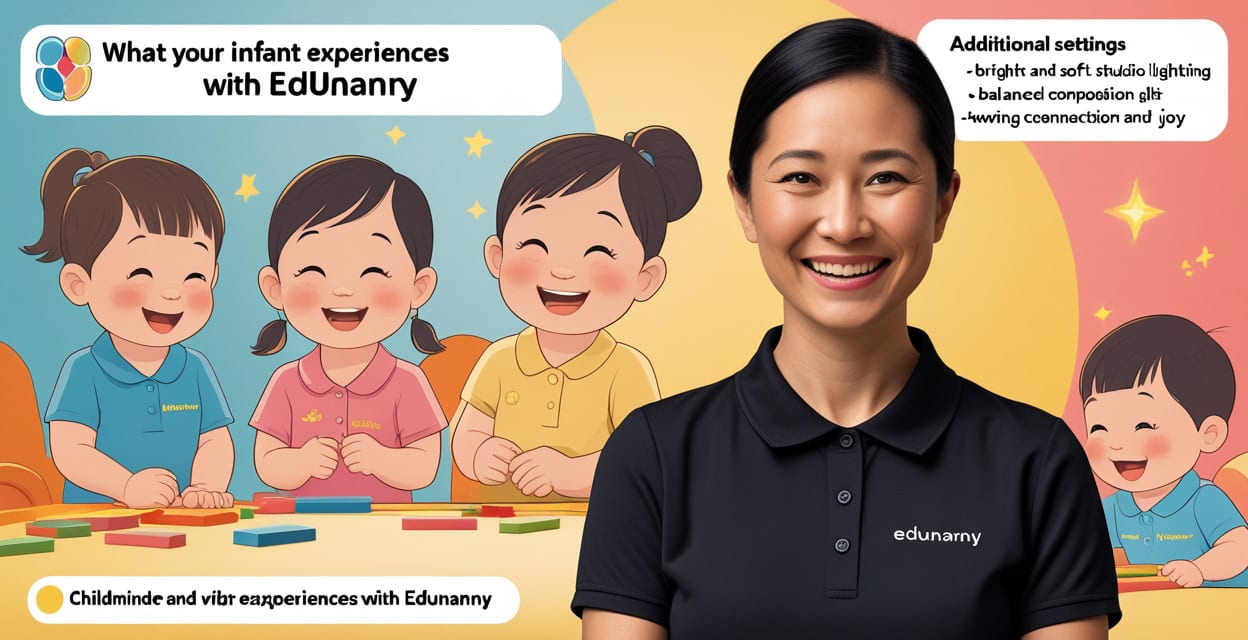
Four Pillars of Practice: What Your Infant Experiences with EduNanny
1) The Secure Base: Building attachment with intention
- Handover rituals and predictable routines reduce infant stress. We draw from Pikler-inspired care—slow, respectful movements, narrated caregiving, and waiting for the infant’s cues—so babies feel seen and safe.
- Serve-and-return interactions are deliberate and frequent: eye contact, vocal mirroring, and responsive touch to support language, emotional regulation, and confidence.
- Ultra-low ratio (1:3) fosters a stable bond with the same caregiver, promoting calmer bodies, better sleep, and joyful exploration.
Practical example: During handover, the caregiver speaks softly to the infant, states the plan for the day, and waits for a cue—smile, reach, or calmness—before proceeding. Parents can practice a simple script at home to reinforce this rhythm during daily exchanges.
2) Safety Without Compromise: From environment to ethics
- Spaces: Clean, uncluttered, infant-friendly layouts with anchored furniture, covered outlets, gated stairs, safe sleep surfaces, and strict food hygiene protocols.
- People: EduNanny caregivers are certified and background checked; ECDA extends checks to household members with regular access in home-based care.
- Policies: No sick child policy to protect the pod; clear medication procedures, safe sleep guidelines, and transparent incident management.
- Transparency: CCTV is installed in community premises; home-based CCTV is available by mutual agreement to balance safety and privacy.
- Digital trust: Families receive timely updates, care notes, and responsive communication from the EduNanny Concierge Team.
Practical tip: Before enrolment, request a walkthrough of safety features and review the incident-management flow. Create a simple one-page contact sheet with emergency numbers and a preferred method of contact for the caregiver.
3) Joyful Learning in the Everyday: Development woven into care
- Infants learn best through warm relationships and meaningful repetition. Our routines—feeding, diaper care, naps, and play—are structured as learning moments.
- Materials are sensory-rich but not overstimulating: soft fabrics, safe rattles, grasping toys, tummy-time mats, natural light, gentle music, and ongoing conversation.
- Movement as medicine: Floor time supports gross motor development; reach-and-grasp activities build fine motor skills; cause-and-effect play nurtures curiosity.
- Tempo and responsiveness: The day follows the infant’s cues while maintaining a predictable rhythm for the pod as a whole.
Practical example: A typical learning moment might be a shared reading of a picture book with tactile pages, followed by a related sensory activity (soft cloth, mirror, or textured ball) to reinforce language and exploration.
4) The Happiness Index: How we know your baby is thriving
- Signals of thriving: relaxed posture during handovers, bright eyes, steady appetite, deeper naps over weeks, curiosity during play, tolerance for brief separations, and a consistent daily mood.
- Family voice matters: Sleep routines, feeding preferences, and cultural rituals from home inform the ongoing curriculum.
- Outcomes evolve over weeks: calmer transitions, better sleep-wake patterns, fewer viral exposures through low-density care, and a child who feels known.
Actionable step: Maintain a simple daily care log for the first month, noting feeding times, sleep windows, mood shifts, and any notable cues. Use this log during caregiver handovers to align expectations and adapt routines.

Why Childminding Matters for Singapore
- Who: Parents seeking safe, attachment-forward infant care; childminders seeking dignified, well-supported work; neighbours who value local, community-based solutions.
- What: A single experienced professional caring for up to three infants near home, within a national pilot that emphasizes safety and quality.
- When: Weekdays, 7am–7pm, with flexible five- or ten-hour subsidised blocks for working families.
- Where: In childminders’ homes and community premises across Singapore—ultra-low density, near residences, designed for infants.
- How: Training, supervision, background checks, CCTV in community spaces, privacy-balanced CCTV in homes by mutual agreement, plus CDA/Baby Bonus support for subsidised hours.

What Parents Can Expect from EduNanny
- Ultra Low Ratio/Ultra Low Density—1:3 care that preserves health, attention, and calm.
- Certified EduNanny Childminders—Trained in infant first aid, hygiene, safe sleep, and respectful care.
- Background Checks—ECDA-conducted checks for childminders and regular-access household members.
- CCTV and Transparency—CCTV in community spaces; home CCTV available by mutual agreement; responsible data practices.
- No Sick Child Policy—Clear return-to-care criteria to protect infants and staff.
- Flexible, Affordable Blocks—Half-day (5 hours) or full-day (10 hours), weekdays 7am–7pm; islandwide.
- Payment Support—Subsidised hours payable via CDA/Baby Bonus.
- Choice of Setting—Home-based or community-based environments with infant-focused layouts.
- National Social Initiative—Part of the ECDA Childminding Pilot, aligning quality, safety, and access.
- Maximum Employment Commitment—Growing a skilled, community-rooted workforce of childminders across Singapore.

Answers to Common Questions
- Eligibility: Infants aged 2 to 18 months who are Singapore Citizens and not concurrently enrolled in ECDA-licensed infant care centres.
- Health: For safety, unwell infants rest at home. If medication is needed, parents provide written instructions, dosage, timing, and any side effects to monitor.
- Hours and Fees: Half-day (5 hours) at $16.50; full-day (10 hours) at $33.00, before GST, Monday–Friday, 7am–7pm. CDA/Baby Bonus subsidies may apply for subsidised hours.
- CCTV: Required in community premises; in-home CCTV usage is by mutual agreement to balance safety and privacy.
- Disputes/Feedback: Clear incident and feedback protocols ensure timely, fair, transparent handling; parents may also contact ECDA for serious incidents.

Our Philosophy and Purpose
EduNanny exists to dignify the earliest season of life with the right scale of care and the right spirit of practice. We believe that:
- Safety is a discipline, not a slogan.
- Attachment is the engine of development.
- Joy is measurable—in curiosity, comfort, and connection.
- Community is a protective factor for children and working families.
- Transparency builds trust, and trust builds thriving families.
This is infant care as a public good: intimate, affordable, and excellent, supported by a national framework that maintains quality, safety, and access for all Singaporean families.

Practical Tips for Enrolling and Starting with EduNanny
- Assess Your Priorities: Proximity, safety history, caregiver consistency, and language/cultural practices from home. Decide whether you prefer home-based or community-based settings.
- Plan the First Visit: Bring a short list of questions about routines, safety checks, and how the pod handles transitions and nap times. Request a sample day plan.
- Prepare Your Home for a Pod: Designate a calm, safe caregiving space with a designated handover area, clear sleep surfaces, and minimal clutter. Ensure outlets are childproofed and cords are out of reach.
- Handover Readiness: Create a simple two-way communication routine. Example: a 2-minute spoken handover with a cue-based check-in from the infant and a brief note for the parent exchange about sleep, mood, and feeding.
- Documentation: Have medication instructions, emergency contacts, and consent forms ready. Keep a one-page health profile for each infant to share with the caregiver.
- Prepare for the First Week: Expect a period of adjustment. Maintain consistent routines, supply the necessary comfort items, and keep lines of communication open.
- Engage Subsidy Programs: Explore CDA/Baby Bonus subsidies for subsidised hours to make care affordable within the ECDA framework.

Enrolment Process: How to Start with EduNanny
- Visit EduNanny’s pages: edunanny.com or the ECDA Childminding Pilot pages for information and application details.
- Fill out the enquiry form or reach out via WhatsApp to start a conversation with the EduNanny Concierge Team.
- Schedule a site visit to the chosen setting (home or community space) to meet the candidate childminder and observe the space.
- Complete enrolment, set up a transition plan for your infant, and begin the supported transition into EduNanny care.
EduNanny Insight: A Day in the Pod
Sample day outline for a 2–6 month window in a 1:3 pod:
- 7:00–9:00: Arrival, settle-in, calm handover, feeding, and gentle interactive time.
- 9:00–10:00: Tummy-time play, sensory exploration with age-appropriate materials, and a small group song or lullaby activity.
- 10:00–11:00: Nap or quiet time with consistent sleep cues and a comfortable arousal level for each child.
- 11:00–12:00: Snack (if applicable), caregiver-led responsive play, and language-rich interactions.
- 12:00–14:00: Independent play, outdoor time if possible, and a predictable lunchtime routine.
- 14:00–16:00: Afternoon activity, story time, and a brief reflective handover for parents with care notes.

Conclusion
EduNanny embodies a future where infant care is near, trusted, and scientifically grounded—an ecosystem that dignifies early life while supporting working families. With ultra-low density pods, attachment-forward practice, transparent safety measures, and a clear path to affordable care, EduNanny aims to be a cornerstone of Singapore’s social fabric—expanding access to high-quality infant care without sacrificing the intimate, human connections that babies need to thrive. If you’re seeking a care model that respects both the science of development and the realities of modern life, EduNanny invites you to explore the possibilities and join us in building stronger, more connected communities—one small day at a time.
SEO keywords: [#EduNanny, #SingaporeInfantCare, #ECDA, #ChildmindingPilot, #AttachmentBasedCare]