
From Handover to Happiness The 1 to 3 Pod Blueprint for Safe Attachment and Learning in Singapore
Introduction: Nurturing the Tiny Place, Building the Life Ahead
Ladies and gentlemen, parents and grandparents, caregivers and community partners — good evening. EduNanny’s mission is simple and profound: to honor infancy as a real place where confidence is built, language takes root, and trust becomes the quiet architecture of a healthy life. This article expands on the speech that inspired a generation of families in Singapore to rethink early care — not as a stopgap, but as a daily practice of development. Here, you will find practical, actionable guidance for parents seeking to nurture attachment, safety, and joyful learning in the earliest years, grounded in EduNanny’s ethos of science, compassion, and everyday practicality.

Topic I — The Attachment Architecture: How a Tiny Ratio Changes a Lifetime
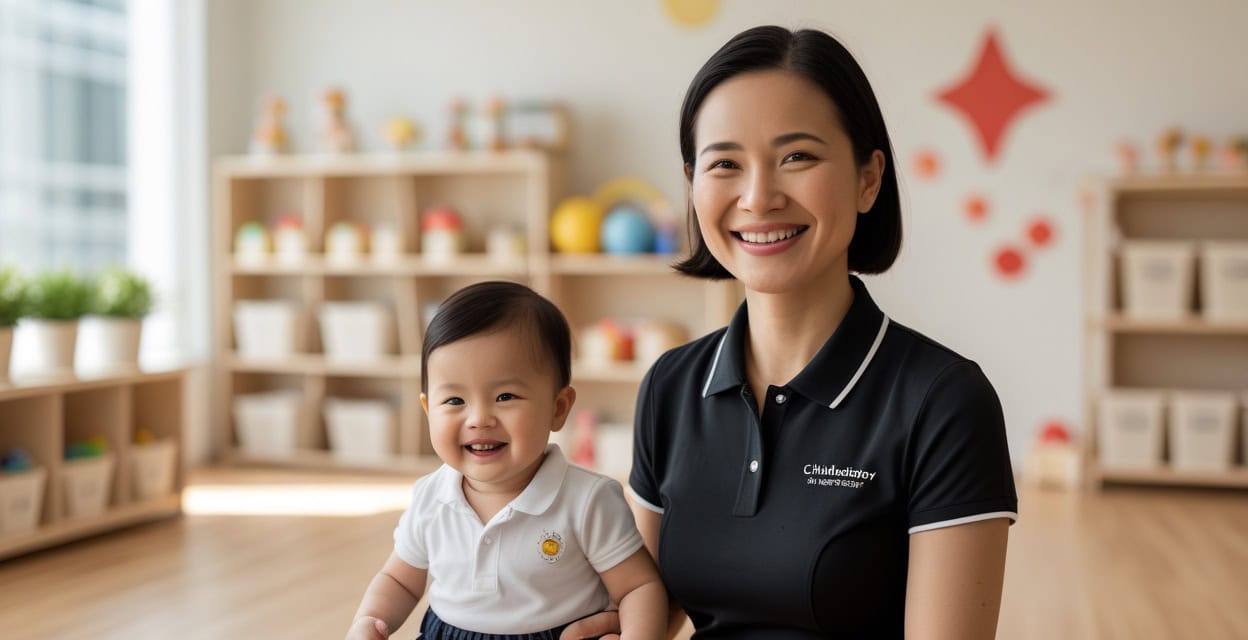
Attachment science teaches that infants thrive when their world is small, predictable, and warmly responsive. EduNanny centers this insight with an ultra-low 1:3 infant-to-educator ratio. Three is not merely a number; it is a design principle that makes care human, observant, and deeply responsive. Here’s how to translate this into everyday practice for families and caregivers:
- Your baby is seen, not supervised. An educator’s eyes stay on the child, interpreting cues—startle, gaze, coo, stretch—and responding within seconds. Parents can reinforce this by sharing daily cues at pick-up and asking, “What did you notice about today’s needs?”
Feeding, diapering, and settling are not chores; they are opportunities to narrate action, label feelings, and name sensations. For example, during feeding: “You’re hungry; let’s do slow sips and name what you see.” Consistency matters. A familiar adult supports transitions, reducing distress and facilitating smoother attachment. Parents can reinforce this at home by maintaining a predictable routine and using a simple “handover script” when leaving a child with a caregiver (e.g., “See you at 4.30; you’re safe; I love you.”). In a pod of three, educators can provide child-led movement opportunities, tolerate a broader range of signals, and scaffold skills at the child’s pace. At home, replicate this by setting up small, open spaces with safe toys that invite reaching, grasping, rolling, and crawling—avoiding over-scheduling or over-stimulation. Respect the child’s circadian rhythms. Families should observe sleep cues, provide a calm environment, and avoid abrupt transitions. Consistency in nap timing supports brain development and mood regulation.
Actionable takeaways for parents:
- Ask prospective programs about their primary caregiver model. Request a sample day showing how one caregiver supports a trio of infants during key routines.
- Observe cue-based communication during visits. Look for staff who narrate actions and validate emotions rather than rush through tasks.
- Establish a predictable home routine that mirrors daycare rhythms (e.g., consistent feeding windows, nap times, and caregiver handovers) to strengthen attachment across environments.

Topic II — Safety as a Culture: From Room Design to Daily Ritual
Safety is more than a checklist; it is the culture of the space, practiced every day. EduNanny’s approach integrates room design, sleep protocols, hygiene, emergency readiness, and transparent oversight to create an environment where caregivers and families share a common language of safety.
Clear sightlines enable caregivers to monitor multiple infants without feeling rushed. Hazard-minimised zones reduce risk during floor-based exploration. Practical at home: arrange a dedicated play corner with low, open shelves, labeled bins, and a clear view of the child from a central seat or mat. Firm cot surfaces, supine positioning, breathable bedding, and continuous but unobtrusive monitoring align with global best practices. At home, practice a consistent nap routine: dim lights, a short lullaby, and a calm, predictable sleep environment. Structured handwashing before meals and after diaper changes, plus sanitised toy rotation, minimises illness spread. Families can adopt a simple at-home routine: handwashing for 20 seconds, sanitiser use after outdoor play, and a clean toy rotation schedule. Regular drills, clear roles, and age-appropriate responses help children build confidence. At home, practice emergency drills with age-appropriate language and calm explanations so children know what to expect. Innovative CCTV paired with secure access gives families real-time reassurance while maintaining caregiver privacy. Parents can request regular transparency reports or sample daily notes to stay informed about a child’s day. Islandwide access with consistent hours supports families’ work-life balance. When evaluating programs, ask about backup staffing and contingency plans for staff illness or holidays to ensure continuity.
Practical guidance for parents and caregivers:
- Request a floor map and safety audit checklist from any center you consider. Check for clear sightlines, safe sleep zones, and clean, well-labelled storage areas.
- Engage in a “safety huddle” at the start of the week: review any changes in routines, exposure to new foods, or changes in environment (e.g., new toys) that require adjustment.
- Ask about data privacy policies related to CCTV playback and photo sharing. Ensure families understand when and how footage is used, stored, and who can access it.

Topic III — Learning in the Everyday: The Curriculum of Care
The most transformative curriculum for infants isn’t a worksheet; it is the observable way adults move, talk, and pace interactions. EduNanny’s approach turns everyday care moments into meaningful developmental opportunities grounded in Montessori, Froebel, and Reggio-inspired observation.
Names feelings, narrates actions, and uses a pace that matches cues. Practically, try a “feeding dialogue”: “You’re taking a sip; you’re enjoying the taste; I see you’re finished.” Ask for permission, invite participation (e.g., “Can you help roll over?”), and mirror expressions to build body awareness and mutual respect. Provide open-ended objects, safe challenges, and ample space for movement. At home, set up a tidy “discovery mat” with a few inviting items (stacking cups, texture cards, mirrors) and let babies explore with minimal intervention. In a 1:3 pod, infants observe peer interactions and practice basic social exchanges. Parents can nurture early empathy by modeling shared attention and gentle prompts like, “Your friend is looking at the toy—shall we trade?” Small triumphs — grasp to release, coo to babble, etc. — are logged for families to track progress through photos, notes, and brief observations.
Home integration tips:
- Maintain a simple daily log for infants at home: sleep, feeds, mood cues, and new milestones. Share a concise daily note with your caregiver so transitions are seamless.
- Incorporate “help me do it myself” moments with age-appropriate tasks (hand-washing, helping with a snack plate, simple dressing). These foster independence and confidence.
- Use language-rich routines: narrate daily actions, describe objects, and label emotions during play and care times.

Topic IV — Joy, Belonging, and the Mental Health of Early Family Life
Happiness in infancy is quiet and observable: a relaxed posture, a soft sigh, or a contented gaze. EduNanny’s approach focuses on emotional attunement, predictable rituals, and real-time reassurance to protect that happiness and support family well-being.
Caregivers read cues and match tempo to avoid overstimulation or shut-down. Parents can practice short, responsive exchanges at home: pause, listen, and respond with a connection-based cue. Predictable arrivals, warm handovers, and calm goodbyes reduce cortisol for both babies and parents. The home practice: a short goodbye ritual and a quick recap of the day for the child who returns later. CCTV-enabled updates, daily notes, and photos give families a window into the day, enabling安心 and reducing anxiety during busy workdays. Consider a weekly summary for your family calendar or messaging app. Centre-Based, Home-Based, and Distance options support diverse family needs, including travel, waitlists, or temporary relocations. Evaluate options based on your family’s work hours, commute, and social needs to choose the best fit.
Practical strategies for supporting mental health in early childhood:
- Keep routines predictable but flexible enough to accommodate occasional delays (e.g., a slightly later pickup). Communicate any changes clearly to caregivers and children using simple language.
- Introduce soothing rituals that your child can anticipate, such as a favorite song at the end of the day or a special cuddle corner with a beloved toy for transitions.
- Encourage safe social play with peers to build early social skills while respecting individual temperament. Short, guided interaction times help avoid overwhelm.

Topic V — The Purpose and Profession of the Childminder
Great childminding blends vocation with professional practice. EduNanny invests in people to care for families with dignity, expertise, and ongoing growth. This is how families, educators, and communities benefit:
Speak with respect, move with intention, and protect the child’s pace. Home caregivers should be trained to honor the child’s autonomy within safe boundaries. Training in infant development, responsive caregiving, safe sleep, hygiene, and family partnership ensures caregivers stay current with best practices. Structured coaching helps caregivers improve techniques, assess outcomes, and align with each child’s needs. Parents can request periodic progress reviews or feedback sessions with educators. Stable roles across neighborhoods contribute to local expertise and reduce turnover, which in turn strengthens attachment security for children. Professionalisation elevates care quality, enabling families to expect consistent, skilled support as their child grows.
The childminder’s purpose blends civic and personal dimensions: fewer avoidable emergencies, steadier parental employment, and stronger attachment foundations for the next generation. Families benefit when care is treated as a public good with private love.

A Day in the Life of a Three-Infant Pod
Consistency, calmness, and connection define a day in a 1:3 pod. Here is a practical, illustrative itinerary to help families understand how care unfolds:
- 7:00 am — Arrival and hello ritual. Slow, predictable handover with mood mirroring and naming: “You’re curious today. Let’s hang your bag together.”
- 8:15 am — Floor exploration. Open-ended objects and safe challenges encourage self-initiation; educators scaffold without interrupting.
- 9:30 am — Feeding as conversation. Eye contact, paced feeding, and verbal narration turn meals into language-rich moments.
- 10:15 am — Nap routine. Dimmed lights, consistent lullaby, firm cot, safe positioning, and vigilant oversight; data is logged to observe patterns over time.
- 12:00 pm — Movement and fresh air. Stroller walks or secure courtyards to calibrate circadian rhythms and curiosity, weather permitting.
- 2:00 pm — Care moments with respect. Diapering becomes a cooperative experience, not a task detached from the child’s pace.
- 3:30 pm — Mini social moments. Shared gaze, board books, touch-and-feel activities, and early turn-taking within the 1:3 pod.
- 5:30–7:00 pm — Gentle goodbyes. Day notes, photos, and small victories shared with parents to support smooth transitions home.

Why EduNanny Works for Singaporean Families Now
Visit EduNanny.com or Childminding.EduNanny.com to book a tour, speak with a care advisor, or join the team.

The EduNanny Compact with Families
We promise rigor without rigidity, warmth without indulgence, and transparency without intrusion. The compact centers two questions that guide every decision:
Safety is the non-negotiable baseline of every moment in EduNanny care. Every practice should deepen trust between child, caregiver, and family.
We promise to protect your child’s pace, your family’s dignity, and your workday’s reliability. Everything else flows from these commitments.

Childminding Matters: Who, What, When, Where, and How
Who
- Infants who need secure attachment, unhurried care, and room to discover.
- Parents who deserve trustworthy schedules and real-time transparency.
- Childminders who are trained, respected, and supported as professionals.
- Communities that benefit from stable employment and early prevention.
What
- Childminding as the public work of private love: attentive, evidence-based daily care that builds emotional security, motor skills, language, and resilience.
- A bridge between home and society, ensuring parents can contribute to the economy without sacrificing a child’s developmental birthright.
When
- Especially in the early years, when neural connections explode and habits of trust take hold.
- Every weekday, 7 am–7 pm, when families need it most.
Where
- Near home—across Singapore—in carefully prepared centre spaces and approved home premises, with designs that protect sleep, exploration, and connection.
- With Distance options for continuity during travel, transitions, or waitlists.
How
- Through an ultra-low 1:3 ratio that keeps care personal.
- Through a safety culture that is visible, rehearsed, and audited.
- Through caregiving-as-curriculum practices that turn daily routines into developmental gold.
- Through innovation CCTV and modern layouts that make safety observable and learning natural.
- Through affordable, transparent pricing (from $33/day) with fees payable by CDA/Baby Bonus where eligible.
- Through the ECDA Childminding Pilot and the national social initiative spirit that scales excellence across neighborhoods.
- Through EduNanny by BUTLER’s operational backbone, professional training, and commitment to meaningful jobs.
Closing: A Gentle Invitation
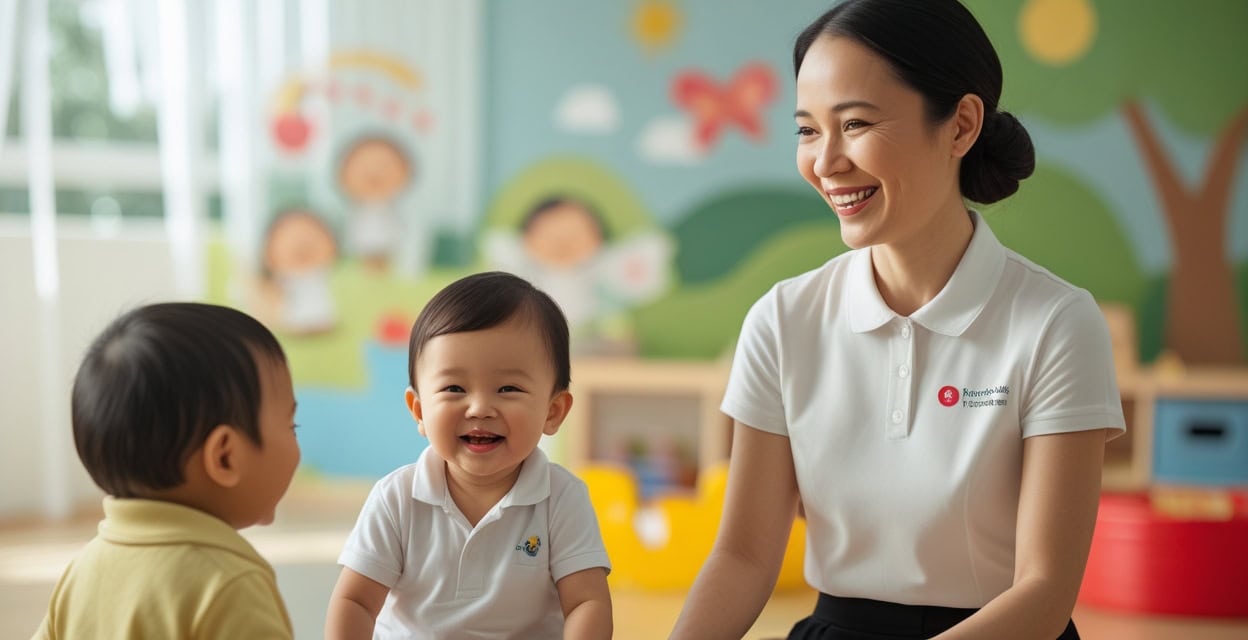
Singapore’s future is shaped in quiet rooms where tiny hands test new strengths and familiar voices name new feelings. If we get those rooms right—if we make them safe, small, observant, and joyful—we change not only childhoods but the character of our city. EduNanny stands ready to partner with you in that work. Come see a pod. Watch how three infants and one devoted educator make a world that is calm, curious, and kind. Speak with us about Centre-Based, Home-Based, or Distance options. Ask about affordability from $33/day and payments via CDA/Baby Bonus. Explore our islandwide availability, Monday to Friday, 7 am to 7 pm. Visit EduNanny.com or Childminding.EduNanny.com, and if your calling is to care, consider joining our Maximum Employment Mandate as a trained childminder.
The earliest care we offer becomes the earliest confidence a child carries. Let’s build that confidence together—one bond, one day, one small, safe room at a time.
Thank you.

SEO and Readability Notes
To help families find this article and connect with EduNanny, we emphasize practical guidance, Singapore-specific context (ECDA Pilot, CDA/Baby Bonus, islandwide access), and clear next steps (tours, contact points, and program options).
[#earlychildhood, #SingaporeChildminding, #EduNanny, #infantcare, #attachment]