
EduNanny One to Three Promise Near Home Infant Pods Redefining Singapore Early Years

EduNanny Infant Childminding: A Purpose‑Built Solution for Singapore’s Early Years
Good evening, parents, grandparents, caregivers, and friends of Singapore’s youngest citizens. EduNanny presents a near‑home, ultra‑low‑ratio childminding model designed to nurture safe, joyful, science‑grounded care for infants aged 2 to 18 months. Grounded in decades of attachment science and Singapore’s distinctive urban fabric, EduNanny’s approach is simple in promise and rigorous in practice: one caring adult for every three infants, delivered in a setting that respects family proximity, daily rhythms, and dignity.

Why EduNanny Works in Singapore
Singapore’s compact geography, high trust, and strong standards create a unique opportunity for infant care that is both intimate and scalable. EduNanny’s model recognizes the realities families face—commuting to work, managing schedules, and prioritizing consistent attachment for infants. Below are core reasons why this approach meets the moment:
Ultra‑Low Ratio and Density
- A maximum of three infants per childminder by design, enabling consistent presence and deeper attunement to each child’s cues.
- Small pods in home settings or community micro‑hubs reduce overstimulation, noise, and cross‑infection risk while preserving individualized routines.
- Daily routines stay coherent: feeding, diaper changes, naps, and soothing are predictable and personally attended.
Affordability and Access
- Government‑subsidised fees of $16.50 for half‑day and $33.00 for full‑day (before GST), with CDA/Baby Bonus accepted to defray costs.
- Flexible scheduling that respects a family’s work hours and care needs, without compromising care quality.
- Islandwide availability through home pods and community micro‑hubs, bringing care closer to where families live and work.
Near‑Home Convenience
- Care options in familiar spaces—either in the childminder’s home or in nearby community hubs—reducing travel time and stress for families.
- Doorstep access that supports continuity of routines and strengthens parent–caregiver communication.
- Options for both home‑based warmth and centre‑like structure within a small, attached community.

The Five Lenses that Shape EduNanny Care
EduNanny organizes infant care around five foundational lenses. Each is grounded in evidence about early development and reinforced by practical, day‑to‑day implementation. Below, you’ll find actionable guidance for families to support your child’s growth inside and outside of EduNanny settings.
1) The Attachment Architecture: one steady adult, many secure beginnings
Attachment is the foundation of early development. In a 1:3 setting, each childminder becomes a consistent secure base. Practical tips for families:
- Ask about transitions: how does the caregiver introduce the infant to new routines? Expect gentle, named cues and predictable sequences during feedings and naps.
- Support co‑regulation at home: mirror the caregiver’s calm language and labeling of feelings, reinforcing the infant’s sense of safety.
- Observe consistency: look for a trusted routine with one caregiver who knows your child’s preferences, signals, and routines.
2) The Pod as a Village: micro‑ecology, macro‑impact
Small groups enable individualized care and sensitivity to cues. Practical ideas:
- Ask for a simple daily diary: “What was the infant’s mood on waking? Any notable cues or milestones?”
- Encourage sensory play that matches the infant’s development: safe mirrors for self‑recognition, textured fabrics for tactile exploration, and natural light for circadian rhythm support.
- Promote a calm environment: discuss noise levels, layout, and materials to ensure spaces support exploration without overstimulation.
3) Safety as Love Made Visible: systems that protect, people who care
Safety is a systems approach supported by trained people. Practical steps for families:
- Review training and certification expectations before enrolment: infant first aid, basic infant care, and food safety are baseline requirements.
- Inquire about monitoring: CCTV availability in community pods and opt‑in options for home pods, with clear privacy guidelines.
- Clarify medication procedures: ensure written instructions, dosing checks, and monitoring plans are in place.
4) Learning in the Lullabies: turning everyday care into a world of meaning
Everyday routines are rich with learning opportunities. Practical at‑home applications:
- Diaper changes as language: name actions and describe sensations to support vocabulary development.
- Feeding science in action: demonstrate breathing, bottle‑tilt, and pace to help infants explore physical processes.
- Motor and cognitive play: offer floor time, cause‑and‑effect toys, and simple object permanence games that fit the infant’s stage.
5) Happiness You Can Feel—and Measure
Joy indicators can guide care quality as much as checklists. Practical indicators:
- Observe settled sleep, curious wake windows, and relaxed bodies at pickup.\n
- Notice warm reciprocity with caregivers: sustained eye contact, smiles, and engaged play.
- Maintain transparent updates: expect meaningful observations rather than generic notes, fostering true partnership between families and caregivers.

What Distinguishes EduNanny in Practice
- Ultra‑Low Ratio, Ultra‑Low Density: 1:3 infant ratio in purposefully small pods.
- Certified and Background‑Checked: mandatory training, ongoing quality assurance, and household checks for home pods.
- Safety Infrastructure: CCTV in community spaces; opt‑in CCTV for home pods; hazard‑free layouts and defined incident protocols.
- Health and Hygiene: No Sick Child policy during pod hours; clear medication procedures; robust cleaning routines.
- Flexible Scheduling: 7am–7pm, Monday–Friday; five‑hour half‑days or ten‑hour full days.
- Affordability with Dignity: transparent pricing, CDA/Baby Bonus options, and subsidies under ECDA’s pilot.
- Near‑Home Convenience: home‑based or community micro‑hubs placed where families live and work.
- Transparent Trust: live view‑ins where available, daily notes, and open communication with EduNanny Concierge team.
- National Standard, Local Heart: aligned with ECDA’s Childminding Pilot and committed to quality jobs for trained childminders.
- Choice of Setting: familiar home pods or centre‑like community hubs that preserve intimate care.

The ECDA Pilot: How it Supports Your Family
Understanding the framework helps families plan with confidence. Key details include:
- Who: Singapore Citizen infants aged 2 to 18 months not concurrently enrolled in ECDA‑licensed infant care centres.
- What: near‑home childminding in pods of 1 to 3 infants with trained, background‑checked childminders under appointed operators (EduNanny by BUTLER, Kidibliss, NannyPro Care).
- When: 1 December 2024 to 31 December 2027; care Monday to Friday, 7am–7pm, excluding public holidays, in 5‑hour or 10‑hour blocks.
- Where: childminders’ homes and community spaces across Singapore.
- How: Government‑subsidised fees of $16.50 (half‑day) and $33.00 (full‑day) before GST; CDA can be used; ECDA background checks and mandatory training prior to deployment.

Enrolment Pathway: A Practical Guide to Getting Started
Ready to begin? Here is a practical, step‑by‑step path to enrolment that mirrors the EduNanny process and keeps your family’s needs at the center:
- Step 1: Visit the official EduNanny page for ECDA childminding: edunanny.com/edunanny-ecda-childminding-service/ to review options and gather information.
- Step 2: Submit an enquiry or message via the site’s contact tool or WhatsApp to receive a prompt response from the EduNanny Concierge Team.
- Step 3: Schedule a site visit—choose between home‑based care or a community micro‑hub to observe spaces and meet your prospective childminder.
- Step 4: Complete enrolment forms, select your schedule (half‑day or full‑day blocks), and arrange introductions with your childminder before Day One.
- Step 5: Start care with ongoing monthly updates, access to caregiver notes, and transparent communication channels to support continuity between home and EduNanny.

What Parents Receive with EduNanny
- A 1:3 infant ratio in ultra‑low‑density pods.
- Islandwide availability, Monday to Friday, 7am–7pm.
- CCTV in community spaces; opt‑in CCTV for home pods during care hours.
- Certified EduNanny childminders with training in infant first aid and basic infant care.
- Background checks completed before deployment.
- No Sick Child policy during pod hours to protect the group.
- Modern, clean layouts and thoughtfully prepared environments.
- Centre‑style structure in community micro‑hubs; home‑like comfort in home pods.
- Transparent pricing, subsidised blocks, and CDA/Baby Bonus acceptance.
- A national initiative delivered with excellence, quality, and heart.
Practical Insights for Parents: Making the Most of EduNanny
To maximize your child’s early learning, couple EduNanny care with deliberate home practices:
- Consistency: align morning and evening routines with the caregiver’s schedule where possible, to reinforce security and predictability.
- Communication: request short daily notes and a weekly highlight reel of milestones to track progress and share with family members.
- Language at Home: model infant‑directed speech and narration to support early language development between care sessions.
- Home Support: replicate calming activities at home—gentle rocking, quiet cuddle time, and predictable nap routines—to support regulation learned at EduNanny.
- Health Habits: reinforce hygiene habits at home (handwashing before feeds, clean surfaces) to reinforce the No Sick Child policy and overall health culture.
- Observation Questions for Caregivers: ask about sleep patterns, cue recognition, and responses to soothing strategies to understand the daily “why” behind care actions.

A Day in the Life: Realistic Expectations and Practical Tips
Understanding typical daily rhythms helps families prepare and transition smoothly. A representative day might include:
- 7:00 am Arrival: caregiver begins with settling routines, diaper changes, and feeding.
- 9:00 am Sensory Play: safe, low‑stimulus exploration with mirrors, textures, and soft toys.
- 11:00 am Nap Window: consistent sleep cues and soothing routines to support secure sleep patterns.
- 1:00 pm Lunch and Quiet Time: gentle feeding with opportunities for self‑soothing and engagement.
- 3:00 pm Active Play: tummy time, supported sitting, or assisted mobility activities tailored to each infant’s stage.
- 5:00 pm Reflection and Pickup: caregiver provides a short update on the day’s milestones and mood cues to prepare you for the transition home.
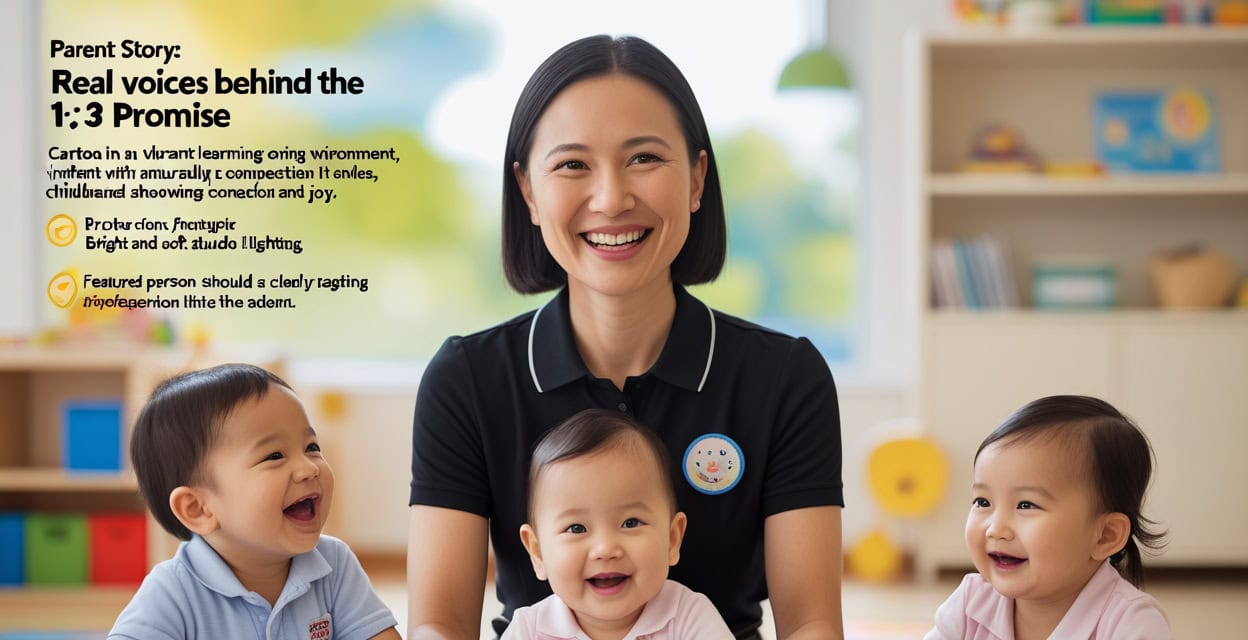
Parent Story: Real Voices Behind the 1:3 Promise
One mother shared that she knew her family had found the right fit when her daughter approached the drop‑off with a calm smile, rather than distress. By pick‑up, her child slept deeply and played with relaxed energy, a sign of a well‑attuned day. This kind of settled, joyful energy is the daily deliverable EduNanny aims for—paired with open, honest communication that keeps families in the loop and connected to their child’s first teachers.

Closing: Join EduNanny and Build a Strong Start for Your Child
EduNanny exists to ensure every infant is known by name, held with skill, and guided with joy. By combining ultra‑low ratios, rigorous safety, thoughtful pedagogy, and accessible pricing, EduNanny makes high‑quality, near‑home care both feasible and sustainable for Singapore families. If you’re seeking a reliable, loving first circle for your child’s early days—one that treats care as the first school of life—consider EduNanny as your partner in growth.

Conclusion
In the critical first thousand days, attachment, safety, and daily meaning lay the groundwork for a lifetime of curiosity and resilience. EduNanny’s model puts those principles into everyday practice—through small pods, trained caregivers, and transparent, affordable access. If you value care that feels like family, proximity that respects your routines, and a science‑backed approach to infant development, take the next step: explore the enrolment pathway, meet your potential childminder, and begin a relationship that prioritizes your child’s safety, joy, and growth.
[#keyword1, #keyword2, #keyword3, #keyword4, #keyword5]