
EduNanny Singapore Elevating Infant Care and Childminding for a Stronger Future

EduNanny Singapore: Elevating Infant Care and Childminding for a Stronger Future
Good evening to all families, caregivers, partners, and friends who share a belief in the transformative power of the earliest days. This article presents EduNanny’s philosophy, practice, and practical guidance drawn from years of professional care, research-informed routines, and a commitment to dignity, safety, and joy for every child. Here you will find clear, actionable steps for parents, caregivers, and communities who want to turn daily care into lasting development.

Why EduNanny: A Purposeful, Professional Path for Infant Care
EduNanny was born from a conviction: the earliest days of life are not a waiting room for “real learning” but the workshop where character, confidence, and curiosity are quietly forged. Our model blends the heart of dedicated childminders with the discipline of research. We bring this partnership to homes, neighborhoods, and thoughtfully designed centres—across Singapore—to create safe, joyful, and purposeful care wherever families live and work.
Key features you’ll find in our approach include a human-centered, evidence-guided framework, a transparent technology plan, a family-friendly service design, and a professional path for childminders. This article expands on four core ideas and translates them into practical steps you can apply today.

Core Idea 1: Attachment as Architecture — Three Calm Certainties
The strongest foundation for lifelong learning is secure attachment. EduNanny’s approach centers on three certainties that guide every moment with an infant.
Devoted Relationship: Continuity and Co-regulation
What it means in practice:
- Assign a primary childminder for each infant to foster a stable bond and consistent signals for comfort.
- Co-regulate emotions by identifying cues early—from a frown to a sigh—and respond with calm, predictable soothing patterns (gentle touch, soft voice, slow pace).
- Practice name-to-face recognition and individualized soothing plans. Learn each child’s unique preferences, feeding cues, sleep patterns, and delight triggers.
Practical parent tips:
- Keep a simple “first-thing” routine for the morning (greeting, diapering, initial cuddle) to reinforce security.
- Record a short daily note of cues you observed at home and share with your caregiver to maintain continuity.
- Choose a settling ritual (e.g., a rocking song or a particular lullaby) and use it consistently to help transitions.
Predictable Rhythm: A Child’s Daily Heartbeat
What this looks like in daily life:
- Unhurried routines with a repeating sequence: wake, connect, explore, refuel, rest.
- Flexible pacing that respects each child’s tempo—no shouting, no rushed transitions.
- Regular opportunities for both quiet and active engagement to support regulation and curiosity.
Actionable steps for families and providers:
- Establish a simple timetable for the day and hold to it as much as possible, while remaining responsive to cues of fatigue or overstimulation.
- Use predictable transitions—e.g., a “sound cue” or a song before moving from play to meal or nap.
- Involve families in the rhythm by sharing a weekly snapshot of routines and any adjustments needed for home routines.
Responsive Environment: Learning Through Attuned Space
EduNanny spaces are designed for action and discovery, not overstimulation:
- Infant-friendly layouts with floor-level access, soft lighting, natural materials, and safe, reachable provocations.
- Curated, age-appropriate materials: textures, simple cause-and-effect toys, mirrors for self-awareness, language corners for talk and song.
- An emphasis on attunement—caregivers read the room, adjust pace, and slow transitions when needed.
Sample home and centre tweaks:
- Keep clutter low and curated; rotate materials to maintain novelty while avoiding overstimulation.
- Arrange spaces at infant eye level to encourage exploration and autonomy in safe bounds.
- Offer language-rich routines—narrate care steps, label feelings, and invite child-initiated conversations.
A Day with EduNanny: A Sample Schedule and Practical Routines
A representative day might include:
- Warm arrival ritual that acknowledges the child’s feelings.
- Breakfast and conversation to nourish social engagement.
- 12–18 minutes of floor-time exploration to support sensorimotor growth.
- Outdoors or fresh-air break for reset and development of vestibular skills.
- Nap with consistent soothing and routine cues.
- Sensory play after waking with simple, guided activities.
- Short, meaningful rituals—hand-washing songs, feeding as conversation, and diapering as connection.
Parents can adapt these templates to home life by identifying two or three reliable rituals that travel well between home and EduNanny environments.
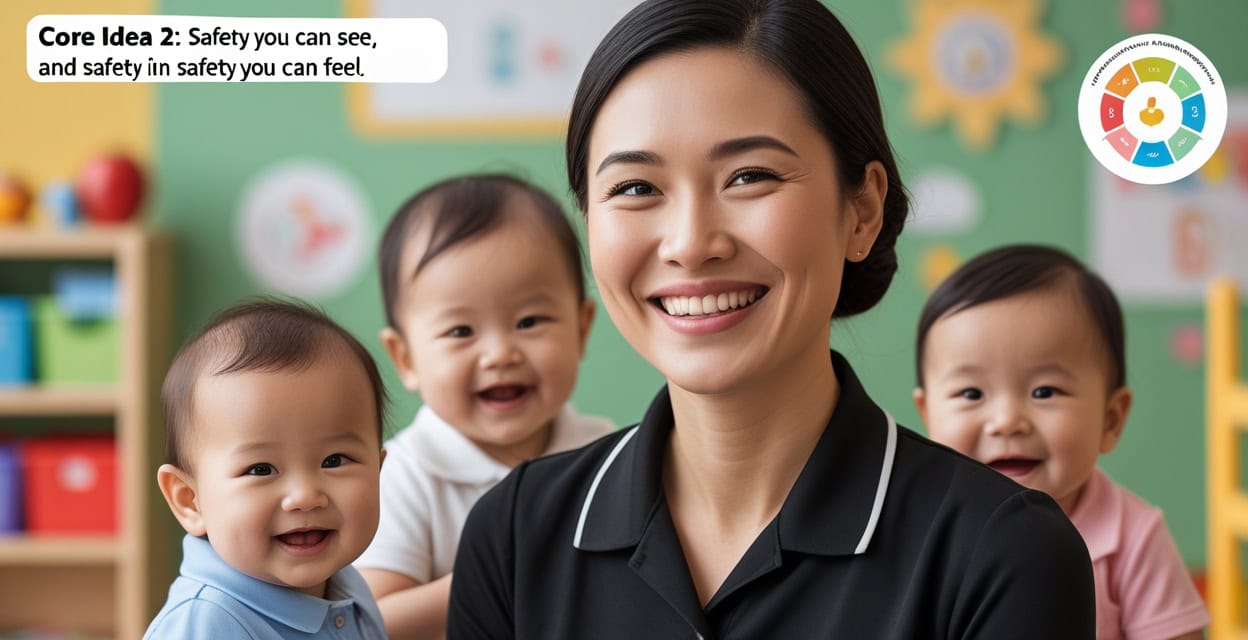
Core Idea 2: Safety You Can See, and Safety You Can Feel
Five Ways We Layer Safety
- People: Calm, reflective caregivers trained in infant CPR/first aid, safe sleep, choking response, hygienic routines, and ongoing supervision.
- Place: Environments designed at infant eye level with safe-sleep surfaces, clear sightlines, secured furniture, hazard-free electrics, appropriate temperature and light, and safe outdoor testing via risk-benefit assessments.
- Process: Daily start-up environment scans, safe sleep protocols, bottle/food chain-of-custody, hygienic diapering, and clear illness-exclusion policies with compassionate execution.
- Technology: Optional CCTV for transparency, with strict privacy controls, and digital daily logs detailing feeding, sleep, mood, and milestones.
- Community: Shared care plans with parents, pediatric guidance when needed, and neighborhood networks that support vigilance and collaboration.
Translating Safety into Everyday Practice
Safety should feel like a calm, respectful atmosphere rather than a checklist. Here are practical practices to implement at home and in care settings:
- Establish a predictable safety routine: safe sleep practices, separate bottle and food handling to avoid cross-contamination, and clear diapering steps that emphasize dignity and care.
- Practice evacuation and lost-child drills in a low-stress manner to ensure quick, calm responses if needed.
- Use technology thoughtfully: if CCTV is used, set boundaries and discuss privacy expectations with caregivers and family members.
- Maintain daily logs and weekly summaries for parents, highlighting any changes in mood, sleep, appetite, or milestones.

Core Idea 3: A Micro‑Curriculum for the Under‑Threes — Learning Woven into Life
Infants are not blank pages; they are active learners. EduNanny’s micro-curriculum emphasizes experiences over formal lessons, with a focus on every-day moments that build a strong foundation.
Sensorimotor Mastery
- Stable floor time, tummy time, and opportunities for movement in safe spaces.
- Opportunities for rolling, creeping, and pulling to stand—paired with supportive handling that respects pace.
- Open space for exploration with textured toys and simple cause-and-effect materials to encourage curiosity.
Practical home tips:
- Set aside a daily “floor-time” window with soft mats and age-appropriate toys to encourage motor exploration.
- Offer a rotating set of textures (fabric, wood, silicone) and encourage the child to explore with hands and mouth in safe guidelines.
Early Language and Relationship
- “Talk-Sing-Read” as a daily habit: caregivers narrate routines, label emotions, and pause for turn-taking.
- Incorporate bilingual rituals when families desire; use simple phrases and songs in both languages to build dual-language familiarity early.
- Use rhymes, rhythm, and daily reading to promote vocabulary growth and social engagement.
Foundations of Executive Function
- Even in infancy, children practice focus and self-regulation through moments like waiting for a bottle or taking turns with a toy.
- Design brief, playful waiting periods, simple hide-and-find activities, and joint attention moments that build patience and persistence.
Social-Emotional Literacy
- Coach the moment: name emotions, model gentle interactions, and celebrate small social victories (sharing a block, waiting for a turn).
- Use predictable soothing strategies during meltdowns to support co-regulation and trust.
Sensory and Schema Play
- Rotate baskets of materials following Froebel/Montessori-inspired ideas: threading rings, fabric squares, containers to fill and dump, shakers for comparison.
- Encourage repetition of meaningful patterns to help children master choices and predict outcomes.
For toddlers, EduNanny adds meaningful errands that instill dignity and cooperation:
- Carrying a cloth, placing cups on a tray, choosing a book for a younger child—small responsibilities that build pride and agency.
Core Idea 4: Joy as a Developmentalneed and a Family Right
Joy is a developmental nutrient—necessary for regulation, exploration, and secure return to caregivers. EduNanny tracks observable indicators of thriving to keep joy visible and accountable.
Signals of Thriving
- Appetite and digestion: steady intake, fewer feeding battles.
- Sleep consolidation: predictable rhythms and easier settling.
- Curiosity: time spent in self-directed exploration and goal-directed play.
- Joint attention: shared gaze, shared delight with caregivers.
- Soothing index: how quickly upset returns to calm with support.
Distance coaching and home routine tune-ups are practical ways to sustain joy, even from afar. Use weekly video calls to review routines, celebrate small wins, and adjust routines when signals dip.

The EduNanny Service Model: Built for Singaporean Families
Optional CCTV, daily digital updates, and open communication to build trust and partnership. Fees from $33 per day, payable by CDA/Baby Bonus, ensuring quality care is accessible to more families. 1:3 infant ratio to ensure high-quality attention and individualized care. Part of the ECDA Childminding Pilot, aligned with national work-family policies and a pathway for professional caregiving. Distance coaching, consistent EduNanny philosophy across settings, and ongoing support for transitions between home and care. EduNanny by BUTLER—excellence, quality, and convenience without compromise.
Practical guidance for families:
- Tour rooms, meet caregivers, and ask about continuity plans if staff changes occur.
- Request a sample day plan for both centre and home settings to compare routines and space design.
- Discuss privacy expectations if CCTV is used and establish clear guidelines for what is recorded and who can view it.
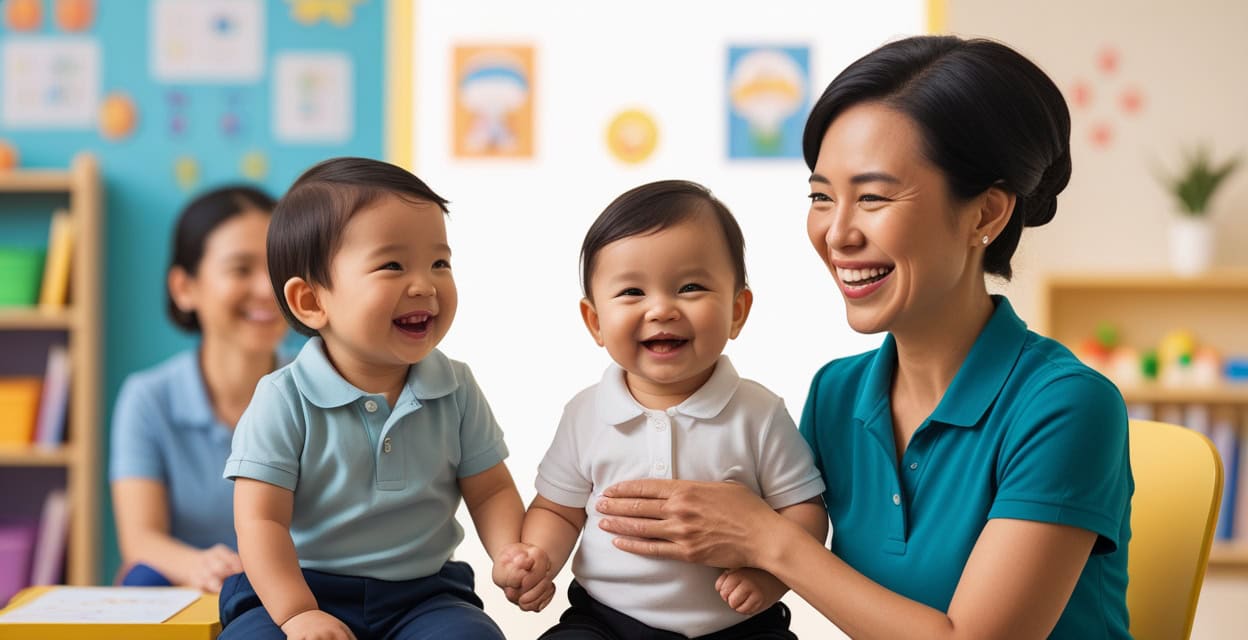
The Purpose of the Childminder: A Quiet Profession with Public Impact
A great childminder is not a substitute parent; she is a second secure base. She protects unhurried moments, reads pre-verbal signals, and turns routine into relationship. She is a scientist, observing patterns; an artist, shaping experience. She carries a public purpose as she helps parents participate in the economy, sustains talent in the workforce, and strengthens social fabric. By professionalizing the role—through training, fair wages, mentoring—we honor a craft that enables all other learning to flourish.

Closing: Who, What, When, Where, and How Childminding Matters
- Who: Infants building trust; parents pursuing careers; caregivers building vocation; employers and the nation benefiting from stronger families and healthier futures.
- What: The daily work of protection, presence, and play that becomes language, regulation, and confidence—the bedrock of later learning and life.
- When: Not someday. Weekdays, 7am–7pm; during the early months when brains are most malleable and habits of heart are formed.
- Where: In calm-centred centres and prepared homes across Singapore’s neighborhoods.
- How: Ultra-low 1:3 ratio, evidence-guided practice, safety you can see and feel, a micro-curriculum woven into routines, and affordability that expands access.

The Philosophy Behind EduNanny: Excellence as a Daily Practice
Excellence is personal—every caregiver, every family, and every child’s experience matters. Safety is a system—the visible calm of well-designed spaces and practiced routines. Learning is woven into love—the everyday moments that become vocabulary, self-regulation, and early social skills. Our promise is clear: islandwide availability, flexible formats, distance coaching when needed, optional CCTV for transparency, modern environments, and affordable fees, all within a public mission to empower families and strengthen livelihoods.

Conclusion: Join EduNanny in Elevating Singapore’s Early Years
Together, we can turn infancy into a shared beginning of opportunity: secure attachments, safe spaces, joyful routines, and a micro-curriculum that makes every day meaningful. For families, this means caregivers who partner with you in your child’s first culture—the culture of care. For caregivers, it means professional pathways that honor expertise, nurture growth, and provide dignity in every shift. For communities and the nation, it means a stronger economy, healthier families, and a brighter future built on the first reliable relationships a child experiences.
If this vision resonates, we invite you to learn more, tour our spaces, meet our people, and ask the hard questions. The best care welcomes scrutiny. The best partnerships start with conversation. Visit EduNanny.com and Childminding.EduNanny.com to explore, tour, or enroll. Let us help you design days that are safe, joyful, and truly developmental.
EduNanny by BUTLER: excellence, quality, and convenience, without compromise.
Call to action: Schedule a family tour, speak with a caregiver about your child’s needs, and begin a journey where early care becomes a national advantage for Singapore’s future.
To the parents: you are not merely choosing a place to park your child; you are choosing partners in your child’s first culture—the culture of care. To the caregivers: you are builders of inner architecture; your calm becomes their calm. To our community: invest in the first years, and every later year becomes easier to teach, safer to live, and richer to work.
If this vision resonates, come visit us. Walk the rooms. Meet the people. Ask the hard questions. The best care welcomes scrutiny. The best partnerships begin with conversation.
SEO keywords: [#earlycare Singapore, #infantcare best practices, #childminding Singapore, #familyworkbalance, #educationfrombirth]