Why Siblings Are Each Other’s Greatest Developmental Gift
The Premise Worth Questioning
The premise is this: siblings divide developmental resources. That a caregiver’s attention, a programme’s quality, a family’s investment — all of it gets split down the middle when there are two children to care for, leaving each with half of what they need.
Here is the new premise — backed by everything we understand about how children grow, how relationships shape minds, and how quality environments multiply rather than distribute developmental richness: siblings, in the right conditions, are not each other’s competition for care. They are each other’s greatest developmental gift.
Let me make the case.
What Quality Care Actually Gives Children
When we think about what quality childcare provides, we tend to think individually. A child learns. A child is safe. A child forms trust. A child develops. These are real and important outcomes, and they deserve every ounce of attention they receive.
But this frame — one child, one outcome — is incomplete in a household with siblings. It misses something extraordinary that happens when two children share a quality developmental environment simultaneously.
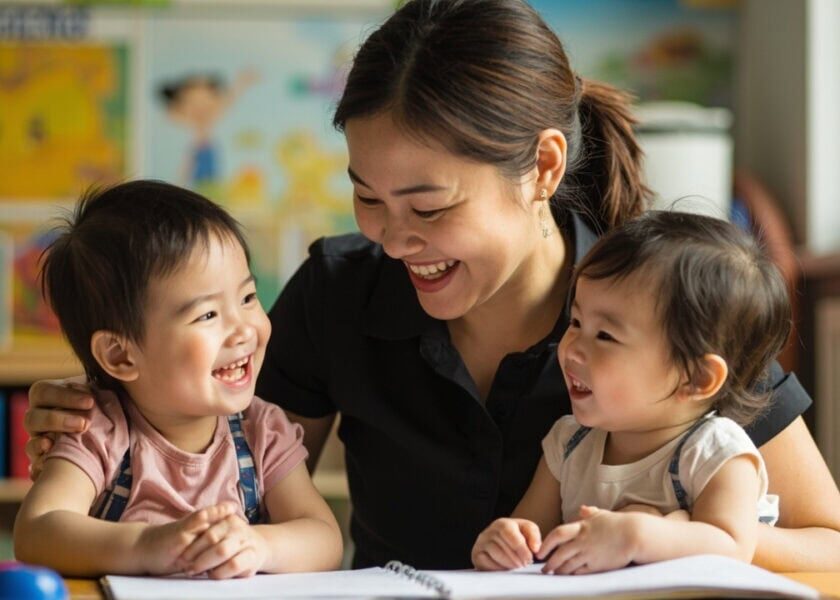
What happens is this: the care given to one child does not merely stay with one child. It flows between them. It bounces off the walls of their shared days. It lives in the conversations they have at the breakfast table about what happened at childcare, in the way a younger sibling watches an older one solve a puzzle and thinks, I want to try that too, in the quiet pride an older child takes when a younger one masters something the older one once struggled with.
This is the sibling effect, and it is not a soft metaphor. It is a measurable, observable phenomenon that quality childcare environments are uniquely positioned to support.
The Attention Multiplication Model
The fear says: one caregiver, divided attention, two children who both need enough. But what quality sibling care reveals is that attention, in the right environment, does not divide. It multiplies.
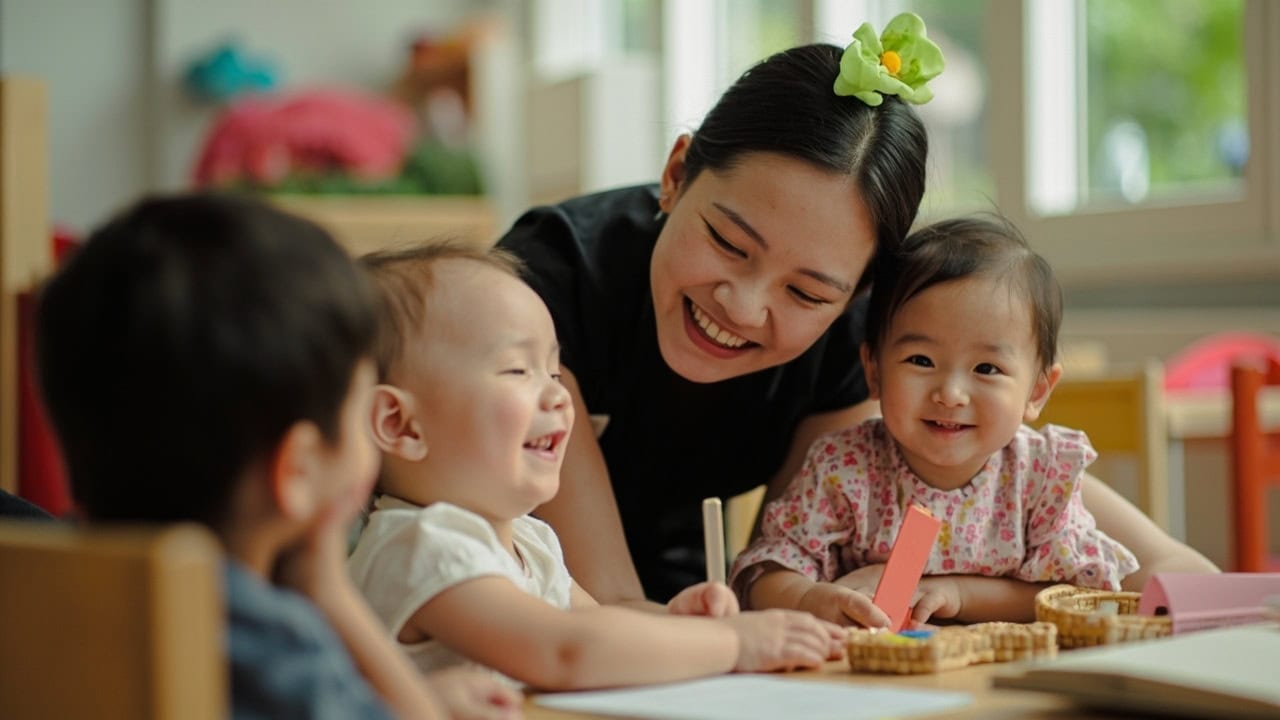
A skilled caregiver working with a one-to-three infant ratio — as is maintained in thoughtful childminding settings — is not stretching thin across multiple children. They are curating a social ecology in which children teach each other, inspire each other, and grow alongside each other in ways that adult-directed instruction alone cannot replicate.
This rests on a simple developmental truth: children learn most powerfully from children who are slightly ahead of them. Not because the older child is a teacher — they are not — but because the gap is small enough to feel achievable, relevant, and motivating in a way that adult demonstration can sometimes feel distant.
When a three-year-old watches her two-year-old brother figure out how to use a spoon with growing coordination, she is being reminded of her own growth, which builds identity. When a four-year-old helps a younger child zip a jacket, he is consolidating his own understanding by verbalizing what he knows — one of the most powerful mechanisms of cognitive development there is. He is teaching himself by teaching someone else.
What Good Sibling Care Looks Like
Consider what actually takes place in a well-structured sibling care setting — whether home-based, community-based, or centre-based. You have children of slightly different ages, different temperaments, different developmental rhythms, sharing space, routines, caregivers, and expectations.
On paper, this sounds like logistical complexity. In practice, when the environment is thoughtfully designed, it becomes something else entirely. It becomes a small society in which a child learns to negotiate, to share, to model behaviour, to experience the world not just through adult eyes but through the entirely different lens of another child who is navigating the same space.
What to Observe on a Childcare Tour
When you visit a sibling care setting, watch what is not easy to fake:
- Parallel play and collaborative interaction both exist. A quality sibling care environment has zones and rhythms that support independent exploration alongside moments of guided group activity. Both are necessary.
- Caregivers intervene as facilitators, not referees. The best responses to a dispute between siblings are not to decide who is right and who is wrong. They are to reframe the interaction — to ask a question that moves two children from opposition to collaboration. That is a high-skill intervention, and it is one of the clearest signals of quality you can observe.
- Different developmental rhythms are honoured. A setting that treats a two-year-old and a four-year-old as identical because they are siblings has not understood the sibling effect at all. True sibling-aware care staggers expectations, provides age-differentiated engagement, and recognises that siblings are not the same person at different sizes. They are two distinct developmental journeys that happen to share a family — and in quality care, share a profoundly enriching environment.
When Both Children Receive Quality Care
Something changes that goes beyond the sum of two individual outcomes. The family itself transforms.
Think about what the first thousand days and beyond actually look like in a family with multiple children. The weekends feel different when both children have been engaged, challenged, and socially enriched during the week. There is less pressure on parents to manufacture developmental experiences from scratch because the children arrive home already fulfilled in ways that are complementary.
The older child, having spent time in a quality setting with younger peers and siblings, comes home with a social confidence that makes family time richer. The younger child, having had an older sibling in the same environment, has a model of what belonging and growing look like that is closer, more relatable, and more motivating than any poster on a childcare wall.
And the sibling bond itself — the relationship your children will carry into adulthood, that will outlast you, that will be the first peer relationship most humans ever form — is being built right now, in the environments you choose for them.
The sibling bond is not fixed at birth. It is shaped. It is strengthened or strained by the conditions in which siblings spend their earliest years together. Siblings who share a quality care environment learn each other’s rhythms, conflict styles, and affection languages in a context that is structured, mediated, and enriched by trained caregivers. They learn that conflict is survivable. That sharing is rewarding. That another person’s needs can coexist with your own.
These are not small things. These are the foundational skills of adult relationships, and they are being built right now — in the space between a puzzle and a story and a nap that two children share in a quality care setting.
This is the compound growth that parents sense but rarely hear articulated clearly: two children in quality care do not simply each grow. They grow together. And the growth they give each other compounds over years in ways that reshape the family’s weekend rhythms, the children’s resilience, the parents’ capacity, and the sibling bond that will define a significant part of each child’s emotional architecture for the rest of their life.
Common Questions From Singapore Parents
You may have questions. They deserve honest answers.
“Will my children get enough individual attention?”
Individual attention matters — and the right environment provides it. But individual attention is not the only form of developmental richness. A caregiver who is present, observant, and responsive to each child’s unique needs while fostering sibling interaction is offering something different from — not less than — one-on-one care.
The key question is whether the caregiver ratio allows for genuine observation and responsive care, not just supervision.
“What if my children have very different needs?”
This is where quality sibling care distinguishes itself from generic group settings. True sibling-aware care does not apply the same approach to every child in the room. It accounts for developmental stages, temperamental differences, and individual rhythms.
The best sibling care settings look different for a two-year-old and a four-year-old — different expectations, different engagement, different scaffolding — even while they share the same space and the same caregivers.
“How do I know if a setting truly understands sibling dynamics?”
Ask them directly. How do they handle sibling conflict? How do they differentiate expectations between children of different ages? Do they communicate with you about sibling interactions specifically, not just individual milestones?
A setting that has thought deeply about sibling care will have thoughtful answers. A setting that hasn’t will offer vague reassurances.
What Quality Sibling Care Looks Like in Practice
For Singapore families exploring their options, understanding what to look for matters. The right sibling care arrangement does more than accommodate two schedules — it actively nurtures the developmental relationship between siblings while meeting each child as an individual.
In settings like the ECDA Childminding Pilot, the structure is designed to support this. Infant ratios that allow caregivers to do more than supervise — they can observe, document, and respond to the specific sibling dynamics unfolding in their care. Communication structures that keep parents informed, not just updated. Consistent Monday to Friday care blocks that provide the reliability siblings need to settle, grow, and build their bond over time.
What distinguishes quality sibling care is the intentionality behind it. Caregivers trained to observe and nurture sibling dynamics — not just individual milestones. Fee structures designed with accessibility in mind, where CDA and Baby Bonus schemes are applicable. Measures that build trust between caregivers and families, creating space for everyone to focus on what matters most.
These elements, taken together, create the conditions in which the sibling effect can flourish — where two children genuinely grow better together than they would apart.
The Decision Worth Sitting With
Let me return, for a moment, to that quiet fear I opened with. The fear that you cannot give enough. That attention is finite. That quality, divided between two children, means less for each.
I want to honour that fear, because it comes from the right place. It comes from a parent’s fierce, honest desire to get this right — to not let either child down, to make the right choice when the choice feels like it matters more than anything else you will decide this year.
And I want to offer this reframing, not as reassurance but as logic: the fear makes sense under a certain model of what childcare does. A model where care is a service delivered to an individual, where each child’s development is a separate track, where siblings are, at best, an administrative consideration.
But under the model that quality sibling care actually creates, siblings are not a division point. They are a multiplier. The environment does not divide your investment between two children. It takes your investment in each child and creates a third thing — the sibling bond, the mutual growth, the compound development — that neither child would have reached alone.
And that third thing grows. It grows across childhood, into adolescence, into adulthood, into the relationship your children will have when they are the ones raising their own families and calling each other for advice at forty and sixty and beyond.
Choosing quality sibling care is not, in the end, a logistical decision about managing two schedules. It is a decision about what you are building for your children — not just who they will become individually, but who they will be for each other.
The children in your care — all of them — are not waiting for you to split yourself evenly between them. They are waiting for you to create the conditions in which they can grow into the siblings who will know each other, challenge each other, and love each other across an entire lifetime.
That is what quality sibling care offers. Not a solution to the fear of dividing your attention, but an answer to a deeper question: what do you want your children to become for each other?
That is the question worth sitting with. And when you are ready to explore what an answer looks like — for your family, for your children, for the siblings they are only beginning to learn how to be — there are resources available to help you think it through.