Why Being Truly Seen Transforms Your Child’s Care Experience
The Difference Between Being Watched and Being Seen
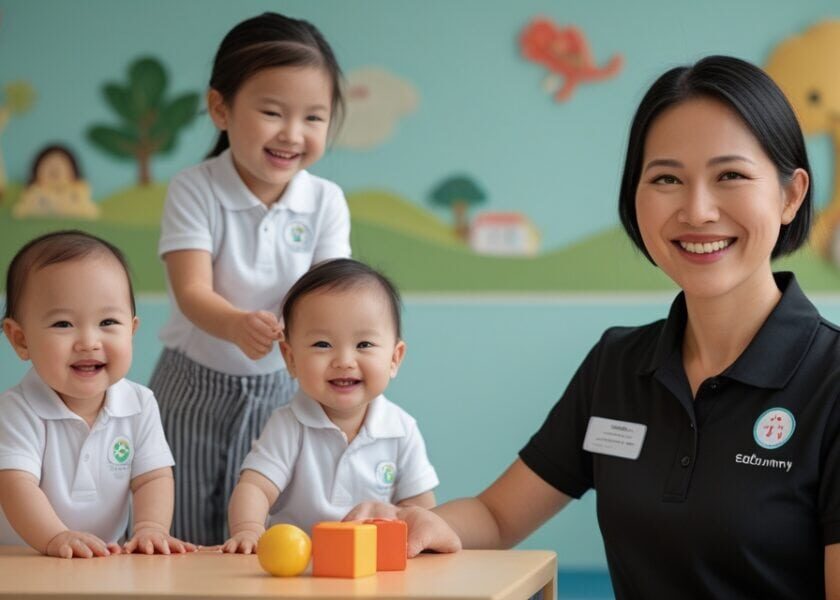
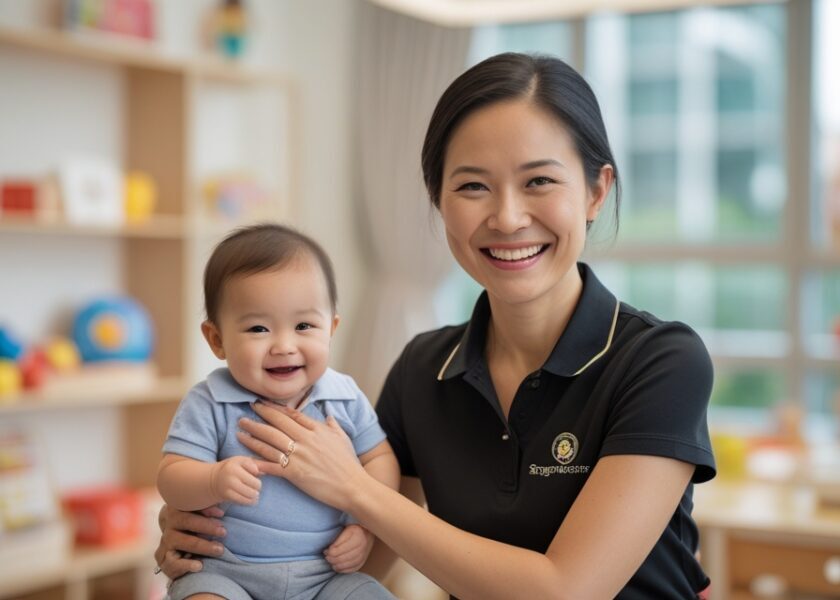
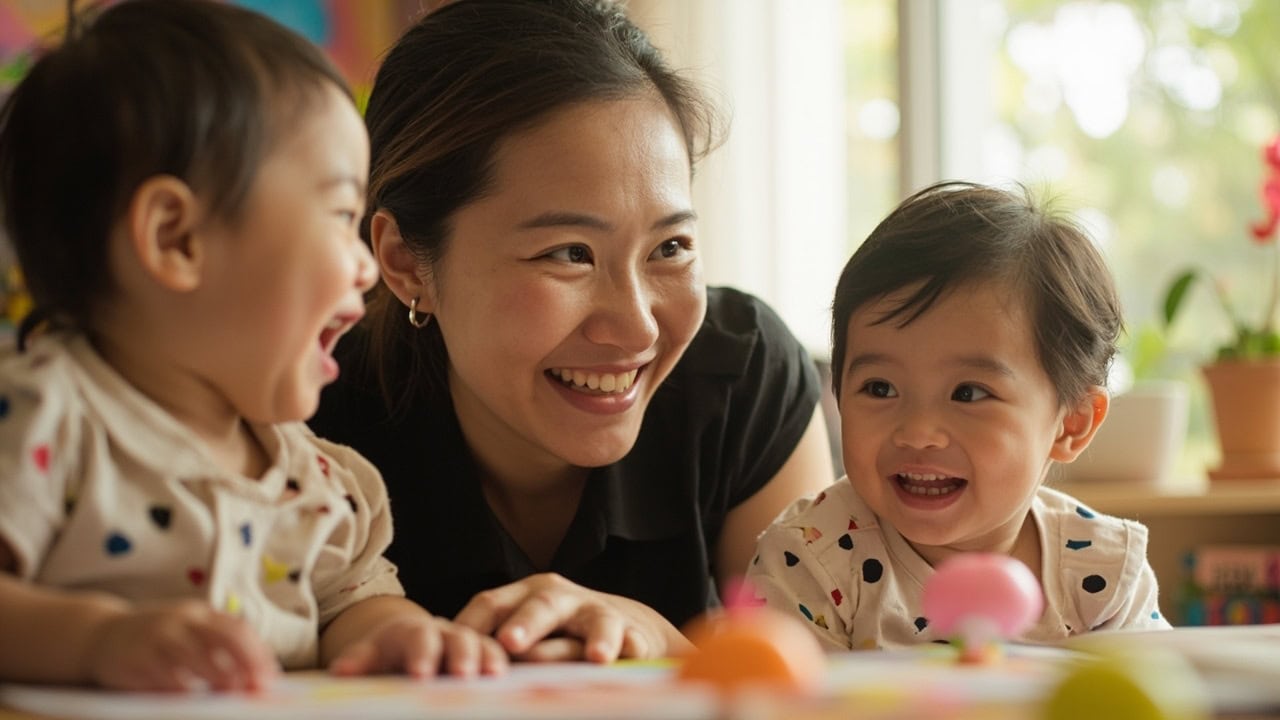
The best childcare is not simply supervision. It is not a pair of safe hands—though safe hands matter. It is not a comfortable room—though a comfortable room matters too. The best childcare is observation: the trained, intentional, daily practice of watching your child closely enough to understand them more deeply, and then telling you what you see.
Let me name this distinction clearly, because confusing them has real consequences for what we expect from childcare and for what we settle for.
Supervision keeps a child safe. It ensures they do not wander, that they are fed, that they are not hurt. Supervision is necessary. It is the floor, not the ceiling.
Observation keeps a child seen. It asks: What is this child becoming? What is she interested in today? How does he respond when he is frustrated? Is she developing a preference for one toy over another, one friend over another? Is there a pattern in how she handles transitions? Is there a shift in how he expresses emotion?
The fear that underlies so much parental anxiety about childcare is not really about safety, though safety matters. It is not really about nutrition or nap schedules, though these matter too. It is this: that something important is happening while you are away, and you will not know about it. That your child will take a step forward, or backward, or sideways—and you will read about it later, or not at all.
This is the gap that quality observation is designed to close.
A trained caregiver in a quality childcare environment is not just watching your child. They are building a developmental record—not a clinical file, but a living understanding of how your child grows, day by day, week by week, month by month.
What Quality Observation Looks Like in Practice
When observation is done well, it is specific. It notices things that matter. Here is what that means in practice:
Language Development
Not just that your child is speaking, but how they phrase requests. Which sounds are still difficult. Which words they repeat with delight. Which questions they ask most often. A caregiver who is truly observing will notice when your child starts combining two words for the first time, or when they begin using “I” instead of their own name, or when a favourite word from last month quietly drops away because something new has captured their attention.
Motor Development
The way your child reaches for objects. The way they climb. The way they handle a spoon or a crayon. Is their grasp becoming more refined? Are they attempting new physical challenges? Is there hesitation in movements they once did confidently—or confidence in movements that once made them pause?
Social Dynamics
Who your child gravitates toward. How they handle conflict. Whether they prefer to watch before joining in. Whether they lead or follow. Whether they are generous or cautious. Whether they need more time to warm up or dive in immediately. These are patterns that reveal temperament, preferences, and the beginning of a social identity.
Emotional Regulation
How does your child handle frustration? What calms them? What unsettles them? Do they seek comfort openly or hold it inside? Are there patterns in their moods that parents might not see during evenings and weekends—patterns that unfold over the full arc of a day?
These are not small things. These are the materials of your child’s inner life. These are the building blocks of who they are becoming. And these are the things that trained, attentive caregivers are in a position to observe—not instead of you, but alongside you.
The First Thousand Days: Why Infant Observation Is Different
The first thousand days of a child’s life are not just important. They are foundational in a way that later years are not. The brain is building itself at a speed that will never be repeated. Language pathways are forming. Neural connections are being laid down. The infant is not merely growing; they are architecting themselves.
In the earliest months, a child cannot tell you what they see or feel. They cannot narrate their discoveries. They cannot explain why they are crying or what they need. They communicate through movement, through expression, through the intensity of their gaze, through the way their bodies settle or stir.
To observe an infant well is an act of translation. You are reading signals that are not yet words. You are noticing the precursor to language, the precursor to walking, the precursor to trust, the precursor to all the capacities that will define your child’s future.
A caregiver who is trained in infant observation notices:
- The way a baby holds eye contact—the quality of it, the duration, whether it is seeking or withdrawing
- The way a baby uses their hands—whether the grasp is tentative or confident, whether exploration is growing
- The body language of hunger, of fatigue, of overstimulation, of wonder
- When something changes: when a baby who usually cries at drop-off settles more quickly this week; when a baby who was content to be held begins to squirm, wanting to see more, wanting to reach out; when a baby looks toward a caregiver’s voice before the voice has finished speaking
These are not trivial moments. These are the seeds of development, and someone must be watching for them.
This is why infant care is not a lesser form of childcare for children who are too young to benefit. It is a distinct practice, one that requires specialised knowledge and ratios that allow for this kind of close attention. The ratio of caregivers to infants matters—not as a bureaucratic number, but as the condition that makes genuine observation possible.
How EduNanny Makes This Standard Practice
EduNanny exists to make this kind of observation standard practice, not exceptional.
EduNanny is part of an ECDA Childminding Pilot—a recognition that trained, professional childminding is a distinct and valuable service, not an afterthought to centre-based care. The pilot reflects a belief that every family deserves access to quality observation, and that pathways to quality care should be flexible enough to meet different needs.
For some families, home-based care offers the intimacy and individualised attention that best serves their child. For others, community or centre-based settings provide the peer interaction and routine that they value. EduNanny offers both pathways, because children are different and families are different, and one size does not fit all.
What does not change across pathways is the commitment to trained caregivers who observe, document, and communicate. What does not change is the belief that a small group size—ensuring attentive ratios in applicable settings—creates the condition for genuine attention. What does not change is the understanding that observation is not a feature; it is the work.
Because EduNanny is part of the ECDA Childminding Pilot, it is structured to be accessible. Fee structures within the pilot aim to keep quality care within reach for families who need it. For families who qualify, subsidies and support mechanisms—including the use of CDA funds and Baby Bonus—can make a meaningful difference in managing the cost of consistent, quality care.
Monday to Friday care blocks provide the regularity that working families need. Transparent communication, including appropriate monitoring measures in applicable settings, offers an additional layer of reassurance—not because parents should need to check, but because knowing they can contributes to peace of mind.
Questions Worth Asking
If you are beginning your search, here are the questions that matter most:
- How does the caregiver describe their role? Do they speak about keeping children safe, or about understanding them? The language reveals the philosophy.
- What does daily communication look like? Is there a structured way that observations are shared? Is it specific, or is it general reassurances?
- What is the caregiver-to-infant ratio? Is there enough time and attention for genuine observation? Or are caregivers managing safety in a crowded room?
- How does the caregiver handle transitions? Drop-off, pick-up, nap time—these are windows into how well they observe and understand your child.
- What is the caregiver’s training in infant development? Are they equipped to read the signals that are not yet words?
Your Questions Answered
Will my child feel abandoned at drop-off?
Quality observation begins at the door. Caregivers who are trained to notice will observe how your child transitions—and they will tell you about it. They will notice when drop-off becomes easier, when your child begins to show anticipation instead of anxiety, when they start to form a genuine relationship with their caregiver.
How do I know the caregiver is actually paying attention?
You know because they tell you. Consistent, specific communication is the evidence. When a caregiver can tell you what your child discovered today, what made them laugh, how they handled a challenge, what they are interested in right now—that is the evidence. Not general reassurances, but specific observations that show real attention.
What if I don’t understand what the observations mean?
Quality caregivers do not just report. They translate. They tell you what they see and what it might mean in the context of your child’s development. They help you understand the significance of small moments.
Is this kind of care affordable?
Within the ECDA Childminding Pilot, fee structures aim to keep quality care accessible. For families who qualify, subsidies can make a meaningful difference. CDA funds and Baby Bonus can be used. The goal is to ensure that quality observation is not only available to families who can pay a premium.
Communication That Extends Your Role as a Parent
The most powerful thing a caregiver can give a parent is not reassurance. It is information. Not the information that says “your child was fine today”—fine is a word that conceals more than it reveals.
I mean the information that says: “Your child did this, and this is what it might mean, and here is how it fits into what we have been seeing.”
When a parent receives this kind of observation, something shifts. The day stops being a mystery. It becomes a shared story.
You drop your child in the morning, and you know—not with certainty, because parenting never offers certainty, but with reasonable confidence—that what happens next is not hidden from you. You will hear about it. You will understand it. The caregiver saw your child do something interesting today. They noticed a shift. They documented it. They will tell you.
This is what I mean when I say that communication is trust infrastructure. Trust is not built through promises. It is built through evidence. When a caregiver consistently shows you that they are paying attention, that they are noticing what matters, that they are willing to take the time to document and communicate what they see, the trust follows naturally. It is earned, not requested.
What is beautiful about this process is that it does not diminish your role as a parent. It extends it.
When a caregiver observes your child carefully and shares those observations with you, you are now part of a shared understanding. You see your child at home, in the evenings, on weekends. The caregiver sees your child during the day, in a different environment, with peers and routines that you cannot replicate.
When these two pictures come together, they form something richer than either alone. You begin to see patterns that neither you nor the caregiver would have noticed alone. You begin to understand your child more fully, not less.
The hours apart do not have to be a gap. They can be a continuation.
The Choice You Are Actually Making
Every parent who entrusts their child to someone else carries a small, persistent hope. It is not the hope that their child will be safe—though of course they hope this. It is the hope that someone else will love their child, in the particular way that means paying close attention. It is the hope that someone else will notice what they notice, understand what they understand, and tell them what they see.
This hope is not unreasonable. It is not demanding. It is the most natural thing in the world.
When we talk about observation, we are not just talking about technique. We are talking about a way of being with children. Observation, done well, is an act of respect. It says: You matter enough to be watched closely. Your movements mean something. Your expressions are worth understanding. Your inner life is worth attending to.
For a young child, being observed—being truly seen—shapes them. Children who grow up with attentive caregivers who notice them, who respond to their signals, who seem to understand them, develop a different sense of their own worth than children who are merely supervised. They learn that they are worth paying attention to. They carry this with them into relationships, into school, into the world.
Being seen is not the same as being watched. Anyone can watch. But to observe is to care enough to understand. And this kind of attention, offered consistently over time, becomes part of a child’s emotional foundation.
The question is not whether this kind of observation is possible. It is whether you can find an arrangement that commits to it, that structures itself around it, that trains its caregivers to do it well and communicates it to you consistently.
EduNanny was built for this. Not as a feature. Not as a promise. As a practice, a daily commitment, a way of working with children that says: We will watch your child carefully, and we will tell you what we see, and together we will build a picture of who they are becoming.
This is the promise of quality observation. This is what transforms the mystery of the day into a shared story. This is what transforms anxiety into trust, not through reassurance alone, but through evidence—the daily, consistent evidence that your child is being seen, understood, and known.
You deserve to know your child. Your child deserves to be known. And sometimes, the most meaningful thing you can do for both of you is to choose a partner in childcare who believes that being seen is not a luxury—it is the work.
Begin the Conversation
If you are exploring infant care or childminding options in Singapore and want to understand how EduNanny approaches observation, communication, and developmental tracking, we would welcome the opportunity to speak with you.
Learn more about who we are and how to reach us to discuss availability, fee structures within the ECDA Childminding Pilot, and how our trained caregivers work with families like yours.
The hours apart do not have to be a mystery. They can be a continuation of the story you are already writing.