Why Being Known Is the Most Important Thing in Childcare
The First Thing a Child Feels: Felt Safety
The first thing a child feels inside quality childcare is safety. Not the absence of danger — that is supervision, and it is necessary, but it is not enough. We are talking about felt safety. The kind of safety that lives in the body before the mind can name it.
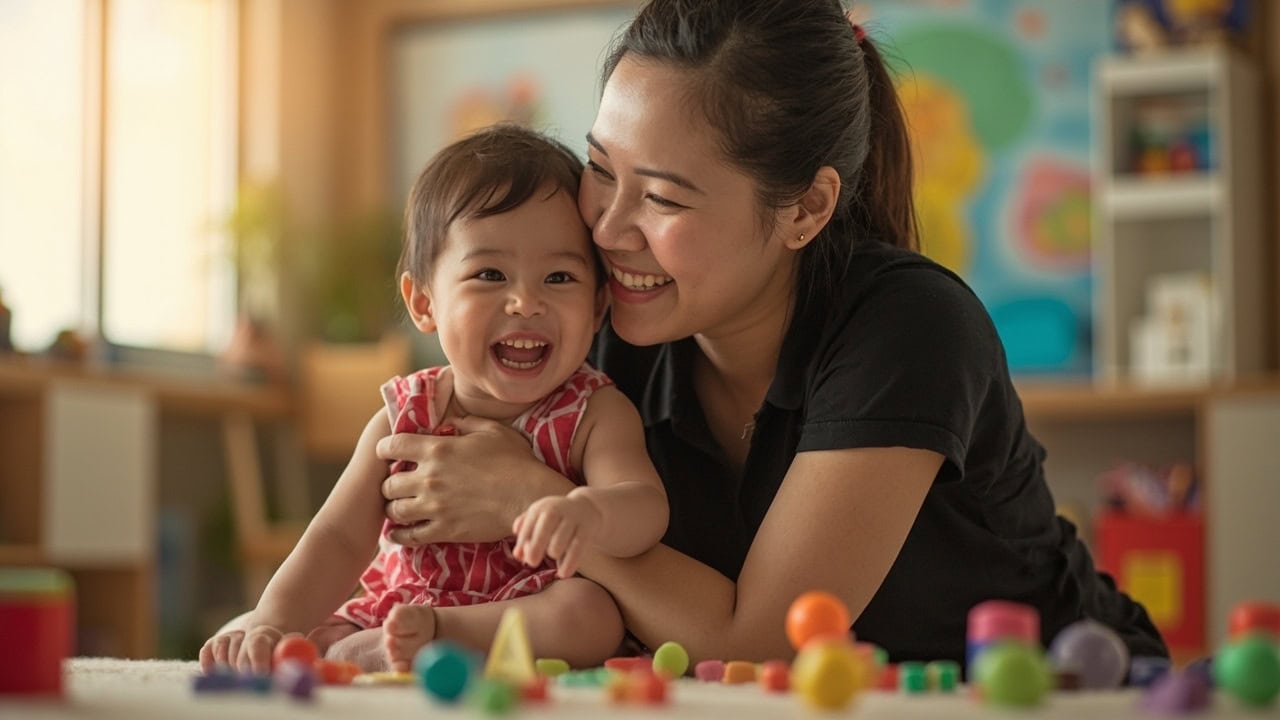
A child who feels safe knows, in a wordless and primitive way, that their body is protected here. That their needs will be noticed. That someone will come when they call. For an infant or a toddler, this is as real and as physical as the floor beneath their feet.
From felt safety, everything else unfolds. A child who feels safe can afford to look away from the door. They can turn their attention toward a toy, a face, a sound. They can explore.
This is the architecture of early development — safety first, and then everything else built on top of it. A child who does not feel safe cannot explore freely. Their energy is spent on vigilance, on holding on, on the exhausting work of managing their own alarm.
You can see the difference in a room within minutes. One child is turning toward the world. The other is turning away from it.
Being Known: What Your Child Carries Home
You know partly by what you observe. But you also know by what your child carries home — something harder to see, and far more important than any curriculum, any activity schedule, any inspection report.
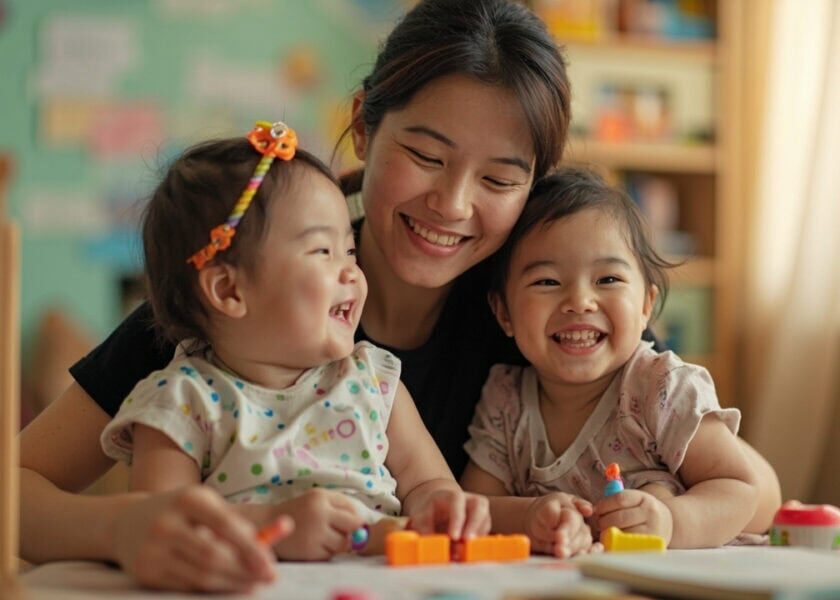
Children in quality care are not anonymous passengers moving through a schedule. They are individuals whose specific rhythms, preferences, and temperament are noticed and responded to. The caregiver who knows your child does not just follow a routine — she knows that your daughter takes her milk slightly warmer than the standard, that she settles faster with a particular song, that something in the texture of certain foods makes her pull away.
She knows your child the way you know your child. Because she has spent enough unhurried hours with a small enough group to learn these things — not from a chart, but from presence.
For your child, this feels like being real. It feels like I matter here. It feels like being a person, not just a number or a set of needs to be met. This is the felt difference between supervision and genuine care — and it is the difference your child experiences every single day, even when no one in the room is talking about it.
There is a word for the combination of being known and being held: it is belonging. But belonging in quality childcare is not the flattening of individuality into a group. It is the opposite. It is your child feeling that they are part of something — a warm, consistent, reliable circle of care — while simultaneously feeling that their specific self is seen, valued, and understood.
Why Consistency Is Not Optional
Now consider what it means to a young child to have this kind of relationship with their caregiver. Not a rotating cast of faces, but a person who shows up day after day, week after week, with the same consistent warmth and attention.
This kind of reliability is not a small thing. For a child whose world is still full of unknowns — new words, new movements, new sensations, new social encounters — the presence of a caregiver who is steady and predictable is an anchor. It is the thing that makes everything else manageable.
The child who has a familiar caregiver does not panic when something unexpected happens, because their internal map says: there is someone here who knows me. I am not alone.
This is why consistency is not just a preference or a nice-to-have in infant care. It is a developmental necessity. A familiar face is not a luxury — it is the foundation from which a child can grow.
The Quiet Confidence That Grows Inside Quality Care
There is a kind of confidence that children carry when they are in the right environment — not the performed confidence that comes from being told they are doing well, but the quiet, embodied knowledge that they are somewhere good. Somewhere they can trust. Somewhere their growth is unfolding naturally, at their own pace, within reliable and warm boundaries.
This is the confidence that shows up in Primary One classrooms years later. It is the confidence that allows a child to raise their hand, to ask for help, to try something hard. It is built, one felt-safe day at a time, in the years before.
That is not an exaggeration. That is what early emotional experience actually does. It does not just affect how a child feels in the moment. It shapes the internal working models they carry into every new social and learning situation for the rest of their lives.
What Quality Childminding Looks Like in Practice
For Singapore parents evaluating their options, understanding what quality actually looks like in a childminding setting can help translate these felt experiences into something observable.
A quality environment
- A small, consistent group size where caregivers can genuinely know each child as an individual
- The same caregiver present day after day, not a rotating schedule of different faces
- An unhurried pace where children’s rhythms are followed, not overridden by rigid scheduling
- Caregivers who respond to your child specifically — by name, by temperament, by preference
- An environment where children are free to explore because they feel safe doing so
- Transparent communication with families about the child’s day, not just a logged summary
Quality caregiver interaction
- Warm, responsive contact at eye level with children, not just proximity supervision
- Caregivers who notice and respond to individual cues — the child who is tired, the child who is hungry, the child who needs a moment
- Patience that is genuine, not performed — unhurried responses even during difficult moments
- A caregiver who talks about your child as a specific person, not a generic “the children”
Listening to What Your Child Is Actually Feeling
If you are a parent in Singapore wondering how to evaluate the quality of the care you are considering, here is a different question to start with — not what do they offer or what is the teacher-to-child ratio or what curriculum do they follow, but: what does my child feel when they are in this place?
You will not always be able to articulate the answer. But you can learn to listen for the signs.
Not the obvious ones — not just whether your child cries at drop-off, because children cry for all kinds of reasons and some of them have nothing to do with the quality of the care. Look deeper:
- The quality of your child’s engagement when they come home
- The ease in their body — whether they are closed and guarded or open and curious
- The questions they ask — or don’t ask — about the caregiver, the space, the other children
- The way they talk about what happened, even if they use the language of feeling before the language of events
I played. I was with Jia Jia. I had fun. These are the sentences that matter. They are the ones your child is actually reporting to you.
And here is what those sentences are telling you: whether your child is spending their days in a space that is merely safe, or in a space that is genuinely right for them.
You cannot be in the room all day. No parent can. But your instincts are not wrong. The signals you are reading — the mood at dinner, the ease of the morning drop-off, the way your child speaks about their caregiver — are real information. They are not the whole picture, but they are not nothing.
The EduNanny Difference
EduNanny by BUTLER operates within the ECDA Childminding Pilot, which means the programme is grounded in Singapore’s own recognition that home-based and community-based childcare pathways deserve the same thoughtful investment as centre-based options.
In the EduNanny model, small-group settings with ratios of up to one to three infants allow a caregiver to genuinely know each child — not as a checkbox, but as a person whose individual patterns and needs become second nature.
Monday through Friday care blocks provide the kind of predictability that young children need to build real trust. Where CCTV measures are deployed, parents have an additional layer of transparency — not because trust is absent, but because they deserve to feel it from the outside, too.
The pilot fee structure keeps this within reach for families who want quality without navigating the premium price brackets that many centre-based options command. CDA and Baby Bonus usability mean that the financial tools the government has put in place to support Singapore families can be directed toward this kind of care — not just as a subsidy, but as a genuine choice.
None of these structural elements mean anything unless the child inside them is feeling what we have been describing: safety, being known, consistency, the freedom to be themselves and the comfort of being held. These are not features. They are the experience.
Choosing Quality Care: A Different Starting Point
Choosing quality care is not a logistical decision. It is a developmental one — and one of the most consequential choices you will make as a parent.
EduNanny was built on this understanding. Every element of the programme — the small ratios, the caregiver consistency, the transparency with families, the alignment with ECDA standards, the accessibility for Singapore families through practical fee structures — exists because the people behind EduNanny believe that what your child feels inside these early years is the most important work they will ever do.
You cannot be in the room all day. No parent can. But you can learn to feel what your child feels there. You can learn to trust the signs, not just the signals. And you can choose a care arrangement that was designed — thoughtfully, deliberately, and with deep respect for what children actually need — to give your child an inner world that is safe, seen, and full of the quiet confidence that comes from being in the right place.
That is not a small thing to give a child. It is, in fact, everything.
If you would like to learn more about EduNanny’s approach to thoughtful, development-oriented childminding for Singapore families, visit our homepage or get in touch with our team.