Who Your Child Is Becoming While You’re Not There
The Moment You Cannot Explain
There is a moment every parent in Singapore will recognize, even if they cannot quite name it. You pick up your child from care, and in the car ride home or the walk through your neighbourhood, they say something. Perhaps they notice a bird they never seemed to see before. Perhaps they handle a frustration differently than they did last week. Perhaps they ask you a question you have never heard them ask, or they solve a small problem with a confidence that seems to have arrived from somewhere else.
And you think, quietly, perhaps while they are distracted by the passing scenery: where did that come from?
You did not teach them that. Neither did their grandparents, during that brief season when they helped out. It was not in the books you read together, not in the songs you sing at bath time. Something shifted while you were at work, while you were managing the hours that require management. Your child grew, in the way children grow, but they grew in a direction that surprised you.
If you are like most parents in Singapore, you felt a flicker of something complex—not quite gratitude, not quite wonder, but something that sits at the intersection of the two. Your child came back to you a little more themselves than when they left.
This is the quiet revelation at the centre of every parent’s experience of quality childcare. Not the dramatic milestone captured in photographs, but the subtle evidence that your child is becoming someone in the hours you are not there.
The Question Beneath the Question
Singapore parents carry a particular weight—not just the ordinary weight of raising children, which is heavy enough, but the weight of navigating a society that is ambitious on behalf of its children. A city that builds systems and structures to support the next generation’s flourishing, and yet somehow leaves the most important question in the hands of parents themselves.
How should my child spend their early years? Who should be with them while they are becoming whoever they will become?
The question that lives beneath every childcare decision is not really about safety. Safety is the floor, not the ceiling. The question that lives beneath it—the one parents rarely say aloud because it sounds too large, too existential, too heavy for a conversation about hiring someone to look after their child—is simply this:
Who is my child becoming while I am not there, and does this care contribute to that becoming in the way I hope?
Most content about childcare focuses on what you can measure: ratios, qualifications, curriculum frameworks, safety measures. These things matter. They are the necessary conditions for quality. But they are not the sufficient conditions.
What matters most is harder to measure and harder to communicate: the orientation of the caregivers, the culture of the environment, the understanding that every interaction is teaching your child something about who they are and what the world is like and whether they can trust it.
The Invisible Curriculum of Quality Care
Children are porous creatures. They absorb everything.
The relational patterns, the emotional climate, the way adults respond to their curiosity and their distress, the sense they develop of whether the world is a place where they can explore and take risks and discover what they love—all of this is being formed in the hours you are not there.
This is what we mean when we speak of the invisible curriculum of quality care. It is not the songs or the sensory activities or the structured learning moments, though these matter too. It is the texture of your child’s experience:
- The feeling of being noticed
- Having their interests seen and reflected back
- Being in a place where their emerging preferences are treated as information worth paying attention to
Because what happens in those early years, in the hours that parents do not witness, does not simply pass without leaving a mark. It compounds. It shapes. It becomes the invisible inheritance that a child carries forward into school, into relationships, into the way they eventually meet the world as an adult.
How Security Becomes Confidence
A child who feels seen becomes, over time, a child who sees themselves clearly.
A child whose fascinations are noticed and named becomes a child who trusts their own passions.
A child who experiences consistent, responsive care builds something invaluable—a secure base from which exploration and growth naturally emerge, because they know, in their body, in their nervous system, that the ground beneath them is solid.
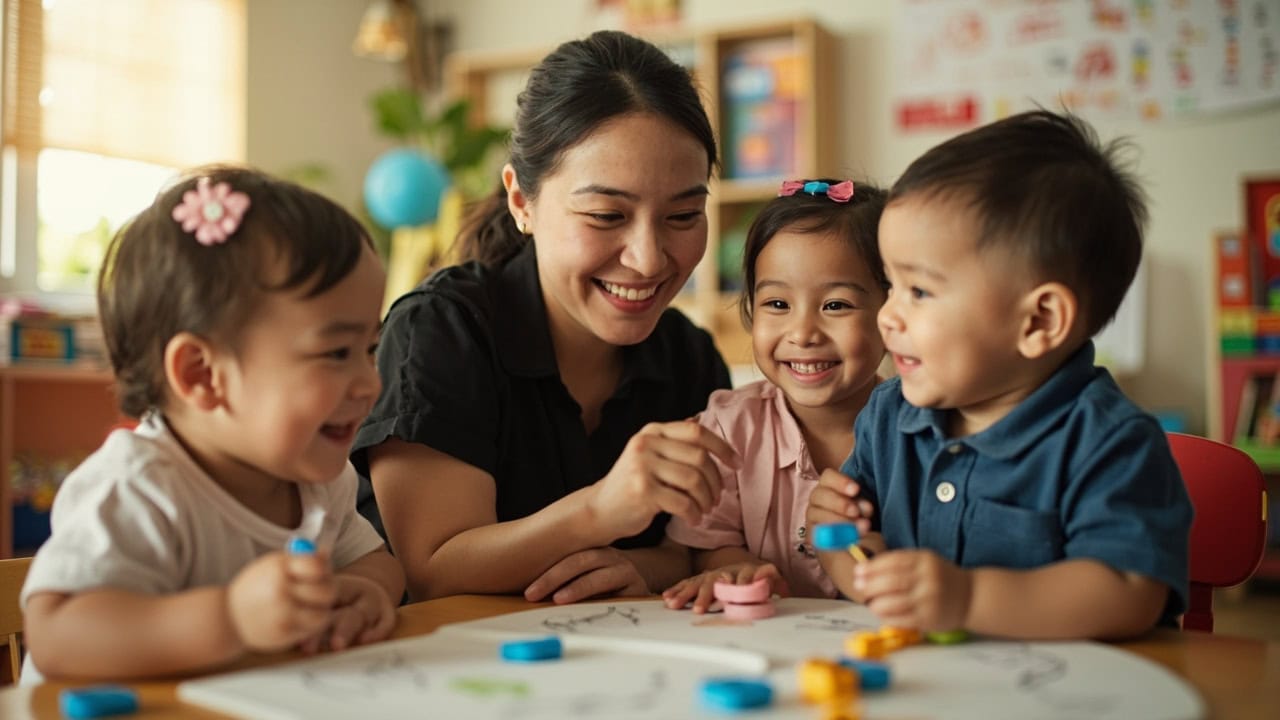
When a caregiver notices that a toddler is fascinated by how things stack and fall, and responds by offering more objects to explore this concept, the child learns that their interests have meaning. When a child struggles with the transition from home to care, and a caregiver responds with patient consistency rather than dismissal, the child learns that their emotions are worth taking seriously. When an infant reaches for a peer in play and a caregiver gently facilitates rather than separates, the child learns that connection is available to them.
These moments may seem small. They are not. They are the building blocks of who your child is becoming.
What Quality Childminding Actually Looks Like
Parents often ask: what should I look for when choosing care? Beyond the necessary conditions—safety, qualifications, appropriate ratios—there are indicators that signal whether care is oriented toward your child’s becoming, not just their supervision.
Caregivers Who Notice
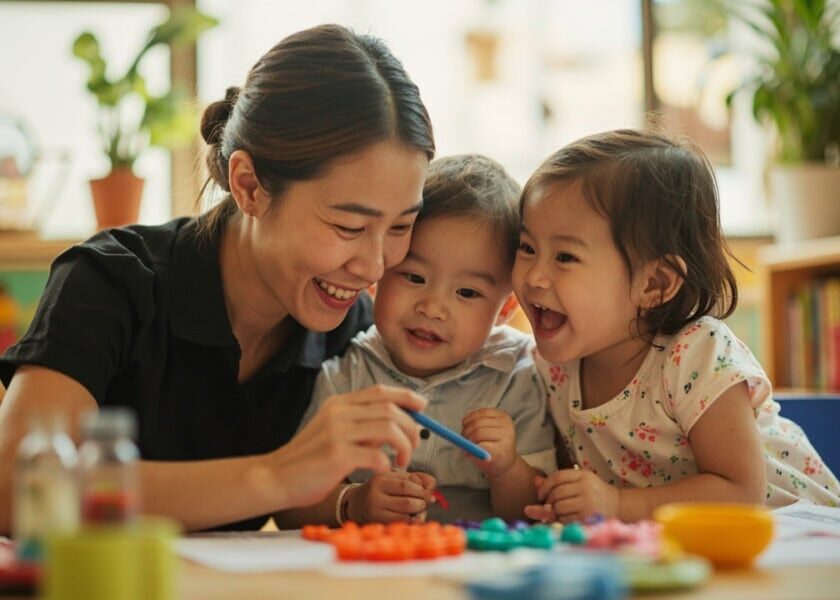
Quality childminding is characterized by attention. Caregivers who track your child’s emerging interests, your child’s particular ways of expressing themselves, your child’s growing capacity to handle frustration or to reach out for connection. They are holding your child’s narrative—the story of who this small person is becoming—and they are shaping that narrative through every choice they make.
Ask yourself: does the caregiver seem curious about my child, or simply focused on logistics?
Emotional Climate
Visit at an unexpected time if possible. Observe how caregivers respond to children who are upset, frustrated, or seeking attention. Notice whether the environment feels warm or clinical, whether children seem comfortable being themselves or performing for approval. The emotional climate of a care setting is one of the most significant predictors of its impact on your child’s development.
Individualization
One-size-fits-all programming may check curriculum boxes, but it does not serve your child as an individual. Quality care adapts to the child, not the child to the program. Look for evidence that caregivers are using your child’s interests and emerging capabilities as the basis for interaction.
Communication That Builds Partnership
You should feel like a partner in your child’s care, not a customer receiving updates. Quality childminders share observations that help you understand your child’s experience, not just what they ate and slept. They view your questions as collaboration, not oversight.
Questions Parents Actually Ask
“Will my child feel secure with someone else?”
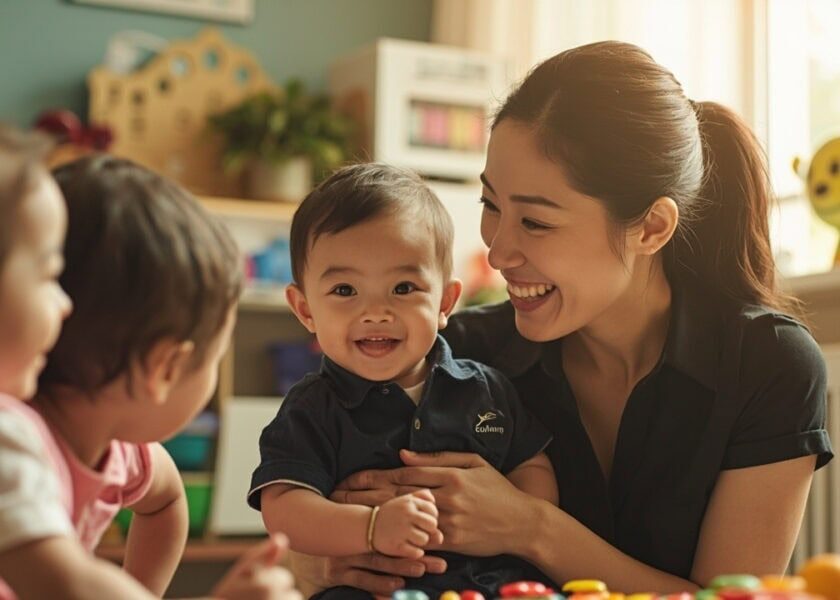
The research is clear: children can form multiple secure attachments. What matters is not whether your child bonds with a caregiver, but whether that caregiver provides consistent, responsive, warm interaction. Quality childminding does not replace your role—it complements it, and for many children, the consistency and individual attention of a skilled childminder actually supports the development of security rather than undermining it.
“How will I know what is happening during the day?”
Quality care addresses this through communication practices that keep you informed—not just about logistics, but about your child’s emerging interests, their moments of frustration and growth, the small developments that make up who they are becoming. Transparency builds trust, and trust allows parents to engage with care from a place of confidence rather than anxiety.
“Is this really worth the investment?”
This is not an expense you are evaluating against alternatives. It is an investment in your child’s developing sense of self. The relational patterns, the emotional security, the sense that their interests matter—all of this is being formed now, in these early years, and it compounds. You may not see the fruits of quality care in weekly reports or photographs. You will see them in your child’s growing confidence, in their willingness to try new things, in the passion that begins to emerge for something they love and are good at.
EduNanny Singapore: Built Around This Understanding
EduNanny Singapore was created to answer the question that lives beneath every childcare decision—not as a slogan, but as a philosophy that shapes every relationship, every observation, every decision made in the hours when you and your child are apart.
EduNanny by BUTLER is part of the ECDA Childminding Pilot, which means we operate within a framework designed to ensure that quality is not left to chance. With ratios that allow for genuine attention—up to one to three infants in our care—we create the conditions for the kind of responsive, individualized interaction that shapes a child’s developing sense of self.
Our caregivers are not simply supervising. They are noticing. They are tracking your child’s emerging interests, your child’s particular ways of expressing themselves, your child’s growing capacity to handle frustration or to reach out for connection. They are holding your child’s narrative and shaping it through every choice they make.
EduNanny’s home-based and community pathways offer families in Singapore options that fit different lives, different needs, different circumstances. Monday to Friday care blocks provide the consistency that young children need to build security and trust. Our communication practices ensure that you remain part of the narrative even when you are not physically present.
We have designed our pilot structure to be accessible, with fee structures that make quality care achievable. Your Child Development Account and Baby Bonus can be used—as government support intended—to invest in the early years in the way that matters most.
Choosing Infant Care in Singapore: A Practical Framework
When you evaluate childcare options, hold this question as your true decision criterion: who is my child becoming while I am not there, and does this care contribute to that becoming in the way I hope?
From this question, several practical criteria emerge:
- Notice and Response: Do caregivers demonstrate genuine interest in your child as an individual? Can they describe your child’s emerging interests, temperament, and patterns?
- Emotional Climate: When you visit, does the environment feel warm? Do children seem comfortable? How do caregivers respond to distress?
- Consistency: Will your child have the same caregiver over time? Consistency is foundational to security, and security is foundational to exploration.
- Ratios and Attention: Can caregivers realistically respond to individual children, or is your child one of too many? Individualized attention is where the invisible curriculum operates.
- Partnership Orientation: Do you feel like a partner in your child’s care, or a customer receiving a service? Quality care invites your involvement and values your observations.
- Alignment With Your Values: Does the care reflect how you want your child to be treated when you are not there? Can you trust this environment to shape your child in ways you would shape them yourself?
Your Child Is Becoming Someone
The invisible inheritance of quality care does not reveal itself immediately. It accumulates. It compounds. And it emerges over years in ways that parents could not have predicted when they made the decision.
You will see it in your child’s growing confidence, in their willingness to try new things, in the ease with which they move through the world, in the relationships they build, in the passion that begins to emerge for something they love and are good at. You will see it in the way they carry themselves. In the sense they carry of being someone who matters, whose interests are worth noticing, whose growing self deserves to be seen.
This is the architecture of their inner life—invisible but foundational. And it is being built in the hours you are not there.
The child your childcare is growing into is not a project or a product. They are a person, with their own emerging identity, their own growing agency, their own unique way of being in the world.
Every child deserves care that leaves them more themselves than before. More curious, more confident, more connected, more secure in their own worth. The parents of Singapore, who care so deeply and work so hard and want so much for their children, deserve a partner in this work—someone who shares their vision, who takes their concerns seriously, who understands that the small moments of daily care are building something much larger than any of us can fully see.
If you are navigating the childcare decision in Singapore and want to understand how quality childminding can support your child’s becoming, we invite you to start a conversation with us. We will listen to what matters most to you, answer your questions honestly, and help you think through what kind of care aligns with your vision for your child’s early years.
Because this decision matters. And you deserve a partner who understands why.