When Familiar Care Ends, Trust Your Child Is Ready to Grow
The Moment Every Singapore Parent Recognises
There is a moment, and every parent in Singapore knows it. You realise the care arrangement that carried your family through these early years is reaching its natural end. Perhaps your domestic helper’s contract is finishing. Perhaps your parents, who have given so generously of their time and love, are beginning to feel the weight of those long days. Perhaps you yourself have been home with your child, and the season is shifting.
Whatever brought you here, you are now standing at a threshold. On one side: familiar arms, the rhythm your child knows by heart, the comfort of what has always been. On the other: a choice that feels, somehow, like a leap of faith.
The truth is that leaving familiar care is one of the most emotionally complex decisions a Singapore family can face. We are not simply choosing a new service. We are asking our child to open their world, to trust new hands, to believe that safety can exist beyond the faces they have known since birth.
And we are asking ourselves, quietly, in the small hours of the night: Am I doing the right thing? Will my child feel abandoned? Am I replacing something irreplaceable?
These questions deserve to be heard, not dismissed. They are not signs of weakness or overthinking. They are the language of a parent who cares deeply. If your chest tightens at the thought of this transition, I want you to know this: you are not being overly cautious. You are being a parent.
Children Are More Resilient Than We Fear
But now let me ask you to consider something else. Something that may reframe everything.
Children are far more resilient than we give them credit for. Not in the sense that transitions are easy or that their feelings do not matter. But in the deeper sense that human beings, even the youngest ones, are built for adaptation.
When children are placed in environments that are predictable, warm, and responsive, they do not just cope. They flourish. They build what psychologists call secure attachment—not to specific faces alone, but to the quality of care itself.
Here is one of the most important things we know about early childhood development: attachment is not about location. It is about consistency, attunement, and love.
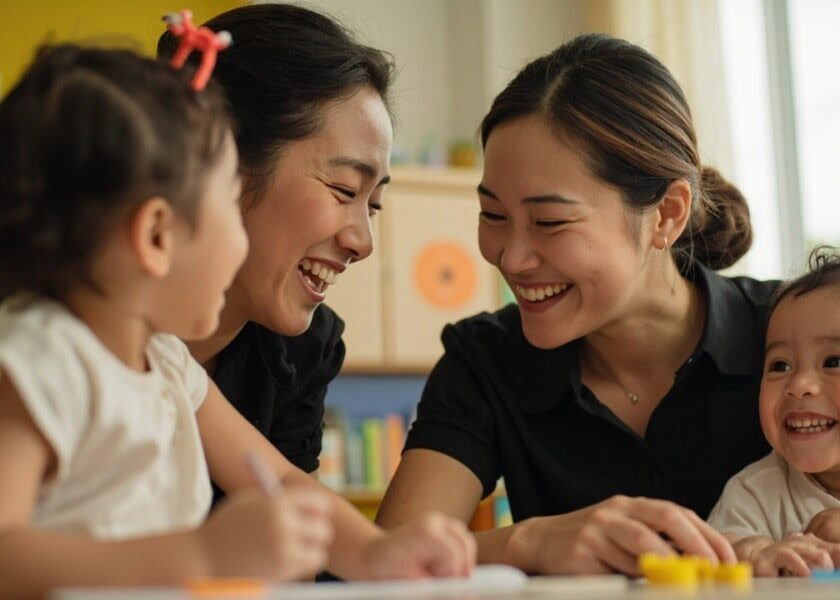
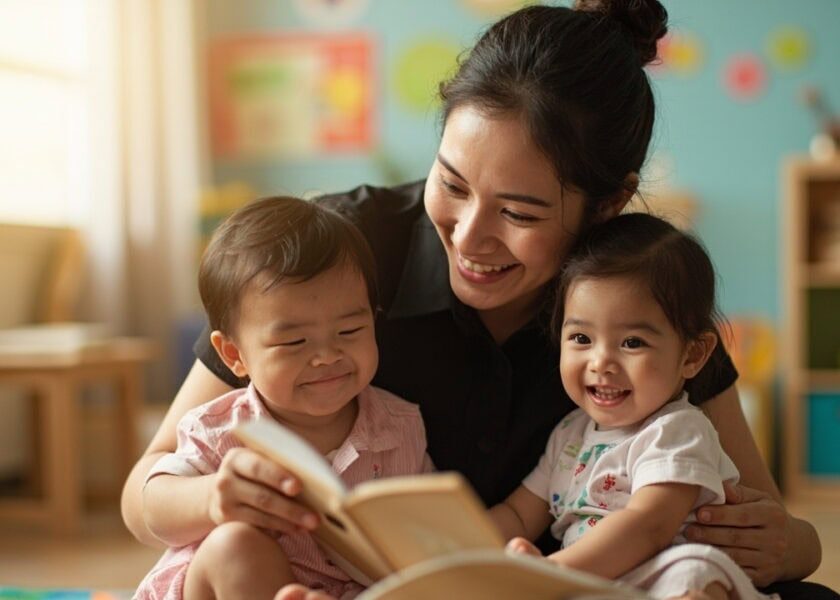
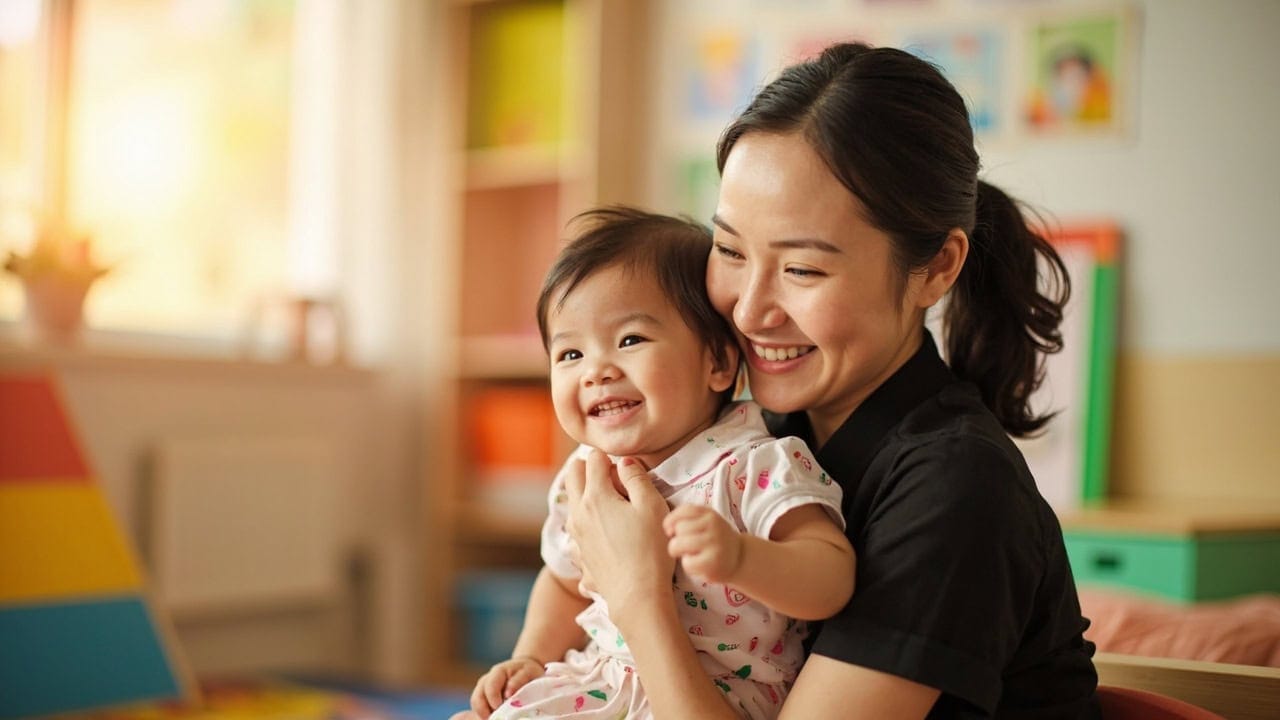
Professional childcare, when it is done well, does not replace the warmth of home. It becomes a new kind of warm. A place where your child learns that the world can be trusted, that there are people beyond family who will meet their needs, that the songs you taught them will still be sung, that comfort exists when they fall, and that their small victories will be celebrated with genuine delight.
You are not failing your child by choosing professional care. You are responding to their evolving needs. The baby who needed your constant presence is becoming a toddler who needs peers, challenges, and structured discovery. Your instinct to provide more is exactly right. You are simply expanding the circle of love your child lives within.
How to Evaluate Quality Childcare
Not all professional care is equal, and this is where careful observation becomes essential. When you visit any childcare arrangement—whether home-based, community-based, or centre-based—here is what to look for.
The Real Indicator: How Caregivers Respond to Distress
Pay close attention to what happens when a child is upset. This tells you more than any brochure or website.
Green lights:
- Caregivers soothe with genuine, focused attention
- They get down to the child’s level, making eye contact
- They speak in warm, unhurried tones
- Children move through the space with ease and confidence
- The atmosphere feels alive but calm
Red flags:
- Children are quieted quickly and left alone with their distress
- Caregivers seem hurried or emotionally disconnected
- Children appear subdued, watchful, or uncertain
- Human interactions feel cold or mechanical
A facility can have gleaming equipment and beautiful curricula on paper, but if the human interactions feel off, your child will feel it. Conversely, a simpler environment where caregivers are present, warm, and responsive is worth far more than polished facilities with distant staff.
Questions Worth Asking
You should feel empowered to ask questions. A trustworthy provider will not only welcome these questions but be relieved that you are asking them—because they know that a thoughtful parent makes for a better partnership.
- How many children is each caregiver directly responsible for? For infants, the ratio matters enormously.
- How are transitions handled between activities and environments?
- What does communication with parents look like—photos, daily reports, check-ins?
- What does a typical day actually look like for my child’s age group?
- How do you handle illness, emergencies, and unexpected situations?
Making the Transition: A Practical Roadmap
Feeling understood is important, but feeling equipped is what brings peace. Here are the principles that guide successful transitions.
1. Go Gradually
Your child’s sense of security is built on predictability. Any transition that honors that reality will go better than one that asks too much too fast.
- Start with shorter sessions—a few hours at a time—before full days
- Stay nearby during initial visits before stepping away
- Visit multiple times before the official start date so the space becomes familiar
- Bring a transition object from home—a familiar blanket or stuffed animal that carries the scent and feeling of safety
Some parents arrange for their child to spend time with the new caregiver in their own home first, allowing trust to form in the most familiar setting before the child is asked to adapt to a new environment.
Beginning during a period of lower overall stress—avoiding major disruptions like moving house or a parent’s travel—makes a significant difference. There is no single right way, but there is a right spirit: go slowly enough that your child never feels abandoned, only expanding.
2. Communicate Honestly With Your Child
Even young children sense when something significant is shifting. Rather than simply disappearing one morning, consider age-appropriate ways to acknowledge the change:
- Visit the new space together and point out what your child will enjoy
- Speak positively about the new caregiver before the first day
- Keep goodbyes warm but brief—lingering increases anxiety
- Maintain the routines you can control: bedtime, morning rituals, familiar foods
Children take their emotional cues from us. When we approach transitions with quiet confidence, they absorb that security.
3. Build a Transparent Partnership
Ask what you can expect in terms of updates, photos, and daily reports. Many families find that the peace of mind from knowing they can check in—knowing there is nothing hidden—makes all the difference in how they experience the transition.
When parents feel informed, they feel calm. And when parents feel calm, children feel it too.
4. Acknowledge Your Own Emotions
This transition is not only happening for your child. It is happening for you. It is entirely normal to feel grief during this season. You may mourn the relationship your helper had with your child, the ease of having someone you trusted in your home, the grandparents’ gentle rhythms that your child knew so well.
These feelings are not a sign that you made the wrong choice. They are a sign that something meaningful is ending, and meaningful things deserve to be grieved. Allow yourself that. Acknowledge what you are leaving behind even as you step forward into what comes next.
One of the most helpful shifts parents have described is reframing this transition not as replacement but as expansion. Think about the love you built with your helper or your parents. The new care arrangement is not erasing that foundation. It is building upon it. Your child carries everything you gave them. That does not disappear. It becomes part of who they are—a stable core from which they can reach out into the world.
Finding a Partner You Can Trust
The early years matter. You already know this, or you would not be here, thinking through this decision with such care.
What you may not have considered is that the very act of navigating this transition thoughtfully is itself a gift to your child. You are modelling something essential:
- That change can be faced with courage
- That new environments can be embraced
- That love is not diminished by being shared more widely
You are teaching your child that the world is full of trustworthy people and that they can build connections beyond the ones they were born into. This is the beginning of their social-emotional life.
The arms you are leaving behind did beautiful, necessary work. The love that lived in your home, the care that shaped your child’s first years, the relationships that formed in those early days—none of that is wasted. It is the foundation.
And now your child is ready for the next chapter. And so, perhaps, are you.
If you are considering this transition for your family, we invite you to speak with us. No pressure, no obligation—just a thoughtful conversation about what your family needs and whether we might be the right partner for this next chapter.
Your child has already been shaped by so much love. We would be honoured to help them grow from there.
Explore more about our approach to quality childminding in Singapore, or get in touch to begin a conversation.