What Your Child’s Behaviour Reveals About Their Care Experience
The Question That Matters Most
There is a question that lives somewhere beneath every childcare centre visit, every orientation tour, every conversation with a centre director. It is not the question on the checklist. It is not the one you ask out loud. It is quieter than that—and it follows you home.
It sounds like this: Will my child feel safe here? Not safe enough. Not tolerably safe. Actually safe. Will they feel known here—not just watched, but known? And will they grow in that knowing?
If you have stood in a childcare centre, nodding at the right answers, filling out the right forms, and still felt that question persist—this article is for you.
Singapore parents are some of the most research-oriented in the world. You visit centres, ask about ratios, read programme philosophies, check accreditations. You are doing your homework. But somewhere beneath all that research, this deeper question persists: What is actually happening inside my child during those hours I am not there?
You cannot fully access their inner experience. You cannot see what their nervous system is registering—whether they feel held or merely supervised, whether they are thriving or simply surviving each day.
You are not overthinking. You are asking the right question. And it deserves a real answer.
What Science Tells Us About Young Children in Care
When a young child walks into any new environment, something profound happens beneath the surface that most parents never get to witness.
Their autonomic nervous system—the part of them that does not think, but registers—is taking stock. It is asking:
- Are the people here attuned to me?
- Is this space regulated?
- When I am upset, will someone come close in a way that feels like help?
Developmental science has shown us, with growing clarity over the past several decades, that young children are not passive recipients of childcare. They are active, sensing beings whose nervous systems are shaped by the quality of care they experience in these formative years.
The first thousand days of a child’s life are not a metaphor. They are a biological window. The architecture of a child’s capacity for emotional regulation, for curiosity, for connection—this is built in the everyday moments of being held, being responded to, being noticed.
The Difference Between Supervision and Genuine Engagement
A supervised child is one whose physical presence is accounted for. A genuinely engaged child is one whose inner state is being read, honoured, and supported throughout the day.
You can see the difference. It shows up in the child’s body, in the quality of their attention, in the way they move through the room—free rather than guarded, curious rather than watchful.
When a caregiver consistently attunes to a child’s cues—when they notice the early stirrings of distress and respond before the child collapses into it—they are not simply being kind. They are teaching that child’s nervous system what safety feels like from the inside.
How Quality Care Shows Up in Your Child
There is a moment, familiar to every parent who has placed their child in good care, that reveals more than any inspection report could. It is the moment you pick up your child and notice something about how they arrive back in the world.
A child in quality care comes home differently than a child who has simply been minded. Not perfectly. Not without the ordinary fatigue of a long day. But differently in quality.
The Child Who Arrives Curious
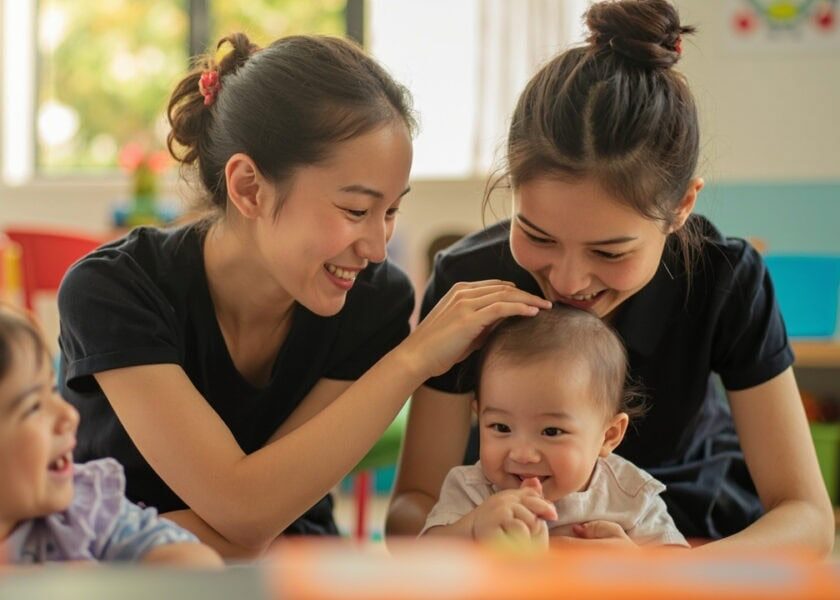
A child who has felt genuinely known in their care setting arrives curious. They may talk about what happened:
- The song they sang
- The friend they sat beside
- The caregiver who noticed they needed a drink of water before they asked
They mention these people and activities with a particular quality of pleasure, a kind of quiet pride. In their mind, this is not just a place they go. It is becoming their place. These are their people.
The Felt Sense of Belonging
This is one of the most powerful things a childcare environment can give a child: the felt sense of belonging.
When a child feels that they belong—when they have named, internally, that this is their space and these are their trusted adults—the anxiety of separation does not disappear entirely. Separation is a real and valid thing for a young child to feel. But it softens. It becomes manageable.
The child who feels known does not spend their care hours in a low-grade state of vigilance, wondering if anyone will notice if they need something. They are freed—actually freed—to explore, to play, to form those early peer relationships that are so tender and so formative.
Early Friendships That Matter
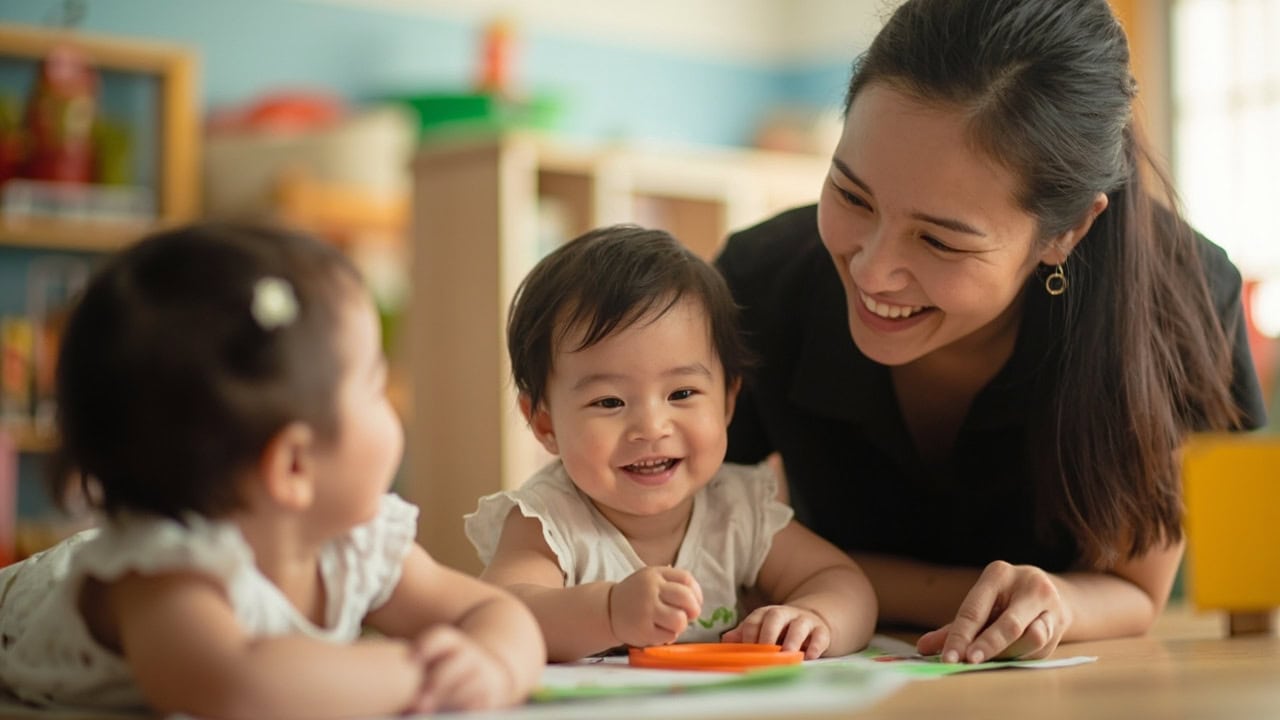
Watch two toddlers in a quality care setting who have been together for months. You will see something remarkable.
You will see them seek each other out. You will see the beginning of shared attention, of mutual delight, of the earliest forms of friendship.
These are not trivial social skills being practiced. These are the foundations of a child’s capacity for relationship, for empathy, for collaboration—and they are being built in the small, ordinary moments of shared play that happen when children feel safe enough to reach toward each other.
The Regulated Child vs. The Depleted Child
Now watch the same children after a long day. Here is where the real evidence lives.
A child who has spent their day in an environment that supported their autonomic regulation—who was held in a consistent, warm, attuned way—will show it. Not perfectly, not in every moment, but recognizably.
They will be tired, yes. But their tiredness will be the tiredness of a full day, a day in which they were engaged and active and learning through doing.
It will not be the depletion of a day spent managing anxiety alone.
There is a difference between a child who is spent from thriving and a child who is spent from surviving. You know this difference in your body when you pick them up.
What Quality Childminding Actually Looks Like
Understanding what quality care produces in a child is essential for making a good decision. It is equally important to understand what quality care looks like from the inside—the practices and conditions that enable genuine attunement.
Ratios That Allow for Real Connection
Quality care begins with the conditions that make genuine attunement possible. When caregiver-to-child ratios are manageable, caregivers can read the cues of young children—the way a child’s body communicates before language arrives, the way distress shows up in play before it shows up in tears.
Environment That Serves the Child
An environment can look calm on the surface and still be dysregulating for a child whose inner state is not being held. And the inverse is also true: a lively, active environment can be deeply soothing when it is structured around the child’s actual needs for safety, connection, and agency.
Agency and Choice for Even the Youngest
Even our youngest children—who cannot yet speak in words—can exercise choice in quality care. They can:
- Choose which activity to approach
- Move freely in a space that has been prepared for their exploration
- Say no with their body, and have that no be respected and responded to rather than overridden
This is not permissiveness. It is the respectful recognition that a child who feels agency in small things is building the internal confidence to engage with big things.
Trust Built Through Transparency
Trust is built through openness, not assurances. Quality childminding providers maintain regular, honest communication with families—not the transactional communication of daily reports, but the kind that helps parents understand what their child’s day looked and felt like from the inside. Parents should know not just what happened, but how their child moved through it.
The Signs That Live in Your Child’s Felt World
Here is what this means for you, as you sit with the decision about where to place your child.
The question you are asking—will my child thrive here?—is the most important question you can ask. But it cannot be fully answered by looking at wall displays or reading programme philosophies. It is answered over time, in the evidence of your own child’s behaviour and inner experience.
Look for these indicators:
- Trust in caregivers: Does your child speak about their caregivers with a quality of familiarity that suggests trust?
- Genuine pleasure: Does your child mention activities with genuine pleasure, not just rote recall?
- Curiosity over anxiety: After the initial settling period, is your child curious about their day rather than anxious about it?
- Emotional regulation: Does your child come home internally organised, capable of transitioning back into family life—not perfectly behaved, but regulated?
- Quiet confidence: Does your child show a confidence that says, I have been in a place where people understood what I needed, and I am okay?
These are not checklists. They are windows into your child’s inner experience. And they are the most honest indicators of whether the care you have chosen is genuinely serving your child’s development.
EduNanny by BUTLER: Built Around the Child’s Inner World
This is what EduNanny by BUTLER was built to understand and to serve.
We are part of the ECDA Childminding Pilot, and we have designed our programme around a conviction that is deceptively simple but profoundly important: children do not simply need to be looked after. They need to be known.
Our approach is built on several commitments that serve this understanding:
Small Groups, Genuine Attunement
We maintain small groups with experienced caregivers who are trained not just in childcare practices but in reading the cues of young children. Our caregivers understand how a child’s body communicates before language arrives, and how distress shows up in play before it shows up in tears.
Accessibility for Singapore Families
We believe that access should not be a barrier to quality. Our programme operates within the ECDA Childminding Pilot fee structures, and families can use Child Development Account funding and Baby Bonus where applicable.
Monday to Friday care blocks are designed to support the realities of working family life across Singapore. This is not incidental to our mission—it is inseparable from it.
Openness Where Deployed
Where deployed, our centres have CCTV measures in place. We believe parents deserve to know what is happening with their child, and we build our practices around openness rather than assurances.
Communication That Goes Deeper
We maintain regular, open communication with families—not the transactional communication of daily reports, but the kind that helps parents understand what their child’s day looked and felt like from the inside. We want you to know not just what happened, but how your child moved through it.
Understanding Family Context
A programme that truly understands the child’s experience must also understand the family’s context, because for a young child, the family and the care environment are not separate worlds. They are two settings in one developing life.
Trusting Your Child’s Answer
We know that for many parents in Singapore, the decision about childcare is made under pressure—practical pressure, financial pressure, the pressure of a return-to-work date that does not wait for certainty.
And we know that research and centre visits can only take you so far, because the question you are really trying to answer—will my child feel safe, known, and growing here?—is ultimately answered by your child, in the weeks and months after enrolment.
The Settling Period Is Normal
Some initial anxiety during the settling period is normal and expected. Young children are making sense of a new environment, new people, new routines. But that anxiety should soften over weeks, not intensify.
If your child continues to show signs of distress months into enrolment—if they are still dysregulated, still guarded, still depleted—that is data worth taking seriously.
You Know Your Child Best
You know your child better than anyone. If something feels off—if your child consistently comes home dysregulated, if they do not speak about their caregivers with any sense of warmth or familiarity, if they seem to have named the experience as “not theirs”—these are signs worth heeding.
Quality care produces a child who is not just tolerating the experience but growing in it.
The child who has been in quality care, over weeks and months, begins to show something quieter and more lasting. They begin to show confidence that is not performative. It is the kind that says, I have been in a place where people understood what I needed, and I am okay.
This is the foundation of inner security—not a personality trait that some children are born with, but a developmental achievement, built through repeated experience of being genuinely cared for.
Your child will not remember every day of their early childcare experience in the way an adult remembers events. But they will carry it. The felt sense of having been safe, known, and meaningfully engaged will live in them as a foundation—as a quiet confidence that says, the world was warm to me when I was small, and I can trust it.
Here is what we have seen, watching hundreds of children settle into quality care: the child who thrives does not just survive the childcare years. They use them. They grow in them.
They carry the security they found there into their relationships, their learning, their sense of self. And that growth shows up not just in developmental milestones, but in the everyday quality of their presence—at the dinner table, in the playground, in the way they look at the world.
That is what quality childcare can do. That is what we believe it should do. And that is what EduNanny by BUTLER is here to offer—not as a promise, but as a practice.
A daily, intentional practice of knowing and serving the child that has been entrusted to us.
We would be honoured to walk that path with you.
If you are exploring childcare or childminding options in Singapore, we invite you to learn more about our approach and to discover what it looks like when a childcare environment is built around understanding what children actually need to thrive.
Curated childcare and childminding for Singapore families — EduNanny by BUTLER