What Your Child Shows You at Singapore Pickup Matters Most
The Threshold Moment
The Singapore childcare pickup is a particular kind of orchestrated chaos. There are other parents arriving. There is the sound of the gate. There are small voices calling out, a rush of movement, bags being gathered, the clatter of water bottles and spare clothes. And in the middle of all that noise and motion, your child is either emerging from the room, or waiting by the door, or being brought out by their caregiver.
In that threshold moment—the one that lasts maybe five seconds, maybe ten—your child’s entire day is visible. Not in words. Children that age cannot narrate their experience the way adults do. But they show it. Every single time, they show it.
Why does this matter so much in Singapore? We live in a city where both parents are often working. Where childcare is not a backup plan but a daily reality for the first several years of a child’s life. Where the hours apart are long and the hours together are precious. In this context, the ability to read your child’s experience at reunion is not a luxury. It is a form of literacy. It is how you know. It is how you participate in your child’s life even when you are not there.
What Quality Looks Like at Reunion
What does quality look like, in that moment? Here is what to watch for.
The Face First
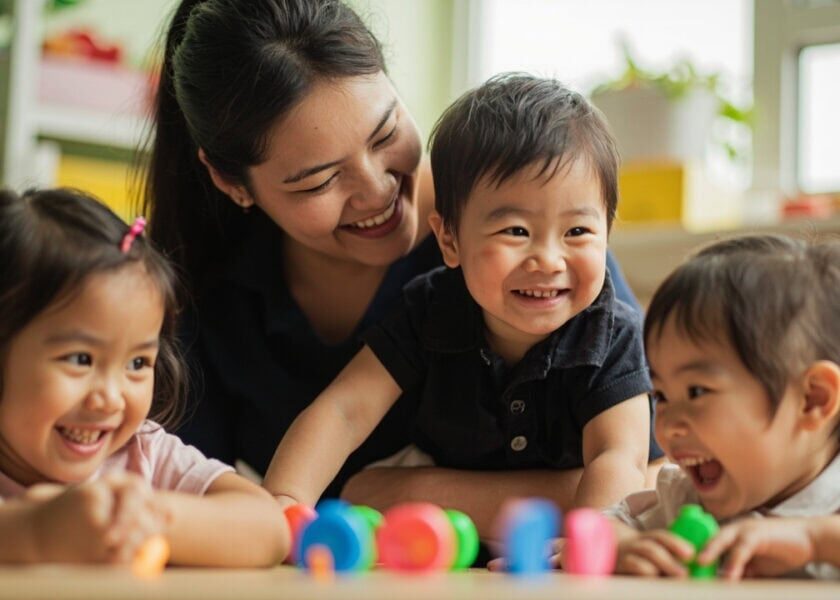
A child who has spent the day in a warm, attentive environment will often break into an expression that is hard to describe but impossible to miss. It is not just happiness. It is recognition. There is a lighting up that goes beyond the pleasure of seeing a familiar face. It is the face of someone who has been well, and knows it, and is glad you are here.
The Body Language
A secure child will often reach up to be held, or take your hand with a particular kind of settled energy—not frantic, not clinging, but connected. There is a looseness to the shoulders. The child may chatter immediately, pulling you into something that happened during the day, showing you a drawing or a toy or a new friend. The body language says: I have things to share. I was engaged. I was present in my own life today.
The Voice
Not just what is said, but how. A child who has been in a nurturing environment will often speak with a certain musicality, a back-and-forth rhythm that suggests they have been listened to. Their questions are curious, not anxious. They ask about you, about what happens next, about dinner, about home. There is room in their mind for other things besides worry.
The Caregiver Goodbye
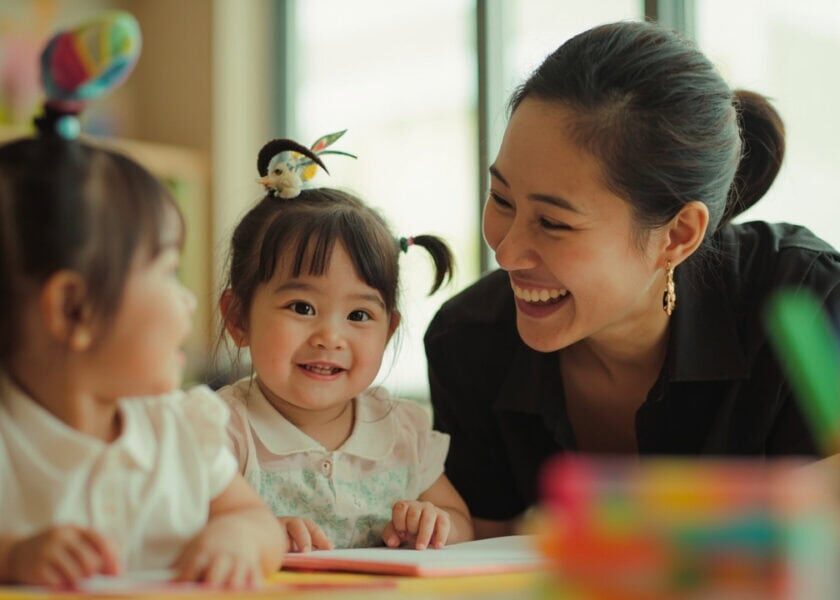
This is perhaps most important: watch how your child looks at their caregiver in those final moments of handover. A child who trusts their caregiver will often offer a casual, easy goodbye. There might be a wave, a smile, a mention of coming back tomorrow. This is not learned behavior imposed through routine alone. This is the visible residue of genuine attachment. The child is not afraid to leave because leaving does not feel like abandonment. It feels like a pause.
When the Signals Are Different
Now let me be equally clear about what the absence of these signals can look like. Not to alarm you, but to be honest. Because honesty is what gives observation its power.
Signs of a More Passive Environment
A child who has spent the day in a merely supervisory environment may show up looking flat. Not visibly distressed—there is no dramatic collapse, no tears. Just a kind of neutrality. A face that is not unhappy, but is not particularly alive either. The child may not run to you. They may come slowly, or hang back. Their energy may feel low in a way that is different from tiredness after play. There is a quietness that does not feel like contentment.
You might notice the caregiver handing over with a cheerful announcement—today was wonderful!—but the child themselves has nothing to add. No stories. No excitement. The child is present but not quite there.
Persistent Distress Versus Normal Adjustment
Or there might be a different kind of signal: a child who clings excessively, who cries at every handover for weeks and weeks, who seems genuinely relieved to be taken away rather than simply glad you have arrived.
The research is clear that a period of adjustment is expected and does not, by itself, indicate a problem. Most children need time to settle into a new environment. But when that clinging persists, when the relief at pickup feels more like rescue than reunion, when your child seems to have spent the day in a state of quiet vigilance—those are not things to explain away. They are data.
Why These Signals Are Real
The answer lies in how human beings are built, especially in the earliest years. A child’s brain does not develop in isolation. It develops in relationship. When a caregiver is genuinely attentive, when they respond to a child’s cues with warmth and consistency, when they enter into the child’s experience rather than simply managing the child’s behavior—something happens neurologically.
The stress response system calibrates. The child learns that the world is a place where their needs are met, where they are known, where they matter. Children who are securely attached in their earliest years show it in how they move through the world. They show it in their faces, their bodies, their voices. They show it in how they handle separation and reunion.
Your child cannot tell you about attachment theory. But your child can show you whether they have been living inside it all day, or outside it.
Pickup as Your Quality Audit
Here is the reframe: this is not a moment of anxiety. It is a moment of intelligence. When you walk through that gate and observe your child, you are not searching helplessly for reassurance. You are conducting the only quality audit that matters.
More reliable than any tour you might have taken, any credentials on the wall, any conversation with a director. Because those things can be curated. The childcare center can be arranged to look impressive at two in the afternoon on a Saturday when you visit. But your child’s face cannot be faked. Your child’s body language at reunion cannot be staged. That is the truth of the day, emerging in real time.
Children do not narrate their days the way adults do. They do not say, “Mummy, the caregiver was warm and attentive and helped me resolve a conflict with another child during free play, which supported my social-emotional development.” They say, “I played with the blocks.” But if you watch how they say it—the energy, the animation, the willingness to share at all—you are hearing far more than the words.
A child who returns from a day of genuine relational care will often be full of small, specific mentions. There is a richness to the account, a desire to pull you into the world they inhabited. There is not just information transfer—there is an invitation.
What to Look For and What It Means
If you are currently researching infant care or childminding in Singapore, here is a practical framework for what to watch for at pickup—and what to look for in the care options themselves.
Questions to Ask Yourself at Pickup
- Does my child’s face light up with recognition—not just of me, but of feeling secure?
- Is there a looseness in my child’s body, or tension and guardedness?
- Does my child reach for me with calm connection, or frantic clinging?
- Does my child speak about their day with energy and specificity, or with flatness and reluctance?
- Is the goodbye to the caregiver casual and easy, or does my child seem relieved to leave?
- Does my child seem present and engaged, or detached and going through the motions?
What to Look for in Caregiver-Child Relationships
- Ratios that allow genuine attention: The fewer infants per caregiver, the more individual warmth each child receives
- Caregiver consistency: Children thrive with predictable, consistent caregivers who know them
- Environment stability: A calm, familiar space supports emotional security
- Communication practices: Regular updates that go beyond “everything was fine”
- Transparent oversight: Reassurance measures that work for parents without disrupting care
Walking Toward That Gate with Confidence
Not every variation in pickup behavior means something is wrong. Some children are naturally reserved. Some are tired after a big day. Some are going through developmental phases that make them clingy or withdrawn temporarily. What we are offering here is not a diagnostic tool. We are offering a practice: the practice of paying attention to what your child shows you, and trusting what you see.
Children are profoundly expressive beings who have not yet learned to hide what they feel. A child who is secure will show you security. A child who is not will show you that too. The signals are real. The question is whether we are trained to see them.
Because here is the first thing to understand: stop waiting for your child to tell you what you need to know. Watch how they say it—the energy, the animation, the willingness to share at all—and you will hear far more than the words.
If you are looking for care that makes the pickup reunion something you can trust—not just hope for—EduNanny by BUTLER is here to walk that path with you. Through the ECDA Childminding Pilot, we work with ratios that make genuine relationship possible—one, two, or three infants at most per caregiver. Our caregivers are chosen not just for qualifications, but for their capacity for warmth, their ability to enter into a child’s world. Fees are designed to be affordable, with CDA and Baby Bonus funds usable, and communication is built into every day, not just when something goes wrong.
We would welcome the chance to learn about your family’s needs and explore how our approach might serve your child.
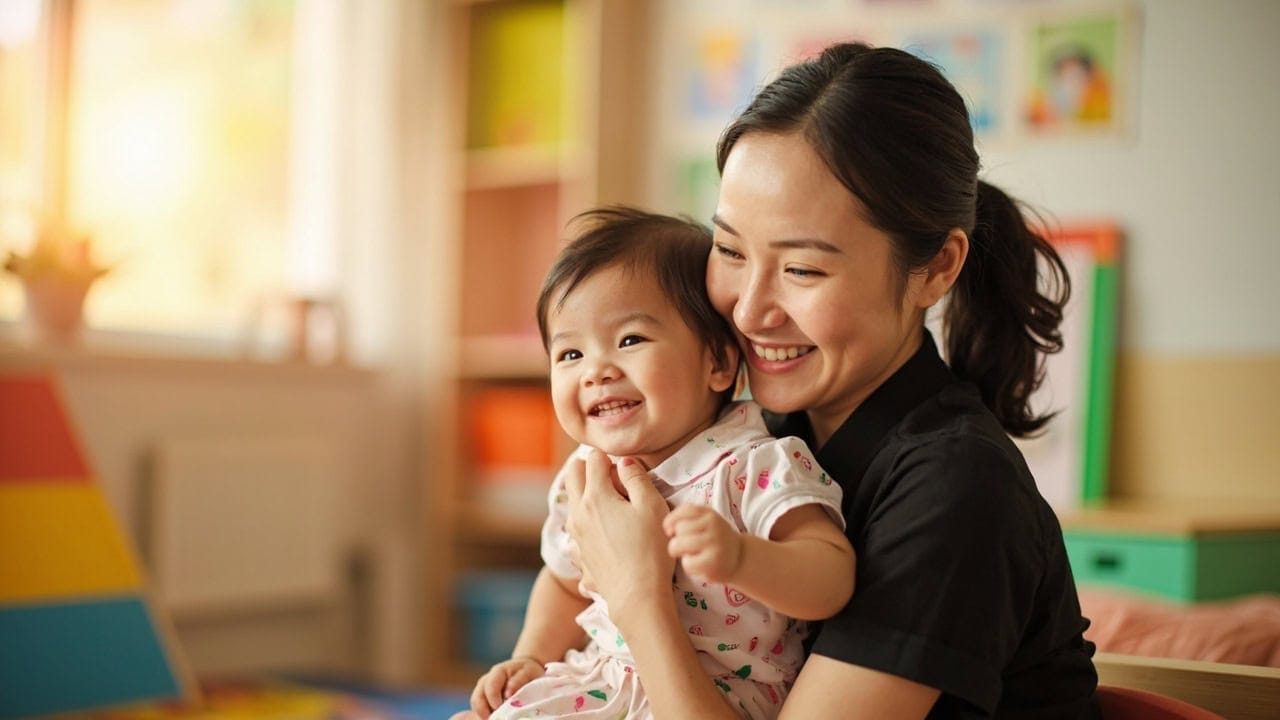
Because the best outcome is simple: a child who is well, and knows it, and is glad you are here.
Explore More:
Learn about EduNanny’s Childminding Pilot pathways | Book a consultation with our team | Read about our caregiver matching process