What Your Baby’s Inner World Tells You About Quality Care
The Moment Every Parent Knows
There is a moment, familiar to every parent who has ever left their child in care. You stand at the door and your heart pulls in two directions at once. You turn back one last time. Your child is playing, or being soothed, or perhaps crying in that particular way that sounds like your name. And you wonder, with a precision that aches: what is happening inside them right now?
You wonder if they feel abandoned. You wonder if they understand that you are coming back. You wonder if the caregiver is holding them the way you would, speaking to them with the same tenderness, noticing the small shifts in their mood that only someone who loves them would catch.
You tell yourself that this is good for them, that socialization is important, that they need to learn to be secure away from you. But the part of you that is still, in some essential way, their mother or father does not care about the research. It only cares about that small face. It only wants to know: are they okay?
This is not a moment of weakness. It is a moment of love so acute it feels like geography, like a place you carry inside you. And it is one of the most honest experiences of parenthood—the recognition that what matters most to you is not what you can observe, not the report card or the photograph, but what your child feels in your absence. Whether their inner world is a place of safety.
What This Article Covers
- Quality infant care is felt, not just observed—what your child experiences internally may look very different from what you see on a camera or report.
- Infants are not passive recipients. From birth, babies read the emotional weather around them with remarkable accuracy, and their developing brains are profoundly shaped by the quality of caregiving they receive.
- Secure attachment in infancy builds lifetime resilience. When care environments are warm, consistent, and attuned, children develop healthier stress response systems, stronger emotional regulation, and deeper capacity for trust.
- The difference between supervised calm and genuine security is real. A child may appear fine while internally experiencing chronic stress.
- EduNanny’s Childminding Pilot prioritizes the child’s inner world through low ratios, attachment-informed training, and a philosophy that places felt experience at the center of everything.
The Question That Matters Most
For too long, conversations about infant care have focused almost entirely on what parents can see, measure, and evaluate from the outside. We talk about ratios and certifications, safety features and curriculum frameworks. We frame the question of quality as a question of parental surveillance: how do I know my child is being well cared for?
But this framing misses the deeper question. The question that parents are really asking when they stand at that door, when they lie awake at night, when they read article after article trying to choose the right care.
The question is not only: how will I know? The question is: what does my child actually experience? What does quality feel like from the inside?
What a parent observes and what a child feels can be surprisingly disconnected. A child may appear calm and still be internally flooded with stress hormones. A child may appear distant and still be forming the most important emotional connections of their young life. Understanding this distinction is not just scientifically interesting—it is the key to understanding what we are really trying to build when we talk about quality care.
What Neuroscience Tells Us
Infants and toddlers are not passive recipients of care. They are active, sensing, feeling human beings whose nervous systems are extraordinarily sensitive to the emotional quality of their environment. From the moment they are born, babies are reading the world around them with an accuracy that no observation form can capture.
When an infant experiences consistent, warm, responsive care, their developing brain is literally being wired for security. The neural pathways associated with emotional regulation are strengthened. The stress response systems are calibrated to respond proportionately to challenge, rather than flooding the body with cortisol at every minor upset.
The foundations of attachment security are being laid—not as an abstract concept, but as a lived, felt, bodily experience of what it means to be in the world and whether the world is safe.
When these foundations are laid well, the effects ripple outward across a lifetime. Children who develop secure attachment tend to show greater emotional resilience, stronger social skills, more flexible thinking, and a deeper capacity for intimacy and trust.
But when these foundations are insecure—when a child is cared for in an environment that is cold, inconsistent, or emotionally neglectful—the stress response systems can become dysregulated in ways that are difficult to reverse. The child’s inner world becomes a place of chronic low-grade alarm, even when nothing overtly wrong is happening.
This is why the question of what care feels like from the inside is not a soft concern. It is the question that should be at the center of every conversation about infant care quality.
What Quality Care Feels Like
Imagine, for a moment, that you are small—very small, without language, without the ability to reason your way through fear, but with an exquisite sensitivity to every shift in the emotional weather around you. You are brought to a new place. The smells are different. The sounds are different. The face of the person who holds you is not the face you have memorized over months of breastfeeding, of being rocked to sleep, of learning the particular music of your mother’s voice.
In a care setting that is merely adequate, this transition might be managed with reasonable efficiency. You might be soothed, distracted, fed on schedule, kept safe from harm. But your inner world would remain, in some fundamental way, alone. You would be regulated from the outside—held firmly, shushed loudly, bounced with a competence that does not quite reach the place inside you where the fear lives.
You would learn, over time, to suppress your distress, to perform a compliance that adults mistake for comfort. Your nervous system would adapt by shutting down, by becoming less sensitive, by learning that the world does not reliably respond to your signals.
Now imagine a different experience. Imagine that you are met, in that moment of transition, by a caregiver who is not just trained in soothing techniques but genuinely attuned to what you need in this specific moment.
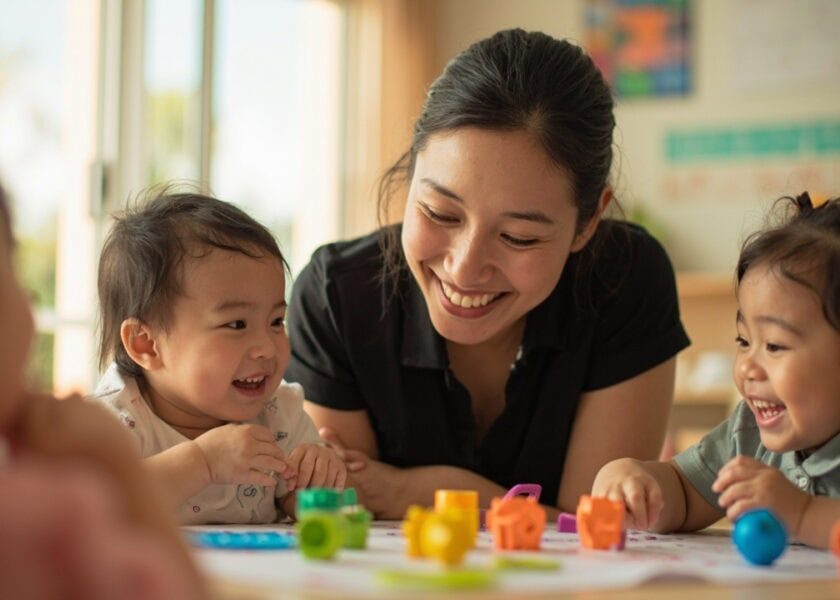
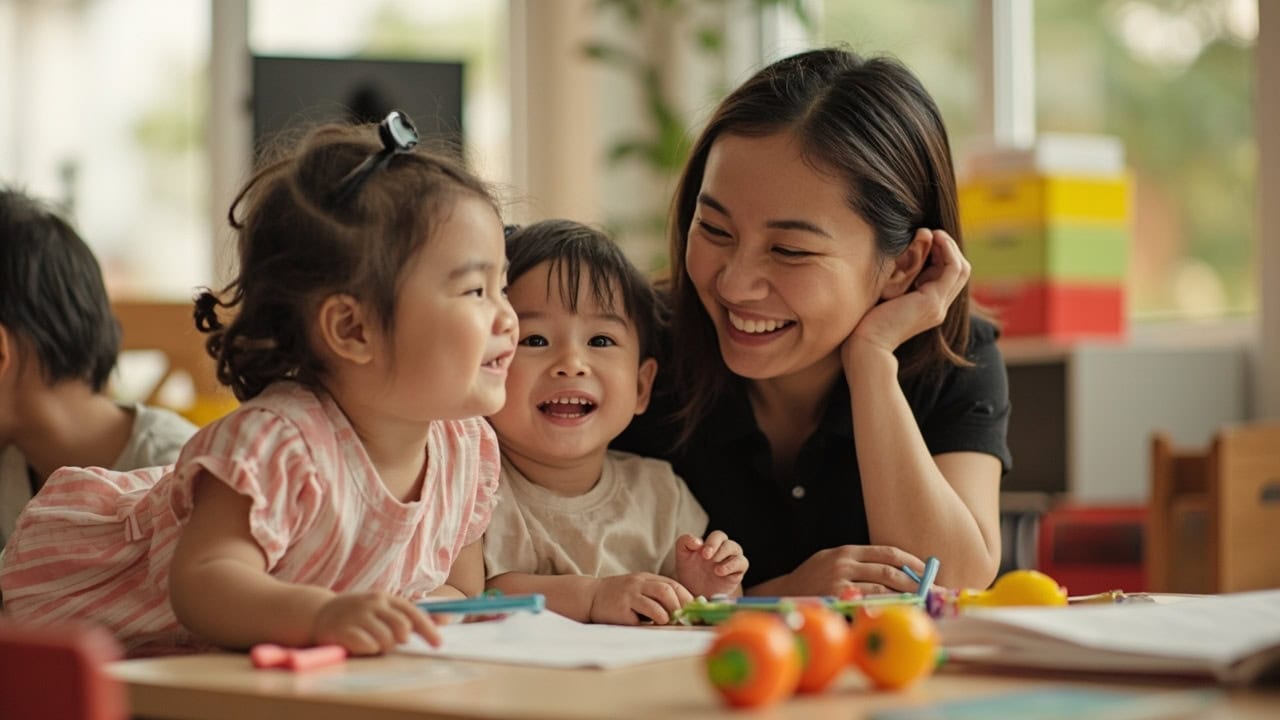
This person notices the particular way you stiffen when you are overwhelmed, the sound you make when you are hungry, the difference between your cry of tiredness and your cry of fear. They slow down. They match their movements to your rhythm. They hold you in a way that communicates, wordlessly: I see you. I am here. This is safe.
The Felt Signature of Security
In this environment, something different happens inside you. Your stress hormones do not spike and then linger. They rise, briefly, as they would in any novel situation, and then they settle. Your body learns, session after session, that the world is a place where your needs are anticipated and met, where distress is not permanent but temporary, where being small does not mean being helpless.
This is what quality care feels like from the inside. It is not a feeling of perfection or constant happiness. It is a feeling of safety so foundational that it becomes invisible, a feeling you can take for granted the way you take for granted the ground beneath your feet.
It is the feeling of being known.
The Conditions That Make This Possible
What allows a caregiver to offer this quality of attunement? The answer is not mysterious, but it is demanding.
It requires time—not just the time to feed and change and monitor safety, but the time to be fully present with each child, to notice the nuances, to develop the deep familiarity that allows for genuine attunement.
It requires low ratios. Caregivers who are not exhausted and stretched thin, but who have the emotional and cognitive resources to be present to each child’s unique inner world.
It requires training that goes beyond technical competence to encompass a genuine understanding of child development and emotional health.
And it requires a philosophy of care that places the child’s felt experience—not the parent’s observation, not the provider’s metrics—at the center of everything.
Why Ratios Matter More Than You Might Think
In most childcare settings, the ratio of caregivers to infants is determined by regulatory minimums that prioritize supervision and safety. But when we shift our frame from supervision to attunement, the ratio becomes one of the most important differentiators of quality.
A caregiver responsible for three infants can notice small distress before it becomes large distress. They can pause in the middle of a task to respond to a child’s need, knowing that the other children are not in danger, that there is space for this attention to matter. They can learn the particular cry of each child, the particular rhythm of each child’s temperament.
A caregiver responsible for six or eight infants cannot do this. They can manage. They can ensure safety. But they cannot attune—not in the way that builds emotional security, not in the way that gives the child’s nervous system the message that they are known and valued.
EduNanny’s Approach
This is the philosophy that EduNanny has built its childminding programme around. Operating within the ECDA Childminding Pilot—a government-supported initiative reimagining what early childhood care can look like in Singapore—the programme offers both home-based and centre-based pathways, recognizing that families have different needs while both settings can be shaped by the same philosophy of care.
In the home-based pathway, a trained childminder cares for a small group of children in a domestic setting, providing the warmth and consistency of family life while meeting professional standards. In the centre-based setting, the same principles of low ratios and emotional attunement are embedded in daily practice.
What the Pilot Provides
- Low infant-to-caregiver ratios that allow for genuine attunement rather than just supervision
- Attachment-informed training for all caregivers, going beyond technical skills to encompass how infant brains develop and how emotional memory forms
- Consistent scheduling with Monday to Friday care blocks, providing the predictability that young children need to build trust
- Thoughtful communication that gives parents windows into the emotional quality of their child’s day without undermining caregiver authority
- Accessible fee structures using Child Development Account and Baby Bonus funds, so quality care is not available only to families with significant financial resources
The Caregivers Who Make It Possible
All of these are conditions that make quality possible. But what matters most is not the physical environment or the ratio or even the training—though all of these matter. What matters most is the quality of the relationship between the caregiver and the child.
This is why EduNanny’s approach to selecting caregivers is so important. The programme does not simply recruit people with the right credentials. It looks for individuals who have a genuine love of children, who bring warmth and patience to their work, who are capable of the kind of emotional labor that high-quality infant care requires.
And then it supports them—not just with training but with manageable workloads, with ongoing supervision and reflection, with the recognition that caring for infants is among the most demanding work humans can do, and that caregivers who are depleted cannot offer the quality of presence that children need.
There is a dignity in this work that deserves to be named. The childminder is not a substitute parent, but neither is she merely a babysitter. She is a bridge between the child’s first, most intimate world and the wider world they will inhabit for the rest of their lives. Her work is sacred in the truest sense of the word.
Addressing Your Real Concerns
If you are a parent researching infant care in Singapore, you likely have questions that go beyond what any brochure can answer. Let us address some of the concerns that lie beneath the surface of every childcare decision.
Will my child feel abandoned?
Separation is hard for young children. There is no intervention that eliminates the difficulty of that moment when you hand your child to someone else.
But here is what the research tells us: infants and toddlers are remarkably adaptable when the care environment is consistent, warm, and attuned. They do not experience separation as abandonment when they learn, through experience, that you always return and that the person caring for them in your absence is safe and reliable.
Quality care does not prevent the difficulty of separation. It provides the reliable, warm, attuned presence that helps the child process that difficulty and return to a state of safety.
How can I tell if my child is actually okay?
You cannot see what your child feels. You were not there during the morning greeting when they were soothed by a familiar voice. You did not witness the moment when a caregiver noticed their frustration and helped them regulate before it became a tantrum.
But the child who is genuinely secure in their care will show signs—not dramatic signs, but signs that, once you know what to look for, are unmistakable:
- Curiosity, not fear, when you arrive to pick them up
- Not indifference to you, but not being overwhelmed by your arrival either
- A kind of emotional ease that radiates from a deep internal foundation
- Interest in the world, in other children, in play—because their stress response system is calm enough to allow for exploration
What should I watch out for?
The child who is merely supervised, who has learned to suppress their distress and perform a false calm, will also appear okay on the surface. But you may notice something different if you look closely:
- Anxiety that is not easily explained by any current circumstance
- A hypervigilance that seems out of proportion to any real threat
- Limit-testing that feels relentless, or difficulty separating from you even in situations where separation should feel manageable
- Sleep disturbances or changes in appetite that persist
These are not failures of parenting. They may be messages about the quality of the care environment—messages that deserve to be heard and taken seriously.
How to Choose Care That Prioritizes Your Child’s Inner World
Choosing infant care is not simply a logistical decision. It is a decision about what kind of inner world you are building for your child. It is a decision about the emotional foundations you are laying—foundations that will shape their capacity for relationship, for resilience, for happiness in ways that extend far beyond the years of infancy.
This is not meant to make you feel guilty or overwhelmed. It is meant to honor the significance of the choice, to take seriously what is at stake.
Questions to Ask When Visiting a Care Setting
When you visit a potential care setting, go beyond the surface indicators. Ask yourself—and ask the caregivers—these questions:
- How do caregivers respond when a child is distressed? What does that look like in practice?
- What is the ratio of caregivers to infants, and why was that ratio chosen?
- How do caregivers build familiarity and consistency with each child?
- What does training in child development and emotional health look like for your staff?
- How do you communicate with parents about the emotional quality of the child’s day, not just their physical needs?
And pay attention to what you feel in the space. Is the atmosphere calm or frantic? Do the caregivers seem hurried or present? Does the environment feel like somewhere a child could feel safe?
Trusting Your Instincts
Your anxiety is not weakness. It is wisdom. It is your child’s inner world speaking to you through your own heart, telling you that what happens in your absence matters enormously.
Listen to that anxiety. Let it guide you to ask deeper questions, to look not just at the surface indicators but at the quality of presence and attunement that your child will actually experience.
And if you find something that feels right—not because of a brochure or a ratio, but because the people who work there seem to genuinely love children, because the atmosphere feels warm and calm, because your child responds with something that looks like trust rather than fear—then trust that instinct.
Trust the feeling in your body. Trust that you know more than you think you know about what your child needs.
Because the child’s inner world is not as invisible as it seems. It speaks to us, in a thousand small ways, if we are willing to listen.
Begin Your Search with Confidence
Your child’s inner world is waiting to be filled with safety, with warmth, with the experience of being truly known. That is not a small gift. It is everything.
EduNanny is here to stand beside you in that act of choosing. Not to replace your role as your child’s first and most important love, but to support it, to extend it, to be a consistent, warm presence during the hours when you are apart.
We believe that every child deserves to feel safe, to feel known, to feel loved in their inner world as well as their outer world. And we believe that when children feel this way, they are not just surviving the early years. They are building the foundations for everything that comes after.
The next time you stand at that door and wonder what is happening inside your child, we hope you will carry with you not just hope but knowledge—not just faith but understanding. We hope you will know, in your bones, that quality care has a felt signature, and that when you find it, you will recognize it the way you recognize the voice of someone you love in a crowded room.
Choosing care that honors your child’s inner world is one of the most important, most loving things you will ever do. We would be honored to walk that path with you.
Learn more about EduNanny’s approach to infant care and childminding in Singapore.
You can also connect with our team to discuss your family’s needs, or learn more about who we are.