What Singapore Parents Actually Worry About in Childcare
What Singapore Parents Actually Worry About
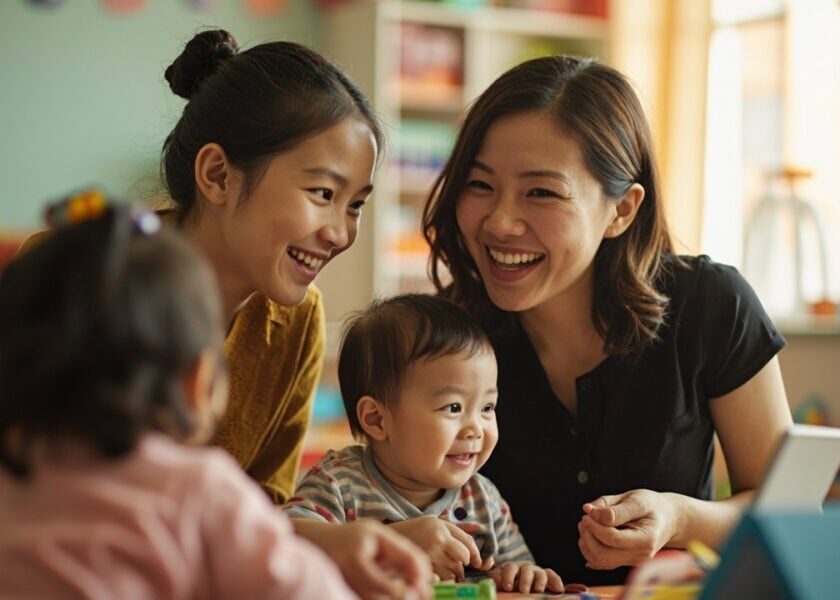
There is a moment, quiet and unrehearsed, that happens every morning at the threshold between home and the world beyond. A parent kneels, adjusts a small collar, presses a kiss to a forehead that is already turning toward the next thing. The caregiver extends a hand, warm and unhurried. The child takes it.
And in that single, small gesture, something is being entrusted that no inspection of a facility, no review of a curriculum, no checklist of safety protocols can fully capture. The child is being handed over — not just to be watched, but to be known.
Because what is really happening in that handover is a question every parent in Singapore carries — sometimes aloud, often unspoken: Will whoever receives my child truly see them? Not just keep them safe. Not just occupy their hours. But see them — their temperament, their needs, their emerging self?
This is the question that quality childminding was built to answer.
The Anxiety That Keeps Parents Awake
Parents come to childcare arrangements with a particular kind of worry — and it is not the anxiety of whether their child will be fed on time or changed regularly. That concern, while real, is manageable. Parents can inspect a kitchen. They can ask about sleep schedules. They can verify that bottles are sterilized.
The anxiety that truly keeps Singapore parents awake is subtler and harder to address. It is the fear that their child will be adequately supervised but not genuinely observed. That they will be cared for, but not understood. That at the end of the day, when they pick their child up and ask the familiar question — “What did you do today?” — the answer will be a pleasant, meaningless blur. A story that could apply to any child. A portrait with no face.
This fear is not irrational. It is the logical response to a system that often confuses visibility with knowledge. Parents hear about ratios, qualifications, and facilities. They are shown spaces designed to reassure. But what they long for — what they have always longed for — is someone who can tell them who their child is when they are not there to see it themselves.
The recognition that this longing is not a luxury — that it is the most important thing a caregiver can provide — is where quality childminding begins.
What Trained Observation Actually Means
There is a particular kind of attention that a skilled caregiver brings to her work. It is not the distracted supervision of someone watching for danger. It is not the dutiful responsiveness of someone following a schedule. It is something more disciplined, more deliberate, and ultimately more valuable. It is observation as a professional practice.
It means that the caregiver notices — not just that a child is playing, but how. Whether the child approaches new materials with caution or with eager experimentation. Whether she gravitates toward other children or toward a quiet corner with books. Whether he processes frustration internally or expresses it outwardly, and what helps him move through it. Whether a child learns best by watching, by doing, or by being talked through a new concept.
These are not trivial observations. These are the building blocks of a child’s identity — the temperament patterns, learning styles, and social instincts that will shape how they move through school, through relationships, through their own inner life.
Here is the crucial insight: these patterns are not always visible at home. Not because parents are inattentive, but because parents are too close. The same intensity that makes a parent’s love irreplaceable also makes certain patterns harder to see. You are inside the experience of your child in a way that no caregiver can be.
But the caregiver has something you do not — a professional distance, a trained eye, and the repeated opportunity to see your child alongside others. She has watched your child try something new forty times this month. She has seen the week when frustration finally broke into triumph. She has noticed that your child asks for help in a particular way that no one else would recognize. She knows that the stubbornness you see at home is not defiance — it is persistence, and it is a strength.
What Observation Looks Like in Practice
Let me make this concrete with a story you might recognize.
Imagine a child — we will call her Mira — who is seventeen months old and has recently joined a new care arrangement. At home, Mira’s parents describe her as “fussy” and “slow to warm up.” They worry that she cries when they leave, that she does not play well with other children, that she seems anxious and withdrawn.
Now imagine a caregiver trained in observation. Over the following weeks, this caregiver begins to notice something different.
She sees that Mira does not cry when her mother leaves — she cries after her mother leaves, once the door closes and the new reality settles. This is not distress at separation; this is the processing of a transition. It is different, and it matters.
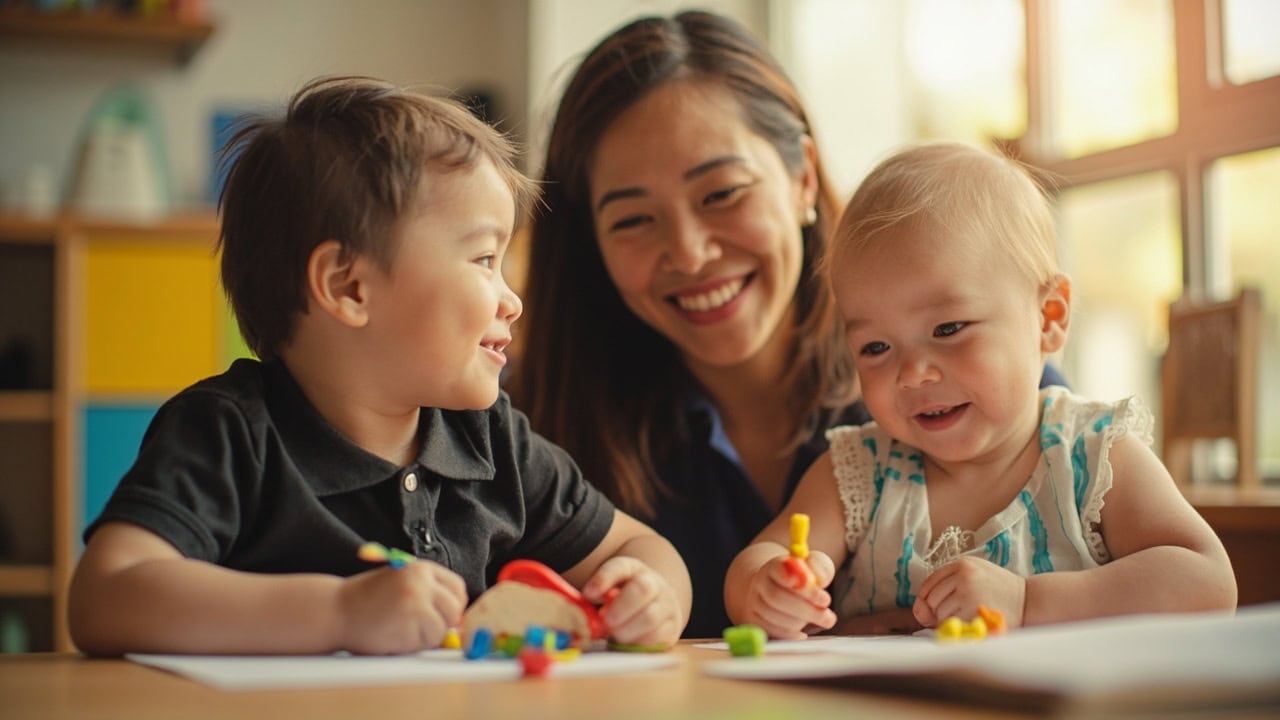
The caregiver also notices that Mira watches other children before she joins them — sometimes for as long as fifteen minutes. When she finally engages, she does so with a precision and intention that other children lack. She is not withdrawn. She is careful. She is gathering information. And when she enters a group, she enters with a plan.
This observation changes everything. Instead of interpreting Mira’s behavior as a problem to be managed, the caregiver understands it as a temperament pattern to be respected. Instead of trying to draw Mira out faster, she gives her the space she needs to observe first.
Instead of telling the parents that their daughter is anxious, she can tell them something more accurate and more illuminating: Their daughter is an attentive, methodical learner who prefers to understand a situation before she commits to it.
Can you imagine what that does to a parent? Instead of anxiety, they receive insight. Instead of a label, they receive a portrait. Instead of worry, they receive understanding.
Documentation as a Gift
Trained caregivers do not simply observe. They record. They document. They track patterns over days and weeks, looking for the arc of development that no single snapshot could reveal.
A child’s growing persistence. Another child’s evolving vocabulary. The moment when a child who was wary of messy play reaches, tentatively, for the finger paint and discovers that it feels good on her hands.
This documentation — shared with parents through regular, meaningful conversation — transforms childcare from a black box into a window. Parents who receive this kind of communication stop asking, “Was she happy today?” They start asking, “What is she learning? What is she becoming? Who is she?”
Here is what is most meaningful about this process: it does not just help parents understand their children. It helps children understand themselves.
Because a child who is consistently observed — whose temperament is respected, whose learning style is accommodated, whose emerging strengths are noticed and encouraged — that child is building something profound. She is building self-awareness. She is building the vocabulary of her own experience. She is learning, in the earliest and most foundational way, that who she is matters.
This is the beginning of emotional intelligence. This is the foundation of resilience. And it begins not in a classroom, but in the daily, patient, attentive work of a caregiver who truly sees.
Beyond School Readiness: What Singapore Children Actually Need
Singapore is a remarkable city. It has built a world-class education system, and the ambition parents have for their children is genuine and understandable. But there is a difference between preparing a child for school and preparing a child for learning. And that difference is everything.
A child can be drilled on letters and numbers and still arrive at school without the self-knowledge that will carry her through the inevitable challenges ahead. She can pass a readiness assessment and still not know how she learns best, what frustrates her, how to ask for help, how to recover from a setback.
These are the skills that matter beyond any curriculum, and they cannot be taught in a few months of preparation. They must be cultivated over time, through consistent observation and responsive care.
A child who has been seen — truly seen — by her caregiver has a foundation that no test can measure. She knows herself. She trusts that her experience is valid. She has the confidence — not yet of words but of inner certainty — that says: I am a person with preferences and strengths and a way of being in the world that matters.
When that child enters school, she carries that self-knowledge with her like an invisible engine. It is the thing that will keep her curious, resilient, and genuinely ready — not just for school, but for life.
Observation-based care builds this foundation. It does not replace academic preparation. It goes deeper, and it makes everything else possible.
What EduNanny Singapore Offers
EduNanny Singapore is built within the framework of the ECDA Childminding Pilot — a program that represents Singapore’s serious investment in making quality childminding accessible to families across the island. We offer both home-based and community-based pathways, because families are not all the same and the right arrangement depends on your circumstances, your preferences, and your child’s needs.
Our ratios matter. We maintain up to one caregiver to three infants — a ratio that is not mandated everywhere, but that we believe is essential for genuine observation. When a caregiver is responsible for too many children, attention fragments. The kind of noticing described above — the patient, disciplined attention to temperament and development — becomes impossible.
Quality care must also be accessible care. Within the pilot fee structures, we have worked to ensure that our approach is affordable for Singapore families. For those who qualify, it is straightforward to use CDA funds and Baby Bonus payments, so that financial barriers do not stand between your child and the care they deserve.
Communication is integral to what we do. Parents receive regular developmental updates that go beyond reassuring platitudes like “your child had a great day.” They receive meaningful documentation — observations about temperament, emerging skills, social patterns, and developmental milestones. They receive the kind of conversation that helps them understand their child better, both during the care arrangement and for years to come.
Where our model includes CCTV measures, we implement them thoughtfully — not as surveillance, but as a tool for transparency and trust. We want parents to feel not that they are monitoring their caregiver, but that they are partners in a shared commitment to their child’s wellbeing.
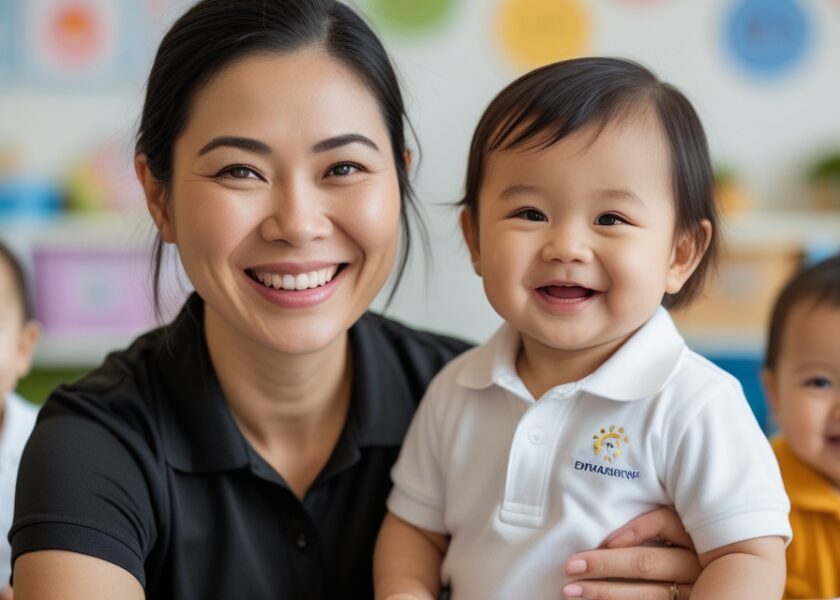
This is what we offer. Not a babysitting service. Not a facility with a cheerful name. But a genuine developmental partnership — grounded in trained observation, sustained by professional caregivers, and built on the belief that every Singapore child deserves to be known.
What to Look For: Questions to Ask Any Caregiver
- How do caregivers track individual children’s development over time? What does a typical daily observation look like?
- How many infants is each caregiver responsible for? What training do caregivers receive in child development and observation?
- What will I know about my child’s day beyond “she ate well and slept well”? Can you tell me about my child’s temperament, learning style, or emerging interests?
- Do the caregivers seem genuinely curious about the children — or just attentive to schedules? Do they notice individual differences, or do they respond to all children the same way?
The right childcare arrangement will not just keep your child safe. It will help you understand who your child is becoming. If a program cannot articulate what makes your child unique, it may not be observing them closely enough to know.
The Partnership of Being Truly Known
A parent kneels. A caregiver extends her hand. A child takes it.
In that moment, something is being entrusted — and that trust has been earned through months of patient, disciplined observation. Every small detail noticed. Every pattern tracked. Every insight earned through the quiet work of truly seeing who this child is, how they learn, what they love, and how they are becoming more fully themselves with each passing week.
Your child is not a project to be managed or a checklist to be completed. Your child is a person — with temperament, with emerging strengths, with a way of being in the world that is entirely their own.
And somewhere, right now, a trained caregiver is watching a child settle into a new activity, and she is noticing something that you will want to know. She is noticing who your child is becoming.
That is the portrait that quality childminding will help you see. That is the partnership we are offering. And that is why, when you ask the question — will anyone really see my child here? — the answer matters more than anything else on your tour.
We see them. And we cannot wait to show you who they are.
If you are searching for childcare that offers more than supervision — if you have been hoping to find someone who will not just keep your child safe but will help you understand who your child is — we would welcome the conversation. Learn about our home-based and community-based childminding options under the ECDA Childminding Pilot, and discover what it means to be truly known.
At EduNanny, we believe every child deserves to be known. Learn more about our approach.