What Lies Beneath the Welcome Singapore’s Architecture of Premium Childcare
The Question Every Singapore Parent Is Asking (But Nobody Answers)
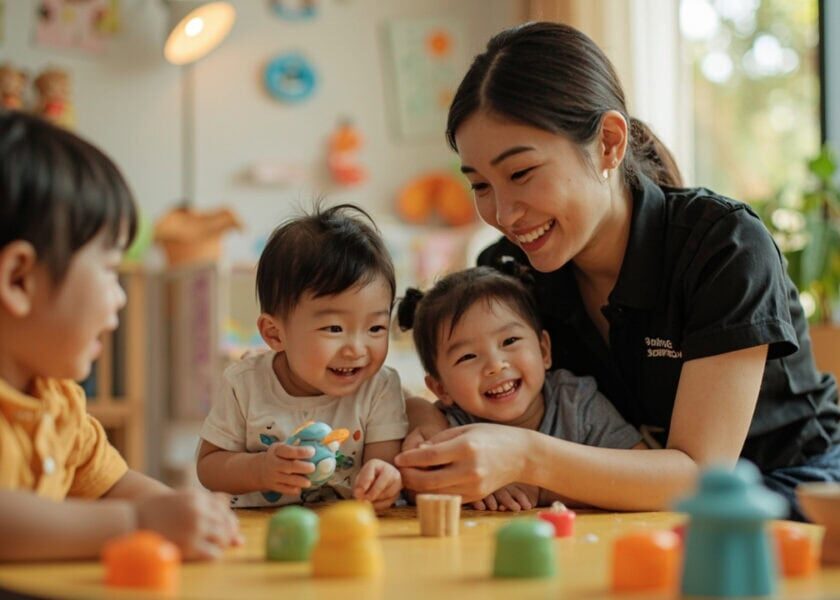
You walk into a childcare centre. The room is bright. The caregiver kneels down to greet your child by name. Everything feels warm, intentional, right. You leave the tour thinking: this could be the place.
But somewhere between the tour and the signing of the enrollment form, a quieter thought surfaces—one that most childcare marketing never addresses:
How do I know this quality will last?
Not today, when everything is curated and everyone is on their best behaviour. But six months from now? When the newness has worn off? During staff transitions? On ordinary Tuesdays when no parent is watching?
This is the invisible anxiety that Singapore parents carry when investing in premium childcare. You sense quality. You cannot verify the systems that sustain it. And that uncertainty can make even the most confident parent hesitate.
What follows is an honest explanation of what actually lies beneath the welcome—the architecture of consistent quality that most parents never see, but are actually paying for.
Atmosphere vs. Architecture: The Fundamental Distinction
When you visit a childcare centre, you experience what we call the welcome—the curated surface, the intentional presentation, the moment when everything is designed to create a positive first impression. This is not dishonesty. It is simply the nature of observation: we see what is visible, and we naturally assume that what is visible represents the whole.
But premium childcare is not purchased for what you see on the day you visit. It is purchased for what your child experiences every single day—during staff transitions, when someone is unwell, when the rhythm is disrupted, when no parent is present to witness what is happening.
The question is not whether the welcome is warm. The question is whether the systems behind that welcome are built to produce consistent quality regardless of circumstance.
This distinction matters because it reframes what you are actually evaluating when you research childcare options. You are not just assessing today’s atmosphere. You are assessing tomorrow’s architecture.
Beyond Hiring: Why Caregiver Development Is Where Quality Actually Lives
Every reputable childcare operation can tell you about their recruitment standards. Clear criteria, thorough vetting, verified credentials—these are the starting points. But if that were the complete picture, quality would be determined entirely by who you hire.
What EduNanny has learned through both experience and operation within the ECDA Childminding Pilot is this: a caregiver who enters the profession with good qualifications and warm intentions is necessary but not sufficient for sustained quality. Sustained quality requires a system that continues to develop, challenge, and refine a caregiver’s practice over time.
Structured development goes well beyond initial training. It includes:
- Ongoing mentorship—regular one-on-one support from experienced practitioners who model excellence
- Reflective practice—deliberate time for caregivers to examine their own interactions and responses
- Child development deepening—continuous learning about infant cues, attachment patterns, and responsive caregiving
- Skill refinement—working through real scenarios, not just theoretical frameworks
The goal is not to create caregivers who are competent on paper. The goal is to develop caregivers who can read an infant’s cues before they become cries—who understand that a child’s sense of security is built through consistent, attuned, knowledgeable care.
You are purchasing the ongoing development of the person your child spends their days with. You are purchasing a system that takes a caregiver from competent to excellent, and keeps them there.
Continuity Protocols: Protecting the Relationship Your Child Depends On
You understand attachment theory. You know that infants form deep bonds with their primary caregivers, and that these bonds are the foundation for their sense of security, exploration, and later relationships. What you may not have considered is how vulnerable this bond is to disruption—and how most childcare operations, through no malice but through operational necessity, allow these disruptions to occur far more frequently than they should.
Caregiver changes happen. People move on, take leave, face personal challenges. This is reality. But the question is not whether disruption occurs; the question is how the system responds when it does.
At EduNanny, specific practices called continuity protocols protect the child-caregiver relationship even when the surrounding system is in flux. When a caregiver transition is necessary, it does not happen abruptly:
- Overlapping introductions—the arriving caregiver works alongside the departing caregiver before taking over
- Deliberate communication with the child—age-appropriate explanations of what is changing
- Rigorous handover practices—preservation of knowledge about the child’s rhythms, preferences, and individual needs
- Gradual transition—the new caregiver builds rapport before becoming the primary figure
Your child is not a slot to be filled. Your child is a person whose world depends on predictability and trust. The architecture EduNanny has built preserves that predictability even as the people involved may change.
Transparency vs. Surveillance: Building Trust When You Cannot Be Present
Here is something many parents feel but few articulate: the anxiety of not knowing what happens when you are not there.
You love your child. The thought of them in someone else’s care—however much you trust that someone—is naturally accompanied by a need to understand what is occurring in your absence. And yet, you cannot be present all the time. That is the fundamental tension of childcare.
The typical industry response is to offer parents more access: apps, updates, photos, real-time feeds. These have value. But the deeper answer to parental anxiety is not surveillance—it is trust built on transparency and reliability.
Sustainable transparency looks like this:
- Proactive communication rhythms—updates that come as a matter of course, not reactive responses to parent requests
- CCTV where deployed—an additional layer of assurance, understood as a tool, not a solution
- Regular developmental updates—structured sharing that keeps parents informed about progress, not just activities
- Open channels for questions—responsive communication that treats parental concern as legitimate
The real solution is the culture of quality that operates whether or not anyone is observing it. Because your child spends far more time without you than with you, and what matters is not whether you can see at any given moment, but whether the systems in place are the kind that do not require supervision to maintain excellence.
This is what distinguishes structural excellence from surface performance: structural excellence continues when no one is watching.
What Premium Childcare Actually Costs (And Why)
Premium childcare in Singapore represents a significant investment. Parents who choose this path are not choosing it lightly. They deserve to understand what they are actually purchasing.
You are not purchasing a prettier room. You are not purchasing a logo, a reputation, or the comfort of a well-designed foyer. You are purchasing:
- The systems that produce consistent quality—not just on good days, but on all days
- Hours of caregiver training and development—ongoing investment in the people caring for your child
- Continuity protocols—the infrastructure that protects your child’s attachment
- Quality assurance mechanisms—the oversight that catches problems before they affect your child
- Operational infrastructure—the planning, refinement, and attention that makes visible quality possible
This is the structural truth the industry rarely states plainly: atmosphere can be manufactured for a tour. Architecture must be built and maintained every single day. And that costs money.
The ECDA Childminding Pilot Context
EduNanny operates within the ECDA Childminding Pilot—a government-supported initiative that recognises the need for flexible, high-quality care options for Singapore families. This is not a regulatory checkbox. It is a commitment to demonstrating what excellent childcare can look like when designed with intention.
Through this pilot, EduNanny offers both home-based and centre-based pathways, with infant ratios of up to one-to-three—small enough to ensure genuine attention, large enough to allow for the social development infants also need. Care operates within Monday to Friday blocks, designed around the rhythms of working families.
Fees are structured within the pilot framework to be accessible for Singapore families, with the ability to utilise Child Development Account and Baby Bonus funds.
The Evaluation Framework: Questions That Go Beyond the Welcome
Whether you are considering EduNanny or another provider, these questions go beyond the surface of any tour. They help you evaluate the architecture, not just the atmosphere.
Caregiver Development
- What happens after a caregiver is hired? Is there ongoing training?
- Do caregivers receive regular mentorship or supervision?
- How does the programme support caregivers in developing their practice over time?
Continuity
- What happens when a caregiver needs to leave or take leave?
- How are transitions managed for the children involved?
- Is there overlap time when departing and arriving caregivers work together?
Quality Assurance
- How does the programme maintain standards when parents are not present?
- What mechanisms exist to identify and address problems early?
- How are caregiver practices reviewed and refined?
Communication
- What is the default communication rhythm—is it proactive or reactive?
- How are parents informed about their child’s day-to-day experience?
- What transparency measures are in place, and what is their actual purpose?
The Architecture of Peace of Mind
Singapore parents are exceptionally well-informed. You research, you compare, you visit, you ask the right questions. You read about ratios, qualifications, curriculum frameworks, safety protocols. And all of that matters.
But there is a dimension of quality that no tour can fully reveal and no brochure can adequately capture: the architecture beneath the atmosphere.
When you ask how do I know this quality will last, you deserve an answer that goes beyond the welcome. You deserve to understand the systems—the caregiver development, the continuity protocols, the quality infrastructure—that make consistent excellence possible.
Your child deserves more than a warm welcome. They deserve a system built to sustain that warmth, that care, that attention, for every single day they are in care.
EduNanny was built for exactly this purpose. Not to impress you on a tour. Not to make you feel good about your choice for a single visit. But to deliver quality that endures—because it was designed to.
To learn more about EduNanny’s approach to caregiver development, continuity protocols, and the invisible architecture that protects your child’s earliest years, connect with the EduNanny team.
EduNanny is a Singapore-based childcare and childminding service operating within the ECDA Childminding Pilot. Learn more about who we are and what we offer for Singapore families.