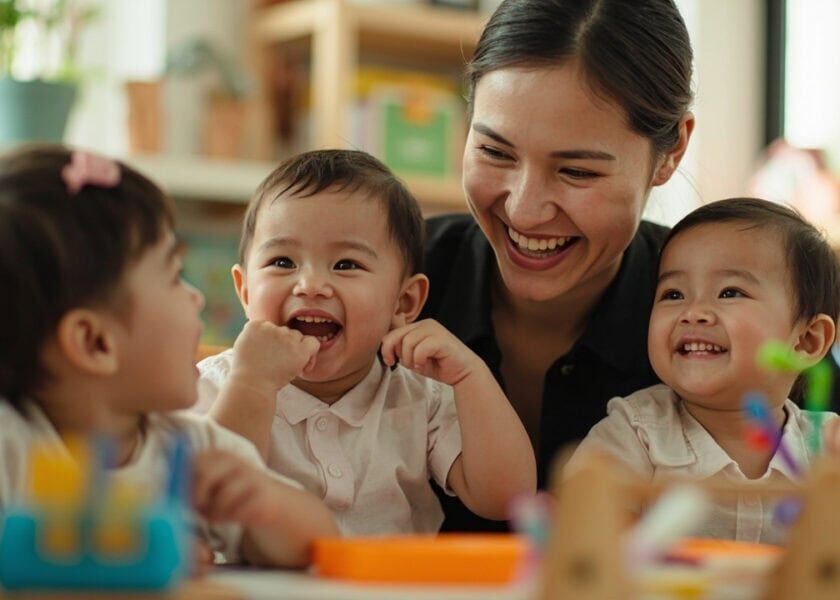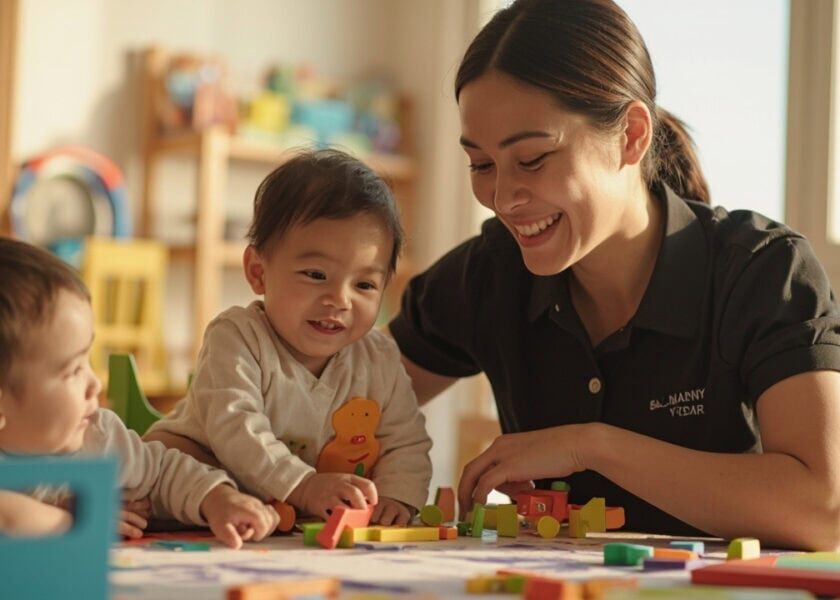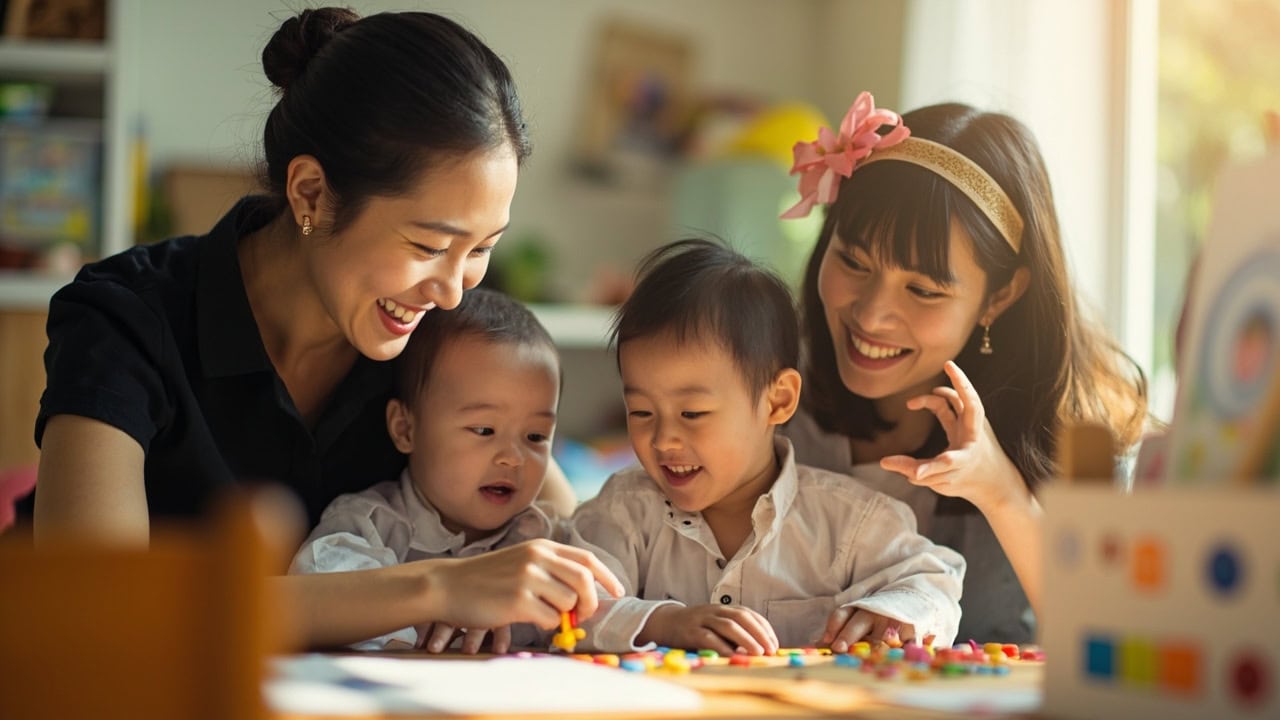
Watch Your Child Closely and See Their Own Story Unfold
The Silence Parents Learn to Listen For
There is a particular silence that parents in Singapore learn to listen for when they place their child in someone else’s care.
It is the silence on the other end of the phone when you call your child’s childcare setting and wonder if anyone will answer. It is the pause before pickup when you scan your child’s face for clues about how the day went, because the report card says only that she had porridge and played outside.
It is the quiet question that sits beneath every childcare decision you make, the one you may not even articulate to yourself, but which shapes every tour you take, every gut feeling you follow:
Will they actually see my child?
Not as a body in a room. Not as a name on a cot card. Not as a slot to fill from nine to five. But as a person. A small, unfolding, unrepeatable person whose development matters in ways that cannot be measured by attendance sheets alone.
This is not an unreasonable fear. Singapore’s childcare landscape is vast and varied, and in many settings, the sheer weight of ratios, routines, and regulatory demands means that individual observation becomes a casualty of institutional necessity. A child may be safe, may be fed, may be stimulated. But being known? That requires something more deliberate. Something designed. Something that does not happen by accident.
Supervision vs. Responsive Care: The Fundamental Difference
The first thing to understand is that there is a fundamental difference between supervision and responsive care.
- Supervision keeps children. Responsive care knows them.
- Supervision operates on schedules. Responsive care operates on observation.
- Supervision asks: “Is everyone fed and accounted for?”
- Responsive care asks: “What did this particular child need today, and did we provide it?”
For infants, this distinction matters more than we sometimes acknowledge. In the first year of life, development happens at a pace that will never be repeated. The brain is forming connections rapidly. Emotional regulation is being wired. Language is being absorbed not through lessons but through presence—through being responded to when a sound is made, through the subtle dance of eye contact and vocalization that tells a baby: You exist. You matter. What you need reaches someone.
When an infant is in a setting where they are known, the educator notices not just when they cry, but how they cry. She notices the particular quality of fussiness that means hunger versus the one that means tiredness. She learns that this baby settles best when held on the left side, facing outward, with a voice humming at a specific pitch.
This is not magical intuition. This is pattern recognition over time—systematic observation that has been valued, protected, and built into the culture of the setting.
In contrast, where children are managed, these signals are averaged out. Every baby gets a bottle at eleven. Every child gets put down for a nap at twelve-thirty. Routines become efficient because routines are scalable, and scalability can feel like safety. But a routine is not a relationship. A schedule is not a response. A child raised primarily on routine, without the counterweight of individualized knowing, is a child whose development is shaped by averages rather than by attention.
What Systematic Observation Looks Like in Practice
This is where the real work of quality childcare lives. Not in glossy photos posted to parent apps. Not in the word “holistic” printed on brochures. But in the quiet, daily, unglamorous practice of watching a child closely enough to know them.
With Toddlers and Preschoolers
A quality educator working with toddlers is not just managing behavior. She is tracking the emergence of language, noting which words appeared this week that were not there last month. She is watching how a particular child approaches new social situations—whether they dive in or hang back—and adjusting the environment accordingly, perhaps placing a familiar toy nearby as a bridge.
She notices that this child eats well in the morning but pushes food away after afternoon rest, not because of caprice, but because their internal rhythm is different, their hunger cues follow a pattern, and that pattern is worth understanding.
When she speaks to you at pickup, she does not say, “He had a good day.” She says, “He tried a new block structure today that he could not quite balance, and he got frustrated, so we talked about how towers fall sometimes and that is how we learn. He came back to it twice, which felt like real persistence for him.”
This is the difference between reporting and observation. Between information and knowing.
What Individualized Attention Produces Over Time
When educators track development systematically, patterns emerge that tell a story:
- A child’s fine motor skills are developing ahead of their gross motor skills, so the environment is adjusted to support both without pressure.
- A child’s social interest is growing, so small group activities are introduced before large circle time, where the overwhelm would actually set back their social confidence rather than build it.
- A child’s communication style shifts from primarily gestural to increasingly verbal, and the educator responds by narrating what the child points at, building the bridge between gesture and word.
This is what developmental intelligence looks like in a childcare setting. It is not a test. It is not a checklist. It is a living, breathing map of how a specific child grows, learns, and changes, built by someone who is present enough, trained enough, and supported enough to notice.
Why Individual Mapping Matters at Every Age
Quality observation adapts to what is developmentally relevant at each stage. Applying the same lens across all ages is a sign that observation is template-driven rather than child-centered.
For Infants (0 to 18 months)
Tracking focuses on physical wellbeing, attachment patterns, sleep rhythms, feeding responses, and the earliest social signals: eye contact, cooing, the quality of engagement with faces. At this stage, the educator is learning the infant’s unique temperament—how they self-soothe, what overstimulates them, how they communicate needs before language exists.
For Toddlers (18 months to 3 years)
Observation expands to include language acquisition, emotional regulation, social approaches, and the emerging sense of self as an agent in the world. Toddlers are asserting autonomy while still needing secure boundaries. An educator who knows a toddler understands their particular triggers, their comfort objects, and the specific type of support that helps them regulate big feelings.
For Preschoolers (3 to 6 years)
Observation deepens into cognitive curiosity, peer relationships, conflict resolution styles, and foundational academic skills that grow best when discovered rather than drilled. A known preschooler is one whose ideas are anticipated, whose questions are taken seriously, and whose social struggles are understood in context—not managed with blanket rules.
Signs Your Child Is Being Known, Not Just Kept
This is the practical question every parent should ask: How do I know if my child is genuinely being observed and known?
Communication That Goes Beyond the Transactional
Quality communication does not just report activities. It reflects observation:
- Not just “she ate well” but “she tried a new food today and made a face but kept reaching for it, which felt like curiosity to me.”
- Not just “he slept fine” but “his sleep was a bit restless this morning, which might mean he is cutting a tooth. Here is what we observed.”
- Not just “she played” but “she chose the sensory table again and spent forty minutes pouring and watching the water. Her concentration is really deepening.”
Your Child’s Name in Context
When a setting knows your child, you hear their name in context. Not just on a cubby or a cot, but in the way educators speak about them. They know what makes your child light up. They know what unsettles them. They know what they are working on—not as a deficit to fix, but as a frontier to explore.
Questions Back to You
A quality setting does not pretend to know your child in isolation. They know that you are the primary expert on your child’s history, temperament, and needs. They ask about sleep patterns at home. They ask about feeding preferences. They ask about family changes, about anything that might be affecting your child’s equilibrium. This is not small talk. It is information gathering, and it is a sign that they are building a complete picture.
Evidence of Observation Over Time
You should expect to see records of growth, of change, of the journey—not just a snapshot of today’s activity. In settings designed this way, educators maintain developmental records that track progress across domains. These are not files that sit in a cabinet. They are working documents that inform how your child’s day is structured, how activities are tailored, how challenges are approached.
A Real Example: When Knowing Changes Everything
There was a two-year-old in a quality setting who would fall apart every time another child approached the toy he was playing with. Not just mild frustration. Full collapse. Screaming, hitting, inconsolable.
In a setting that was simply supervising, this child would have been labeled difficult, managed with timeouts, or left to “work it out” in ways that were developmentally inappropriate for a toddler whose emotional regulation was still very much under construction.
But the educator had been tracking his patterns. She knew that this child had limited language for his feelings. She knew that his triggers were specifically around territory, not sharing broadly. She knew that he needed more warning before transitions, that his dysregulation spiked when he felt rushed.
So she adjusted. She started giving him advance notice before the block session would end—not with a timer he could not read, but with a verbal and visual cue that built his internal preparation. She started pairing him with a peer who was naturally generous with space, creating a social buffer that was not forced but felt. She started teaching him words for his feelings using a simple emotion chart, not as therapy, but as vocabulary building, so that when the big feeling came, he had some language to meet it.
Over months, the incidents decreased. Not because the child changed overnight. But because the environment changed around him. Because someone was watching closely enough to understand what he needed. Because the system was designed to respond to him as an individual rather than to enforce a blanket rule.
This is what individualized mapping produces. It produces children who feel seen, and children who feel seen develop differently than children who feel managed. They develop trust. They develop confidence. They develop the foundational belief that their needs matter and that reaching out to others will bring response rather than dismissal.
These are not soft outcomes. These are the building blocks of emotional intelligence, of social competence, of resilience that will carry them through every stage of life.
The Structure of Care: Why Individual Knowing Is Possible—or Not
Here is a truth that is rarely spoken plainly: individualized attention is not just about attitude or intention. It is about structure.
When ratios are high—when an educator is responsible for too many children—systematic observation becomes impossible. The energy required to know each child deeply simply is not available when the day is spent managing logistics. You cannot observe and track and respond to individual development if you are running from one need to the next without pause.
This is a structural reality, not a criticism of educators. Well-meaning teachers in overcrowded settings still care. But care without capacity becomes managed care. Observation without time becomes impressionistic observation. The child who needs to be known suffers not because no one cares, but because the system does not allow caring to translate into knowing.
What This Means for Singapore Parents
When evaluating childcare settings, ask about ratios. Ask specifically how many children each educator is responsible for at any given time. Understand that even if a setting has a favorable ratio on paper, the actual daily experience depends on whether the environment is designed to make observation a priority—or whether educators are perpetually in reactive mode.
The ECDA Childminding Pilot addresses this directly. By design, it operates with ratios that make genuine knowing feasible. For infants, this means up to one to three, which allows an educator to learn each child’s rhythms, signals, and patterns in a way that is simply not possible at higher ratios. This is not a luxury. It is a prerequisite for the kind of care we have been describing.
The EduNanny Approach: Built for Individual Knowing
EduNanny by BUTLER was built on the understanding that quality care requires structural conditions to exist. Not as an afterthought, not as a marketing angle, but as a foundational principle.
Every element of the pilot has been designed to make individual knowing possible:
- The ratios—designed so that educators have the time and capacity to observe, not just manage.
- The training—grounded in systematic observation techniques that build familiarity over time.
- The communication systems—structured to generate meaningful updates, not generic templates.
- The pathways—offering families options between home-based and community-based care, both grounded in the same principle that your child deserves to be known, not just kept.
- The fee structures—designed to expand access, with CDA and Baby Bonus funding applicable, so that individualized attention does not become a privilege reserved only for families who can pay a premium.
- The technology—supporting documentation and observation tracking without replacing human presence and judgment.
Two Pathways, One Standard
EduNanny offers both home-based and community-based pathways, recognizing that families in Singapore have different needs, preferences, and rhythms of daily life.
In a home-based setting, your child is cared for in a smaller, more domestic environment, often with consistent caregivers who become deeply familiar with their routine and development over time. The intimacy of the setting lends itself naturally to individualized knowing.
In a community-based setting, the environment is designed to support individualized observation within a broader community context. The structure and systems are built to ensure that each child is still seen, tracked, and responded to as an individual—even within a group setting.
Both pathways are grounded in the same principle: that your child deserves to be known, not just kept.
The Role of the Childminder: Professional, Not Afterthought
There is sometimes a hierarchy of perceived prestige in early childhood education, where centre-based teachers are elevated and home-based childminders are minimized. This is a mistake, and it has real consequences for the quality of care available to Singapore families.
A skilled childminder who has been trained in observation, who is supported by a quality framework, who operates within a system that values her work, is not providing an inferior service. She is providing something different and, in many ways, profound. She is often working in a home environment, with smaller ratios, with a continuity of care that allows deep familiarity to form over months and years.
EduNanny’s framework recognizes this. It trains, supports, and empowers childminders to practice at the highest level of their capability. It does not treat them as informal caregivers. It treats them as professionals who are doing the serious work of raising the next generation.
What Parents Should Actually Ask
When you walk through the doors of a childcare setting—whether for a tour or a trial—you deserve answers that go beyond pleasant language. Here are the questions that separate genuine quality from polished marketing:
- How do educators track my child’s development over time? Look for systems, not just enthusiasm. Quality settings have documentation processes, not just good intentions.
- What would you tell me about my child’s temperament if I asked you to describe them to someone who had never met them? If the answer comes back generic, keep looking. If it comes back specific, nuanced, personal—that is a sign.
- What are the ratios during the day? Specifically. Not just during activities. During transitions, during meals, during naps.
- How do you communicate individual development to parents? Is it a generic daily report or something that reflects genuine observation?
- Can I see the developmental records you maintain for children? A quality setting will be transparent about what they track and how they use it.
- How do you handle a child who is struggling with a particular issue? Listen for whether the answer reflects individualized observation or blanket strategies.
- What do you need to know from me about my child? A setting that asks questions is building a partnership. A setting that assumes they already know everything may be managing, not knowing.
Where to Begin
Quality childcare is not a lottery. It is not about finding the one perfect teacher who happens to care deeply, while hoping the next one does not. It is about finding a setting whose structure, culture, and systems are designed to make individual knowing possible—by default, not by chance.
The fear that lives in every parent who places their child in someone else’s care is not shameful or irrational. It is the fear of invisibility. The fear that in a room full of children, your child becomes a routine, a number, a body to manage rather than a person to know.
That fear deserves a real answer. Not a reassuring slogan. Not a generic promise of quality. But an actual description of what quality looks like, how it is structured, and what it produces.
Quality looks like systematic observation. It looks like educators who have the time, training, and support to know each child individually. It looks like developmental tracking that informs daily practice, not just annual reports. It looks like communication that reflects genuine familiarity, not generic templates. It looks like ratios that make individual attention possible, environments that are designed for knowing, and a framework that treats the childminder as a professional rather than an afterthought.
Quality produces children who are not just kept, but known. Children who develop differently because they are responded to as individuals. Children who carry the sense of being seen into every relationship they form, every challenge they face, every frontier they approach with curiosity rather than fear.
This is what EduNanny by BUTLER was built for. If you are exploring what this looks like in practice, learn more about the ECDA Childminding Pilot, the pathways available, and how individualized care is structured—not as a promise, but as a practice.
Ask to see how your child would be observed. Ask to see the systems that track development. Ask what the daily experience looks like for a child who is being genuinely known.
If the answers come back specific, nuanced, personal—if you sense that your child would be a story that these people know and care about telling—then you have found something rare.
You have found a place where your child is not just kept.
You have found a place where they are known.
#ChildcareSingapore #InfantCareSG #ChildmindingSingapore #QualityChildcare #EduNannySG