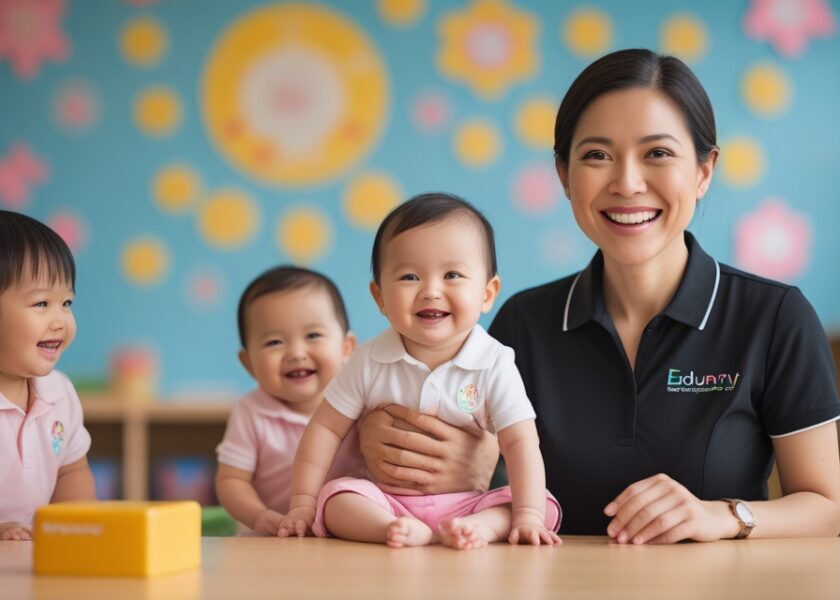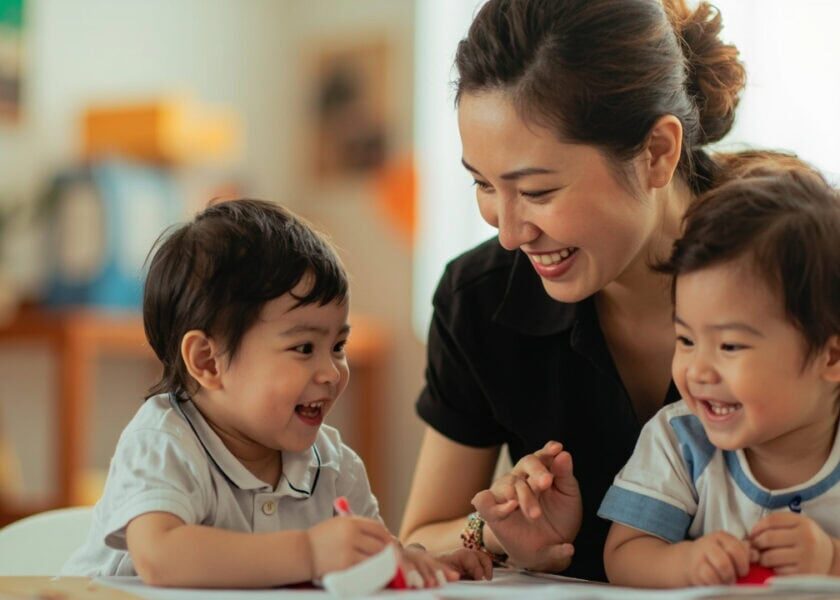
Understanding Your Child: The EduNanny Approach to Developmental Observation in Singapore
The Question Beneath the Practical Questions
Most parents enter the search for childcare with a practical question: Is this place safe? Is this person reliable? Will my child be happy?
These are not small concerns. They are the foundation. But underneath them, often unspoken, there is another question—one that most childcare providers never address, and one that leaves parents feeling uncertain long after enrollment.
Will I know what I am looking at?
Will I know how to read my child’s development? Will I recognize the signs that something is on track, or the signals that something deserves attention? Will I trust my own observations, or will I spend the next several years waiting for someone in authority to tell me whether my child is growing the way she should?
This is not a question about competence. It is a question about confidence. And it is the question that EduNanny Singapore was built to answer—not by replacing your vision as a parent, but by sharpening it.
The Difference Between Watching and Reading
When a trained caregiver watches a child, she is not simply watching. She is reading. There is a difference, and it matters enormously.
Watching is passive. It is noticing that a child is present, that a child is moving, that a child is occupied.
Reading is active. It is understanding why a child is moving in a particular way, what that movement represents in the larger story of that child’s development, and what it suggests about the skills that are emerging just beneath the surface.
A trained caregiver notices that a child is reaching for a block with a specific hand and wonders about hand dominance emerging. She notices that a child who was content to play alone six months ago is now actively seeking the company of other children and understands this as a milestone in social development. She notices that a child’s vocabulary, while different from the child next door, is following a coherent internal logic—a logic that reveals how this particular child is organizing language in her mind.
None of these observations require special equipment or clinical training. They require something harder: a frame of reference built from watching hundreds of children, and the discipline to look at each child as an individual rather than a benchmark.
What trained caregivers notice is not magic. It is pattern recognition developed over time—the result of learning what development typically looks like, and then learning how wildly individual development can still be while remaining entirely healthy. It is the practice of withholding judgment long enough to see what is actually there, rather than what you expected to see.
What Caregivers Actually Notice
In infant care and childminding settings, trained caregivers develop a vocabulary of observation that goes far beyond the surface of what happened during the day.
Here is what that looks like in practice:
- Motor development: Noticing changes in how a child climbs, runs, or manipulates objects. A slight shift in grip pattern might signal maturing fine motor control. The way a child navigates between furniture might reveal growing spatial awareness.
- Social-emotional cues: Observing how a child responds to other children, how they manage separation from caregivers, how they express frustration or joy. A child who begins making eye contact and smiling deliberately is showing the foundation of social connection forming.
- Communication milestones: Tracking the emergence of babbling, first words, gestures like pointing, and the back-and-forth rhythm of early conversation. Each of these is a window into cognitive and social development.
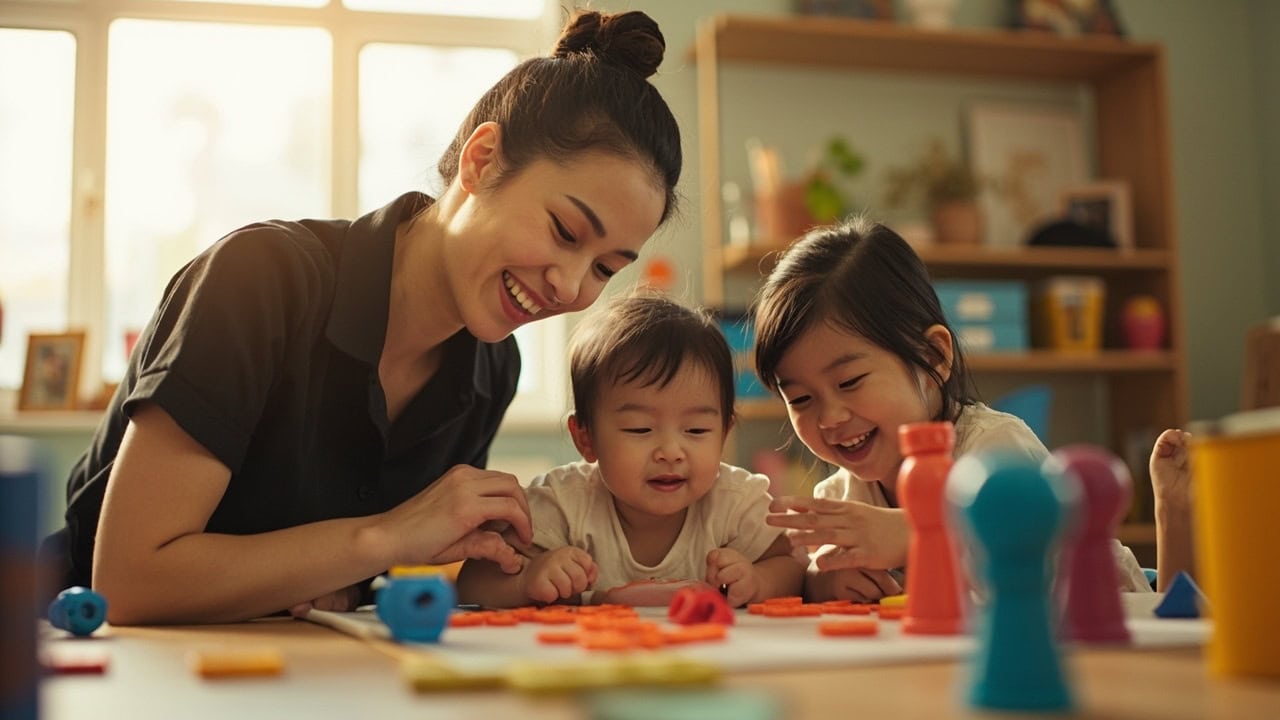
- Play patterns: Understanding what a child’s play choices reveal about their interests, their comfort with challenge, and their emerging understanding of cause and effect. A child who methodically knocks down towers she has built is learning about gravity, testing her own agency, and exploring the relationship between creation and destruction.
These observations are not isolated events. They are threads in an ongoing narrative about who this child is becoming.
And here is what matters most: this trained observation is not meant to exist apart from your own. It is meant to flow toward you. When a caregiver shares what she notices, she is not just reporting—she is modeling. She is showing you what developmental interest looks like in action. She is inviting you to notice the same thing tomorrow, and the day after, and eventually without any prompting at all.
Parents who are invited into the observation process rather than simply given updates become, over time, better observers themselves. Not because they learned something in a manual, but because they have been shown, repeatedly, what attentive looking actually looks like.
Reading Your Child at Pickup
Let us return to that moment at pickup, because it is more significant than it appears.
When you walk through the door and your child comes toward you, there is a whole world of information waiting to be read. How does she move? Is she steady? Is she tentative? When she sees you, does she run, or does she pause, taking in the sight of you before deciding how to react? Is there something in her face today that tells you about her morning—was she frustrated, fulfilled, curious, tired?
These are not idle questions. They are the texture of your child’s inner life, and they are available to you every single day, if you know how to look.
A parent who has been learning to read developmental signs will notice that her child’s way of running has changed—more coordinated, more confident, a small shift in motor planning that signals neural maturation. A parent who has been learning to read emotional cues will notice that her child’s expression when she walks in is different today, charged with something she cannot quite name, and this will prompt a question, a conversation, a connection that might never have happened otherwise.
This is what becomes possible when observation becomes a shared practice between caregiver and parent. You do not have to choose between trusting the professional and trusting yourself. You begin to see what the professional sees. And when you can see what the professional sees, you do not need to choose at all.
Developmental Windows and Why Timing Matters
The early years of a child’s life are not simply a period of growth. They are a period of extraordinary sensitivity—a time when certain capacities are forming faster than they ever will again.
Language, motor skills, social-emotional regulation, executive function, the ability to attach and connect—these emerge in layers, and they emerge most easily during specific windows of time when the developing brain is most receptive.
Quality observation matters in this context because it allows caregivers and parents to work together in recognizing where a child is within these windows. Not to rush them, not to pressure them, but to support them—to provide the experiences, the interactions, the environmental richness that allows each child to move through their own developmental trajectory with confidence.
In Singapore, where parents often carry a deep awareness of educational pathways and future possibilities, this can feel like pressure. But quality childcare reframes the conversation.
The question is not whether your child will be ready for school. The question is whether your child is being seen now—in all their specificity, all their emerging strengths, all their areas of growth—and whether that seeing is shaping the care they receive.
A child who has been observed well in their early years enters school not just with knowledge, but with a foundation of security, of being known, of knowing themselves. That foundation cannot be measured in assessments. But it can be seen in a child’s eyes, in the way they engage with the world, in the confidence they carry into new environments.
EduNanny by BUTLER: Built Around Observation
EduNanny by BUTLER understands this at the deepest level. As part of the ECDA Childminding Pilot, EduNanny offers Singapore families a pathway to childcare that is built on the belief that every child deserves to be seen.
The pilot operates across both home-based and centre-based models, offering flexibility for families whose needs are as individual as their children. Small ratios—up to one to three infants in infant care settings—ensure that children are not simply supervised but observed, known, and supported in the context of their individual development.
The practical dimensions of the pilot are designed to make quality care accessible:
- Monday to Friday care blocks provide the consistency that developing children need
- Fee structures within the pilot are designed to be affordable
- CDA and Baby Bonus funds can be applied, removing one layer of financial uncertainty
- Regular updates and open communication mean that parents are never guessing about what is happening in their child’s day
- CCTV measures in deployed locations ensure that care is visible and shareable
But the real differentiator is not the logistics. It is the training.
EduNanny’s caregivers are trained not just to provide care, but to observe. They are trained to understand developmental milestones, yes—but more importantly, they are trained to understand the individual variation that makes every child’s development unique. They are trained to notice what untrained eyes might miss, and to translate those observations into language that parents can understand, internalize, and act upon.
When a caregiver notices that a child has begun to point at objects and then look back at the caregiver for a reaction, she is seeing joint attention emerge—a foundational skill for language development and social connection. When she notices that a child who once cried at every separation is now beginning to manage goodbyes with greater composure, she is seeing attachment security developing, a child’s growing confidence in the consistency of care.
These are not just observations. They are windows into the ongoing story of your child’s growth. And parents who receive these gifts consistently, over time, begin to see for themselves.
Common Questions from Parents
“What if I cannot tell if something is wrong with my child?”
This fear lives in many parents. Quality observation is not about diagnosis—it is about noticing patterns over time. When a trained caregiver observes your child daily, changes in behavior, mood, or development become visible that a parent seeing a child only in mornings and evenings might miss. The goal is not to replace your role but to complement it.
“Will I feel competent as a parent if I need help reading my child?”
Asking for support in understanding your child is not a sign of inadequacy. It is a sign of thoughtfulness. The parents who worry most about whether they are reading their child correctly are often the most attentive parents there are. They care deeply about getting it right. Quality childcare exists to stand alongside that care, not to judge it.
“How do I know the caregiver is actually observing, not just babysitting?”
Ask questions about how observations are shared. Quality childminding is transparent about what caregivers notice and how they communicate it. At EduNanny, regular updates and open communication are built into the model—not as an extra, but as a core practice.
“Is my child too young for developmental observation to matter?”
The earliest years are precisely when observation matters most. Developmental windows for language, attachment, motor skills, and social-emotional regulation open widest in the first years of life. What caregivers notice in infancy shapes the support they provide—and the patterns they help parents recognize.
What Quality Childcare Looks Like in Practice
If you are beginning your search, here are some practical markers of quality that go beyond safety checklists:
- Ask about observation practices. How do caregivers track and share what they notice? Are updates specific and developmental, or generic and surface-level?
- Notice the caregiver’s questions about your child. A quality caregiver will ask about your child’s preferences, rhythms, and patterns—not just to gather information, but to build a picture of who this particular child is.
- Look for communication that teaches. Updates that explain why something matters, not just what happened, are a sign that observation is genuine.
- Check ratios and environment. Small group sizes allow for the kind of individualized attention that quality observation requires.
- Trust your gut. If a provider makes you feel judged, rushed, or uncertain, that is information. Quality care should leave you feeling more confident, not less.
Choosing Vision for Your Child
When you choose childcare, you are making many decisions at once. You are choosing a daily environment for your child. You are choosing a set of values about how children should be treated. You are choosing a relationship with the people who will spend hours with your child each week.
But beneath all of these, you are also choosing what kind of eyes will be watching your child. And you are choosing whether those eyes will teach you to see more clearly, or whether you will remain uncertain, always wondering whether you are reading your child’s development correctly.
EduNanny by BUTLER invites you to choose vision. To choose a childcare partner who understands that the most important thing they can give your child is attention—and the most important thing they can give you is the ability to provide that attention yourself.
There is a moment, after every school day ends, when your child shows you something true about themselves. A skill they have been practicing. A word they have been saving. A way of moving or laughing or connecting that tells you who they are becoming.
If you know how to read it, that moment is a gift. It is a reminder that your child’s growth is not invisible. It is happening all the time, in front of you, waiting to be seen.
With the right support, you can see it. Not because you have been given answers, but because you have been given eyes. The trained eyes of professional caregivers, yes—but also your own eyes, developed and confident, ready to witness the extraordinary, quiet unfolding of your own child.
When you are ready to explore what quality observation looks like in practice, connect with EduNanny to learn more about how their trained caregivers support both your child’s development and your own growing confidence as a parent.