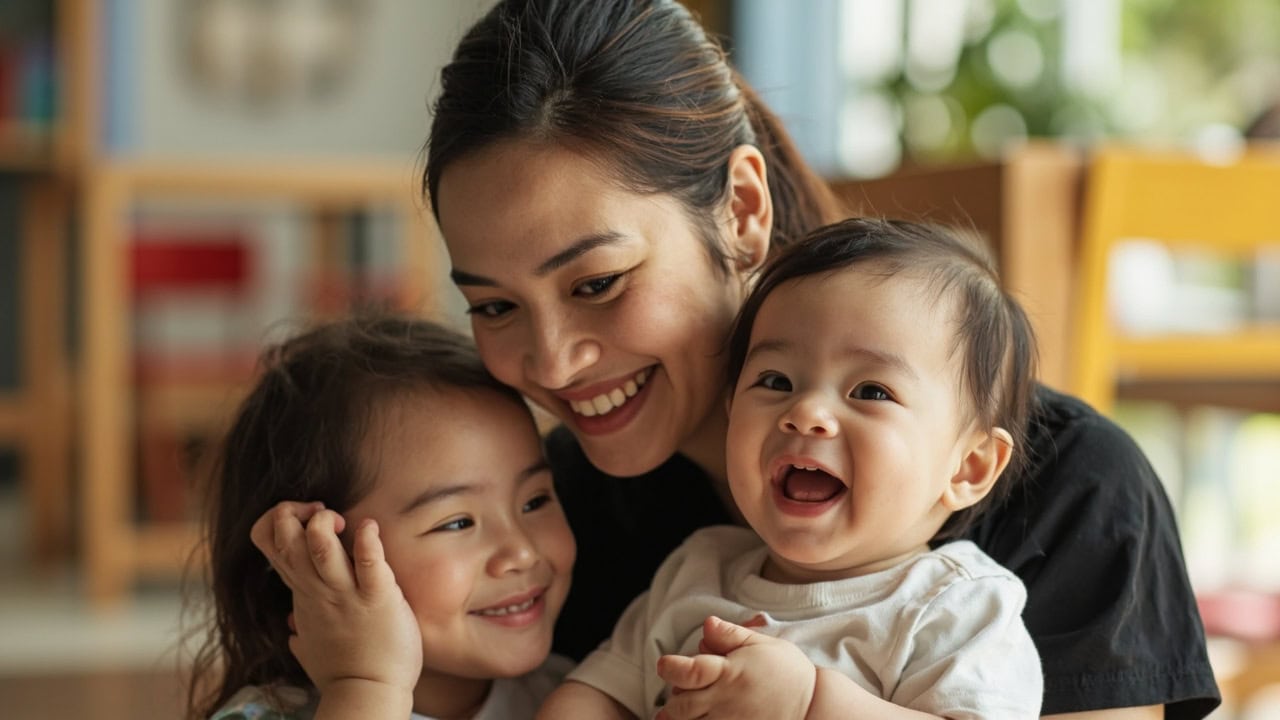
Toddler Care That Helps Your Child Reach for the World
Why Toddlerhood Is Different From Everything Before
Let us start with a recognition that matters more than we often admit: toddlerhood is categorically different from babyhood. This may seem obvious, but its implications run deep.
When your child was an infant, the childcare question was fundamentally about safety and nurturance. Can this person feed my baby the way my baby needs to be fed? Can they hold my baby in a way that feels warm and secure? Can they respond to my baby’s cries with attention and care? These are profound concerns, and they deserve profound answers. But they are, in a fundamental sense, concerns about protection—about keeping someone safe and comforted in their vulnerability.
Toddlers are no longer only that. Toddlers are also explorers. They are people who are learning, in real time and at remarkable speed, that they have preferences, that they have will, that they have the power to affect the world around them. They are discovering that they can push a chair to the counter and reach the things on top. They are discovering that when they say my turn, people sometimes listen.
This is the age of autonomy development, and it is one of the most beautiful and exhausting things you will ever witness. Your toddler is reaching for the world with both hands and also reaching back for you—sometimes in the same minute, sometimes in the same breath. They want to run and they want to be held. They want to climb and they want to be caught. They want to be independent and they want to know you are there.
This tension—this beautiful, constant, contradictory tension—is not a problem to be solved. It is the work of toddlerhood. And any childcare arrangement that does not understand this is missing something essential about the child in its care.
The Texture of Toddler Goodbye
Consider, for a moment, what separation looks like at this age. It is not the same as the infant goodbye.
You may remember those earlier partings—your baby crying as you left, your heart breaking in a specific way, the relief of reunion when the day was done. That grief was real and it was hard. But with a toddler, the texture of goodbye shifts.
Your toddler may run to you when you return and then immediately push you away so they can go back to what they were doing. They may cry when you leave and then be perfectly fine within three minutes, playing as though you had never existed. They may not cry at all, and this can feel like its own kind of wound—as though they don’t need you the way they used to.
All of these responses are normal. All of them are heartbreaking in their own way. What they share is this: your toddler is learning that you exist even when you are not in the room. This is a monumental developmental achievement—what psychologists call object permanence extended into emotional experience.
Your child is beginning to carry you inside them, to trust that you will return, to hold your absence as a feeling rather than a void. This is not a sign that they don’t need you. It is a sign that they are starting to need you in a different way—a way that is sustainable, a way that will carry them forward.
Quality toddler childcare understands this. It does not treat separation as a problem to be minimized or a wound to be bandaged. It understands that your toddler is doing important emotional work when they say goodbye each morning, and that the way this goodbye is held—warmly, consistently, without rush—matters enormously.
The caregiver who greets your toddler at the door is not just a person providing supervision. They are a person who is teaching your child that parting is survivable, that the world contains trustworthy people, that independence and connection can exist in the same breath.
The Language Explosion: What Your Toddler Is Actually Doing
Between eighteen months and three years, most children experience what researchers call the language explosion. Words that were few and halting become sentences. Sentences become stories. The monosyllabic baby who pointed and grunted is now a small person who wants to tell you about the truck they saw, and the bird they didn’t see but heard, and the feeling they had about the nap they did not want to take.
The comprehension outpaces the expression by a wide margin. Your toddler understands far more than they can say, and this gap—this frustrating, thrilling gap—is one of the engines of toddlerhood’s emotional intensity.
When a child cannot yet tell you what they need, they show you. The tantrum is not manipulation. The screaming is not a behavior problem. It is a child whose feelings have outpaced their vocabulary, and who does not yet have the neural pathways to regulate that experience.
What they need is not silence or obedience. They need someone who can name what they feel, who can sit with them in the storm, who can reflect back: I see that you are so frustrated. You wanted to go home. We will go home after we finish our snack.
This kind of caregiver response is not just emotionally supportive. It is neurologically formative. When a trusted adult consistently names a toddler’s emotions and offers containment, they are quite literally building the architecture of the child’s future capacity for self-regulation.
You are not just choosing childcare. You are choosing the person who will help your toddler’s brain learn how to manage big feelings. That is not a small thing. That is one of the most significant contributions anyone will ever make to your child’s inner life.
When evaluating toddler care, pay attention to how caregivers talk to your child. A caregiver who narrates a toddler’s experience, who asks questions and waits for responses, who reads and sings and talks through routines—this caregiver is not providing babysitting. They are providing education in its deepest and earliest form.
The Body in Motion: What Quality Toddler Care Looks Like
Toddlers are in constant physical negotiation with the world. They are refining their gait, learning to run without falling, discovering stairs with a mixture of terror and delight. They are developing fine motor skills that will eventually allow them to use a spoon without stabbing themselves, to turn pages, to build towers that seem impossible.
They are negotiating nap transitions—no longer the heavy infant sleep, but a lighter, sometimes resistant rest that your toddler may fight with surprising ferocity. They are learning to sit at a table and eat with others, which sounds simple and is actually a feat of social coordination, impulse control, and physical skill all at once.
This is why quality toddler care cannot be passive. It cannot be a room where children are kept safe and entertained while time passes. It must be a carefully designed environment that invites movement, that supports physical development, that offers the right level of challenge—not so much that a child feels overwhelmed, not so little that they are bored.
The way a childcare setting manages nap transitions, mealtimes, and gross motor play is not a logistical detail. It is a window into the program’s understanding of what toddlers actually need.
When your toddler is in a high-quality toddler care environment, you should expect to hear about their physical day. Not just that they ate and slept, but how they approached food, what they seemed curious about, whether they were experimenting with climbing or cautious, whether they were settling into rest or needing extra comfort.
This kind of specificity is not micromanagement. It is evidence that your child is being seen as the particular, individual person they are becoming.
Relationship as the Foundation
The bond between a toddler and their caregiver is different from the bond between an infant and their caregiver. It is less absolute, more negotiated. Your toddler is not just being cared for. They are learning, in this relationship, what it means to be in relationship at all.
How do I assert myself without losing connection? How do I express need without losing autonomy? How do I love someone and also want to be away from them? These are the questions that live inside every toddler-caregiver dynamic, and the quality of the caregiver’s response shapes far more than you might imagine.
A child who learns, in toddlerhood, that their assertiveness can coexist with warmth—that they can say no and still be loved, that they can want their own way and still be held—carries that lesson forward into every relationship they will ever have.
A child who learns that their needs are seen and met, that their preferences matter, that their voice is worth hearing, enters the world with a foundation of worth that no curriculum can teach.
This is why the caregiver selection process matters so deeply at this age. You are not just hiring someone to keep your child safe. You are choosing a person who will be a significant figure in your child’s developmental story. You are choosing a partner in the earliest act of your child’s becoming an individual.
A Word for Parents: You Are Not Alone
There is something we want to say that is perhaps the most personal thing in this article: you are doing something extraordinarily difficult, and we see you.
You are watching your child become a person in real time, and it is both beautiful and devastating. You are proud of who they are becoming and grieving who they are leaving behind. You are navigating your own complicated feelings about separation while also being the steady, present, attuned parent your toddler needs you to be.
You are making decisions about childcare with the weight of knowing that these early years will shape your child in ways that cannot be undone, and you are doing this without a manual, without a guarantee, with only your love and your instincts and the imperfect information available to you.
We do not want to add to your burden with guilt. We do not believe that good parenting requires perfection, or that the wrong childcare choice will damage your child irreparably, or that you should feel shame for needing support. Children are resilient. Relationships are repairable. You are doing your best, and your best is enough.
But we also believe that you deserve better than generic care for this specific, irreplaceable phase. Your toddler is not a bigger baby. They are a person in the most explosive, creative, challenging, magnificent season of their early development. They deserve care that understands this. They deserve caregivers who are trained for this, who are present for this, who see them as the emerging individual they are rather than a smaller version of someone older.
What to Look For When Choosing Toddler Care
If you are beginning to search for toddler care in Singapore, here are some questions worth asking—not as a checklist, but as a starting point for understanding whether a care arrangement is designed for the toddler your child actually is:
- How do caregivers respond to toddler autonomy? Do they allow your child to attempt things themselves, even when it would be faster to do it for them? Do they respect “no” while maintaining warm boundaries?
- What does goodbye look like? Is there time for it? Is it warm? Does the caregiver help your toddler process the separation rather than just moving on?
- How do caregivers talk to toddlers? Are they narrating, asking questions, naming feelings? Or is the interaction more directive and transactional?
- What do you hear about at the end of the day? Quality toddler care should give you insight into your child’s physical day, emotional experience, and emerging interests—not just a log of meals and sleep.
- Is the environment designed for movement and exploration? Toddlers need to climb, run, touch, and discover. Is the space inviting that, or just safe and clean?
- Can the caregiver relationship grow with your child? A caregiver who was perfect for your eighteen-month-old may need support as your child becomes a more verbal, more insistent, more complex two-year-old. Is there capacity for that evolution?
Finding the Right Fit for Your Family
The toddler years are their own chapter. They deserve their own kind of care—and parents who feel confident rather than anxious when they walk away each morning.
If what you have read here resonates with the toddler you know and love, we would welcome a conversation about what your family needs, what your toddler is like, and whether there is a fit worth exploring.
At EduNanny, we are committed to thoughtful, development-oriented childminding for Singapore families. We are part of the ECDA Childminding Pilot, and we bring trained caregivers, intentional environments, and a genuine belief that the years between eighteen months and three are worth every ounce of care we can offer.
You can reach us here to learn more about our approach, our caregiver training, and how we support families across Singapore. There are no perfect choices, only informed ones. We want to help you make an informed one.
Your toddler is reaching for the world. They deserve hands that will help them get there.