The Wisdom Your Second Child Inherits When Quality Childcare Becomes Family
The Assumption We Make About Second Children
We speak about childcare as though each enrollment begins from zero. We talk about adjustment periods and first-day routines and the work of building trust between caregiver and family. This language is not wrong—it simply tells an incomplete story.
For a first child, yes, these things are new. The parents are new. The caregiver is new. The routines, the rhythms, the whole rhythm and structure of daily care—all of it must be built from the ground up.
But for the second child, something fundamentally different is already in place. The question is not whether quality childcare can serve your second child. The question is whether you can see what your first child has already given you.
What You Learned the First Time
When your first child entered childcare, you were learning too—perhaps more than you realised at the time.
You were learning to read cues you had never needed to read before. How your baby signals hunger versus fatigue. How separation anxiety manifests in a toddler’s body. What your child needs in the hours after pickup to feel secure about returning the next morning.
You were learning to trust a caregiver with a kind of vulnerability that does not come naturally to most parents. You were learning your own thresholds, your own comfort zones, the specific qualities in a childcare arrangement that made you feel, on your better days, that this was the right place.
That knowledge does not disappear when a second child arrives. It accumulates.
By the time your second child needs care, you are a different parent than the one who walked through those doors three years ago. You have seen how your first child thrived under certain conditions. You know which transitions were harder than others, which caregiver relationships mattered most, which aspects of the daily rhythm created security and which created stress.
You have judgment now that you could not have purchased or studied your way into. You have the lived evidence of what works for your family, and that evidence belongs to your second child.
What It Means for a Caregiver to Know Your Family
In home-based or community-based care arrangements, this knowledge runs deeper than most parents initially expect.
The caregiver has witnessed your first child’s development across seasons. They have seen how your child responds to frustration, how your child celebrates small victories, what makes your child laugh until breath becomes impossible to catch.
They understand your family’s values because they have lived them alongside you. They know the things you worry about and the things you let go. They have opinions, formed through genuine experience, about what your second child might need based on patterns they have already observed in your first.
The caregiver knows your child. Not a generic child of the same age, not a theoretical infant, but your child, with your child’s particular temperament and needs and joys. When a second child enters that same space, that knowledge does not reset. The caregiver brings it forward.
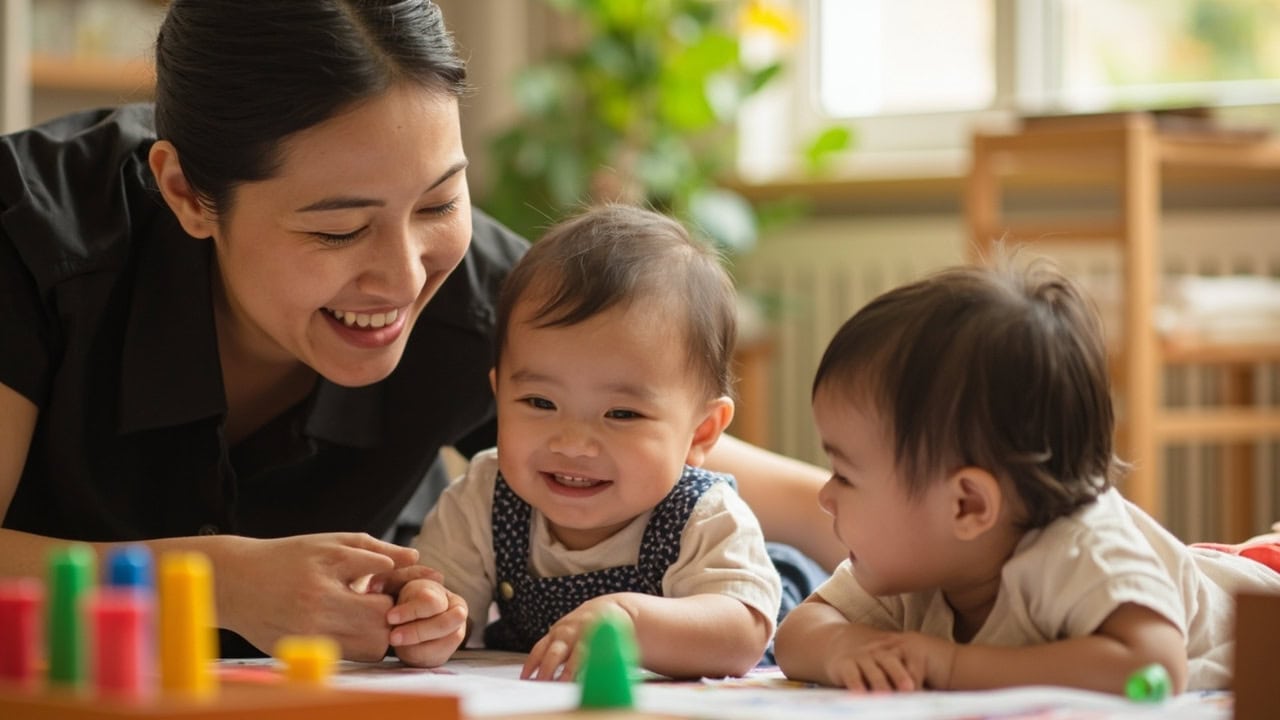
They recognise the family walk, the family rhythms, the family way of being in the world. Your second child is not a stranger in an unknown place. They are a new chapter in a story that already has a shape.
What Siblings Teach Each Other in Quality Care
There is something else that compounds across children, something quieter and more profound. The sibling relationship itself becomes part of the developmental architecture.
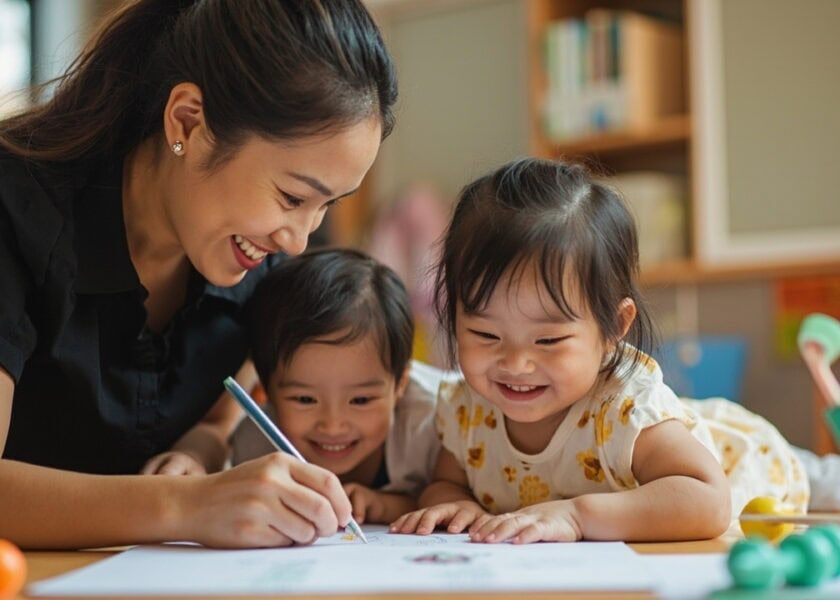
When two children from the same family are in quality care together—whether in the same home or the same centre—they begin to learn from and with each other in ways that would not be possible otherwise.
- The younger child watches the older child navigate the morning routine and unconsciously absorbs rhythms, expectations, and social cues. They learn, in some cellular way, that this place is safe—because their sibling has taught them without words that there was nothing to fear.
- The older child, in the role of the one who knows, develops a different kind of confidence. Not the confidence of being the only one, but the confidence of being the one who can show the way.
- Both children carry a shared memory of those early years together that no amount of individual childcare could have given them. Sibling bonds formed in quality care are different. They are forged in shared experience, in the daily knowledge of having navigated the same spaces and the same separations together.
There is a mentorship that happens between siblings in these environments, a natural teaching and learning that builds social competence in both directions. This is not something caregivers manufacture or force. It emerges naturally when children from the same family are held within a consistent, quality care environment.
What Quality Childminding Looks Like in Practice
For Singapore families researching infant care, it helps to be specific about what quality actually means—not as an abstract ideal but as something you can observe and evaluate.
Quality childminding is characterised by:
- Consistent caregiver relationships. Your child knows who will greet them each morning. The caregiver knows your child’s rhythms, preferences, and cues. This continuity is not a luxury—it is the foundation of the trust that makes everything else possible.
- Developmentally appropriate attention. In smaller home-based settings, this often means lower ratios—one caregiver to a small number of children. In centre-based care, it means ratios that allow for genuine responsiveness rather than just supervision.
- Rhythms that serve families, not just schedules. Quality care adapts to your family’s rhythm, not the other way around. Pickup and dropoff times, nap schedules, feeding routines—these should feel like supports rather than constraints.
- Transparency and communication. You should feel like a partner in your child’s day, not a visitor to it. Regular updates, open communication, and visibility into what your child is experiencing matter more than most parents realise before they enrol.
- A sense of family extension. The best childminding arrangements feel less like a service and more like an extension of your own home. Your child should feel safe, known, and valued as an individual—not as one of many.
Addressing Common Concerns
If you are considering enrolling a second child in childcare, you may be carrying specific worries. Here are the questions we hear most often, answered directly.
“Will the caregiver have enough attention for two children from the same family?”
This concern reflects a real understanding of what matters. Attention does matter. But the answer depends less on the number of children than on the ratio and the caregiver’s genuine investment in each child.
In quality home-based care with low ratios, a caregiver who already knows your family’s rhythms and values is often better positioned to serve a second child than a new caregiver who knows neither. The knowledge transfers. The relationship foundation is already laid.
“What if sibling dynamics create problems—jealousy, competition, overwhelm?”
Sibling dynamics in quality care tend to be the opposite of problematic. When the environment is secure and the caregiver is attuned, siblings often become each other’s greatest resource. The older child provides a model; the younger child provides a reason to consolidate and express that learning.
The key variable is not whether siblings share care, but whether the care itself is of sufficient quality to hold both children’s needs.
“My first child’s adjustment was hard. Will the second child’s be harder?”
Not necessarily—and often, not at all. The second child’s adjustment benefits from everything the first child’s adjustment taught you. You know what signs to watch for. You know what your child needs after long mornings apart. You know how to support the transition because you have done it before.
Your first child’s adjustment, even if it was difficult, gave you knowledge. That knowledge is a gift to your second child.
“Is childcare actually worth it for a second child?”
This is a genuine question worth sitting with honestly. The answer depends on your family’s circumstances, your second child’s temperament, and what you need to sustain your own wellbeing as a parent.
What we can say with confidence is this: when quality childcare is the right fit for your family, its value compounds across children in ways that individual enrolment cannot. The relationships deepen. The routines strengthen. The sibling bond becomes a developmental resource rather than just a family dynamic.
You Are Not Starting Over
There is a moment—and we have seen it many times now—when a parent who has walked in expecting to feel the same anxiety they felt with their first child realises that they do not feel it.
What they feel instead is gratitude. Gratitude for the relationship they built with their caregiver over three years. Gratitude for the routines they established that their second child will inherit. Gratitude for their own growth as parents, which they can now direct toward a child who is in some ways easier and in some ways more complex, but always, always better served by the knowledge they have already earned.
Childcare is not a service you purchase for a child. It is a developmental inheritance you build for a family. Every year of trust, every caregiver relationship, every rhythm you establish with your first child becomes raw material for your second child’s beginning.
Your second child does not need you to start from zero. They need you to start from everything you have already built.
EduNanny is a trusted, development-oriented childcare and childminding service for families in Singapore. Learn more about our approach or speak with our team about your family’s needs.