The Unexpected Way Childcare Builds Stronger Sibling Bonds
The Counterintuitive Truth: Childcare Strengthens Sibling Bonds
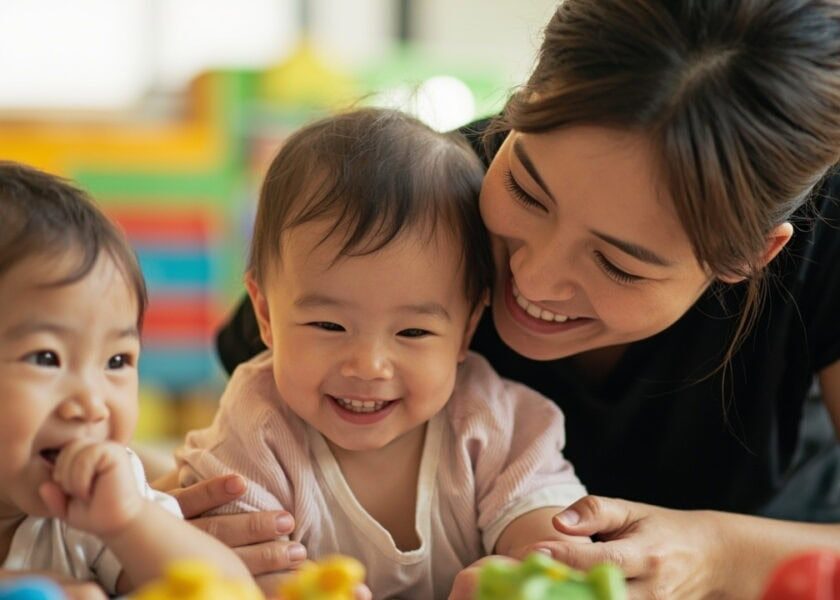
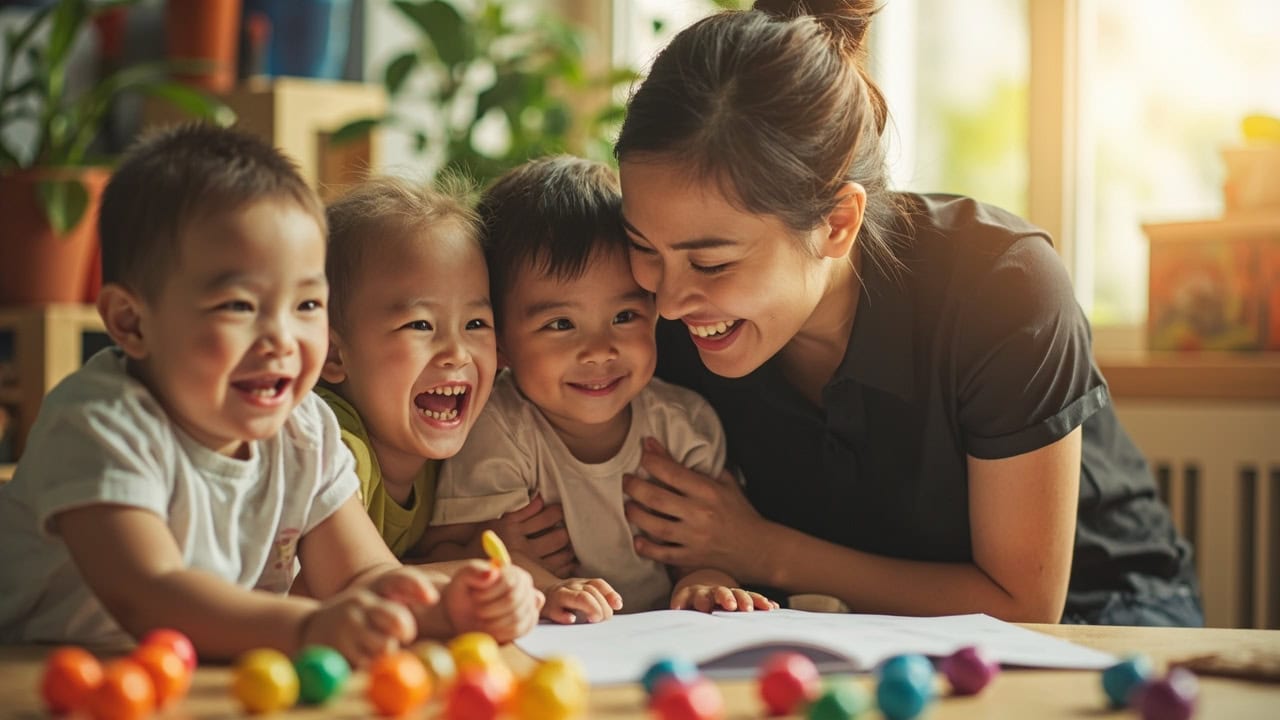
Here is what very few childcare conversations address directly, yet it lies at the heart of why we do what we do: quality childcare does not complicate the sibling bond. It strengthens it.
Quality childcare, the kind that sees your child as a whole person with emotional needs and relational capacity, does not divide your family. It expands your village. And that expansion feeds every relationship within it, including the one between your children.
Key Insights at a Glance
- Quality childcare expands your village. It adds emotional resources that every relationship within the family draws from, including the sibling bond.
- Sibling attachment is its own system. Children need emotional security to relate to each other as companions, not rivals.
- Secure children are generous children. When each child has their emotional cup filled, they can share without resentment.
- Individualized attention reduces rivalry triggers. Each child learns they are not interchangeable, which transforms comparison into complementarity.
- Togetherness is redefined. Quality time together matters more than proximity. Children who are full of life have more to share with each other.
Understanding the Sibling Attachment System
Most of us grow up understanding that children need secure attachment to their parents. This is well documented, well understood, and absolutely true. A child who feels safe with their primary caregiver develops the emotional foundation to explore, to learn, to relate.
But here is what we talk about less often: siblings have their own attachment system, one that operates alongside but distinctly from the parent-child bond.
When siblings feel emotionally secure in their family environment, when each child believes there is enough love to go around, they are free to relate to each other as companions, collaborators, and eventually, as the lifelong witnesses to each other’s unfolding lives.
But when even one child in the family feels anxious, dysregulated, or uncertain of their place, that anxiety ripples outward. It creates friction. It fuels the push and pull of rivalry, of comparison, of the quiet competition to be seen.
What Quality Childcare Builds at the Foundation
Quality childcare ensures that each of your children arrives at the sibling relationship from a place of emotional stability. It ensures that:
- Your youngest is not just cared for but genuinely nurtured
- Your middle child, who might otherwise fall into patterns of helper or complement to the older sibling’s leader, has their own developmental space to become fully themselves
- Your oldest, who may be carrying more responsibility or expectation than we often acknowledge, has somewhere to simply be a child
When children are secure in themselves, they can be generous with each other. They can share without resentment. They can play without power struggles dominating every interaction. They can argue and reconcile because they have the emotional tools to do so.
When your child comes home from a day in quality care feeling seen, feeling regulated, feeling like their needs were met by someone who understood them, they are not coming home depleted. They are coming home whole. And a whole child is a far better sibling than a child who has been waiting all day for their emotional cup to be filled.
Addressing the Real Concern: Divided Attention
There is something that weighs heavily on many Singapore parents: the question of divided attention. When you have two or three children, you are already aware that love, while infinite in theory, requires time and energy in practice. The fear that introducing childcare for one child will somehow diminish what remains for the others is real, and it deserves a thoughtful answer.
The answer is this: quality childcare does not take attention away from your children. It adds a layer of attention that your children bring home to each other.
Individualized Attention Changes the Sibling Dynamic
When a child receives individualized developmental support in a quality care setting, when someone is attuned to their specific rhythms, their particular needs, their unique way of expressing curiosity or frustration or joy, that child develops a deep sense of their own worth. They learn that they are not interchangeable with their sibling. That their achievements do not diminish theirs. That their needs are valid and will be met.
This is extraordinarily important for sibling dynamics. Much of sibling rivalry is not actually about love. It is about identity. It is about the child who wonders, perhaps unconsciously, whether there is room for all of who they are alongside a brother or sister who seems so different, so celebrated, so present.
When each child has had the experience of being fully attended to, not just managed but genuinely understood, the comparison trap loses its power. The siblings can begin to appreciate each other’s differences as complementary rather than competitive.
- The older child who learned to share in care can bring that lesson home
- The younger child who learned to ask for help in care can model that vulnerability as strength
- Both children develop language for emotions and relationships that extends beyond the family unit
What Siblings Observe and Absorb
Children are extraordinarily perceptive. They notice when someone they love is happy, when someone they love is struggling, when someone they love is coming home lighter and more at ease.
When an older sibling sees their younger brother or sister return from a day in quality care with stories of warmth and engagement, with songs they want to teach and friends they want to describe, something shifts in how they understand that experience. It becomes something desirable, something that adds to their family life rather than subtracting from it.
When siblings are in care together, or when one is in care and another will soon follow, they become co-narrators of something shared. They have a common reference point. They have a vocabulary for care that goes beyond just mom and dad. They begin to understand that the world contains more than the family unit, and that this is not threatening but enriching.
Navigating Different Developmental Stages
For parents who have children of different ages, there is a real complexity in supporting simultaneous developmental needs. Singapore parents face this with extraordinary clarity, because our lives demand that we find solutions that work for everyone, not just for one child at a time.
When you have an infant and a toddler, or a preschooler and a school-age child, the developmental stages are not just different. They are often pulling in different directions:
- Your toddler needs structured social learning
- Your infant needs responsive sensory engagement
- Your preschooler is asking questions about the world
- Your older child needs quiet time and independence
The Village Becomes a Practical Necessity
This is where the village metaphor becomes more than a comforting phrase. It becomes a practical necessity. Quality childcare does not pretend that one caregiver can meet every developmental need of every child simultaneously. What it does is create multiple nodes of attuned care, each one responsive to where that child actually is.
When your children come home secure in who they are, something remarkable happens with siblings. The infant who has been so deeply held and responded to does not resent the toddler who needs more physical engagement. The toddler who has had space to run and climb does not begrudge the baby who needs stillness. The older child who has been challenged with real learning does not feel competitive with the younger who is still discovering.
Each child, having been met where they are, can let their sibling be where they are too. The family becomes a place where differences are tolerated, then tolerated with grace, and eventually, celebrated.
Redefining Togetherness
There is something that sits at the root of so much parental anxiety about childcare, and that is the word “togetherness.”
We have been taught, both by cultural expectation and by our own upbringing, that togetherness means proximity. That the family is strong when it is physically close, when parents are present at every milestone, when siblings share every waking moment. And I want to honor that desire, because it comes from a place of deep love. You want your children to have what you had, or to have something better than what you had. You want the sibling bond to be forged in shared time and presence.
But here is what we have learned from watching thousands of families navigate this question: togetherness is not diminished by quality care. It is redefined.
Quality Time Actually Means
When your children spend their days in an environment that is attuned to their developmental needs, they are not becoming strangers to each other. They are becoming people who have more to bring to each other. They are not arriving home depleted from a day of mere supervision. They are arriving home full of experience, curiosity, stories, and growth. And siblings who are full of life are siblings who can share it.
The togetherness that matters is not measured in hours. It is measured in quality:
- It is the dinner where each child has something to say because their day had something to offer
- It is the bedtime where the older sibling asks about the younger’s day because they have learned that what happens in care is real and important
- It is the weekend play that emerges from a week of enough, where children have been regulated and engaged and now have capacity for genuine connection
When we expand the village, we do not shrink the family. We give the family more room to breathe, more resources to draw from, and more emotional space to simply be together when they are together.
What Quality Childminding Looks Like
For parents researching infant care and childminding in Singapore, understanding what quality actually means in practice can feel overwhelming. Here is a framework for evaluating whether care is truly supporting your children’s emotional development and sibling bonds.
Key Indicators of Quality Care
| What to Look For | Why It Matters for Siblings |
|---|---|
| Low child-to-caregiver ratios | Each child receives individualized attention, reducing competition for emotional resources |
| Responsive, attuned caregivers | Children learn they are seen and valued, which they then model with siblings |
| Developmentally appropriate activities | Children come home regulated rather than overstimulated or underwhelmed |
| Consistent routines and relationships | Security in care translates to security in family bonds |
| Transparent communication with parents | When parents feel confident and informed, they can be more present at home |
The Difference Between Supervision and Nurture
Not all childcare is created equal. Supervision means your child’s physical needs are met. Nurture means your child’s emotional and developmental needs are understood and responded to. It is nurture that creates the conditions for strong sibling bonds.
A child who has been merely supervised all day is arriving home with an emotional deficit. They need your attention, your comfort, your presence to fill what has been empty. A child who has been genuinely nurtured is arriving home whole. They have already had their cup filled. They can play, share, engage, and connect because they have capacity to do so.
How EduNanny Singapore Approaches This Work
Philosophy must be lived to be meaningful. At EduNanny, we have built our approach around the understanding that quality childcare serves the whole family system, not just individual children.
Our Framework and Context
EduNanny Singapore is part of the ECDA Childminding Pilot, which means we operate within a framework that takes both quality and accessibility seriously. We know that Singapore families face real financial pressures, and that childcare decisions cannot be made on philosophy alone. That is why our pilot fee structures are designed to be affordable, and why we work with Community Development Council pathways and Baby Bonus frameworks to ensure that cost is not an unnecessary barrier to quality.
We offer home-based childminding, because we know that for infants and young children, the home environment can be a place of extraordinary safety and comfort. But we also work with families who need centre-based or community pathways, because every family’s situation is different and there is no one-size-fits-all solution to something as complex as raising children.
Caregiver Ratios and Consistency
Our care blocks run Monday through Friday, because we understand the rhythms of working parents and the importance of consistency for young children. Our infant ratios, which can be as focused as one to one or one to three depending on the care pathway, are a reflection of our belief that each child deserves not just supervision but genuine attunement.
We also know that trust is not built on promises alone. It is built on transparency. Where deployed, our communication protocols and CCTV measures are in place because parents deserve to know what is happening with their children, not in a spirit of surveillance but in a spirit of partnership. When parents and caregivers are aligned in their understanding of the child’s day, the child benefits.
Ongoing Support for Parents
We have developed Thomas, our AI-powered chatbot, as a resource for parents navigating the realities of childminding in Singapore. Not because technology replaces human care, but because parents navigating complex decisions deserve support that is available when they need it, that is consistent, that answers the questions that arise at odd hours or during moments of quiet doubt.
Thomas is not a substitute for the warmth of a knowledgeable caregiver. It is an extension of the support we want every EduNanny family to feel they have access to.
A Message About Trust
If you are a parent in Singapore who has been quietly wondering whether childcare might somehow harm the relationship between your children, I want you to hear this: quality childcare is not a division of your family. It is an expansion of your village. And that village feeds every relationship within it, including the one between the two or three people you love most in this world.
Your children are not yours to keep small. They are yours to prepare for a world that will ask them to collaborate, to empathize, to negotiate, to forgive, to love. And the best preparation for that world is not keeping them close in ways that constrict. It is giving them the emotional security to reach outward, to include others, to trust that connection multiplies rather than divides.
At EduNanny Singapore, we are honored to be part of that preparation. We are honored to care for your children in ways that make them more fully themselves, so that they can show up for their siblings, their extended family, their future friends and colleagues and partners, as people who know what it means to be genuinely seen.
This is why we do what we do. Not just to give parents peace of mind, though we know that matters enormously. Not just to support child development, though we take that responsibility with absolute seriousness. But because we believe, with evidence and with heart, that every child deserves to grow up secure enough to love well.
And when children grow up secure enough to love well, they love their siblings well too.
Common Questions, Answered
“Will my children feel abandoned or replaced?”
Research consistently shows that children who receive quality care from attuned caregivers do not experience it as abandonment. They experience it as addition. They learn that there are more people in the world who can love them well, who can see them, who can meet their needs.
“What if one child gets more from care than the other?”
When your infant receives the individualized sensory engagement they need, they arrive home calm and available for connection. When your toddler has space for the physical exploration they crave, they are less likely to act out or compete for attention. Each child’s needs, met appropriately, serves the whole family system.
“How do I know if childcare is actually good for my children?”
Look for signs that your child is returning from care whole rather than depleted. Do they have stories to tell? Are they regulated, able to play and engage? Do they speak warmly about their caregivers? Do they seem secure in exploring new things? These are indicators that care is providing nurture, not just supervision.
“Is it selfish to choose childcare when I could be home with my children?”
The question itself contains a false assumption: that parents must choose between their children’s wellbeing and their own capacity to sustain family life. Parents who are supported, who have help, who can return to their children refreshed rather than depleted, are parents who can show up better. Quality childcare is not a subtraction from your family. It is an addition to your capacity to parent.
Questions to Ask When Choosing Infant Care in Singapore
- What are the caregiver-to-child ratios? For infants, lower ratios mean more individualized attention.
- How do caregivers respond to emotional cues? Observe whether they attune to children’s needs, not just manage behaviour.
- What does a typical day look like? Is there a balance of structured and free play, rest and activity, individual and group time?
- How do they communicate with parents? Transparency matters. You should feel informed about your child’s day.
- What is your gut feeling? Trust your instincts. If something feels off, it probably is.
- How does the environment support different developmental stages? If you have multiple children, can the arrangement meet each of their needs?
Ready to Explore Your Options?
If you would like to learn more about how EduNanny Singapore approaches infant care and childminding, we invite you to reach out to our team. We are here to answer your questions, understand your family’s unique needs, and help you find a pathway that supports not just your children’s individual development, but the bonds between them that will last a lifetime.
You can also chat with Thomas, our AI assistant, at any time. He can answer questions about our programs, fees, and care pathways, and help you take the next step whenever you are ready.
We believe every family deserves a village. Let us be part of yours.
Learn more about EduNanny: Home · About Us · ECDA Childminding Pilot