The Second Anchor: Why Your Child’s Caregiver Matters More Than You Think
Why This Partnership Matters for Your Child’s Development
Research and decades of developmental observation have quietly confirmed something most parents intuit but rarely hear articulated with the weight it deserves: the single most developmentally powerful relationship a child has outside their immediate family is the one their parents choose with care and cultivate with trust. Not the playgroup. Not the enrichment class. Not the programme with the most impressive credentials.
The relationship between the people who love that child most and the person who spends their waking hours learning that child’s language, anticipating their needs, and co-creating the rhythms of their early days — that is where the compounding happens. That is where security deepens or frays. That is where a child’s understanding of the world as a safe, readable, responsive place either solidifies or begins to wobble.
And here is what makes this so urgent for families in Singapore. We have built a society where most parents, by necessity or by choice, return to work. Where grandparents may or may not be available. Where the village is not always down the road or next door.
Into that very specific, very modern reality, we send our children to be cared for by someone we have often met only once or twice before handing over the most precious thing in our lives. We do this not because we do not love them, but precisely because we do. We work so they can have more. We work so we can provide. But in doing so, we enter a relationship we rarely know how to name, let alone how to build well.
Releasing Control and Embracing Partnership
The instinct most parents reach for is control. The observation reports, the camera updates, the daily messages asking for reassurance. These impulses are not wrong. They come from love. They come from the deep biological imperative to protect what we cannot be with every moment of every day.
But when control becomes the primary mode of managing this relationship, something important gets lost. What gets lost is the partnership itself. What gets lost is the subtle, powerful reality that the caregiver standing in front of your child each morning is not an extension of you. They are a person with their own attunement, their own observations, their own relationship with your child.
Your child does not need a relationship where you are the commander and the caregiver follows orders. Your child needs a relationship where two adults, who both love them and know them deeply, are communicating, aligning, and co-regulating together. Your child needs the security of knowing that the world outside your home is not a foreign territory but a connected one. That mummy and the person who takes care of them are on the same page.
And here is the fear that lives just beneath the surface for so many parents: the fear that sharing this relationship means losing it. That by letting someone else know your child deeply, you somehow diminish your own bond. That your child will love them too much, or need them more, or forget where they came from.
This fear is not irrational. But it is rooted in a misunderstanding of how love works in a child’s life. A child’s love for their parents is not a finite resource that gets divided up as more people enter their world. A child’s capacity for attachment and connection expands when those connections are consistent, safe, and trusting.
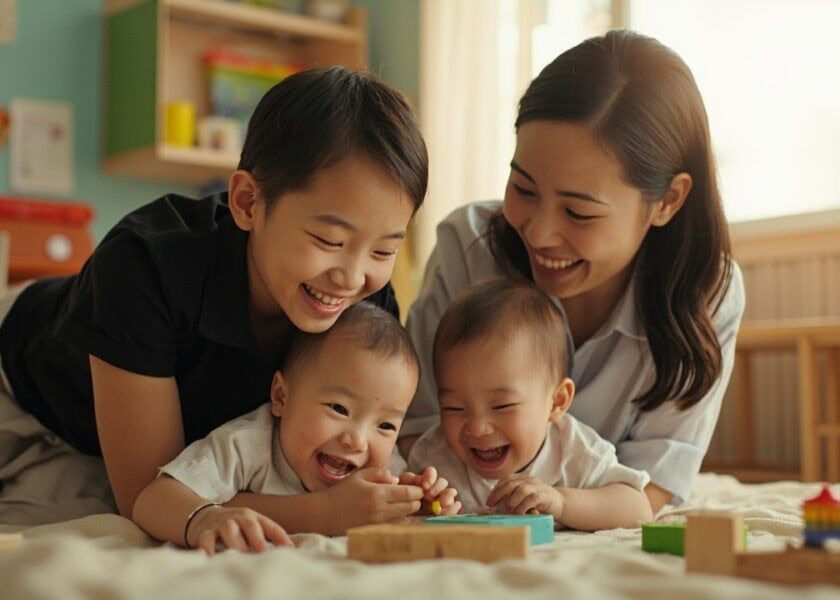
What competes with a parent’s bond is not a caregiver’s presence. What competes with it is insecurity, inconsistency, and a child who does not feel held by the adults around them. When your child feels securely attached to their caregiver, they are not taking anything away from you. They are building a second anchor. And that, paradoxically, is one of the most profound gifts you can give your child — and one of the most affirming things you can do for your own parenting.
What Co-Regulation Looks Like in Practice
This is what developmental scientists call co-regulation, and it is one of the most underappreciated gifts a childcare partnership can offer a child.
Co-regulation is the process by which a calm, attuned adult helps a child move from dysregulation back to equilibrium. When a child falls and scrapes their knee, co-regulation is not just the band-aid. It is the reading of their face, the matching of your voice to their distress level, the pacing of your response so that you are neither minimizing nor catastrophizing. It is the invisible work of helping a child feel that their big feelings are manageable, that someone is with them in it, and that they will be okay.
Now imagine what happens when a caregiver learns this language. Not as a scripted technique but as a genuine shared practice with the parent. Imagine that when your child has a meltdown at pickup, the story you hear from their caregiver is not just a report of what happened but a conversation about what worked, what did not, what they noticed about your child’s patterns, and what they would try differently next time.
Imagine that when your child is going through a sleep regression or a separation anxiety phase, your caregiver shares not just updates but observations:
“I noticed she calms faster when we use that song you mentioned. She seems to need more transitional time in the mornings. This is the same child who needed nothing from me last week, but today she wanted to be held for a while before she could let go.”
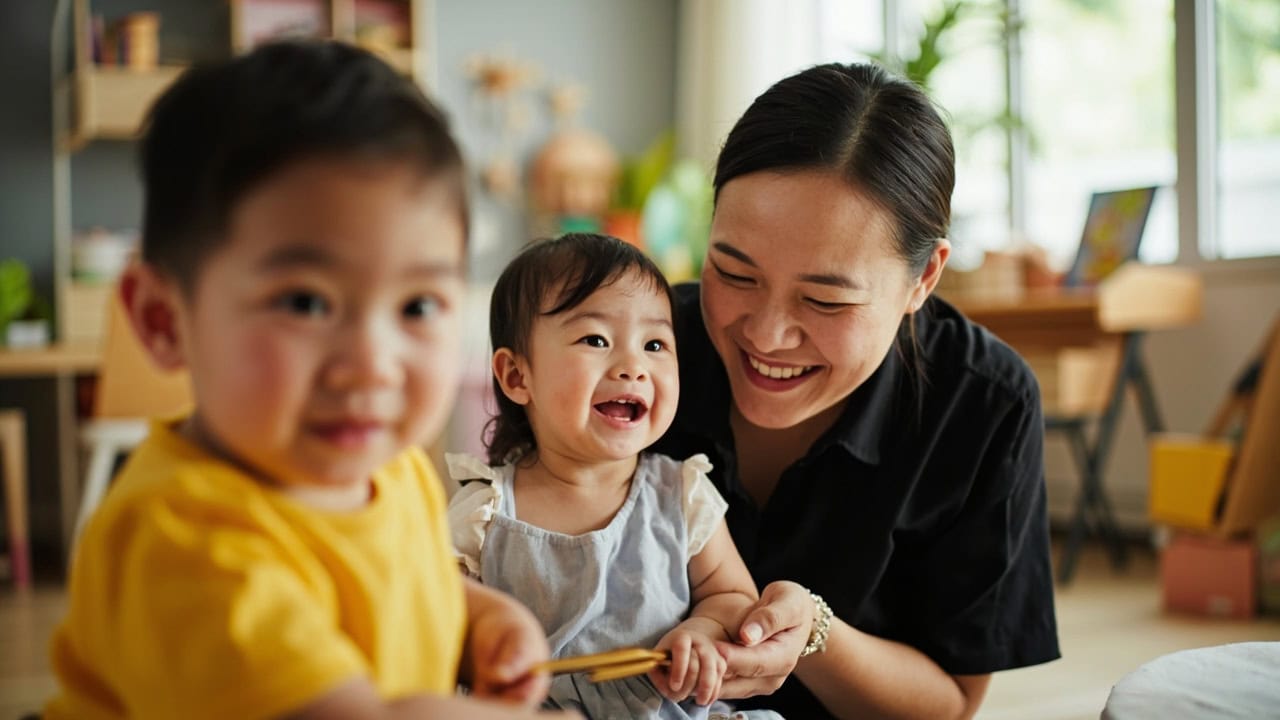
This is the partnership. This is what it looks like when it is working. Not a relay race where you hand off responsibility and hope for the best. Not a surveillance relationship where the caregiver reports and the parent judges. But a genuine developmental alliance — two people who are paying attention to the same child and learning to speak the same language about that child.
The Four Dimensions of a Real Partnership
So what does this look like in practice? What are the specific dimensions of a genuine parent-caregiver developmental partnership?
1. Shared Observation
This means developing a language you both use when describing what you see in your child. Not the casual check-in but genuine curiosity about what is happening developmentally, emotionally, sensorily for this child.
It means the caregiver noticing that your two-year-old is going through a precise lining-up phase and telling you about it not just as an observation but as a shared wonder: “I wonder if this connects to what you were saying about the need for order at home.”
It means you telling the caregiver that your child has been having big feelings about the new baby and watching to see if they express it differently in care. Shared observation means you are both scientists of this child’s development, and you are comparing notes.
2. Co-Regulation Consistency
This means that when your child is frustrated, both you and your caregiver respond in ways that feel like they come from the same playbook. Not identical words, but the same tone. The same respect for the child’s feelings. The same patient presence.
Children are exquisite readers of inconsistency. When they learn that the way they are held during distress is different depending on who is there, they become anxious. When they learn that the calm, patient presence is consistent whether it is mummy or their caregiver, they internalize a sense of safety that travels with them everywhere.
3. Aligned Comfort Rhythms
This is smaller than it sounds. It is about knowing how your child soothes. Whether they want to be sung to or read to or simply held. Whether they need movement or stillness during transitions. Whether a particular stuffed animal is non-negotiable or genuinely optional.
When a caregiver learns these rhythms from you and honors them, your child experiences continuity of care. They are not starting from zero every morning. They are continuing a relationship that began with you.
4. Honest Communication
This is where many childcare relationships falter, not because parents are difficult or caregivers are unresponsive, but because no one established how honest conversation would flow.
What does open communication look like? It looks like the caregiver who tells you when your child had a hard day without waiting for you to ask. It looks like the parent who can say “I noticed this and it worried me” without it sounding like an accusation. It looks like regular touchpoints — not just the daily update but actual conversations about development, about concerns, about wins.
Transparency and trust are not accidents. They are architecture. You build them in.
| Dimension | What It Looks Like in Practice |
|---|---|
| Shared Observation | Developing a shared language for describing your child’s development, curiosity about patterns, comparing notes like scientists |
| Co-Regulation Consistency | The same calm, patient presence whether with parent or caregiver — same tone, same respect for feelings |
| Aligned Comfort Rhythms | Consistent soothing methods, known transitional needs, honoring the child’s established cues |
| Honest Communication | Regular real conversations about development, proactive sharing, ability to raise concerns without blame |
How EduNanny by BUTLER Builds This From Day One
Which brings me to why EduNanny Singapore matters in this picture. Not as a service you hired, but as a partner you chose.
EduNanny by BUTLER is not a typical childcare arrangement. It exists within the ECDA Childminding Pilot, which means it is part of a deliberate, structured experiment in what quality home-based and community-based care can look like in Singapore. The pilot offers home-based and centre-based pathways, giving families options that fit their real lives.
The ratios are intentionally small — up to one to three infants — which means your child’s caregiver is not juggling seven others at the same time. Your child gets the attention, the attunement, the presence they deserve. And within the pilot fee structures, this quality is made accessible in a way that many families assumed was beyond their reach.
What EduNanny brings that is harder to quantify but equally important is the philosophy that underpins every interaction. They do not simply place a caregiver in your home and hope for the best. From the first conversation, the question is not “How can we serve you?” but “How can we build this together?”
The caregiver selection process is rigorous. The training is grounded in developmental science and responsive caregiving. The communication structures are explicit and consistent. Transparency measures like regular updates give parents peace of mind without replacing the relationship with surveillance.
There is something else EduNanny does that is quietly revolutionary. They respect the role of the childminder as a profession of dignity and skill. In too many conversations about childcare, the caregiver is treated as a support character in the parent’s story. EduNanny sees them as co-authors. They invest in their training. They structure their work so that it is sustainable, respected, and genuinely professional.
Because a caregiver who feels valued shows up differently than one who feels interchangeable. A caregiver who is trained in developmental observation and co-regulation is not just watching your child. They are nurturing them.
And then there is Thomas, the AI chatbot that EduNanny offers. This is not a gimmick but a genuine reflection of how they think about supporting parents. Parenting in Singapore is intense. The information is overwhelming. The second-guessing is constant. Thomas exists because EduNanny understands that a parent who is uncertain and unsupported is not bringing their best self to the partnership. Thomas does not replace the caregiver relationship. It supplements it with accessible, reliable, thoughtful guidance that helps parents feel more confident in their own role.
Taking the First Step Today
Think about what it means to be a parent who is not alone in the work. Who has a partner who notices things you might miss because they are there in the moments you are not. Who can tell you, with genuine care, that your child has been working so hard on their pincer grip this week, or that they finally climbed the big slide, or that they keep asking for the book about the little rabbit who misses his mummy.
This is not interference. This is expansion. This is the village that Singapore parents keep longing for, actually arriving in the form of a relationship you built with intention and trust.
You are not hiring a service. You are building a relationship. And every day, in every small interaction, you are either strengthening that bond or allowing it to remain unnamed and unintentional.
If you are beginning to explore infant care or childminding in Singapore, here are a few questions worth sitting with:
- Am I looking for someone who will follow instructions, or someone who will observe my child and share what they see?
- Does this arrangement invite honest conversation, or does it feel like one-way reporting?
- Do I feel, in my gut, that my child’s caregiver and I are on the same team?
- Is the communication proactive — not just updates, but genuine observations about my child’s development?
- Does the caregiver seem to feel valued, or like a replaceable pair of hands?
The answers to these questions will tell you more than any brochure or fee comparison ever could.
Your child has been in this partnership since the first day they walked through that door and reached for a hand that was not yours but that learned, over time, to hold them just as gently. The choice was always yours. But now you have language for it. Now you have a framework. Now you have a partner in EduNanny who understands that what they are building with you is not just childcare. It is a developmental alliance. It is the second anchor your child needs. It is the village that Singapore parents have been quietly longing for, designed with intention, grounded in trust, and delivered with the care it deserves.
EduNanny is ready. They have been ready. Now the question is, are you?
If you would like to learn more about EduNanny Singapore and how we approach quality childminding, we welcome you to explore our about us page or get in touch with our team.