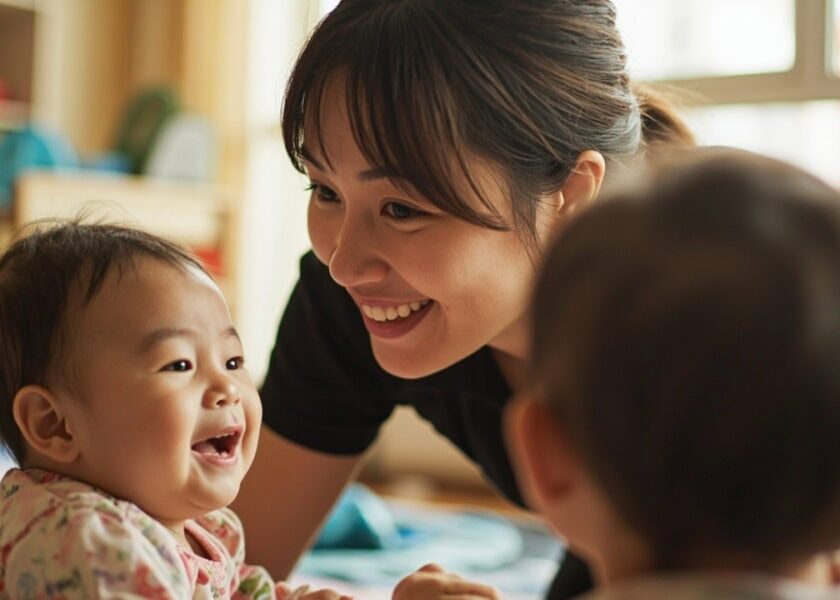
The Real Readiness Test Your Child Faces on Primary One Day
Is My Child Ready for Primary One?
There is a moment that comes for nearly every Singapore parent, usually around the time their child turns three or four. It doesn’t arrive in the pediatrician’s clinic or the childcare orientation hall. It surfaces in the quiet of the night, in conversations with other parents, in the careful glances at what other children seem to be doing.
The question is deceptively simple: Is my child ready for Primary One?
The answer that follows almost reflexively sounds something like this: We should probably start worksheets. Phonics. Numbers. Maybe an enrichment class on the weekend. Something structured. Something that looks like school.
You are not wrong for thinking this. You are not a bad parent for wondering this. You are responding, with every ounce of love and protectiveness you have, to the world you have been given. Singapore has some of the highest-performing schools in the world, and the desire to give your child every possible advantage is not ambition—it is love.
But here is what deserves to be said clearly, because it rarely is: the preparation you have been pointed toward—the instinct to reach for worksheets and literacy drills—is preparing your child for the wrong test.
The School Readiness Truth Most Parents Never Hear
- The real Primary One assessment is not academic. On your child’s first day, teachers watch whether they can sit still and attend, regulate their energy, process sensory demands, and coordinate their body well enough to hold a pen.
- Literacy and numeracy depend on physical foundations. Before a child can read, their visual system must track and focus. Before they can write, their fine motor control must be developed. Before they can sit and attend, their sensory integration must be organized.
- Movement is not preparation for learning—it is the substrate of learning. The science of embodied cognition shows that thinking, attending, remembering, and regulating are all built, first, through physical experience.
- Quality childcare is a sensory-motor learning laboratory. Every climb, pour, messy play session, and roll down a grassy slope builds the neurological foundations that academic skills will eventually rest upon.
What Primary One Teachers Actually Assess on Day One
The test that teachers administer on that very first day of school is not a reading test. It is not a numeracy test. It is not a worksheet test.
The test is whether your child can:
- Sit still and attend when a teacher speaks
- Regulate their energy and modulate their excitement
- Bring their body to a state of readiness for learning
- Process the sensory demands of a new environment—the fluorescent lights, the ambient noise, the feel of a desk chair, the weight of a pencil
- Coordinate their hands well enough to hold a pen with precision
- Cross their midline to write across a page
- Track text from left to right with coordinated eye movements
These are not soft skills. These are the actual neurological and physical foundations upon which literacy and numeracy depend. And they are not built by worksheets. They are built by bodies in motion.
The Science Behind Why Your Child’s Body Is Their First Classroom
Before a child can learn to read, their visual system must be mature enough to track and focus. Before a child can write, their fine motor system must be developed enough to control a pencil with strength and precision. Before a child can sit and attend, their sensory integration system must be organized enough to filter irrelevant stimuli and sustain focus on what matters.
Before a child can regulate their emotions in a new and challenging social environment, their proprioceptive and vestibular systems—the body’s deep sense of position and movement—must be calibrated enough to give them a stable internal experience of themselves.
The body is not a container that holds a mind that learns. The body is the mind’s instrument, its medium, its partner. In early childhood, the body is where learning actually happens.
This is the science of embodied cognition, and it is not fringe or speculative. It represents decades of developmental research distilled into a single, clarifying insight: movement is not preparation for learning. Movement is the substrate of learning.
- When an infant crawls, they are building the neural pathways that will later support visual tracking, postural control, and the bilateral coordination required for reading and writing.
- When a toddler climbs, they are developing the vestibular and proprioceptive systems that will later support attention, emotional regulation, and the ability to stay calm under pressure.
- When a preschooler digs in sand, pours water, manipulates clay, climbs stairs, or rolls down a grassy slope, they are constructing the sensory-motor foundations that every academic skill will eventually rest upon.
Movement Is the Medium of Learning: Why the Sandbox Is Actually a Classroom
The most prescient school readiness curriculum is not a set of workbooks. It is a sensory-rich environment where children move, explore, climb, balance, pour, squeeze, roll, jump, and navigate with their whole bodies, every single day.
Here is what quality childcare environments actually offer:
- The climbing structure is not an amenity. It is a precision tool for developing the muscle tone, coordination, and body awareness that will later allow a child to sit in a chair and focus.
- The messy play table—water, sand, oats, paint, slime—is not a treat. It is sensory nutrition for a nervous system that is still learning to process and organize the world.
- The outdoor exploration time is not a break from education. It is the education itself, happening through the body.
The Role of Trained Caregivers in Sensory-Motor Development
The caregivers in these environments are not merely supervising children. They are:
- Reading developmental cues
- Supporting sensory modulation
- Scaffolding motor challenges appropriately
- Creating the emotional safety that allows children to take the risks that development requires
A child attempting to climb a little higher than they have before needs a calm, observant adult nearby—not to do it for them, not to hover anxiously, but to be present with quiet confidence, to offer just enough support to make the attempt possible and the failure safe.
That presence is not incidental to the learning. It is constitutive of it.
What to Look For: A Parent’s Practical Guide to Quality Childcare
The pressure you feel to turn your home into a preparatory school can be reframed, redirected, released. But it also means you have to become a more discerning consumer of childcare than you may have anticipated.
Because not all childcare is created equal, and the difference matters enormously.
The sensory-motor foundations that your child needs are not built automatically. They require an environment thoughtfully designed for developmental purpose. They require caregivers who understand what they are looking at when they observe a child climbing or playing or struggling. They require a curriculum that is not merely a schedule of activities but an intentional progression of sensory and motor experiences.
Look at the Physical Environment
- Is there space for gross motor play? Not just a small play area with a slide, but room to run, to climb, to roll, to move with freedom and intensity?
- Is there access to outdoor spaces or natural elements—sand, water, plants, natural textures?
- Is there a variety of materials that invite sensory exploration—things to pour, to squeeze, to manipulate, to build and dismantle?
- Is the environment safe but not sterile? Does it look like a place where children can get appropriately messy, take appropriate risks, and test the limits of their developing bodies?
Look at the Caregivers
- Do they observe and narrate what children are doing—not to entertain, but to reflect back what they see and support the child’s own understanding of their actions?
- Do they allow children to struggle productively, offering support at the edge of competence but not removing the challenge that is necessary for growth?
- Do they seem at ease with mess and movement and noise?
- Do they understand the connection between physical development and learning readiness?
Look at the Philosophy
- Does the childcare center or childminding service speak about development as a holistic endeavor?
- Do they reference sensory integration, motor development, body-based self-regulation?
- Or do they speak primarily about academic preparation, structured learning, and the early delivery of literacy and numeracy skills?
The former is not anti-academic. It is academically wiser, because it understands that the foundations must come before the building.
EduNanny by BUTLER: Where Developmental Science Meets Daily Practice
EduNanny by BUTLER was built on this understanding. Not as an afterthought, not as marketing language, but as the organizing principle of everything we do.
We are part of the ECDA Childminding Pilot, operating within a framework that reflects Singapore’s own recognition that home-based and community-based childcare pathways must be developed with the same rigor and intentionality as center-based options.
We believe that every infant and young child deserves caregivers who understand the science of their development—who can read the developmental story written in a child’s movements and behaviors, and who can create environments that serve as laboratories for the sensory-motor foundations of all future learning.
What This Means in Practice
- Our infant ratios—up to one to three in our home-based childminding pathway—allow for the kind of individualized, responsive care that mass-market center settings often cannot provide.
- Our caregivers are trained not merely to supervise but to observe, to scaffold, and to facilitate the physical and sensory experiences that development requires.
- Our environments are designed with intention, with materials selected for what they offer developmentally, with spaces that allow for the movement and mess that young bodies need.
Accessibility and Transparency
We know that Singapore families face real pressures—dual-income households, demanding work schedules, the weight of educational expectation. We do not pretend otherwise. But we also believe that those pressures deserve a better answer than the default rush toward worksheets. They deserve an answer grounded in what children actually need, what developmental science actually shows, and what Primary One teachers actually assess when a child walks through their classroom door.
Our care blocks run Monday through Friday, structured to meet the realities of working families. CDA and Baby Bonus structures are applicable within our pilot framework, because we believe that quality childminding should not be a luxury reserved only for those who can afford premium pricing.
Communication systems, observation practices, and where deployed, security measures including CCTV, are in place not because we doubt our caregivers but because we understand that trust is built on clarity. You should know what your child is doing, how they are developing, and what your childminder is observing. Partnership begins with visibility.
Your Child’s Primary One Readiness Checklist
As you consider what your child actually needs, here are the questions that matter most:
- Is your child’s sensory system organized enough to process the demands of a classroom?
- Is your child’s motor system developed enough to support the physical requirements of reading and writing?
- Is your child’s body-based self-regulation strong enough to sustain attention, manage energy, and navigate the social and emotional landscape of school?
Addressing Your Real Concerns
“But won’t my child fall behind if they don’t do worksheets?”
The research is clear: children who enter Primary One with strong sensory-motor foundations outperform their peers academically within one to two years—regardless of whether they had early literacy instruction. The foundations matter more than the head start. A child who can attend, regulate, and coordinate will learn to read. A child who cannot attend will struggle with reading regardless of how many worksheets they completed.
“Isn’t play just… play?”
Play is the serious work of early childhood. When your child climbs, they are building vestibular and proprioceptive systems. When they dig in sand, they are developing fine motor coordination and sensory integration. When they navigate social play, they are learning self-regulation and emotional resilience. Every seemingly simple play experience is constructing neural architecture.
“What if my child needs more structure?”
Structure and sensory-motor development are not opposites. Quality childcare provides intentional structure—a predictable rhythm of activities that includes active movement, quiet activities, outdoor time, and social interaction. This structure supports the very regulatory systems that allow children to eventually thrive in the structured environment of Primary One.
Building the Readiness That Actually Lasts
The body is the first teacher. The body is the first classroom. The readiness your child needs is not waiting to be delivered in a workbook. It is waiting to be built, carefully, intentionally, day by day, in a place that understands what building actually looks like.
That place matters. And you have the right to demand that it be excellent.
When you tour a childcare or childminding service, watch how children move through the space. Notice whether the adults seem attentive to more than just safety—whether they are reading developmental cues, supporting challenges, and creating the conditions for genuine growth. Ask about the philosophy behind the schedule. Notice whether the environment feels alive—sensory-rich, intentionally messy, designed for bodies in motion.
You are not wrong to worry about Primary One. You are right to prepare. But the preparation your child needs is not flashcards and phonics drills. It is the patient, purposeful construction of the sensory-motor foundations that will make everything else possible.
Your child’s body is already learning. The question is whether the environment around them is giving that learning the support it deserves.
If you are exploring infant care or childminding options in Singapore and want to understand how EduNanny by BUTLER approaches school readiness through developmental integrity, we welcome the conversation. Visit our website or schedule a consultation to see our home-based childminding environments and meet the caregivers who make developmental intentionality their daily practice.
Because your child deserves care that takes their future seriously—not by rushing academics, but by building the foundations that every academic skill will one day rest upon.
#SchoolReadiness #PrimaryOnePrep #SingaporeChildcare #SensoryDevelopment #EarlyChildhoodLearning