The Public Ethic of Infants: EduNanny’s Blueprint for Safe, Joyful Development Across Singapore

EduNanny Singapore: A Public Ethic for Infant Care
In a city of precision and compassion, infant care deserves a framework that is safe, scalable, and deeply developmental. EduNanny is a national childminding initiative designed for Singapore’s neighborhoods and working families—centre-based and home-based, Monday to Friday, 7 a.m. to 7 p.m., islandwide. Grounded in the science of development and the wisdom of care, EduNanny treats the first thousand days as the most transformative period of human growth. This article expands on the EduNanny philosophy, offers practical guidance for families, and provides actionable steps to turn daily routines into powerful engines of development.
Five Core Ideas: The Daily Compass of EduNanny
1) The Attuned Minute: How tiny exchanges build big brains
Development unfolds not through lectures, but through a consistent, reciprocal dance between caregiver and infant. With a 1:3 ratio, caregivers have time to notice the subtle cues that signal readiness, curiosity, or distress. Actionable practices include:
- Engage in serve-and-return moments: when an infant coos or looks, respond with warm facial expressions and language within two to three seconds.
- Narrate everyday activities: describe diaper changes, dressing, or bath time in calm, respectful tones to build language and predictability.
- Bring Pikler-inspired unhurried routines: give infants time to explore a clean, accessible environment before stepping in with intervention.
- Anchor with Montessori-inspired environments: floor-level, reachable objects encourage autonomy and deliberate choice.
- Utilize Vygotsky’s concept of the “more knowledgeable other”: caregivers scaffold development through warmth, language, and guided participation.
Practical takeaway for parents: ask how care teams implement these moments. Seek centers that document micro-moments—glimpses of gaze, engagement, and progression—so you can continue the rhythm at home.
2) Prepared Places, Predictable People: The safety and meaning of well-designed care
Learning begins with the body first. EduNanny spaces are designed to support movement, curiosity, and social ease while keeping safety front and center. Key components include:
- Low, open shelving and child-friendly materials that invite exploration without overwhelming.
- Non-toxic, grip-friendly materials and durable play surfaces to reduce risk and promote confident movement.
- Quiet corners for rest and reflection to support regulation and self-soothing.
- Predictable care teams with a stable circle of caregivers who understand each child’s cues and rhythms.
- Detailed, shared profiles for each child, updated daily or weekly to keep home and care aligned.
Practical takeaway for parents: inquire about your center’s physical layout, safety features, and how caregiver assignments ensure continuity. Ask to see how daily notes translate into home routines.
3) Safety as a System, Not a Sign
Safety is a living practice that scales from posters to daily habit. EduNanny’s safety framework includes layered safeguards and transparent practices:
- Daily hazard mapping and routine checks to prevent common injuries and hazards.
- Safe-sleep protocols aligned with the latest science, with regular rotation and comfort checks during naps.
- Comprehensive food and allergen protocols, plus temperature and hygiene logs for accountability.
- Evacuation drills and clear, dignified handover procedures that protect privacy and data integrity.
- Ethical use of CCTV as a tool for reflective practice and parent transparency, not surveillance for its own sake.
Practical takeaway for parents: request a safety playbook, understand how data is stored and shared, and discuss how CCTV is used to improve staff performance and safety.
4) Rhythm Grows the Brain: Care routines as a curriculum
Infants thrive on predictable, developmentally rich rhythms. EduNanny organizes the day around secure routines—rest, feed, and play—while weaving in sensory, motor, and language experiences:
- Structured daily schedule that respects each infant’s natural rhythms while ensuring ample language-rich interactions.
- “Language nutrition” through singing, rhymes, repeated phrases, and turn-taking conversations to build vocabulary and prosody.
- Floor time, tummy time progressions, vestibular play, and outdoor light exposure when feasible to stimulate vestibular and motor development.
- Home-care alignment through high-fidelity daily communication so that home and care share the same “musical score.”
Practical takeaway for parents: emulate EduNanny’s rhythm at home by establishing consistent wake-sleep cycles, feeding routines, and daily language-rich activities that fit your family’s schedule.
5) The Professional Childminder: Singapore’s quiet engine of social good
Childminders are practitioners, not substitutes for parenting. EduNanny elevates care work through training, coaching, and reflective supervision, building a professional, well-supported workforce:
- Dedicated training and ongoing coaching to convert intuition into evidence-based practice.
- A national social initiative that values dignified work and creates upskilling pathways for caregivers.
- A community of practice where caregivers share strategies, reflect on practice, and celebrate growth and safety.
Practical takeaway for parents: seek programs that offer transparent training standards, supervisor support for caregivers, and a community network that connects families with qualified professionals.
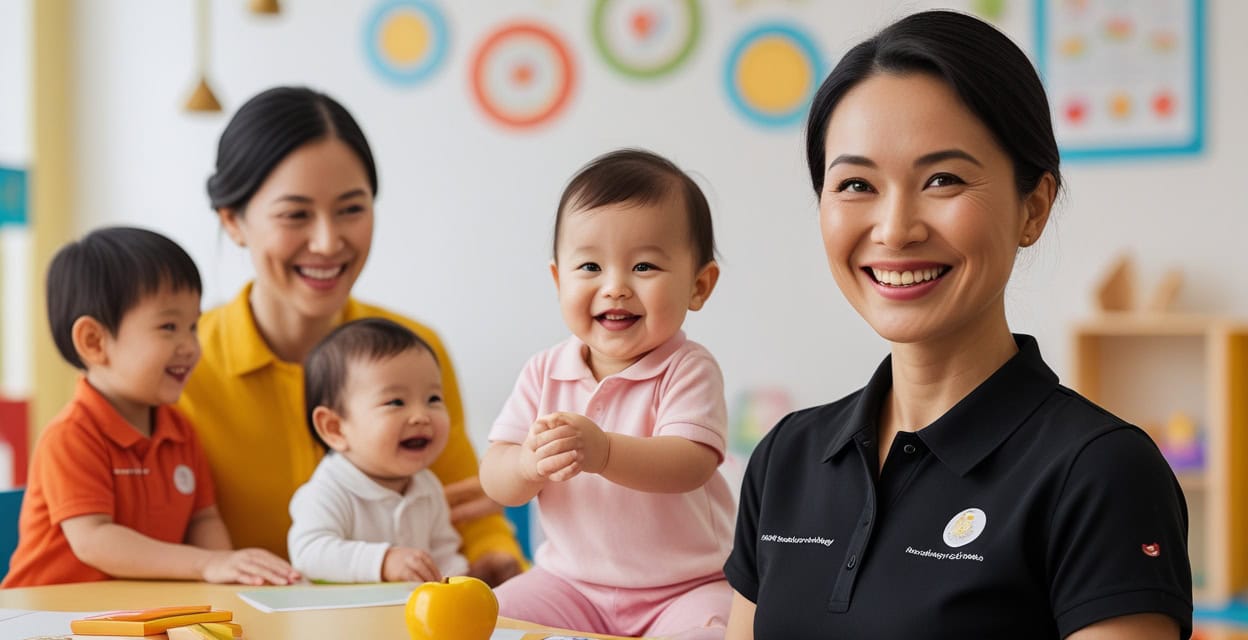
Practical Guidance for Families: Turning theory into daily practice
What to look for when choosing care
- A clear 1:3 caregiver-to-infant ratio with evidenced commitment to consistency in caregiving teams.
- Well-designed spaces that promote safe exploration, independence, and regulation.
- Strong safety protocols, documented by a single, shared standard across all sites.
- Transparent daily communication: routine notes, developmental observations, and access to caregiver feedback.
- Affordability and accessibility, with flexible options and acknowledged government support such as CDA/Baby Bonus eligibility.
Partnering with EduNanny: Daily handover and home continuity
Effective partnership starts with a thoughtful handover and ongoing dialogue:
- Handover checklist: sleep duration, feeding cues, mood, any concerns, and notable social interactions.
- Consistency in language and routines between home and care to preserve the infant’s sense of security.
- Weekly or bi-weekly updates that translate observed progress into home activities (e.g., language games, fine-motor challenges).
Home routines that reinforce development
- Set aside daily “language time” where caregivers and parents narrate activities in simple, repetitive phrases.
- Incorporate gentle floor play encouraging reach, reach-and-grasp, and object exploration with safe, reachable toys.
- Plan short, developmentally appropriate activities: peek-a-boo for social understanding, stacking blocks for motor planning, and simple songs with rhythm.
- Respect sleep cues and create a quiet, comforting sleep environment aligned with safe-sleep guidelines.
Sample day at home aligned with EduNanny principles
A typical day begins with a predictable morning routine, a nourished breakfast, and a language-rich play period. Throughout the day, parents engage in narrated interactions during diaper changes, dressing, and feeding. Short, focused play times combine floor exploration with guided attention. A mid-day nap is observed with a quiet environment and soft, predictable cues. In the afternoon, caregivers and parents share a simple activity like reading a picture book, singing, or a gentle song-and-mantle game, ending with a consistent goodbye ritual that mirrors the morning handover. This structure helps the infant predict the day, regulate emotions, and build neural networks for language and social development.

A Day in the EduNanny Day: A Vivid Window into Practice
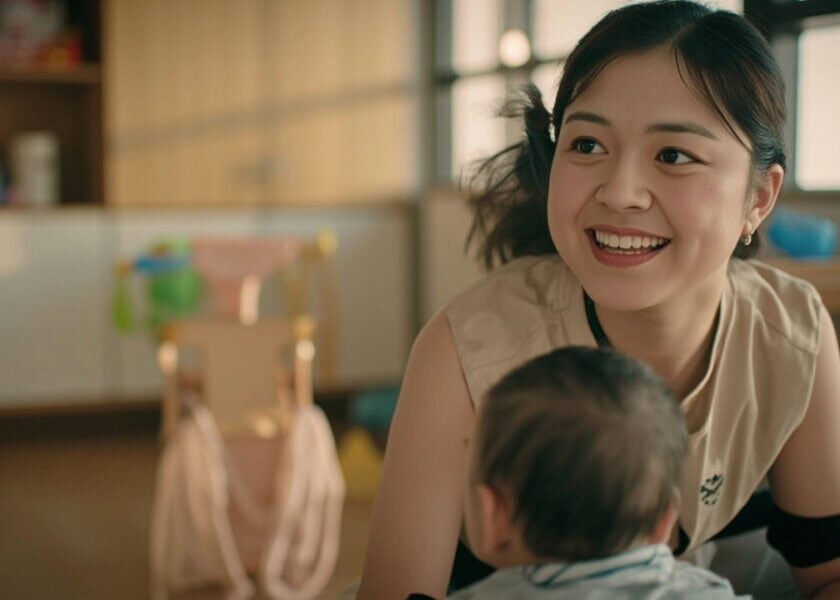
Imagine a mother handing her infant son to a familiar caregiver who greets them by name, matching morning energy. The handover is more than polite; it is a careful transfer of information—sleep, feeding, mood, signs to watch. The infant moves to a floor space arranged with a low basket of safe treasures: a wooden ring, a soft scarf, a rolling toy. Hands are offered before help is given; time is allowed before intervention is made. During feeding, the caregiver’s narration accompanies touch—“I’m lifting you now; ready; here we go”—so the infant can anticipate and participate. Sleep time brings a calm environment, subtle checks, and quiet background of soft music. When the mother returns, the caregiver shares a precise, warm summary of the day—what soothed, what sparked, what progressed—so home can naturally carry the baton. This is not a moment; it is a designed, developmental arc.

Why childminding matters—and why now
In Singapore, every infant deserves dignified care that turns routines into relationships and relationships into development. The first thousand days are a window of neural malleability when language, mental health, and executive function begin to take shape. EduNanny provides consistent, available care that respects families’ realities—near home, near work, and with a robust professional backbone that elevates the caregiver’s craft.

Where EduNanny fits: Access, standards, and sustainability
EduNanny operates across centre-based and home-based sites, islandwide, with flexible options that accommodate varied family needs. Our unified standards ensure quality, equity, and parental partnership, backed by government-aligned support through the ECDA Childminding Pilot and the CDA/Baby Bonus framework. This is design-for-impact care—where safety, joy, and development are inseparable from daily life.

Our benefits at a glance
- Excellence in care across centre-based and home-based options
- Distance guidance for families preferring home routines with professional support
- Convenience: Monday to Friday, 7 a.m. to 7 p.m., islandwide
- Affordability from $33/day; fees payable by CDA/Baby Bonus
- 1:3 infant ratio; CCTV innovation for transparency; modern layouts designed for development and safety
- Part of the ECDA Childminding Pilot and a National Social Initiative with a Maximum Employment Mandate
- Operated by EduNanny by BUTLER

Learn more, participate, and register
Education and care are collaborative endeavors. Visit EduNanny.com or Childminding.EduNanny.com to learn more, ask questions, or begin the enrollment process. A partnership with EduNanny means your child’s day is never a placeholder—it is a place of growth.

Conclusion
The earliest years set trajectories for language, mental health, executive function, and empathy. They shape family life, reduce parental stress, and affirm the dignity of caregivers who commit to a craft that is both science-based and deeply humane. EduNanny exists to ensure that parents can work without worry, infants can grow with grace, and caregivers can practice a profession that is respected, supported, and seen. We are ready to welcome your child with eyes that notice, hands that steady, voices that attune, and systems that protect. Let us partner with you to make the invisible work of care visible, measurable, and beautiful. Singapore has always dared to build what it believes. Let us build this together: a nation where every baby’s day is safe, joyful, and profoundly worthwhile—and where every parent knows, deep down, “My child is known here.”
Visit EduNanny.com or Childminding.EduNanny.com to begin.