The Private World Your Child Builds at Singapore Childcare
What Is Really Happening During the Hours Apart
Singapore parents carry a particular weight. You work long hours. You live in a society that values education, preparation, and knowing exactly where your child is at every moment. You have been told, implicitly and explicitly, that the early years are critical—and you believe this, deeply.
You want to be present. You want to be enough. And so when you drop your child at childcare in the morning and drive to work, there is often a small, quiet question that follows you:
While I am gone, who is my child becoming?
Here is what matters: your child is not becoming a stranger. Your child is not slipping away from you. Your child is doing exactly what they are supposed to do. They are building a private inner life—and that inner world, which you are only ever partially invited into, is one of the most important things they will ever develop.
What Your Child Is Learning
Watch a child in a quality care environment and you will see something remarkable. A child who was once entirely dependent on you begins to turn outward. They discover they have preferences. That they can choose. That they can refuse, persist, create, and laugh at things you are not laughing at. That they can have a thought that is entirely their own.
This is not separation anxiety. This is identity formation. This is your child discovering that they are a person.
Between the moment your child waves goodbye to you at the door and the moment you return to collect them, they have made dozens of small decisions:
- Which corner of the room to play in, or whether to sit near a particular friend
- What to eat first, or whether to eat at all
- What happens when they say no
- That they can be funny—and that other children laugh
- An idea, held and acted upon
- How to cope with frustration
- What an experience meant to them personally
None of this required you. And that is precisely the point.
Supervised or Witnessed: Why the Difference Matters
There is a distinction that is central to understanding what quality childminding really means. We often think of children as needing to be supervised. Watched. Kept safe. And yes, safety matters—every parent knows this. But there is a difference between a child who is supervised and a child who is witnessed.
When a child is merely supervised, they are kept from harm. When a child is witnessed, they are seen for who they are becoming.
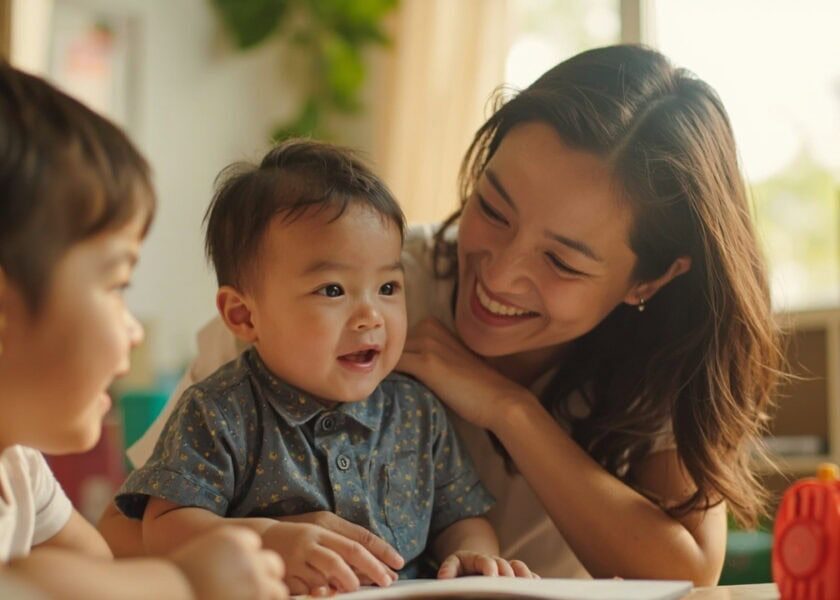
Caregivers who witness do not merely keep children safe. They observe. They attend. They notice the moment a child’s face lights up when they solve a problem. They hear the new word a child has started saying. They see which child is leading today, and which child is content to follow, and which child is discovering, perhaps for the first time, that they have a strong preference about something small but meaningful.
They hold all of this in their attention. They protect it. And they do not rush to report every detail—not because they are hiding anything, but because they understand something profound about child development.
They understand that not everything needs to be reported. Some things need to be held.
What Your Child Is Learning to Keep
There is a skill that develops in quality care that we rarely name. It is the skill of having an inner life and deciding when, how, and to whom to share it. Your child is learning this skill right now, in the hours they spend away from you.
They are learning that some things belong to them. That they can have a private joke with a caregiver that they do not explain to you. That they can have a real, full thought about the world that they choose not to share. That they can decide what is theirs and what is for others.
This is not secrecy. This is not distance. This is a capacity that every whole person needs: the ability to have an inner world that is genuinely their own.
When your child comes home and does not immediately tell you everything that happened, they are not rejecting you. They are practicing something vital. They are learning that they can hold something, treasure it, and decide when it is ready to be given away.
In the rhythms of a Singapore childcare day, children encounter opportunities to develop their sense of humor, their preferences, and their will in ways that feel natural and unpressured. They discover what makes them laugh—a silly song, a caregiver’s expression, a game that repeats until it becomes hilarious. They form strong opinions about which toy is theirs, which spot at the table they prefer, which friend they want to sit beside. They learn that they can insist, negotiate, and sometimes prevail.
These are not trivial moments. They are the foundations of a healthy self-concept.
Signs Your Child’s Inner World Is Thriving
So what should you actually notice when you pick up your child? Here are the signs that reveal your child’s inner emotional life is developing well:
- The humming. A child who is quietly humming a song they learned during the day is carrying something with them.
- The walk. A child who walks differently—with a new confidence or a particular bounce—is showing you who they have become.
- The specific request. “My teacher,” “my friend,” “my spot”—these mean something particular that belongs only to them.
- The quietness. Not withdrawal, but integration. They have been living and they are still living, internally.
- The drawing given freely. When your child offers you something they made, they are choosing to let you into the private world they have been building.
These are not gaps in your knowledge. These are proof that your child has a life, preferences, relationships, and experiences that are real and their own.
Questions That Honor Their Inner Experience
How you receive your child’s experience at the end of the day matters enormously. When you receive their sharing without interrogation, without turning it into an extraction of information, without immediately asking what else happened—you are teaching your child that their inner life is safe with you. That sharing is something they do because they want to, not because they are required to.
Try asking different questions at pickup:
- Instead of “What did you do today?”—a question so large children often have no idea where to begin—try:
- “Did you have a favorite part?”
- “Was there a time today when you felt proud?”
- “What made you laugh?”
- “Did anything interesting happen?”
These questions signal that you are interested in their inner experience, not just the facts of their day. They invite your child to share what they want to share, in their own way, on their own time.
When your child starts surprising you at pickup, that is not a warning sign. That is the point.
What Quality Childminding Looks Like in Practice
If you are researching infant care or childminding in Singapore, you deserve clarity about what good care actually involves. It is not enough to know that a centre is licensed or a caregiver is trained. You want to understand the conditions that allow your child to flourish.
Attention That Allows Your Child to Be Known
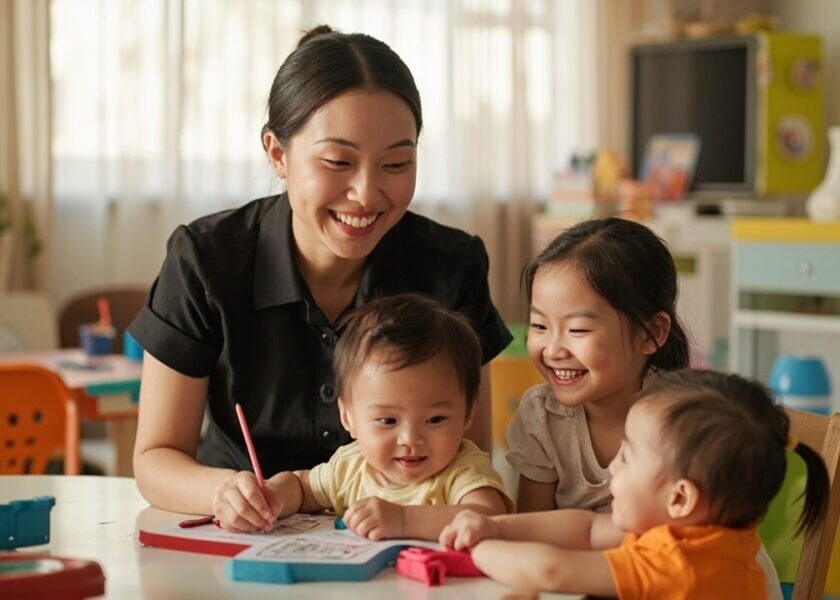
In the ECDA Childminding Pilot that EduNanny participates in, caregivers work in environments with ratios that allow for genuine attention to each child—up to one to three infants in the earliest years. This means your child is not one of many but one of a few.
This is not a luxury detail. It is the condition that makes everything else possible. It is what allows a caregiver to notice the small moment when a child’s face changes. To remember that yesterday, this child loved the blue block best. To hold the child’s inner world as carefully as they hold the child’s hand when crossing the room.
The Discipline of Witnessing
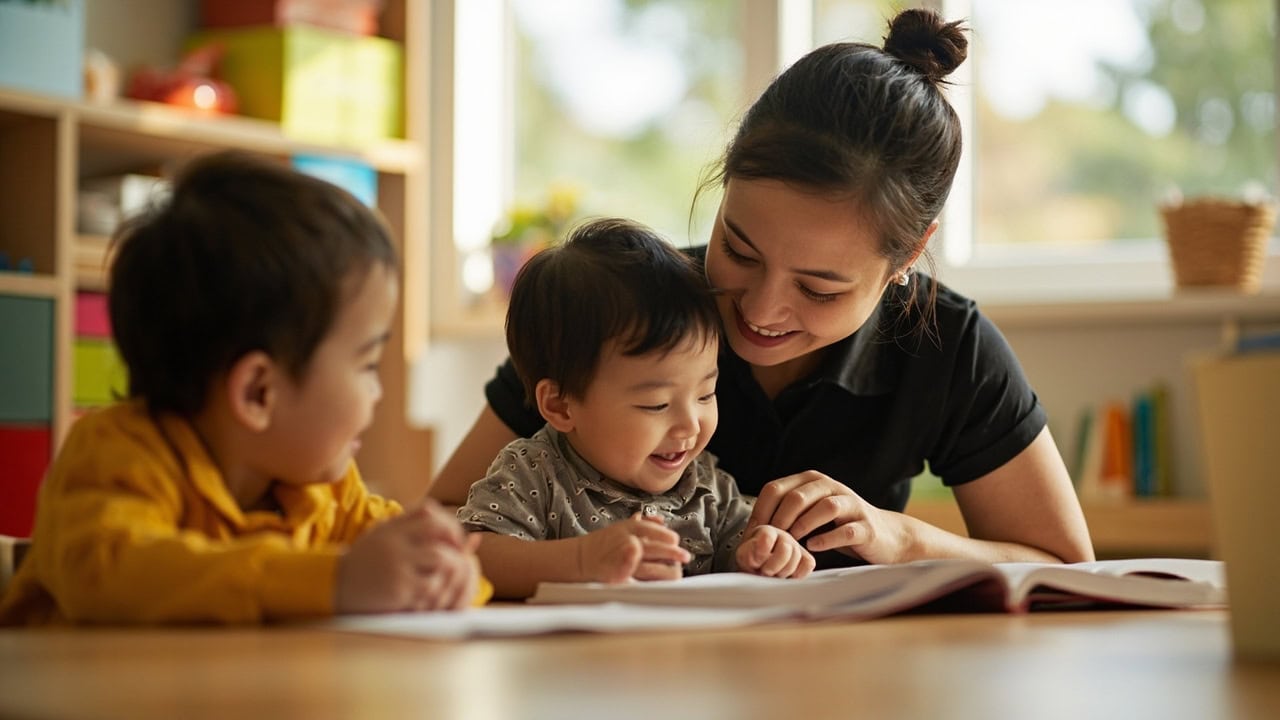
Caregivers in quality childminding are trained not only in safety and development but in something harder to teach: the discipline of witnessing. They know how to protect a child’s emerging sense of self without controlling it. They create conditions in which a child can experiment with preferences, with will, with humor, with the full range of their developing personality—without pressure, without performance, without the need to be anything other than who they are becoming.
They are, in the truest sense, keepers of your child’s inner experience.
Where Caregivers and Parents Work Together
Wherever CCTV measures are deployed, they are there not as surveillance of your child but as one layer of transparency that lets you know—truly know—that your child is in a place where their safety and wellbeing are taken seriously. This is not about doubting caregivers. It is about creating the conditions that allow you to trust.
The pilot fee structures are designed to be affordable for Singapore families. Your Child Development Account and Baby Bonus can be used, which means the cost is not separate from the support systems you already have in place.
EduNanny operates within the ECDA Childminding Pilot, which means it is part of a government-supported framework designed to give Singapore families real options for quality childminding. Care is available Monday through Friday, across home-based and community or centre-based pathways, so you can choose the arrangement that fits your family’s life.
The Invitation at Pickup
What I have been describing—the private world, the witnessed child, the caregiver as guardian, the healthy separateness—all of this comes together in that brief exchange when you see your child at the end of the day.
Your child is not the same child you left this morning. They have lived, learned, preferred, refused, laughed, wondered, and become more themselves. And in that moment when they look at you, there is a choice available to you.
You can meet their expression with anxiety. You can feel the old worry rising—the worry that you are missing something, that you are not close enough, that the hours apart have created a gap you cannot close.
This worry is understandable. It is real. Many parents feel it, and there is no shame in feeling it.
But I want to offer you something different. I want to offer you the invitation to feel honored.
You are being trusted with glimpses of a private world that your child is building. You are being let in, piece by piece, to the person your child is becoming. You are not shut out—you are being invited, slowly, at your child’s pace, to know a new and expanding human being.
They are not becoming less known to you. They are becoming more themselves. And in time, as they grow more confident in their inner life, they will share more of it with you—not because they have to, but because they will have learned that you are safe, and patient, and genuinely curious about who they are.
What You Can Do Tomorrow
The next time you pick up your child and sense something you cannot quite name, try this:
- Take a breath.
- Look at your child’s face.
- Notice who they are in this moment—not just who they were when you left them, but who they are right now, having spent the day building a life that includes you but is not only about you.
- Ask them a gentle question.
- Receive whatever they offer you.
- Trust that the inner world they are carrying is rich, and safe, and exactly what quality care is designed to nurture.
Your child is not becoming a mystery. Your child is becoming a person. And that is the most extraordinary thing that will ever happen in your life.
For Parents Considering Childcare in Singapore
If you are reading this article, you are likely somewhere in the process of making a decision about infant care or childminding. You may be comparing options, feeling the weight of that decision, wondering whether you are making the right choice. These feelings are valid, and they reflect how much you care.
The research is clear: quality early care supports healthy development in ways that benefit your child for life. But quality matters. Not all childcare arrangements are the same.
When you choose a setting where your child is witnessed rather than merely supervised, where caregivers understand the importance of protecting your child’s inner world, where ratios allow for genuine attention—you are giving your child something irreplaceable.
You are giving them the space to become themselves.
Your child is building a private world. That world, carefully tended, will become the foundation for everything they will ever be. Trust the process. Trust yourself. And trust that the moments of not-quite-knowing are not failures—they are invitations.
EduNanny is honored to be part of that process.
If you are exploring quality childminding for your family, we welcome the opportunity to speak with you. You can also learn more about EduNanny’s approach and our participation in Singapore’s ECDA Childminding Pilot.