The Partnership That Helps Your Child Be Truly Known
What It Means to Be Known
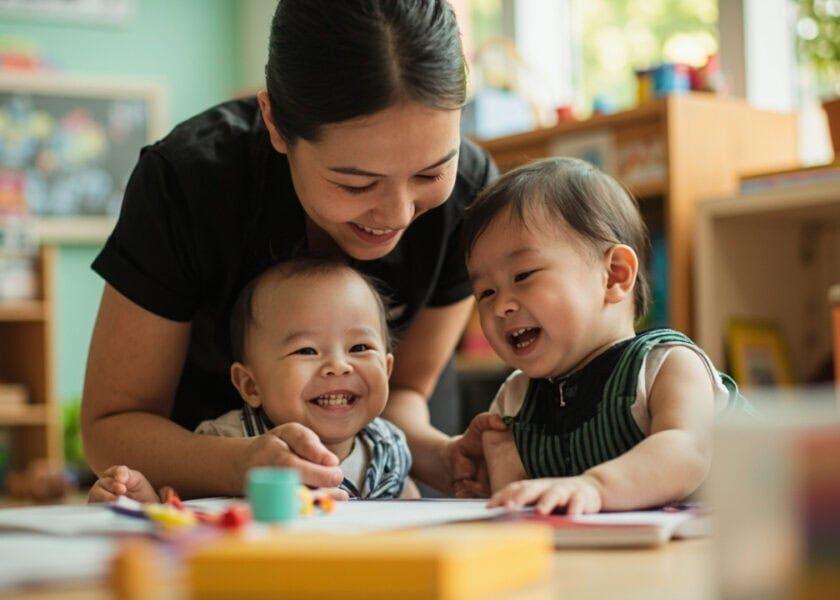
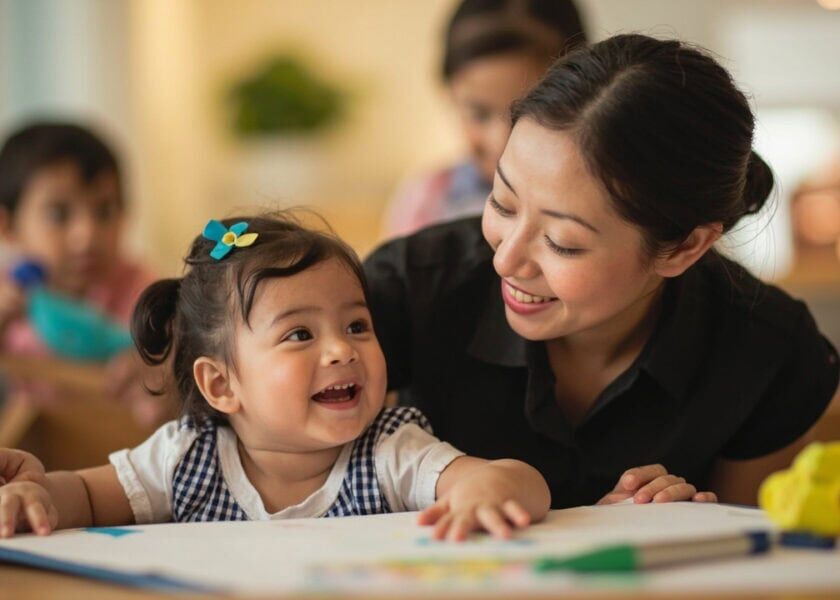
There is a moment, and if you are a parent, you will recognise it. You arrive to collect your child, and the caregiver tells you something — a small thing, a specific thing. Perhaps it is how your child returned to the same activity three times that morning, choosing it again and again. Perhaps it is how they responded when another child took their toy — not with tears but with a long, considering look. Perhaps it is how they laughed differently today, more freely, when the afternoon light came through the window in a particular way.
And what you feel in that moment is not simply gratitude. It is recognition. It is the feeling of hearing someone name something you had seen but never said aloud — something about your child that you knew in your bones but had not yet found the words for.
That moment is not incidental. It is one of the most important things quality childcare can offer.
Most of us come to childcare decisions through anxiety. We worry about safety, about trust, about whether our child will be happy. These concerns are real and legitimate, and they matter. But beneath the practical questions is an unspoken hope. When a parent searches for childcare, they are not only looking for someone to watch their child. They are looking for someone who will see their child. Who will notice the way their particular mind works. Who will recognise what makes their child light up, what makes them pause, what makes them reach for one toy instead of another.
They are looking, in the most fundamental sense, for someone who will help them understand who their child is becoming.
Quality childcare is not passive. It is not simply a matter of keeping children safe and occupied while parents work. That is supervision. What distinguishes quality care is a different orientation entirely — one that sees the child not as a set of needs to be met but as a person in the process of becoming.
In a quality setting, caregivers notice. Not incidentally, but intentionally:
- Patterns that reveal temperament — whether your child is quick to engage or slow to warm, whether they approach new experiences with caution or with abandon, whether they process frustration by moving their body or by going still
- Emerging interests — the activities your child returns to again and again, the topics that make them lean forward, the kinds of play that absorb them completely
- Social style — how your child reaches for others, how they respond to conflict, whether they lead or follow or find their own solitary path in a group
Children are not generic. They do not all need the same thing, respond to the same approach, or thrive under the same conditions. A child who is highly sensitive to sensory input needs a different environment than one who seeks it out. A child who processes new situations by watching and waiting needs different support than one who dives in headfirst. A child who expresses big feelings through their body needs different tools than one who withdraws and goes quiet. None of these differences are deficits. They are simply the ways that people — even very small people — are distinct from one another.
When a caregiver understands that your toddler becomes dysregulated in large, chaotic groups, they can prepare for transitions differently — offering more support, creating calmer spaces, giving your child the conditions they need to feel safe. When they understand that your baby is beginning to develop a strong sense of object permanence and loves games of hiding and finding, they incorporate that into the play they offer, giving your child the specific kind of cognitive engagement that is meaningful to them at this moment in their development.
The Partnership Between Parent and Caregiver
The discoveries that happen in quality childcare are not meant to stay in childcare. They are meant to come home with you — to enrich your understanding of your child in ways that change how you interact with them, how you set up your home environment, how you read their cues, how you respond to their struggles and celebrate their joys.
This happens through communication — through the daily conversations and updates and shared observations that create a bridge between the childcare environment and your home. But it requires something from you as well. It requires that you receive these observations not as expert assessments but as pieces of a puzzle you are assembling together. It requires that you stay curious, that you ask questions, that you share what you notice at home so that the caregiver’s understanding and your own understanding can deepen each other.
When a caregiver tells you that your child has been fascinated by the way blocks balance and topple, and you remember how long they spent watching a stack of books fall in your living room last weekend, those observations are building on each other. They are forming a picture. They are helping you see patterns that neither of you could see alone.
Learning your child through someone else’s eyes can be a vulnerable experience. It can bring up feelings — pride, yes, but also uncertainty, sometimes even defensiveness. When a caregiver observes something about your child that you had not fully articulated, or that you had been hoping was not quite true, it can feel like a mirror held up unexpectedly, showing you something you were not prepared to see.
Quality caregivers do not observe to judge or to label. They observe to understand, and they share their observations with the same care they would want for themselves. They help you see your child in a way that expands rather than limits, that offers new possibilities for connection rather than new categories of concern.
How to Recognise Quality When You See It
How do you assess whether the childcare you are considering — or the childcare your child is already in — truly offers this kind of developmental understanding?
When you ask a caregiver how your child is doing, listen to the answer. Does it describe patterns — the kinds of activities your child gravitates toward, the ways they respond to challenge, the rhythms of their day? Or does it simply report incidents — they ate well, they slept well, they played with the blocks? Both have their place. But the first is a window into who your child is. The second is a logistical update.
Ask specific questions. Not defensive questions, but curious ones: What has my child seemed most interested in lately? How do they handle frustration when it arises? What have you noticed about how they engage with other children? Is there something they keep returning to, activity or topic-wise? How do they respond when they are overwhelmed or upset?
Watch how these questions are received. Does the caregiver light up when they talk about your child? Do they have specific things to say — observations that feel grounded in real attention, real time spent watching and wondering? Or do they give you generic reassurances, the kind of answer that could apply to any child?
A quality caregiver is not threatened by your curiosity. They are grateful for it. Because it tells them that you, too, care about understanding — and that you are willing to be a partner in that understanding.
Signs of Developmental Quality
- Specific observations — Can the caregiver describe your child’s particular patterns, interests, and responses, or only generic information?
- Reciprocal communication — Does the caregiver invite your observations and questions, or only deliver updates?
- Individual adaptation — Does the caregiver adjust their approach based on what they know about your child’s temperament and needs?
- Transparency systems — Are there clear communication frameworks and documentation practices that create accountability?
- Genuine curiosity — Does the caregiver seem interested in understanding your child, or simply focused on safety and routine?
- Ratios that allow attention — Are caregiver-to-child ratios sufficient for genuine observation, not just supervision?
Common Concerns Addressed
What if I feel defensive when a caregiver shares observations?
This is a normal response. Quality caregivers understand this. They share observations with care, with curiosity, and with a genuine desire to partner with you, not to judge. Approach these conversations with the same openness you would want from them, and trust that the goal is always deeper understanding, not criticism.
How do I know if the caregiver is truly observant or just telling me what I want to hear?
Ask specific questions. Pay attention to whether their answers are specific to your child or could apply to any child. Watch for patterns in what they share over time. A quality caregiver will have genuine, grounded observations — things that reveal your child’s particular style and personality, not generic reassurances.
Is this kind of developmental observation really necessary?
Children who feel seen develop differently than children who feel merely managed. When a caregiver understands your child’s particular needs, temperament, and interests, they can respond in ways that help your child feel safe, understood, and capable. This is not an extra. This is the foundation of the kind of care that helps children flourish.
EduNanny Singapore: Built for This Work
EduNanny by BUTLER is built on a conviction that quality childcare is developmental. Not in the abstract, not as a marketing term, but as a daily, practical commitment to seeing each child as a person in process — a person with emerging temperament, emerging interests, emerging strengths, and a way of understanding the world that is entirely their own.
This conviction shapes everything. It shapes how EduNanny trains its caregivers — not just in safety and routine but in the discipline of observation, in the practice of noticing, in the skill of translating what they see into language that helps parents understand their children more deeply.
It shapes the ratios they maintain — ratios that allow for genuine attention, for the kind of focused presence that reveals rather than simply supervises. In infant care especially, this means ratios that make it possible to truly know each child, to understand their rhythms and preferences and emerging patterns, rather than simply managing their basic needs.
The ECDA Childminding Pilot
EduNanny is part of the ECDA Childminding Pilot, operating within a framework designed to make quality childcare accessible to more families. The pilot structure offers home-based pathways alongside community and centre-based options, providing flexibility for families with different needs and circumstances.
Care is available across weekdays in structured blocks, and the pilot fee structures are designed with affordability in mind. For families eligible for the Child Development Account and Baby Bonus schemes, these resources can be applied — a practical recognition that quality childcare should not be the exclusive preserve of those with unlimited means.
Accountability and Transparency
The pilot also provides accountability. Quality is not self-certified. It is demonstrated through systems that support it — through communication frameworks that create genuine transparency between caregivers and parents, through documentation that captures the daily discoveries, through measures such as CCTV where deployed, that give parents confidence in the environment their child spends their days in. These are not substitutes for trust but complements to it — practical expressions of a commitment to honesty and openness.
Discovery Across the Ages
Developmental observation adapts as your child grows. For babies, it looks like noticing how they respond to different textures and sounds, what captures their attention, how they communicate their needs before they have words. For toddlers, it looks like noticing their particular style of play, the way they approach challenges, how they relate to other children, what they return to again and again. For preschoolers, it looks like noticing their emerging sense of self, their growing confidence, their fears and hopes and the way they are beginning to understand the world.
In every stage, caregivers witness your child’s becoming — and honour that role with seriousness and with love.
The Mirror That Reflects Your Child Back
Let us return to where we began — to that moment at pickup, when a caregiver tells you something specific about your child and you feel that swell of recognition in your chest.
That moment is small. It is quiet. It happens in the space of a sentence, a phrase, a few words. But it is not insignificant. It is evidence that your child has been seen — truly seen, not just watched but understood — by someone who was paying attention with care and intention.
It is evidence that the person caring for your child has been doing more than keeping them safe. They have been doing what no algorithm, no app, no amount of logistical management can ever replicate. They have been knowing your child.
This is what quality childcare offers. Not a service. Not a solution. But a partnership — one that recognises that your child is not a project to be managed but a person to be discovered.
And in that discovery, everyone grows. The child grows into their fullest self. The parent grows into a deeper understanding of who their child is and who they are becoming. And the caregiver grows in the profound privilege of witnessing, supporting, and participating in the making of a human being.
Begin the Conversation
If you are a parent in Singapore making decisions about childcare, look for this. Not just for safety, not just for convenience, but for this — for the kind of care that sees your child.
Ask the questions that matter. Look for the observations, not just the updates. Trust your own instinct about whether the people caring for your child are people who truly know them.
And if you find that — if you find a place where your child is seen, understood, known — then you will have found something rare. You will have found a mirror that reflects your child back with clarity and love. And you will understand, in a way that goes beyond words, that this is not a luxury. This is not an extra. This is what your child deserves. This is what you deserve. And this is what quality childcare, at its best, has always been meant to provide.
EduNanny Singapore is here for that work. Not because it is easy, but because it matters. Because every child is becoming someone — and that someone deserves to be seen.
Ready to explore whether EduNanny is right for your family? Start a conversation — one where your questions are welcomed, and where we can share what we observe in your child with the same care and attention we bring every day.
Learn more about who we are and the ECDA Childminding Pilot that makes this care accessible to more families in Singapore.