The One Person Your Child Needs Through Every Stage
The Developmental Arc: What Your Child Actually Needs at Each Stage
The developmental needs of a child are not static. They shift, sometimes gently, sometimes dramatically, as the weeks and months unfold. Understanding these shifts is essential to understanding why continuity matters so profoundly.
In Infancy: The Work of Foundation
In those first months, the work is foundational. Your baby is building attachment, exploring the sensory world, and slowly constructing trust in a reality that is entirely new to them.
They need a caregiver who can read the difference between a hungry cry and an overstimulated one. Who knows that this particular child calms best with rhythmic motion rather than stillness. Who understands that a furrowed brow during feeding is not distress but concentration.
These are not skills that can be learned overnight. They emerge from sustained observation—from watching, week after week, how this individual child moves through the world.
In Toddlerhood: The Business of Exploration
By toddlerhood, the work changes. Exploration becomes the primary business. Your child is driven by a need to understand the boundaries of their own agency—to test what happens when they push, when they pull, when they say no.
The caregiver who already knows this child can respond with a precision that supports rather than suppresses. They do not need to start from scratch. They already know which transitions overwhelm this particular child. Which songs anchor them when the world feels too big. Which play patterns signal that they are reaching for connection versus retreating into independent play.
In the Years Before Primary One: Building the Architecture for Learning
Somewhere between three and six, the work shifts again. The child begins to build the cognitive and social architecture that will support formal learning. They develop narrative memory, sustained attention, and collaborative imagination.
The caregiver’s role evolves once more—from responsive companion to gentle scaffolder of school readiness. Not as a teacher delivering a curriculum, but as someone who has spent years learning how this child thinks. What motivates them. Where their insecurities live and how they have learned to manage them.
This is the developmental arc. It is beautiful. It is complex. And it demands a continuity of understanding that most childcare arrangements simply cannot provide.
What Is Lost When Every Stage Means a New Beginning
Consider what happens when each stage brings a new caregiver relationship. The child must first grieve the departure of the familiar—yes, even toddlers grieve, even if they cannot name it—and then invest the emotional energy required to build trust with the unfamiliar.
This process is not instantaneous. Research across developmental psychology consistently shows that children in environments with high caregiver turnover display elevated stress hormones, increased behavioral regression, and slower acquisition of secure attachment behaviors. These effects are rarely dramatic. They do not announce themselves as pathology.
They manifest as a certain guardedness. A reluctance to fully invest in play. A child who holds back a little of themselves until they are sure.
On the other side of this coin: children who experience consistent, sustained caregiving relationships demonstrate stronger emotional regulation, richer language development, and greater social competence. Not because the curriculum was different. But because the relationship was the same. Because they could count on someone. Because the person caring for them knew who they were.
Why This Matters More in Singapore
In Singapore, where many families navigate demanding work schedules, where grandparents may live in different towns or countries, where the village that once surrounded early childhood has been geographically scattered, this sustained caregiver relationship is not a luxury. It is a developmental necessity.
When extended family cannot step in, when the rhythms of work are rigid, when the networks of informal support that once surrounded young families are stretched thin across distance and schedules—the consistent presence of a caregiver who truly knows your child becomes one of the most valuable anchors your family can have.
EduNanny’s Approach: Treating Relationship as a Developmental Asset
EduNanny, operating as part of the ECDA Childminding Pilot, is built on the principle that the caregiver-child relationship should be treated as a developmental asset—not an administrative variable.
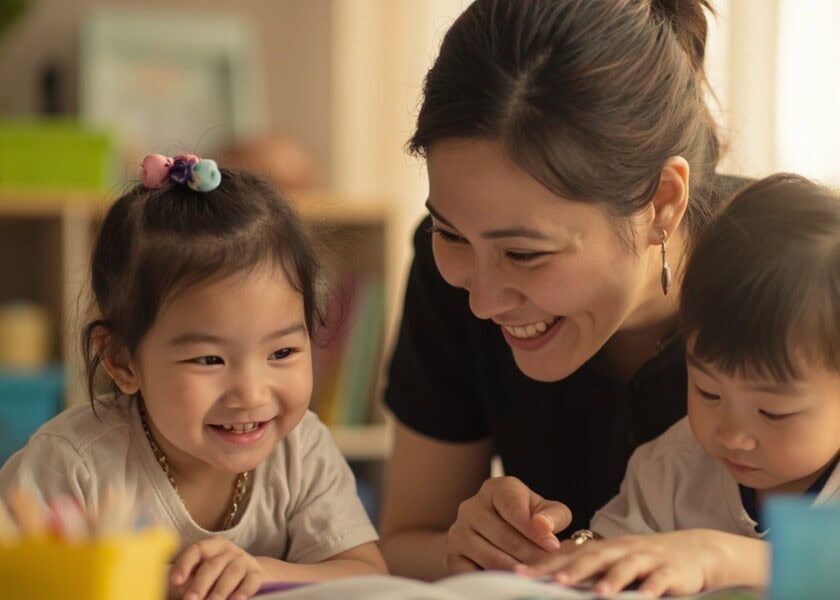
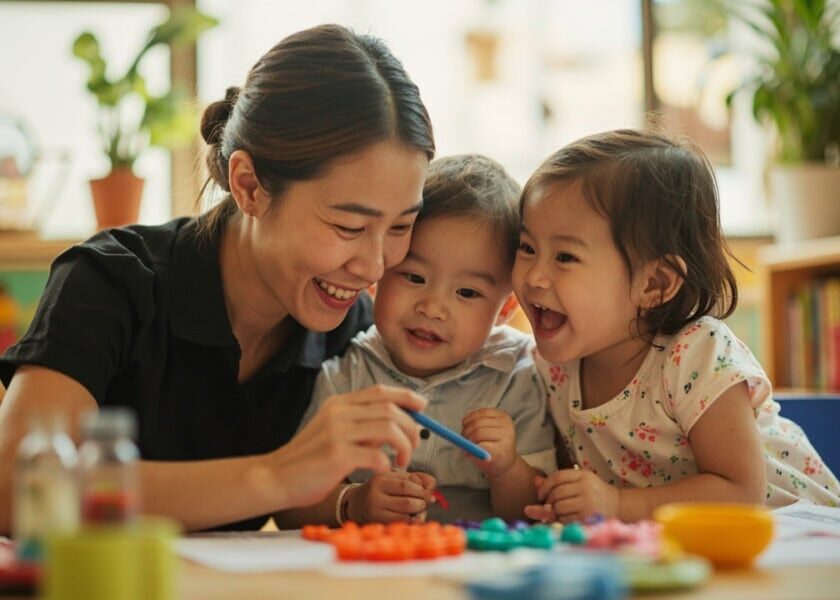
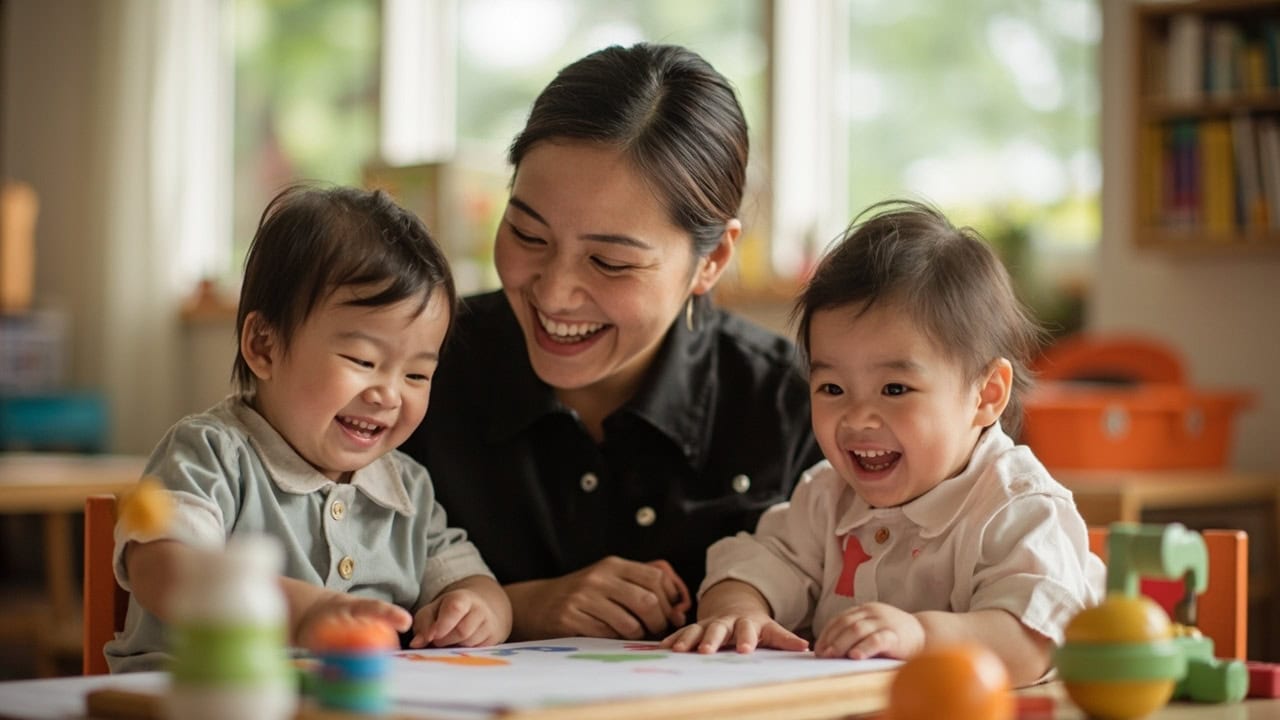
From the moment your family enters the EduNanny programme, the caregiver assigned to your child is expected to stay with that child. When your infant becomes a toddler and the developmental demands shift, the same attentive presence is there. Not a new face learning your child’s cues, but a familiar guide who has been learning alongside your child all along.
By the time your child approaches Primary One, they are walking toward that milestone with someone who has known them for years.
The Conditions That Make This Possible
With infant ratios of up to one to three, EduNanny’s caregivers have the capacity to truly observe, truly learn, truly adapt. They are not stretched across ten or twelve children in a way that makes individual understanding impossible. They are present, attentive, and given the conditions to develop genuine knowledge of the children in their care.
Home-based and community or centre-based options mean that families can find the arrangement that fits their circumstances. Monday to Friday care blocks provide the consistency that developing minds require.
Because EduNanny participates in the ECDA Childminding Pilot, fee structures are designed to be accessible, with CDA and Baby Bonus fund usability to ease the financial planning that every Singapore family must undertake. These are not peripheral details. They are the conditions that make sustained partnership possible.
The Compounding Value of Knowing Your Child
When a caregiver has known your child for two years, they possess something that no assessment tool can replicate. They know that this child’s frustration threshold drops sharply after a poor night’s sleep. They know that certain toys trigger competitive behaviors that are best managed with a redirect rather than a restriction.
They have seen this child through a family move, through the birth of a sibling, through the quiet Tuesday afternoon when something happened at home that the parents do not yet know is affecting their child’s mood. They hold all of this—quietly, attentively—and their knowledge informs every interaction.
Each day, each week, each month builds on what came before. The caregiver’s understanding deepens. Their ability to support growth becomes more precise. The child, sensing this genuine knowledge, responds with greater security and openness.
Communication and True Partnership
Families in the EduNanny programme receive regular updates—not the perfunctory daily report that says “napped well, ate lunch,” but meaningful transparency about development, about patterns, about moments of growth and moments of struggle.
Where deployed, technological measures such as CCTV access provide additional reassurance. Not as surveillance, but as transparency. Parents can see what their child sees. Understand what their child experiences. Arrive at pick-up conversations already equipped with context.
This is the promise of a childcare partner versus a childcare provider. A provider delivers a service. A partner shares a journey.
Addressing Concerns About Flexibility and Long-Term Commitment
There is a tension that many Singapore parents carry, and it deserves acknowledgment. There is a part of you—perhaps a significant part—that values flexibility. The modern Singapore family is not a static unit.
Grandparents visit for extended periods. Job postings take families overseas. Work travel requires coverage that a fixed arrangement cannot always provide. You may have chosen EduNanny partly because its structure offers reliability, but you also wonder whether that reliability might become rigidity.
This fear, while understandable, misunderstands what EduNanny’s approach actually is.
Continuity Does Not Mean Stagnation
A partner who grows with you is not a partner who is rigid. The caregiver who has known your child for two years is also the caregiver who can recognize when your child needs a different rhythm, a modified approach, a new kind of support.
Continuity means the foundation is stable enough to support adaptation. When something changes, the response comes from deep understanding rather than surface assumption.
The Partnership Evolves With Your Family
The parent within this partnership also evolves. In the early months, you may need more frequent updates, more reassurance, more transparency about feeding schedules and sleep patterns. As your child grows and your confidence grows with it, the partnership shifts.
You become collaborators. You exchange observations. You trust each other’s judgment in ways that would have felt premature in those first uncertain weeks. This is not a relationship that remains frozen at the point of inception. It is a relationship that matures alongside your family’s needs.
The Bridge to Primary One
As your child approaches the transition to Primary One, this maturity becomes especially valuable.
The bridge from early childhood to formal education is one of the most significant developmental thresholds your child will cross. It requires not just academic preparation but emotional and social readiness—the ability to navigate a new environment, relate to new authority figures, and manage the complexity of a classroom setting.
Children who have experienced consistent, quality caregiving approach this transition with a particular kind of confidence. They know what it feels like to be known. They have learned that new environments need not be threatening, that new relationships can be trusted, that growth is possible.
The caregiver who has walked beside your child for their entire early life can offer something no school transition programme can replicate: a perspective on who this child truly is, developed over years of daily observation. They can share insights with you about how your child handles challenge, what their learning style reveals about them, where their particular gifts and sensitivities lie.
When your child walks into Primary One, they carry something with them. They carry the knowledge that someone believed in them from the very beginning. That someone stayed. That someone knew their name and remembered their story.
In a world that can often feel transient and transactional, this is a foundation of security that will serve them long after the first day of school has passed.
What Quality Childminding Actually Looks Like
For parents researching their options in Singapore, it helps to be specific about what to look for—not as a checklist, but as a way of understanding what actually matters.
- How long does the typical caregiver stay with a family?
- What is the ratio of caregivers to children at each age group?
- How does the arrangement handle transitions between developmental stages?
- What does communication look like—daily reports, development updates, parent meetings?
- What flexibility exists within the structure for families with variable schedules?
The Difference Between Checking Boxes and Knowing a Child
Quality childminding is not primarily about curriculum or facilities. It is about the quality of observation and response that the caregiver brings to each interaction. It is about whether the person caring for your child is learning who they are—whether they notice the subtle shifts in temperament, the emerging interests, the moments when your child needs extra patience or extra challenge.
This kind of knowing cannot be captured in a brochure. It accumulates over time, through consistent presence and genuine attention.
A Question Worth Sitting With
If you are a parent in Singapore reading these words, I want to invite you to consider what you actually want for your child’s early years.
Not the logistics. Not the checklist. Not the question of who will watch your child while you work—but the deeper question of who will know your child.
Who will notice when they have grown an inch, when their language has taken a leap, when they have mastered something they have been working toward for months?
Who will remember that they were afraid of the vacuum cleaner at eighteen months and are now the first to offer to help tidy up?
Who will carry the long arc of their becoming—not just the fragment of this week’s routine?
You have the opportunity to give your child something rare: a sustained presence. A patient witness. A caregiver who grows alongside them.
EduNanny is ready to walk that story with you—from the first cry to the first day of school and everything in between. Not as a provider. Not as a service.
As a partner.
If you are considering your options for infant care or childminding in Singapore, we invite you to learn more about how EduNanny’s approach can support your family through every stage of your child’s early development.
Connect with EduNanny to explore how a sustained caregiving partnership might work for your family. Reach out to our team to begin the conversation.