The Lasting Gift of Each Other: How Quality Childcare Shapes Sibling Bonds
Understanding the Hidden Architecture of Sibling Bonds
When we talk about siblings in the context of childcare, we usually talk about logistics. Drop-off schedules. Whether the centre can accommodate different age groups on the same day. How to manage the separate routines of a toddler and an infant. These are real concerns, and they deserve real answers.
But beneath the logistics lies something deeper. Siblings are not just people who happen to share a home and a set of parents. They are each other’s first peer relationship, their first testing ground for negotiation and compromise, for love that is not given by a grown-up but offered by someone who is also small, also learning, also figuring out how to be in the world.
That relationship does not develop in a vacuum. It develops in response to everything around it — the emotional environment of the home, the example set by parents, the rhythms and patterns of daily life. And increasingly, for Singapore children, the hours spent in the care of others.
Here is what many parents do not realise: the way a childcare environment is structured directly shapes the social-emotional skills that siblings need to connect with each other. It is not a side effect. It is not accidental.
When children are in a setting where trained caregivers understand child development, where the ratio of caregivers to children is low enough to allow genuine attention, where the daily rhythm gives children the emotional regulation they need before asking them to relate to others, something powerful happens. The children who walk out at the end of the day are not the same children who walked in. They have grown — not just in skills or milestones, but in their capacity to be with another person.
Think about what that means for siblings specifically.
When a younger child has spent the day in a warm, responsive environment where her needs were met not just physically but emotionally, she comes home less desperate. Less clingy. Less likely to compete for the attention that her older sibling also craves.
When an older child has spent the day learning to share, to wait, to express frustration in words instead of actions, to see himself as part of a group rather than the centre of the universe, he comes home more available. More generous. More ready to include his sister in his world instead of pushing her out of it.
What Quality Childminding Looks Like in Practice
The philosophy only matters if it shows up in the real world of your family. So let us be specific about what quality childcare actually looks like day to day.
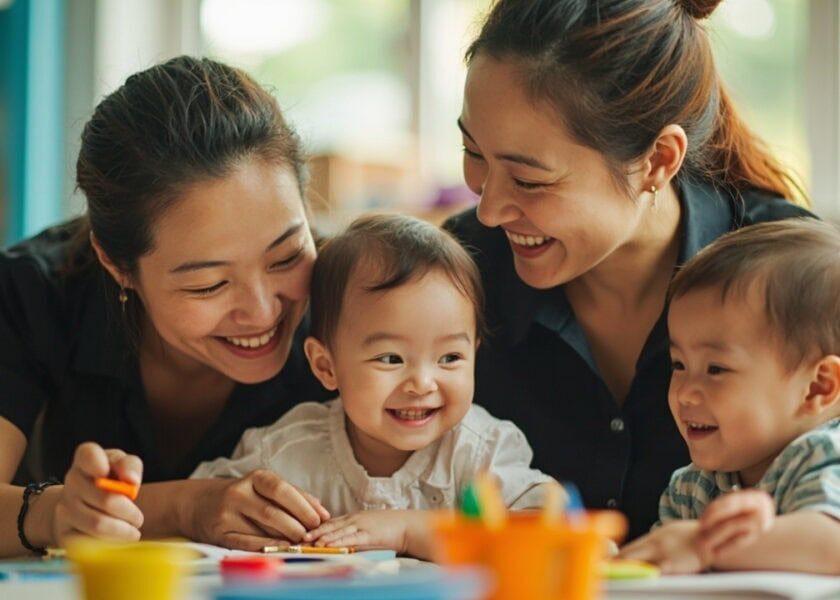
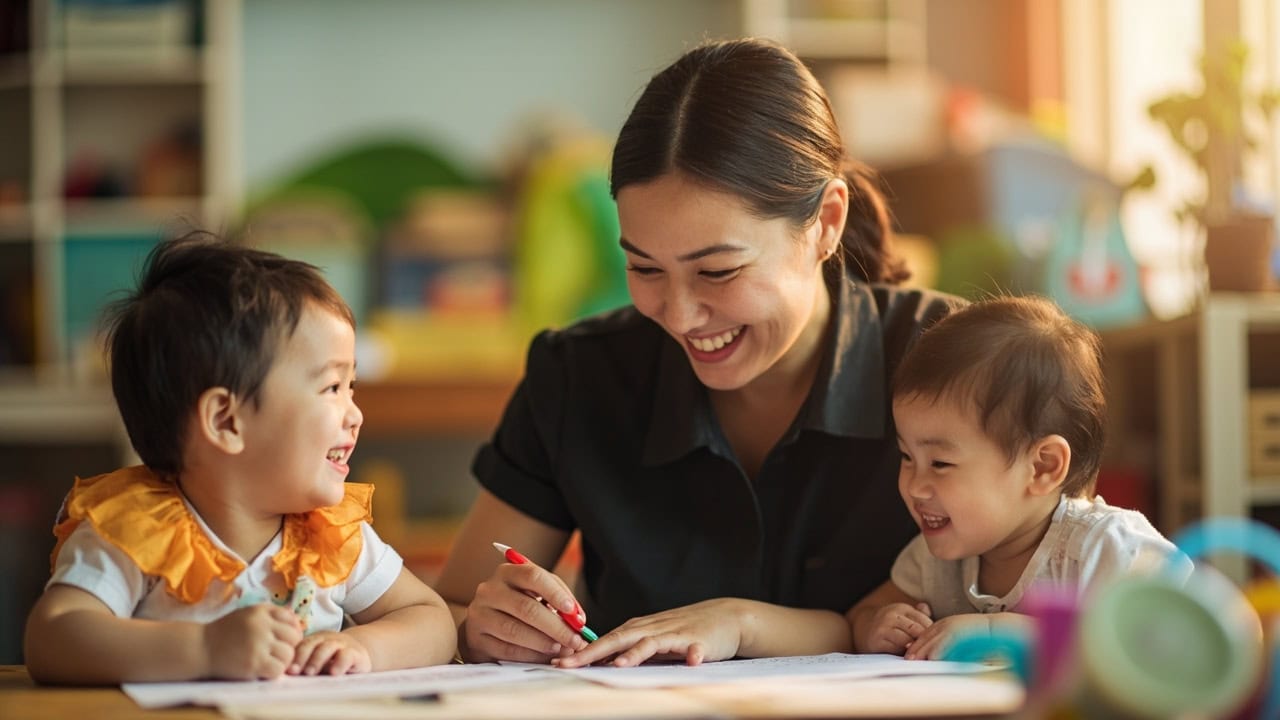
In quality childcare, caregivers do not simply supervise children. They observe. They notice the child who is withdrawn and the child who is dominating. They notice when two children are circling each other with tension and when they are reaching for connection.
And they intervene in ways that teach.
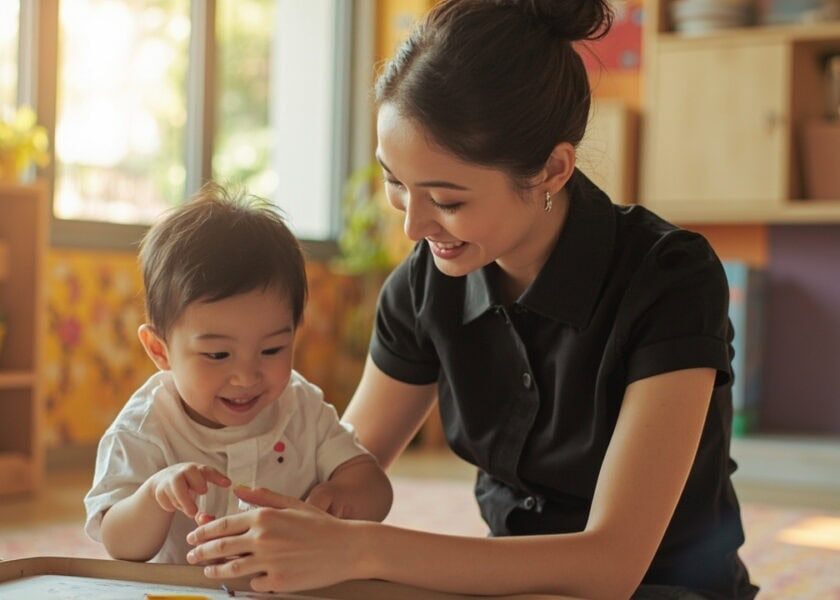
A caregiver might redirect a toddler who is snatching a toy from his sibling, not by scolding but by kneeling down and saying, “I see you really wanted that. Let’s find another one for your sister.” That small moment of modelled fairness and language stays with children. They carry it home. They use it the next time a similar situation arises.
Or consider the child who has not yet learned to regulate big emotions. In a setting with high-quality caregivers, she is not left to escalate. She is held — verbally and sometimes physically — until she can find her footing again. This is not permissiveness. It is the opposite. It is taking her emotional world seriously enough to help her build the capacity to move through it.
When that child returns home to her brother, she is not a bundle of unmet needs waiting to explode. She is a child who has been soothed and can now soothe. Who has been seen and can now see.
The Evening Reunion: A Different Kind of Coming Home
There is a moment that every parent with multiple children knows well. It is the evening reunion. You have been apart all day. The children have been in childcare. You have been at work, managing your own world, counting the hours until you can hold them again. And then you are all together, and something interesting happens.
For siblings in quality care, the evening reunion is different. It is not a competition to see who can reach you first, who can tell their story loudest, who can claim the most of your attention before the other has a chance to speak.
Of course there is excitement. Of course there are squabbles. This is real life, not a highlight reel. But the texture of that time together is shaped by what happened during the hours apart.
When children have been in an environment where their individual needs were met, they return to each other differently. There is less scarcity. Less grasping. Less of the “I need this and if you take it, I have nothing” mentality that fuels sibling rivalry.
Instead, there is something closer to abundance. Each child has had his or her own morning, their own discoveries, their own small triumphs. They come to the reunion with something to share, not something to defend.
A Story from a Singapore Mother
A mother told me about watching her two daughters after a day apart. She had expected the usual chaos, the bickering over who got to sit next to her, the competing demands.
Instead, her older daughter held out a leaf she had found at childcare and said, “Look what I found for you.” Her younger daughter, instead of grabbing, simply smiled and said, “Can we put it in our garden?”
They spent the next twenty minutes building a tiny garden together on the balcony, talking and laughing and collaborating. The mother sat on the couch and watched, barely breathing, because she had not seen them this way in months.
And she realised, with something like wonder, that what had changed was not her children. What had changed was the day they had been given.
Understanding and Preventing Attachment-Disrupting Conflict
Of course, siblings fight. Anyone who has spent more than five minutes with two children knows this. Fighting is not the problem. Fighting is normal. What parents worry about is the quality of the fighting.
There is the desperate, attachment-disrupting kind that leaves both children wounded and reaching for the same parent to make them whole. And there is the ordinary, developmental kind that teaches children how to navigate disagreement and come out the other side still connected.
Quality childcare addresses the first kind.
When children are chronically unregulated because their environment does not meet their needs, every interaction becomes a potential catastrophe. The younger child takes a toy and the older child lunges — not because she is cruel but because she is depleted. She has nothing left. Every interaction is a zero-sum game because she has never experienced enough to believe that there is enough.
But when children are in environments where they are consistently seen and responded to, where the caregiver-to-child ratio is low enough to allow genuine attunement, where the day’s rhythm gives space for both stimulation and rest, something shifts.
Children still fight. They still grab and shove and say unfair things. But they recover faster. They apologise. They find their way back to each other. Because they have the internal resources to do so.
This is why the ratio matters so much. In settings where caregivers are stretched thin, where one person is responsible for too many children to notice the small moments of tension before they escalate, children do not get the scaffolding they need to develop these skills. They learn to fight harder because that is the only language they know.
In settings like those supported by the ECDA Childminding Pilot, where ratios are kept to a maximum of one to three for infants, caregivers can do what they are trained to do. They can observe, intervene, model, and guide. They can help each child feel secure enough to relate to their siblings from a place of strength rather than scarcity.
The Skills Siblings Teach Each Other
When we talk about preparing children for school, we usually focus on cognitive skills. Letters, numbers, the ability to sit still and follow instructions.
But the children who thrive in school are not necessarily the ones who arrived with the most knowledge. They are the ones who arrived with the social-emotional skills to navigate a world full of other children.
- The ability to share
- To take turns
- To resolve conflicts without a teacher present
- To see another child’s perspective
- To be a friend
These skills are developed, first and most powerfully, in sibling relationships. A child who has learned to negotiate with a brother or sister, who has experienced both the frustration and the joy of collaborative play with a peer, who knows what it feels like to be hurt by someone you love and to forgive them and to play together again — that child has something invaluable.
She has relational intelligence. She has practice in the hardest and most important skill of all: being human with other humans.
Quality childcare builds this. Not by replacing sibling time, but by filling each child up so they have more to offer when they come together.
Why Sibling Bonds Carry Special Weight in Singapore
In Singapore, the sibling bond carries a particular significance shaped by our cultural context.
In multigenerational family structures, which remain common across Singapore despite changing household patterns, siblings are often expected to carry responsibilities for each other and for their extended family. They are not just companions in childhood. They become co-keepers of a family legacy, partners in caring for aging parents, the people you trust most in the complexity of modern Singapore life.
This is not a burden. For many Singaporeans, it is a privilege and a source of profound meaning. But it requires a foundation of genuine connection, not just obligation.
That foundation begins in childhood. It begins in the small moments, the daily rhythms, the way children learn to relate to each other before they learn to relate to anyone else. And it is shaped, in part, by the quality of care they receive when they are not in your direct presence.
How EduNanny Singapore Approaches Sibling Relationships
EduNanny understands that children do not develop in isolation. They develop in relation — to caregivers, to parents, and to the siblings who share their world.
When EduNanny’s caregivers engage with your children, they are not just caring for individuals. They are caring for a family system. They are helping each child build the internal resources they need to show up well for the others.
Through the ECDA Childminding Pilot, EduNanny provides home-based and community-based options that keep ratios low and attention high. Their caregivers are trained not just in the mechanics of infant care but in the relational work that makes sibling bonds possible.
They understand that every interaction with your child is also an interaction with your family, with the siblings waiting at home, with the future you are building together.
What Parents Can Expect
EduNanny’s commitment to transparency means you know what is happening in those hours apart. Communication is built into their approach, with measures in place to offer parents additional reassurance.
But more than the logistics, it is the philosophy that matters. The belief that children develop best in relationship. That siblings are partners in each other’s growth. That the hours you spend apart can be hours of building rather than hours of loss.
Practical Support for Singapore Families
The practical elements matter too. Monday to Friday care blocks that fit the rhythm of working life in Singapore. Fees structured to be affordable within the pilot framework. The ability to use CDA and Baby Bonus funds, because raising children is expensive and every pathway to support matters.
These are not secondary concerns. They are part of how EduNanny makes quality care accessible to families across Singapore, because every child deserves the opportunity to develop the skills that make sibling bonds possible.
Making the Choice: What to Look For
If you are researching childcare options for your family, here are the questions that matter most when it comes to sibling relationships:
- What is the caregiver-to-child ratio? Lower ratios mean more attention, more observation, more intervention at the moments that matter.
- How do caregivers handle conflict between children? Look for settings where caregivers model language and fairness rather than simply separating children or issuing commands.
- What does the daily rhythm look like? Quality care includes time for rest, for unstructured play, for the emotional regulation that children need before they can relate well to others.
- How do caregivers communicate with parents? Transparency about what happens during the day allows you to reinforce at home what is being built at childcare.
- How do the children seem after a day of care? The best indicator is your own observation. Do your children come home expanded or depleted? Do they have something to share or something to defend?
The Quiet, Lasting Gift of Each Other
When you choose childcare, you are not just choosing a safe place for your children while you work. You are choosing an environment that will shape who they become — not just as individuals, but as siblings. You are choosing whether they will come home depleted and desperate, fighting over scraps of your attention, or whether they will come home ready to play together, to share, to be the allies you have always hoped they would be.
This is not a small thing. It is, perhaps, one of the most important things you will decide in these early years.
You are building something that will last. A family. A set of relationships that will outlast your own lifetime and carry forward into futures you can only imagine. The choices you make now, in these early years, are part of that building. They matter more than you know.
Quality childcare does not guarantee that bond. Nothing can guarantee it. Sibling relationships, like all relationships, have their own life, their own trajectory, their own moments of fracture and repair.
But quality childcare creates the conditions for that bond to flourish. It fills each child with what they need to be generous rather than grasping. It teaches the skills of relationship that siblings practice on each other for the rest of their lives. And it returns your children to you each evening not diminished by the time apart but expanded by it — ready to play, ready to share, ready to be the siblings you always hoped they would become.
EduNanny Singapore stands with you in that work. Not as a replacement for what you provide, but as a partner in creating the conditions your children need to grow into the people they are meant to become.
People who can love. Who can connect. Who can be, for each other, what siblings are meant to be: not just family by chance, but family by choice, chosen again and again across the years.
That is what quality childcare offers your children. Not just care. Not just safety. But the quiet, lasting gift of each other.
Ready to explore what quality childminding could mean for your family?
Reach out to EduNanny Singapore to learn about their ECDA Childminding Pilot options, discuss your family’s needs, and discover how they support sibling bonds alongside individual development.