The Art of Trained Observation in Your Child’s Early Years
What Trained Observation Means for Your Child
The first thousand days of your child’s life are when the brain’s architecture is built at its fastest pace. Neural connections are forming at a remarkable rate. Emotional regulation systems are being established. Language pathways are being laid down.
Your child’s understanding of whether the world is safe, whether they are worthy of attention, whether their needs will be met, is being shaped with every interaction they experience. This makes quality attention genuinely developmental rather than optional.
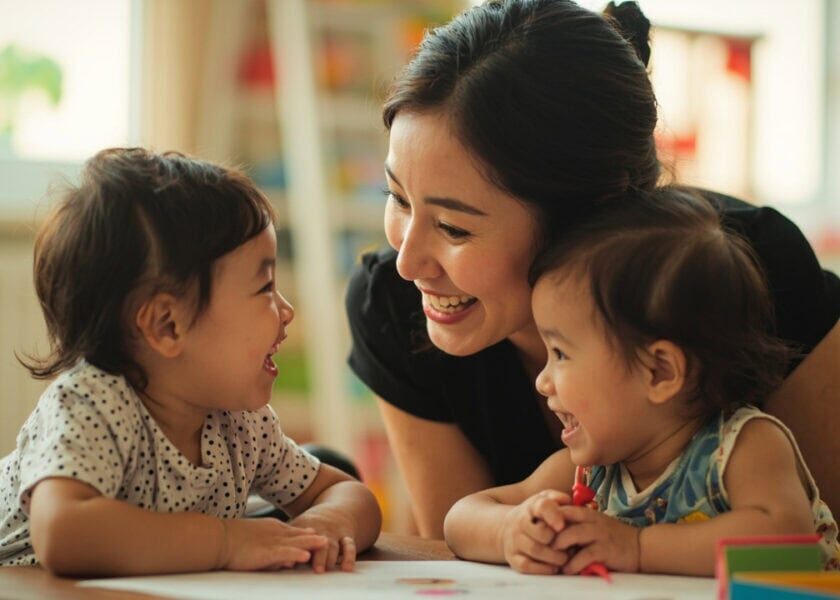
Trained observation means caregivers notice patterns, shifts, and signals—not just activities. When your child is observed rather than merely supervised, you can evaluate the quality of care by watching how caregivers kneel to a child’s level, how they narrate what children are doing, and whether they offer specific developmental feedback rather than general reassurance.
Supervision keeps children safe. Observation helps you understand your child.
The Difference Between Supervision and Observation
There is a difference—one that becomes visible only when you know to look for it—between supervision and observation.
Supervision is keeping a child within sight. It is ensuring safety, managing schedules, responding to immediate needs. A supervised child is watched.
An observed child is known.
Observation—the kind that truly trained caregivers practice—is a discipline. It requires the caregiver to notice not just what a child is doing but how they are doing it. It requires attention to patterns over time, to subtle shifts in behaviour, to the way a child’s face changes when they are frustrated versus when they are tired.
Observation connects individual moments into a narrative of development. It asks: What is this child telling me through their actions? What do they need? What are they ready to learn next?
Trained observation draws on developmental science. It uses established frameworks for understanding infant and toddler behaviour. It tracks milestones not as a checklist but as signals—as invitations to respond appropriately to where a child is in their growth.
What This Looks Like in Practice
A caregiver who is trained in observation will notice that your fourteen-month-old has begun releasing objects deliberately rather than simply dropping them. They will recognise this as a cognitive milestone—a sign of intentional causality—and will respond with language that names and celebrates this development.
They will notice that your two-year-old has been seeking more physical proximity during circle time over the past week. They will wonder whether this signals a developmental leap that requires more grounding and predictability, or whether something has shifted at home that you might not yet have connected to the behaviour.
They will notice the difference between a child who is busy and engaged and a child who is busy but escalated, and will intervene not with discipline but with regulation.
This is what observation looks like in practice. Not a report card. Not a performance review. But a living, attentive presence that reads your child like a language—because it has been trained to.
Can Anyone Really Know My Child the Way I Do?
Parents often wonder, with a kind of aching honesty, whether anyone in a childcare setting could possibly know their child as well as they do.
The answer is both no and not yet.
No parent should be replaced. The bond you share with your child is singular and irreplaceable. You know your child’s cry, your child’s smile, your child’s particular way of turning away when they are overwhelmed. No caregiver, however well trained, will ever replace that.
But knowing a child is not a competition. It is a collaboration.
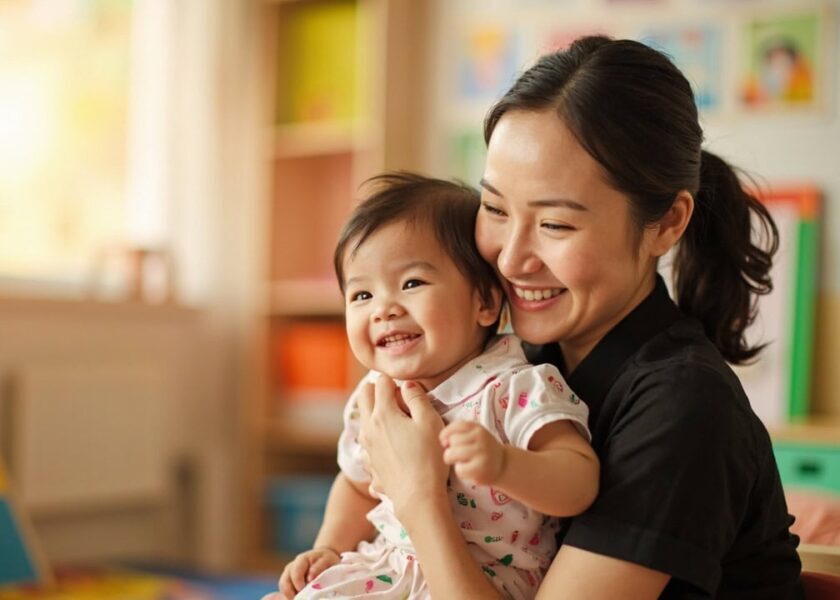
When a caregiver brings trained observation to that collaboration, they do not diminish your role. They extend it. They give you language for what you have been feeling. They notice things that happen in your absence and connect them to what happens in your presence. They become a mirror for your child’s experience, reflecting back to you a picture that is more complete than you could build alone.
A child who feels truly seen responds differently. They are more secure in separations because they trust that their caregiver is holding their experience accurately. They are more open to learning because they are not using all their energy to signal distress that goes unnoticed. They are, in the deepest sense, more themselves.
How to Know If Your Child’s Caregiver Is Observing or Just Supervising
So how do you know if your child’s caregiver is practicing observation or merely providing supervision? Here is a framework you can use during visits and conversations.
Watch How the Caregiver Positions Themselves
- Do they kneel to a child’s level, or speak down from above?
- When a child signals a need, how quickly do they respond, and how accurately?
- Is there evidence of individualized attention, or does the caregiver move through the room in a routine pattern, attending to tasks rather than to children?
Ask Questions About Development, Not Just Logistics
A trained observer will tell you about the developmental stage of the children in their care, about individual differences in temperament and learning style, about recent milestones they have noticed. They will speak about children as individuals, not as members of a group.
They will use specific language. They will remember details from days or weeks ago and connect them to what they are seeing today.
Notice Whether the Caregiver Narrates
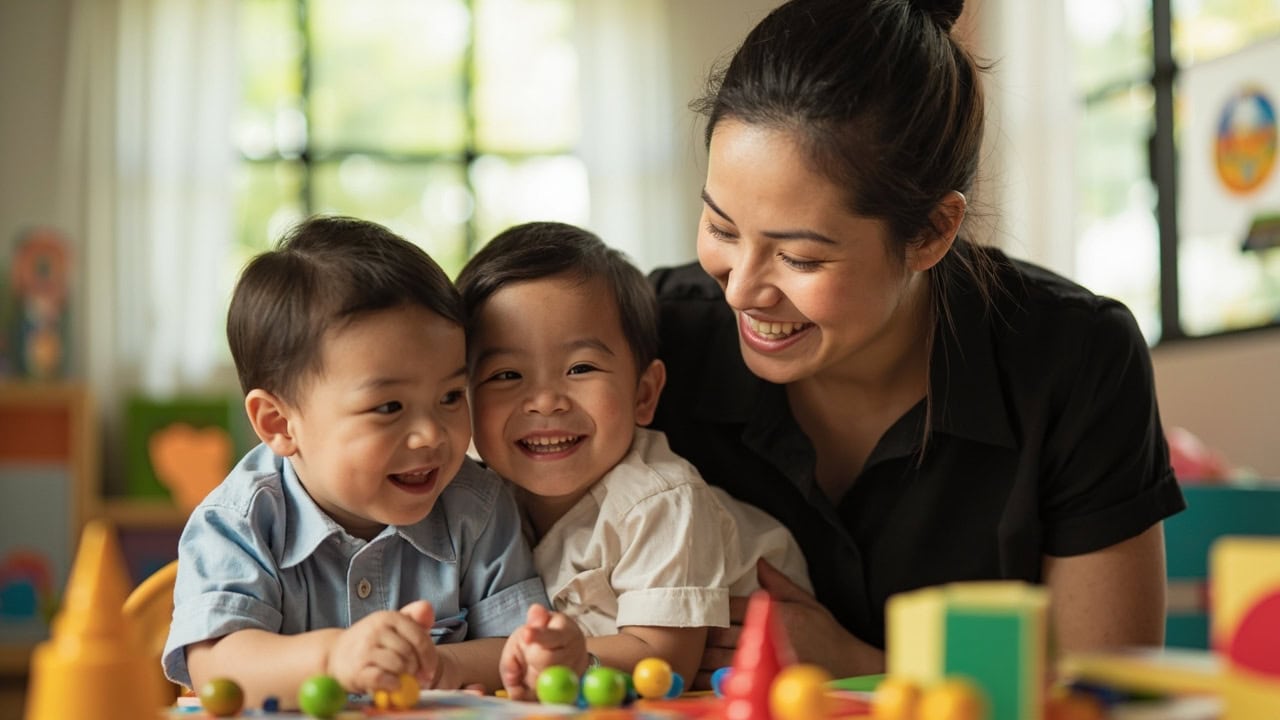
Trained caregivers often use a technique called “parallel talk,” in which they describe what a child is doing in simple, present-tense language: “You are stacking the blocks carefully, one on top of another.”
This is not mere chatter. It is a tool for cognitive development, for emotional labelling, for building the connection between action and meaning. A caregiver who narrates is a caregiver who is attending.
Notice the Difference Between General Reassurance and Specific Observation
“She had a good day” is not observation.
“She showed a lot of persistence today with the shape-sorter, and we noticed she was trying different angles before she found the solution”—that is.
The difference is not trivial. One is politeness. The other is knowledge.
What EduNanny Does Differently
As part of the ECDA Childminding Pilot, EduNanny’s caregivers are trained not simply in the logistics of infant and toddler care, but in the discipline of observation itself.
The training emphasises the difference between seeing and noticing, between activity and engagement, between managing children and understanding them. This training is not a one-time orientation. It is an ongoing practice because observation, like any skill worth having, deepens with attention.
Structure That Enables Attention
With infant ratios of up to one to three, the conditions for genuine attention are built into the structure of the service itself. You cannot observe well if you are responsible for too many children at once. Attention requires capacity.
Whether your family benefits from a home-based arrangement, where a caregiver comes to your residence, or a community or centre-based pathway, the standards of trained observation remain consistent.
Communication as Partnership
Parents should not have to wonder what is happening during the hours their child is in care. Where deployed, transparency measures such as regular updates, documented observation records, and CCTV access give parents visibility without creating an atmosphere of surveillance.
The goal is not to monitor the caregiver. It is to include the parent in the ongoing story of their child’s development. When you receive an update from your EduNanny caregiver, it should read like a chapter in a narrative you are writing together about who your child is becoming.
Making Quality Care Accessible
Quality observation-based care is not a privilege reserved for those who can afford premium programmes. The fees within the pilot are structured to be accessible. The CDA and Baby Bonus schemes remain usable, bringing Singapore’s family support systems to bear on this most important of investments: your child’s early experience.
What This Means for Your Child’s Development
When your child is truly observed, something shifts—not just in the childcare arrangement, but in your child.
Security in early childhood is not a soft ideal. It is a neurological requirement. Children who feel genuinely seen develop differently than children who feel overlooked.
Consider what your child gains when their caregiver is trained to observe:
- Their stress response systems tend to be calmer, because they are not constantly signalling distress that goes unnoticed.
- Their capacity for exploration is greater, because they feel secure enough to investigate the world around them.
- Their social and emotional intelligence deepens more rapidly, because they are receiving accurate responses to their emotional signals.
- They enter the world with a different orientation toward other people, toward learning, toward the possibility that the world is a place where their needs and signals will be received.
Trained observation is not a luxury service add-on. It is a developmental necessity. And the difference it makes is not merely incremental. It is foundational.
Your Instinct Is Right
There is a question that parents sometimes ask, once they understand the value of observation: Can I do this myself? Am I not the best observer of my own child?
You are. You are your child’s first and most important observer. The bond you share gives you an intuition that no training can replicate.
But trained observation offers something in addition to your own:
- Consistency. Trained observers provide daily, reliable attention across time.
- A developmental framework. They can distinguish typical development from concerning patterns.
- Systematic tracking. They notice shifts over weeks and months that you might miss in the daily flow.
- Professional objectivity. Because you love your child so completely, you may not always see with full clarity. Trained attention has its own value.
When parental intuition and professional observation are brought together, the picture they create is more complete than either could be alone.
EduNanny’s caregivers are not a replacement for you. They are an extension of your capacity to see your child. They are the trained eyes you need when you cannot be in the room yourself. And they are a resource for you, because when they share what they have observed, they deepen your own relationship with your child’s development.
Let us come back to where we began. That moment of standing outside, unable to see, handing over something precious and hoping.
You are not wrong to feel the weight of that moment every time it repeats. The first years of your child’s life are brief and unrepeatable, and the quality of attention they receive during those years echoes forward in ways that are both measurable and profound.
But hope, alone, is not a strategy.
EduNanny was founded on the conviction that Singapore parents deserve more than hope. They deserve to know what quality looks like. They deserve caregivers who have been trained not just to supervise but to observe. Not just to keep children safe but to know them deeply.
If you are a parent in Singapore reading this, know that your instinct to look for something deeper than safety and schedules is correct. It is not anxiety. It is discernment.
And discernment deserves an answer.
Your child deserves to be seen. Truly seen.
Speak with our team to discover whether EduNanny’s childminding approach is the right fit for your family.
EduNanny is a trusted developmental childcare and childminding service for families in Singapore. Learn more about our approach or return to our homepage.