The Art of Noticing: What Singapore Parents Can Learn
The Moment Every Singapore Parent Knows
There is a moment, familiar to every parent, when you catch yourself pausing mid-sentence with your child. Perhaps you are watching them play at the playground in the golden hour light, or sitting across from them at breakfast on a Saturday morning — and a question surfaces that you cannot quite silence: am I understanding what is really happening here?
Not the surface of it — you see that fine. Your child is happy, or tired, or hungry. But the deeper thing. The thing that matters. Whether you are reading the signals correctly, noticing what needs noticing, and responding in the way your child actually needs.
This question arrives quietly. It does not announce itself as doubt. It sounds more like curiosity, or perhaps a mild, persistent worry that sits beneath your daily decisions. And yet it shapes so much of how you move through raising them — the childcare you choose, the conversations you have with caregivers, the way you interpret that sudden clinginess on a Tuesday morning, or the way your toddler has started refusing foods they once loved.
You are not failing. This question is not a sign of inadequacy. It is one of the most natural and important tensions of early parenthood — and it is the very tension that shaped everything we built at EduNanny.
More Information, Less Certainty: A Singapore Parent’s Paradox
We live in a time when Singapore parents have access to more information about child development than any generation before. We can download apps that track milestones, read articles comparing parenting philosophies, join forums where thousands of voices offer guidance on everything from sleep training to screen time limits. The Baby Bonus portal gives us financial tools. The ECDA website provides regulatory frameworks. By any measure, we are an informed parent population.
And yet — and this is what we hear again and again from the families who come to us — all this information can sometimes make the simple act of being with your own child feel more complicated, not less.
There is a difference between knowing what developmental milestones your child should be hitting and actually seeing your child. Between watching them interact with the world and witnessing what they are trying to tell you about themselves.
This is not a criticism of Singapore parents. It is an observation — and observation is precisely where our story begins.
What Does It Mean to Notice Your Child?
The skill of noticing is something we spend a great deal of time thinking about at EduNanny. Not noticing in the casual sense, the way any attentive parent notices a diaper change is needed or that a nap is overdue. We mean a deeper, more intentional form of noticing — the kind that requires training, patience, and a genuine curiosity about how children communicate before they have words for what they feel.
Children are always telling us things. They show us who they are, how they process the world, what excites them, what unsettles them, what they need more of and what they need less. They do this through play, through expression, through the way they move their bodies and the questions they ask — or refuse to ask.
The challenge is that most of us were never taught how to read these signals. We were not trained to interpret a toddler’s parallel play as the developmental milestone it truly is. We do not always recognize that a child’s sudden withdrawal from a previously beloved activity might signal an overwhelm they cannot yet articulate. We miss the small, meaningful moments when a baby is practicing persistence, or showing us an emerging sense of humor, or testing the boundaries of trust.
This is not because we are bad parents. It is because reading a child is a skill — and like any skill, it can be learned.
What Changes When You Learn to Observe Differently
Consider what happens when you begin to notice your child more intentionally.
It begins with slowing down — not in a way that disrupts your life or requires you to become a different parent, but in small, deliberate moments throughout the day. You start to notice that your eighteen-month-old always builds towers in the same pattern before knocking them down — a pattern that mirrors the way she processes sequence and cause. You begin to recognize that your three-year-old’s invented stories carry emotional threads from the week: the playdate at the library that went well, the change of routine that unsettled her.
You observe your infant’s face in the morning light and understand that the slight furrow between her brows is not discontent but intense concentration — she is working out a problem that matters to her.
What changes when you notice these things is not just your understanding of your child. It changes your relationship with uncertainty itself. Because the uncertainty that haunts so many parents — the wondering, the second-guessing, the persistent anxiety that you might be missing something important — begins to resolve not into absolute certainty, but into something more valuable. It resolves into confidence.
The confidence that comes from genuinely knowing your child. Not perfectly — no parent knows their child perfectly. But well enough. Well enough to trust yourself. Well enough to recognize when something truly is off, and when what feels alarming is simply the ordinary, beautiful complexity of development.
A Developmental Observation Framework: What Trained Caregivers Notice
Understanding what to notice is the beginning of developing the skill yourself. Here is how observation manifests differently across developmental stages — and how EduNanny caregivers put this into practice every day.
For Infants (Newborn to 18 Months)
For this age group, observation lives largely in the body. A baby’s communication is physical and tonal before it becomes verbal.
- The way an infant turns her head during feeding — is she distracted, or signaling that she is full?
- The tension in her shoulders — what does her body posture tell you about her state?
- The quality of her cry — is this hunger, tiredness, overstimulation, or a need for closeness?
- Her activity cycles — when does she seek stimulation, and when does she need quiet?
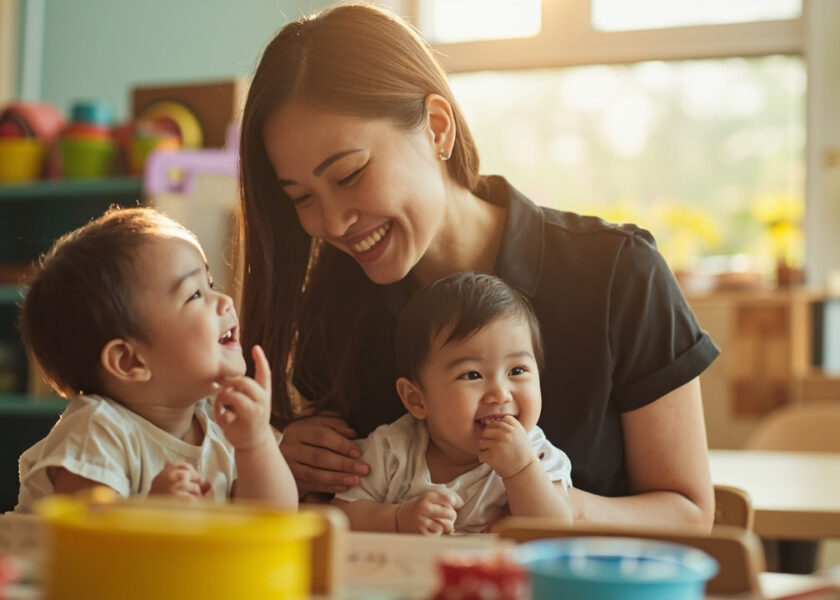
When an infant in our care shifts her body away from a toy that was fascinating a moment ago, our caregivers recognize this as a signal about cognitive processing — the infant is telling us that the stimulus has been integrated and she needs something new. We do not interpret this as inconsistency or disinterest. We read it as communication.
For Toddlers (18 Months to 3 Years)
As children enter toddlerhood, observation expands into the domain of play and social interaction — a stage where many parents feel particularly uncertain.
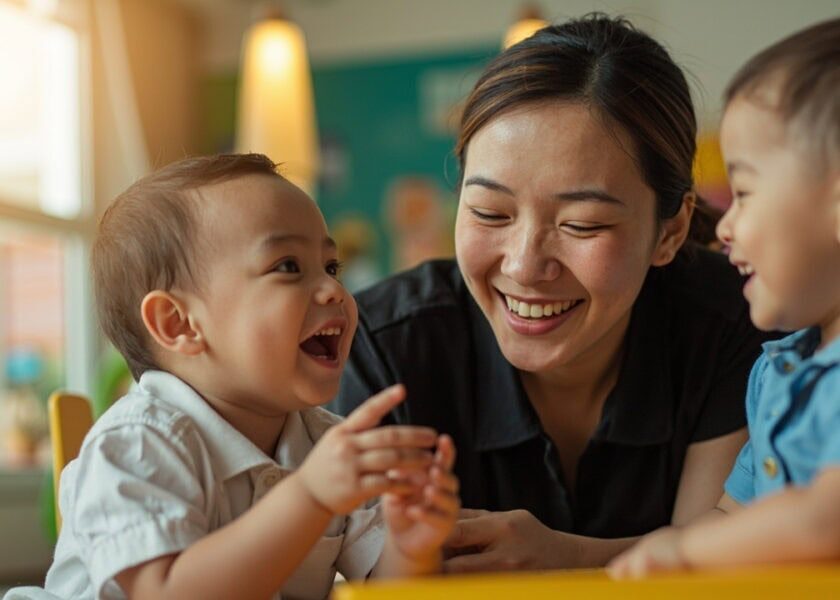
- Parallel play — what looks like children playing near each other without direct engagement is actually a profound developmental achievement. The toddler is practicing social presence while maintaining autonomy.
- Conflict navigation — the way a toddler handles a disagreement over a toy tells us about their emerging sense of justice, their communication skills, and their stress tolerance.
- Play themes — the dragons, the families, the superheroes that emerge in imaginative play often reflect the internal world the child is trying to understand and process.
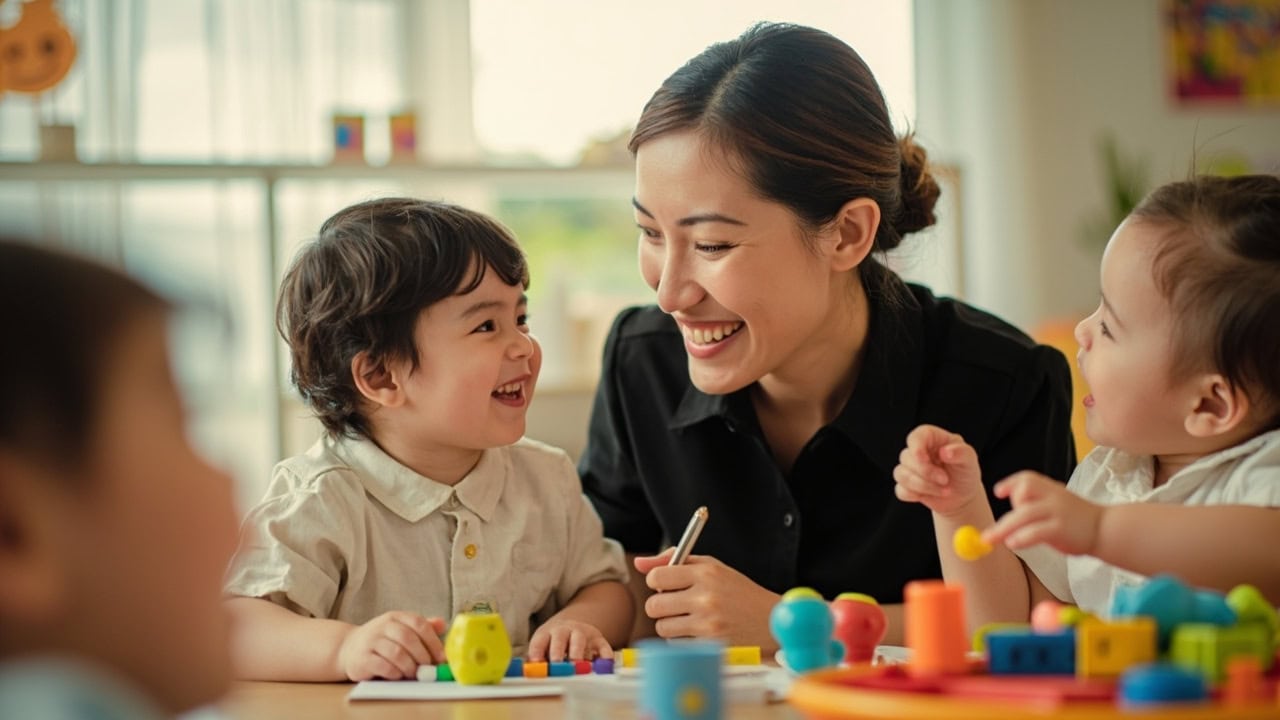
When a toddler in our care moves between activities with unusual rapidity, our team notes the pattern, considers the sensory input of the environment, and adjusts the morning’s rhythm accordingly. We are not just managing behavior. We are responding to a child’s nervous system.
For Preschoolers (3 to 6 Years)
Observation deepens into the territory of emotional literacy and social reasoning. A child who can tell you how she feels is demonstrating a capacity that took years to develop.
Consider the child who could only express frustration through hitting — who then moved to shouting — who now can name the feeling before it overwhelms her. Each stage is progress. Each stage deserves to be seen.
When a preschooler tells us a story that sounds fantastical but carries undercurrents of anxiety — a storm that destroys everything, a character who cannot find their parent — our caregivers listen not just to the plot but to the emotional architecture beneath it.
From Uncertainty to Partnership: Choosing Care That Sees Your Child
There is something else that happens when parents develop observation skills. It transforms the relationship between family and childcare provider from a transaction into a true partnership.
EduNanny was built as part of the ECDA Childminding Pilot, which means our model has been developed in conversation with regulators who understand both the importance of quality care and the realities of Singapore family life. We offer pathways that include home-based care, where your child’s primary caregiver comes to you, and centre-based options where children benefit from peer interaction in thoughtfully designed environments.
When families choose EduNanny, they are not just choosing a childcare service. They are choosing a team that will observe their child alongside them. Our caregivers document, reflect, and communicate. In homes where CCTV measures are deployed, transparency is built into the relationship from the start. Parents receive regular updates that reflect genuine noticing — genuine understanding of who their child is on any given day.
And because EduNanny accepts CDA and Baby Bonus payments, the financial logistics of quality care are simplified in meaningful ways.
Addressing What Singapore Parents Actually Worry About
The uncertainty you carry about whether you truly understand your child is not a weakness to be overcome. It is evidence of how much you care. Parents who did not care would not wonder. Parents who were not paying attention would not notice that they might be missing something.
Here are the real concerns we hear — and how observation addresses each one:
“I drop my child off and have no idea what happened during the day.”
Observation-based communication means you receive updates that describe your child’s actual experience — not just “had a good day” but “was very focused on the water play, returned to the same activity three times, seemed to be working on pouring precision.” This is information that tells you something real about your child.
“How do I know if my child’s development is on track?”
Developmental milestones are useful guides, but they are not the full picture. Observation teaches you to see progress in its many forms — the way your child approaches a problem, the complexity of their play, the growing sophistication of their emotional expression. A child who is not yet speaking may be developing remarkable nonverbal communication skills that deserve recognition.
“I feel like I am always second-guessing myself.”
Second-guessing often comes from not having a framework for understanding what you are seeing. When you learn to observe your child — really observe them — the second-guessing diminishes. Not because you become certain of everything, but because you develop genuine confidence in your understanding of your child.
“What if something is wrong and I miss it?”
This fear is real and understandable. Observation skills actually make you more, not less, attuned to genuine concerns. You learn the difference between typical developmental variation and signals that warrant professional attention. And when you have caregivers trained in observation, you have an additional layer of skilled attention on your child’s development.
What Quality Childminding Actually Looks Like
When you are researching infant care or childminding in Singapore, it can be difficult to assess quality. Here is a practical guide to what to look for, grounded in the observation framework we have described:
| What Parents Often See | What Observation Reveals |
|---|---|
| A toddler playing alone near other children | Parallel play — a sophisticated social developmental milestone |
| A toddler who moves quickly between toys | Possible sensory processing signals that inform care rhythm |
| An infant turning away from a toy | Cognitive processing complete — new stimulus needed |
| A preschooler’s fantastical story | Emotional architecture revealing internal preoccupations |
| A clingy morning at drop-off | Developmental phase or possible stress signal requiring context |
When you understand what trained observation looks like, you can ask better questions of any childcare provider. Instead of “did my child have a good day?” you might ask “what was my child drawn to in play today?” Instead of “is my child meeting milestones?” you might ask “what is my child working on right now?”
These questions do not just give you better information. They signal to your childcare provider that you understand quality care — and that tends to attract better care in return.
You Are Your Child’s Most Important Observer
There is something profound about being seen. Not just glanced at, not just acknowledged, but truly seen — the way you see someone whose inner life you have taken the time to understand.
Children need to be seen. It is not a luxury or a nicety. It is a fundamental developmental requirement. The child who feels seen feels secure. The child who feels seen is more likely to explore, to take creative risks, to form healthy attachments, to grow into someone who understands and values themselves and others.
Parents need to be seen too. Not just as people who are doing their best — though they are. But as capable adults who have the capacity to understand their child deeply, if they are given the right tools.
At EduNanny, we see you. We see the late nights worrying about whether you made the right choice. We see the mornings when drop-off feels harder than it should. We see the tenderness and the exhaustion and the fierce, protective love that drives so many of your decisions. And we see your child — the whole child, across every dimension of their development, with all their complexity and wonder and emerging personhood.
This is why we train our caregivers in observation. This is why we built communication into every layer of our model. This is why we participate in the ECDA Childminding Pilot — not just to offer a service, but to contribute to a broader understanding of what quality childminding can look like in Singapore.
Not just a place where your child is cared for. A place where your child is known. And a place where you are invited to know them too.
The next time you find yourself wondering whether you truly understand your child, we hope you will remember something: your child is already showing you everything. They have been showing you all along. You simply need to learn to see.
And we would be honored to teach you how.
Ready to learn more about EduNanny’s observation-based approach to infant care and childminding in Singapore?
Explore our home-based and centre-based pathways, or speak with our team to understand how we support both your child and your development as an observant, confident parent.
You can also learn more about EduNanny and our commitment to developmental, relationship-based childcare across Singapore.