The Art of Attentive Observation in Singapore Childcare
The Permission You Already Carry
Let me start with something counterintuitive, because the world of childcare advice often gets this wrong.
Quality childcare does not want you to stop watching. It wants you to watch well.
One kind of watching is anxious, scanning, looking for reassurance or disaster in every detail. The caregiver who senses that energy may start to perform safety, to over-report, to hedge every observation with reassurances. The parent who senses that dynamic may start to pull back, to trust less, to feel like their presence is a burden.
But attentive noticing—real, skilled observation—is something different. It is calm, curious, and specific. It notices the quality of an interaction, not just its presence. It reads the texture of a moment, not just its surface. It understands that a child’s wellbeing is not a single data point but a pattern woven across many small experiences.
The best childcare environments do not just tolerate parental attention. They invite it. They are designed to be readable. They want you to see what they are doing, because they know that a parent who sees clearly becomes a partner, not a monitor.
This is the first shift: from wondering whether you should be watching to understanding that watching well is your role. You are not a visitor to your child’s day. You are its most important witness.
How to Notice What Matters
So what does attentive noticing actually look like? Here are the dimensions where it matters most.
Reading Caregiver Warmth
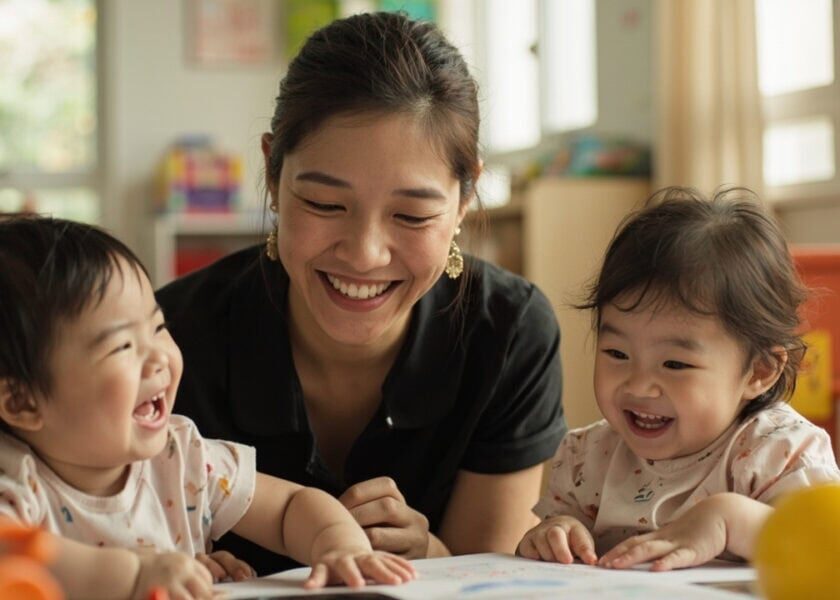
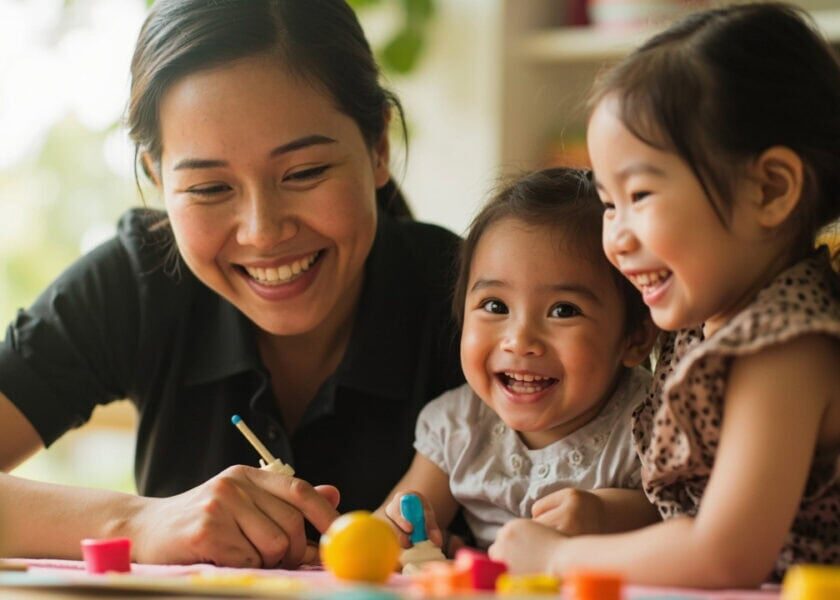
When you observe a caregiver with your child, you are not just watching to see if they are kind. You can learn to read the texture of their warmth.
- Is it consistent, or does it flicker?
- When your child approaches with a need, does the caregiver bend down—not just in body, but in attention?
- When your child is upset, does the caregiver offer presence before solutions?
These are visible, repeatable, and deeply meaningful. You can learn to notice the difference between a caregiver going through the motions and one genuinely present with your child.
Reading Your Child’s Body Language
Watch their posture when they enter the room. Notice whether they move toward certain toys, corners, children—or away from them. Notice whether their body is relaxed or guarded.
Children speak volumes through their bodies long before they have words. A child who is thriving carries a different quality of ease than one merely tolerating the environment. You know your child’s baseline better than anyone. When that baseline shifts, you will be the first to notice—if you give yourself permission to look.
Reading the Environment
There are environmental signals too, often overlooked.
- The sound texture: Is it chaotic, or does it have an organized hum? Children learn better with rhythm, not silence.
- The light: Is it the kind children can play and learn in, or is it institutional and flat? Natural light matters more than most parents realize.
- The smell: A space that smells of bleach and silence may be clean, but it is not necessarily warm.
Reading the Transitions
This is where many parents focus only on the morning goodbye. But consider the other transitions:
- The one that happens when your child moves from free play to snack time
- The one that happens when they are gathered for a story
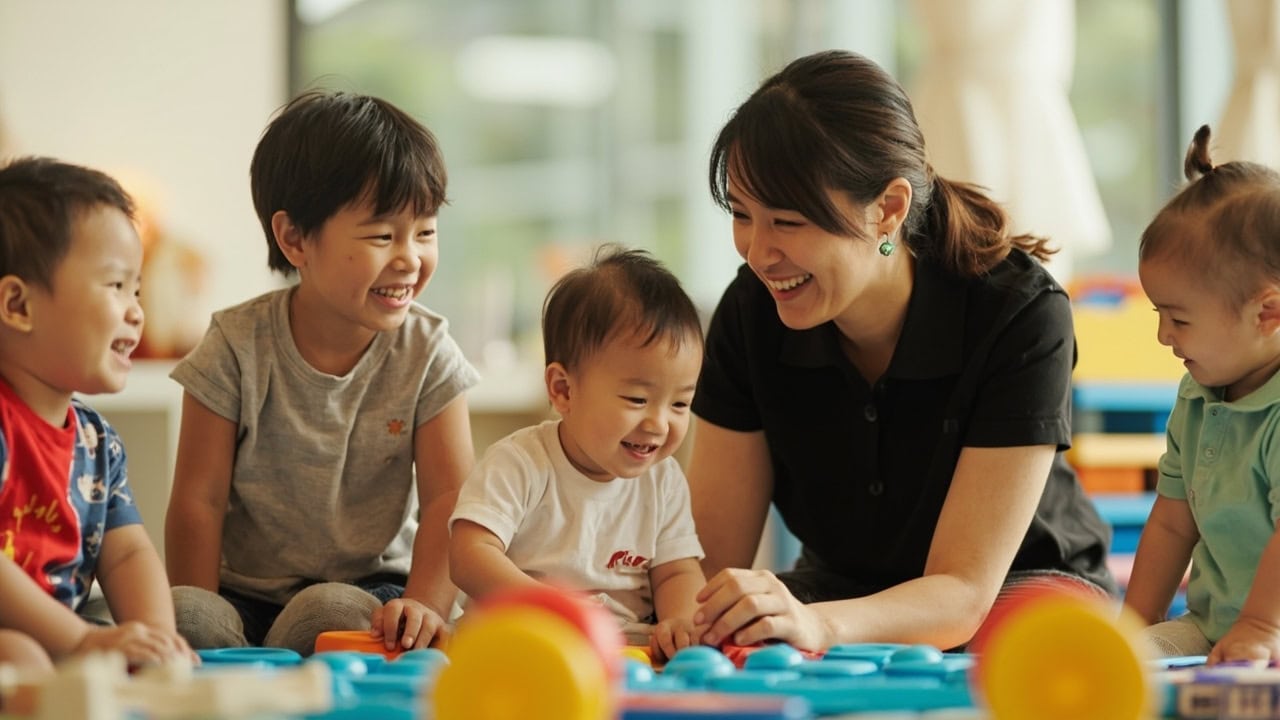
- The one that happens when a new child joins and the room absorbs that new presence
How does your child move through these moments? Are they disoriented, or do they follow a rhythm they have learned to trust?
The quality of transitions tells you something profound about the structure and care of a childcare environment. Children who feel secure in their day can let go of one moment and enter the next.
The Concerns Singapore Parents Actually Have
Before we go further, let me address a few questions I hear often from parents in Singapore.
What if my child has difficult days?
Difficult days are not a sign that something is wrong with your childcare choice. They are a sign that your child is human, growing, and navigating new experiences. What matters is the pattern over time, not any single day. When you know how to notice, you can hold those difficult days in context—and have more honest conversations with caregivers about what your child needs.
How do I know if I am paying too much attention?
You are not. The question is not whether to watch, but how. Attentive noticing is a skill that serves your child. Anxious hovering is a pattern that serves neither of you. The shift is not about pulling back—it is about engaging with more clarity and purpose.
What if the caregiver feels judged by my attention?
If a caregiver feels judged by attentive observation, that itself is information. Quality childcare welcomes the parent’s gaze because it is confident in what it offers. When you find a setting where caregivers are relieved rather than threatened by your engagement, you have found something worth trusting.
How do I balance research with trust?
Research and trust are not opposites. The most confident parents are not the ones who stopped researching—they are the ones who know how to read what they find. Tours, ratios, and policies matter. But what matters more is the quality of attention you bring to evaluating them.
From Anxiety to Quiet Competence
Developing this skill does not eliminate all uncertainty. Your child will have difficult days. They will come home tired and irritable. They will occasionally resist going in the morning, and your heart will twist.
But here is what changes: when you notice well, you can hold those difficult moments in a larger context. You can see the pattern behind the individual data point.
- A single rough morning does not become a crisis of confidence
- A single report of conflict does not become a story of systemic failure
- You can ask better questions, receive more honest answers, and respond with calm clarity that serves your child far better than panic ever could
This is the transition: from anxiety to quiet competence.
Anxiety watches and catastrophizes. It seizes on every ambiguous moment and fills it with worst-case interpretations. It makes parents feel powerless, at the mercy of a system they cannot see or control.
Quiet competence watches and interprets. It notices what it notices, holds it lightly, compares it to the pattern it has been building over days and weeks, and then decides what it means. It is calm because it is informed. It is confident because it is engaged. It does not need certainty to feel secure. It needs clarity—and clarity is something you can build.
What Quality Childminding Looks Like
For parents exploring options in Singapore, understanding what quality looks like in practice can transform an overwhelming search into a more confident one.
| Dimension | What to Notice |
|---|---|
| Caregiver Interaction | Consistent warmth, bent-down attention, presence before solutions |
| Child Body Language | Relaxed posture, purposeful movement toward activities, ease in the space |
| Environment | Organized hum, natural light, warm smell, child-centered design |
| Transitions | Smooth movement between activities, trusted rhythms, secure letting-go |
| Communication | Transparent updates, invitations to ask questions, partnership language |
These are not just ideals. They are observable, learnable, and meaningful. They are the difference between a childcare arrangement that merely supervises your child and one that genuinely nurtures them.
How EduNanny Supports Attentive Childcare
EduNanny was founded on a simple belief: that Singapore families deserve childcare partnerships, not transactions. That parents who entrust their children deserve to feel like partners in that care, not like customers waiting for a service report. That caregivers deserve to be seen and valued for the skill and heart they bring to their work.
EduNanny operates within the ECDA Childminding Pilot, built around the recognition that infant care and childminding in Singapore serve a real need—not just for childcare slots, but for relational depth. When you bring a child into a childcare arrangement, you are creating a second web of relationships that will shape your child’s sense of safety, belonging, and discovery during the most rapid developmental window of their lives.
We maintain up to a 1-to-3 infant ratio in our infant care spaces. We offer both home-based and community-based pathways, because Singapore families are not a monolith. Some children thrive in home-based settings where the environment is domestic and intimate. Others benefit from the richer peer environment of a centre-based community. We do not believe one size fits all.
Our pilot fee structures are designed to be accessible. CDA and Baby Bonus funds are usable with us, because financial accessibility matters. These are not incidental details. They are part of how we take the stress out of a decision that is already emotionally complex.
Because we believe in the power of parental observation, we have built our communication practices around transparency. Our CCTV measures give parents an additional window into their child’s day—not as surveillance of caregivers, but as an extension of the noticing parent. Our caregivers are trained not just to care for children, but to communicate with parents in a way that invites engagement, that answers questions before they become anxieties, that makes the invisible visible.
A Partner Who Helps You See
Let me close by returning to where we began.
There is a moment that happens somewhere between the drop-off and the evening report. You have just left your child in someone else’s hands, and now you are sitting at your desk, or on the train, or waiting for a meeting to begin, and your mind drifts. You wonder what is happening in that room. You wonder if your child is crying, or laughing, or sitting quietly while the world moves around them.
You are not a deficient parent because you feel uncertain. You are not an anxious parent because you want to know what is happening during the hours you are apart. You are a parent who loves deeply enough to worry about the quality of the love your child receives when you are not there.
And that love deserves a partner who can help you see.
Observation is that partner. Not a checklist handed to you by an expert, not a framework borrowed from a parenting book, but a skill you build, day by day, noticing by noticing, as you watch your child move through their world.
- The caregiver who bends down to meet your child’s eyes
- The room that hums with purposeful activity
- The transition that happens smoothly because the children have learned to trust it
- The moment your child sees you at pickup and their face lights up not with relief but with the ordinary, healthy joy of a day that was good
These are not small things. They are the texture of your child’s life. They are what noticing is for.
And when you learn to notice them—when you develop that quiet competence that comes from paying attention with purpose—you will find something unexpected. You will find that your relationship with your child’s caregivers deepens. You will find that your confidence grows not from having answers but from asking better questions. You will find that the uncertainty you once carried has not disappeared, but it has been transformed into something far more useful.
It has become the very thing that makes you a better partner in your child’s care.
EduNanny is here to walk that journey with you. Not as the service that promises to take your worries away, but as the partner who teaches you to see. Because parents who notice are not anxious monitors. They are the most powerful advocates a child can have. And that is exactly the kind of partnership we believe Singapore’s children deserve.
At EduNanny, we believe that thoughtful, development-oriented childcare begins with trust—between caregivers, families, and the children at the heart of everything we do. Learn more about our approach or get in touch to explore how we can support your family.