Starting school: home routines to hold steady, and one shared activity
When a child moves to a new class or starts Primary 1, the useful move is not to add more commitments but to hold a short list steady: age-appropriate sleep, recreational screen time within the official limit, daily physical activity including outdoor play, and regular one-on-one time together. If you add anything, add one shared, low-pressure activity — a walk, a book, or a session already listed by Health Promotion Board.
A Straits Times list published on 10 September 2026, curated by Catch.sg, framed seven children's arts programmes around coping with change and starting school. One of them, Grady's Growth Tales, is a read-aloud drama for preschoolers and parents designed to be experienced together, with lower primary students also able to attend. Nothing in the official guidance below says any activity raises ability or improves school readiness, so this guide stays with what Singapore's health agencies actually set out. [1]
Starting school changes the day, not the need for a steady rhythm
HealthHub's MindSG page describes transitions as events and situations that result in changes to our relationships, routines or roles, and notes that a growing child may meet many: entering a new class, learning new subjects, making new friends. The same page points out that these changes can disrupt a child's routines as well as their feelings of familiarity, comfort and security. That is the mechanism behind an unsettled term: what used to feel ordinary has moved. [2]
MindSG also lists signs to look for — trembling, poor concentration, withdrawing from social activities and excessive worrying — and says these should not be brushed off, as they can be indicators of a child's mental well-being. The same page suggests setting aside part of a week or a day for regular one-on-one time, and entrusting manageable tasks, such as letting a child choose which storybook to read, starting with two options so the choice is not overwhelming. [2]
Lock the sleep and screen numbers to your child's age band
The Health Promotion Board's Childhood Health Behaviours Checklist (February 2025) is built on four lifestyle domains — Screen Use, Sleep, Physical Activity and Nutrition — with seven checklists aligned to Childhood Developmental Screening touchpoints. In the 4-6 years checklist, the sleep item asks about 10-13 hours of sleep daily at 4 to 5 years old and 9-13 hours at 5 to 6 years old, including nap time if any. The screen items ask that total screen use outside of school be less than one hour daily, with no screen time in the hour before bed. [3]
For a preschooler the numbers line up: Singapore's physical activity guidelines for 0-6 years set sleep at 10 to 13 hours for 3-4 years and 9 to 13 hours for 5-6 years, and keep recreational screen time to less than an hour a day. Parent Hub's 3-6 years sleep page, contributed by HPB, adds the practical steps — build a bedtime routine and keep it consistent and within an hour; hold it on weekdays, weekends, school nights and holidays; keep smartphones and tablets away before bedtime; avoid vigorous activity and caffeinated food or drinks near bedtime; and use the bed for sleep only. [4] [5]
Movement, and what changes after Primary 1
Movement is the easiest anchor to protect. The same 4-6 years checklist asks for at least 180 minutes of physical activity of any intensity spread throughout the day, of which at least 60 minutes is moderate to vigorous, plus daily outdoor active play such as playground play, tag or catching, ball games and cycling outdoors. The preschool guideline tips say the same in plain terms: vary the movements, introduce activity-based games, visit outdoor playgrounds for social play. A hypothetical test for any new plan: could it be added without moving the bedtime window or pushing outdoor play into next week? [3] [4]
For a child between 7 and 12 years old, the bands shift rather than the principle. HealthHub's screen guidance, last reviewed on 7 November 2025, sets the limit for that band at less than two hours a day outside schoolwork, and its fun fitness page notes that lower primary children meet and interact with more adults and other children as they start school. That page gives no limit above 12, so check current HealthHub guidance if your child is older. [6] [7]
One shared activity, chosen from what is already listed
For the one shared activity, start with what is officially listed. HPB's preschool programmes page, last updated on 28 September 2026, describes the Active Family series of fun-filled activities, team sports and games for bonding between parents and children aged 4 to 6 years, available every weekend at convenient locations across the island, with sign-up through the Healthy 365 app. That age band matters: it is not an option for a lower primary child. A separate HealthHub page, Getting Fit Through Fun for kids, suggests badminton, basketball, football, tennis, track and field and volleyball for lower primary children. [8] [7]
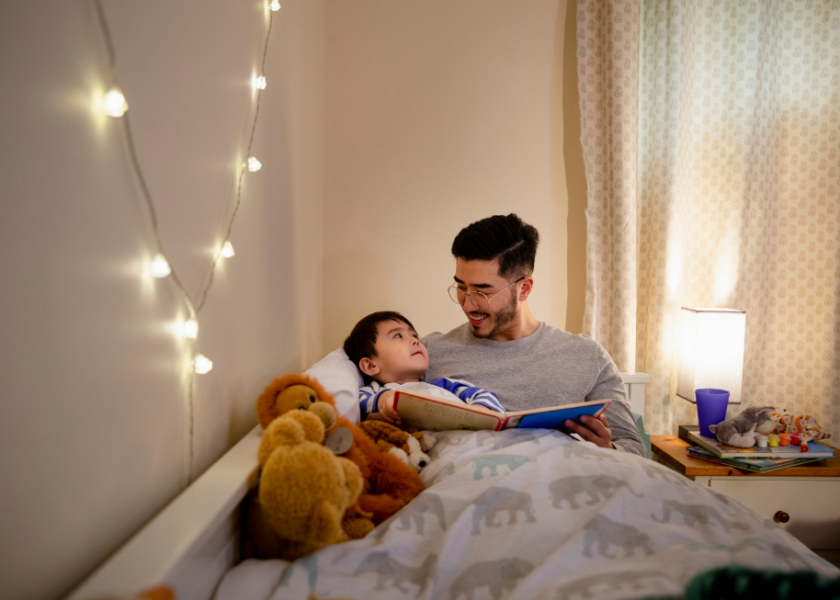
Closer to home, MindSG describes self-care as taking breaks to do what they love — a short walk, reading a book, a nap — and spending time with people they care about. Parent Hub's Grow Well SG page frames the same idea as small everyday moments: healthy habits can start with just 10 minutes, such as moving together, or winding down at night with reading and dimmed lights. Adding a child's profile via Singpass gives families free activities and events personalised to the child's age. Optional editorial ideas, not tested routines: a ten-minute walk before dinner, or one story read in the same spot each night. [2] [9]
The short answer
So, through a change period, hold four anchors steady: sleep at the age-banded amount, recreational screen time within the limit with a screen-free hour before bed, roughly 180 minutes of daily movement including outdoor play, and regular one-on-one time. Add at most one shared activity, and read signs such as withdrawal or poor concentration as information about the routine, not a verdict on the child. [2]
One caveat worth keeping: the checklist extract relied on here gives banded amounts only up to the 4-6 years touchpoint, so the figures for 7 to 12 year olds come from HealthHub's separate screen guidance rather than a checklist item. For your child's age band, check the current HealthHub and Parent Hub pages. [3] [6]
Read next
- Singapore screen time guidance for preschoolers
- Primary school screen and activity guidance
- Enrichment classes for preschoolers: four checks
Sources
- Arts activities to build children's confidence and emotional skills | The Straits Times
- MindSG
- CHILDHOOD HEALTH BEHAVIOURS CHECKLIST
- MOVE WITH FUN & GROW
- Parent Hub: 3-6 Years – Good Sleep Captain Sleep
- Help Your Child Build Healthy Screen Habits – HealthHub
- Getting Fit Through Fun for kids
- Programmes and Resources for Preschool | Health Promotion Board
- Parent Hub: Grow Well SG
EduNanny Editorial · AI-assisted research and writing, reviewed by our automated editorial team. Sources checked 2026-10-06. Featured image: AI-generated editorial illustration.