
Sacred Bonds in the First Circles of Care EduNanny and Singapore ECDA Infant Pilot December 2024 to December 2027

Introduction: A sacred exchange in the first circles of care
Good evening, parents, grandparents, and guardians. I speak as an educator and caregiver who believes—like Montessori, Pikler, Vygotsky, and Bowlby—that the first relationships we offer a baby shape the world that baby will one day shape for the rest of us. EduNanny exists for that sacred exchange: to give each infant a steady hand, a curious heart, and a safe community in which to grow. This article expands on that vision with practical, actionable guidance for families navigating the early years and choosing the right infant care partner.

EduNanny Infant Childminding Service: An ECDA-appointed operator in Singapore’s national pilot
EduNanny operates under Singapore’s national Childminding Pilot for Infants (1 December 2024 to 31 December 2027). We provide near-home, ultra low-density care for Singapore Citizen infants aged 2 to 18 months, in tiny pods of one to three infants per childminder, Monday to Friday, 7am–7pm. With government-subsidised fees during these hours, full-day care (10 hours) starts at $33 before GST and half-day care (5 hours) starts at $16.50 before GST, payable with your Child Development Account (CDA/Baby Bonus). This is quality, safety, and dignity—made accessible and convenient across the island.
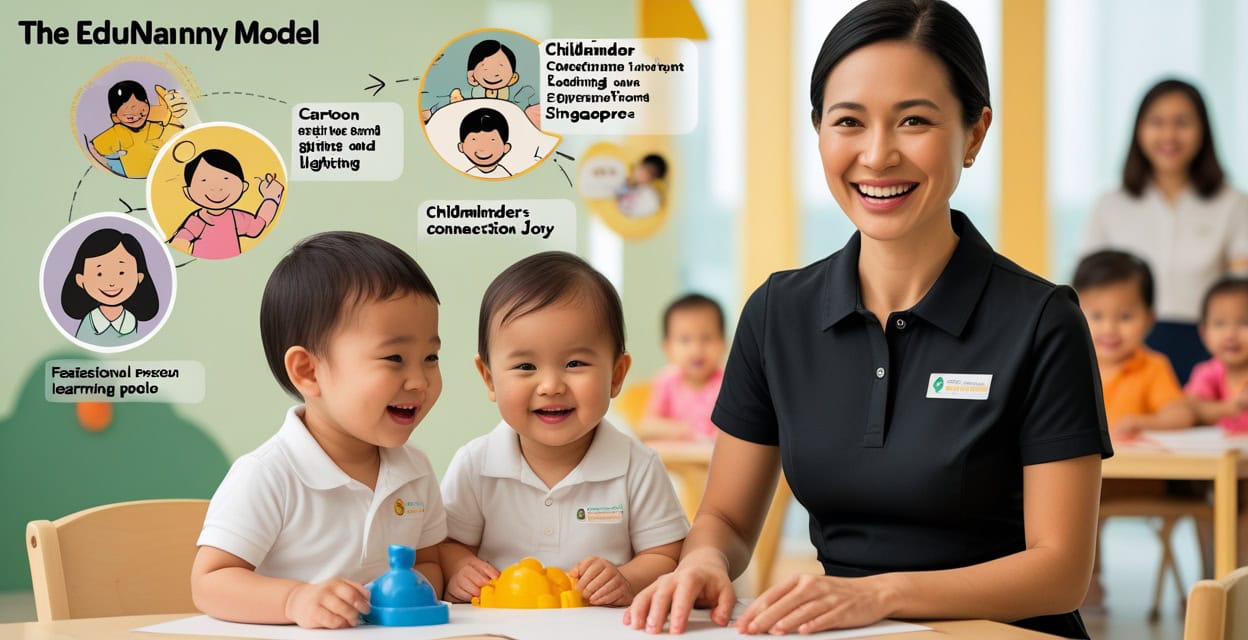
The EduNanny Model: Five guiding themes that shape every moment
1) The micro‑pod method: one to three, on purpose
Infants learn in relationship—through the serve-and-return dance of looks, sounds, smiles, and touch. With a 1:3 maximum ratio, a childminder can notice the little things that are actually big things: hunger cues before fussing, the first attempt to roll, the moment a baby invites connection and then bravely explores.
- Attachment as the curriculum. We borrow from Bowlby’s secure-base theory and Pikler’s respectful care: slow, predictable routines so infants feel safe, seen, and soothed. From that safety, curiosity blooms.
- Autonomy through rhythm. Environments are simple, reachable, and stable: low shelves, open baskets, safe floor time, and uninterrupted play. Infants need time to practice mastery.
- Social mind in miniature. Inspired by Vygotsky, our tiny pods allow just enough peer presence for social referencing and turn-taking, without the overwhelm of large groups.
In practice, each pod develops its own gentle rhythm—feed, rest, explore, repeat—anchored by the same caregiver and space, near home. Continuity keeps tiny nervous systems steady and learning ready.
2) Safety without compromise
- Training and checks. All EduNanny childminders undergo infant first aid and foundational infant care training and are vetted in line with ECDA requirements. Household members with regular access are screened for home-based care.
- Environments that prevent before they correct. We design modern, low-density layouts with gated caregiving zones, anchored furniture, covered outlets, firm sleep surfaces, separate sanitation stations, and safe milk handling protocols. Outdoor time follows strict ratios and hazard scans.
- Health and hygiene. We maintain a No Sick Child Policy during care hours to protect the micro-pod. If an infant is unwell, we partner with families on rest and recovery at home. Medication follows parent-authorised instructions—dose, timing, method, and watch signs—documented and double-checked.
- Transparency and monitoring. CCTVs in community spaces are provided as required under ECDA guidance. For home-based pods, opt-in CCTVs in caregiving areas during care hours are available with consent and privacy safeguards.
- Clear incident protocols. Written emergency responses, daily health checks at drop-off, secure sign-in/out, and timely incident documentation ensure accountability and fairness.
Our promise is simple: your infant’s safety is engineered, practiced, and owned by every adult in the room.
3) Development that is both visible and unhurried
- Sensory and motor foundations. Daily floor time, tummy time, grasp-and-release, and varied textures in safe exploration. We avoid restrictive devices; infants need freedom to move and discover.
- Language from day one. Narration during care routines, singing in English and Mother Tongue, and mirror vocalisations. Early literacy is relationship-first: conversations, picture books, songs, and active listening.
- Feeding and rest with respect. Responsive feeding supports appetite regulation and secure bonding. Safe sleep follows best practices: back to sleep, firm surface, no loose items, calm transitions.
- Observation that guides, not rushes. We log cues, sleep-wake cycles, tummy-time progress, and emerging interests. Brief daily notes and monthly snapshots share progress; concerns trigger early support discussions.
We measure progress by a baby who is regulated, curious, and building trust in the world.
4) Joy is not a luxury; it is the work
- Play that delights and teaches. Open-ended materials, gentle music, stories from local culture, and natural textures. No screens—only human faces and real objects.
- Warmth and attunement. Caregivers practice “sportscasting” feelings and actions, co-regulating with soft voices and confident hands. When babies feel held, they dare to grow.
- Community and belonging. Near-home pods mean familiar streets and faces, simplifying logistics and strengthening family ties to the care setting.
Joy is a developmental nutrient. It shapes resilience, curiosity, and social competence.
5) The purpose and profession of childminding
- A national initiative with local heart. As an ECDA-appointed operator, EduNanny participates in a public effort to expand safe, reliable, near-home care and dignified local employment for caregivers.
- Clear standards, continuous learning. We coach for reflective practice, safe caregiving, and meaningful observation; our quality teams offer ongoing mentorship and support.
- Family partnership. Parents retain primacy. We listen to routines, preferences, and hopes; we share what we notice; and we align on plans and follow through.
Elevating the childminder elevates the infant experience, family confidence, and the nation’s future.
Why families choose EduNanny: What to expect in practice
- Ultra-low density, ultra-low ratio pods. Maximum 1:3 caregiver-to-infant ratio for intimate attention.
- Certified EduNanny Childminders with ECDA background checks.
- CCTV visibility options. CCTV in community spaces; opt-in CCTV for home-based pods during care hours (with consent and privacy safeguards).
- No Sick Child Policy. Clear health and medication protocols to protect the pod and each family.
- National initiative context. Part of ECDA’s Childminding Pilot (Dec 2024–Dec 2027) with local support and quality oversight.
- Quality assurance by EduNanny. Ongoing coaching, mentorship, and professional development for childminders and teams.
- Flexible models islandwide. Home-based pods or centre-style community hubs near your home for convenient access.
- Family-centred scheduling. Monday–Friday, 7am–7pm with affordable, government-assisted pricing via CDA/Baby Bonus.
- Visible, calm spaces. Modern, safety-led layouts designed for infant calm, visibility, and security.
- Clear communication. Daily notes, monthly snapshots, and collaborative planning with families.
Enrollment: How to join EduNanny
Practical steps to begin your EduNanny journey and ensure a smooth transition for your infant:
- Visit the EduNanny information page: edunanny.com or edunanny.ecda-childminding-service (note: use the website from your browser; we provide details in plain text here for clarity).
- Eligibility check: Singapore Citizen, 2–18 months old, not concurrently enrolled in an ECDA-licensed infant care centre.
- Reach out via the EduNanny Concierge Team for a needs assessment and nearby option suggestions.
- Schedule a site visit: see the space (home-based or community hub), meet the childminder, discuss routines, health protocols, CCTV options, hours, and fees. Bring questions and family priorities.
- Enrollment and onboarding: complete consent and health forms, set a start date, arrange CDA payment, and attend a gentle orientation to support a confident transition for your infant.
A final word: The ordinary miracles that shape extraordinary futures
Parents, you do not need grandeur; you need reliable mornings, caregivers who know your baby by heart, and evenings when your child returns safe, content, and ready for sleep. EduNanny exists to make those ordinary miracles reliable. By embracing near-home, low-density care, we align science, dignity, and community to nurture the first thousand days—and by doing so, lay the foundation for a resilient, curious, compassionate generation.

Conclusion: Join us in giving Singapore’s infants small circles and big love
Let us come together to support infants with careful hands, attentive eyes, and joyful hearts. If you share this belief in the power of small groups, consistent relationships, and professional caregiving, explore EduNanny as a trusted partner for your family and your child’s early years. Begin your enquiry today and take the first step toward a near-home, safe, and joyful care experience.
Visit EduNanny.com or Childminding.EduNanny.com for more information, or contact our EduNanny Concierge Team to understand eligibility, options, and next steps.
[#EduNannySingapore, #InfantCare, #MicroPod, #ECDAPilot, #EarlyChildhoodDevelopment]