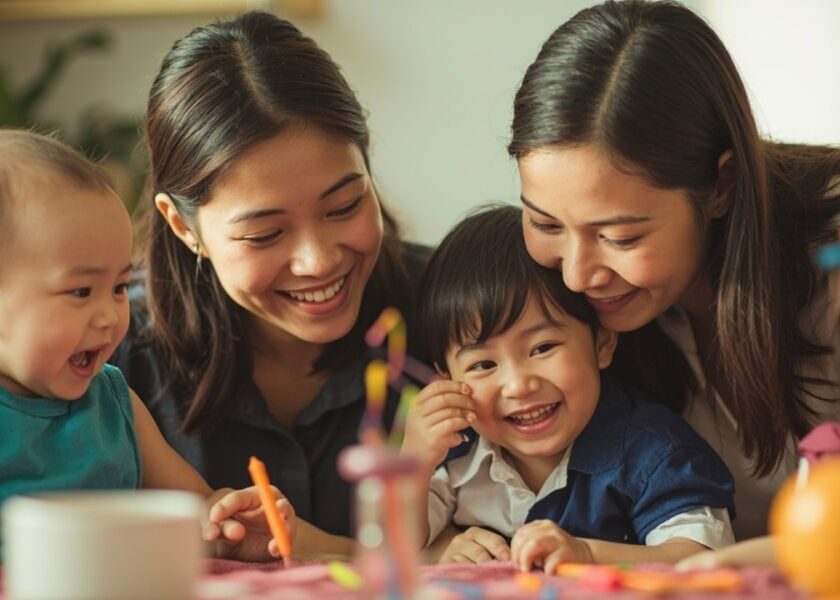
Reading Your Child at the Gate: The Honest Evening Report
The Evening Reunion Window: Reading Your Child After Quality Childcare
There is a particular quality to the light at pickup time. The late afternoon sun softening the edges of everything. The familiar gate, the familiar door, the moment your child appears and you scan their face, their posture, the way they hold themselves in those first seconds.
And something in you settles.
You do not need to ask. Not yet. You can tell. The way they look at you, the energy they carry, the ease in their body. Your child is telling you something important, and you are reading it fluently—the way you always have.
That moment at the gate. The evening reunion. It is one of the most emotionally loaded moments in the life of a working parent in Singapore. And yet it is also the most honest report card available on your childcare choice.
Quick Summary: What the Evening Homecoming Reveals
For busy parents, here is what matters most about pickup time:
- Energy that is engaged, not depleted — A child who has been meaningfully engaged arrives home curious and present, not scattered or exhausted.
- Language that arrives with them — New words, songs, stories. A child eager to share what they learned is a child who had a good day.
- Emotional regulation at reunion — They can hold the big feeling of seeing you. They do not collapse into tears. They reach out with confidence.
- Physical ease and openness — A relaxed posture, present in their body, ready to transition from caregiver to parent.
- A secure attachment response — The child who runs to you, reaches out, and initiates contact with joy is telling you their attachment is intact.
When you see these together, you are reading the evidence of quality care—not because someone told you to feel confident, but because your child is showing you.
What Quality Care Looks Like at Pickup
For hours, your child was in someone else’s care. And before that, in those early morning moments when you handed them over, there was something you needed to believe: that the day would be good. That the person caring for your child would notice them, truly see them, respond to them with warmth and skill. That when you were not there, your child would still be safe, still be held, still be known.
Which is why the moment at the gate matters so much.
A child who has spent a well-structured day in quality care arrives home differently than a child who has simply been managed, or worse, simply entertained. There is a quality of presence that is difficult to miss once you learn to recognize it.
Energy That Is Engaged, Not Depleted
Their energy is not depleted or scattered. It is the energy of a child who has been meaningfully engaged—who has been played with, who has had their questions answered and their curiosity fed. This is not exhaustion. This is the quiet aliveness of a child who has been learning all day without realizing they were being taught.
Language and Curiosity That Arrive Home With Them
The child who comes home with a new word, a song they learned, a game they want to show you, a story they have been saving up. Toddlers and preschoolers especially come alive at the gate with the desire to share, and that eagerness to communicate is itself a sign of a secure, stimulating day. The language is not just developing in the abstract. It is arriving home with them, fully loaded with the pleasure of sharing it with you.
Emotional Regulation at Reunion
They can hold the big feeling of seeing you again. They do not collapse into tears or dissolve into agitation. They are regulated, present, and open. This is not a matter of temperament alone. This is what a well-structured day produces in a child—the emotional capacity to experience joy without being overwhelmed by it.
The Reunion Response: One of the Most Important Signals
The child who runs to you, who reaches out, who initiates contact with confidence and joy. That reunion response tells you that your child’s attachment is secure. It tells you that leaving in the morning and returning in the evening is a rhythm they trust. It tells you that the hours apart did not fracture anything essential.
How Different Ages Show Thriving at Homecoming
For Infants
The evening homecoming has its own texture for the youngest children. You are watching a baby who was in someone else’s arms for the day—someone who held them, fed them, responded to their cues with consistency and warmth.
When you pick up your infant and they nestle into you, calm and alert, reaching for your face with recognition and trust, that is the evening signal. That quiet alertness. That physical recognition. That willingness to be soothed by you and held by a familiar caregiver throughout the day without distress. This is the evidence of a thriving infant.
For Toddlers
The evening homecoming is full of intention. The child who arrives home with new vocabulary, who points and narrates, who pulls you toward the room to show you something, who has been saving up discoveries all day to share with you.
And the emotional regulation beneath it. The toddler who can hold the big feelings of the reunion, who does not dissolve into tears but instead reaches out and then straightens and moves forward—that toddler is telling you something important about how their day unfolded.
For Preschoolers
For the preschooler, it is narrative. The child who can tell you a story about their day, who has enough cognitive and emotional security to reconstruct what happened in sequence, who is proud of what they learned and wants you to know. This narrative capacity at the end of a full day is not trivial. It is a sign of cognitive development, language growth, and emotional wellbeing. It is the full picture.
Different ages show thriving differently. But what connects all of them is the same: openness, ease, the capacity to connect, the readiness to come home.
Trusting Your Observations at the Gate
Now here is what I want you to notice about yourself in that moment. Often, Singapore parents feel a wave of relief at the gate but do not quite trust it. There is something in us that doubts, that wonders if the day was actually as good as it looked, that waits for the other shoe to drop. We have been taught, in a thousand subtle ways, to question our own observations. To wonder if we are reading correctly. To second-guess the evidence of our own child’s face.
I want to invite you to trust what you see.
The evening homecoming gives you something that hours of communication cannot. It gives you the unfiltered response of your child. A caregiver can tell you about the day. Daily reports can describe activities and milestones. But the face of your child at pickup tells you how your child felt about the day. And that is different information. That is the emotional truth of the experience, and it belongs to you.
Your child is not performing for you. In those first moments at the gate, before they have had time to recalibrate or shift or manage their presentation, they show you who they have been all day. They show you the version of themselves that has been living without you, and if that version is bright and regulated and communicative and attached, then something good has been happening in those hours.
The Foundations of a Meaningful Evening Homecoming
The evening reunion is not an accident. It is the result of intentional caregiving throughout the day.
It begins with how the day is structured. A well-designed day of care is not a series of activities loosely strung together. It is an architecture built around a child’s natural rhythms:
- Meals timed to energy levels
- Rest built in before children need to ask for it or fall apart from needing it
- Stimulation that is curious and responsive rather than overwhelming
- Moments of connection with the caregiver woven throughout the day so that a child never reaches the end of their resources
Every decision made in the morning, at lunch, at nap time, in the afternoon is made with the end of the day in mind. Because caregivers who understand quality care know what you know: that the most important moment in a parent’s day is often the one that happens at the gate.
During these hours, your child is not simply waiting for you to return. They are developing language through interaction with attentive caregivers and curious peers. They are building social skills in the company of other children. Their curiosity is sparked by new environments and new faces. Their emotional regulation is modeled by a caregiver who is calm, attentive, and warm. A day in quality care adds to your child’s development. And then they come home to you, full of the day, ready to share it.
Navigating the Days That Are Not Perfect
Not every evening will be smooth, and that is not what I am promising. There will be days when your child is tired or overstimulated or in the middle of a developmental leap that makes everything harder. There will be days when the reunion is more fragile and more needy.
This is normal. This is childhood.
What quality care means is that these difficult days are fewer and shorter, and handled with skill by caregivers who notice what is happening and respond with care. The pattern over time—the consistent rhythm of positive homecomings—speaks louder than any individual difficult day.
One challenging pickup does not mean the care was wrong. It means your child is human, and some days are harder than others. Look for the pattern. Trust the pattern.
How EduNanny Creates the Conditions for These Reunions
EduNanny understands this moment. They understand that for Singapore parents, the evening reunion is not just a transition. It is the daily proof that the choice you made was right.
The caregivers at EduNanny are part of the ECDA Childminding Pilot, trained in the rhythms and needs of young children. They structure the day to support emotional regulation, language development, social connection, and physical wellbeing—because they know that these are the things that make the evening homecoming what it is.
The care at EduNanny is built around the reality of modern Singapore parenting. Through the ECDA Childminding Pilot, families have access to childminding pathways that are structured, professional, and grounded in genuine pedagogical understanding. Whether through home-based or centre-based care, the emphasis is on consistency, warmth, and the kind of attentiveness that produces children who arrive home ready to be children.
With up to one-to-three infant ratios, transparent communication including daily updates where applicable, with caregivers who are trained and supported and committed to their work, EduNanny creates the conditions for these nightly reunions to be what they should be.
Practical Guidance for Your Next Pickup
Here is my invitation to you, whenever you next pick up your child:
- Slow down at the gate. Resist the urge to rush through the handoff. Give yourself thirty seconds to really observe before you ask anything.
- Notice what they are carrying home with them. The language, the energy, the ease, the openness, the reunion response.
- Look for the pattern across weeks, not just days. One good pickup is encouraging. A consistent rhythm of good pickups is evidence.
- Trust your observations. You know your child better than anyone. If something feels off, take note. If things feel right, believe it.
- Ask open questions if you want more information. “What was the best part of your day?” invites sharing. “Did you have fun?” often gets a shrug. Let them lead.
The Evening Homecoming Is the Evidence
Not every evening will be the same. Not every child will show up in the same way every day. But the pattern will be there. The consistent evidence. The child who is okay, who is more than okay, who is thriving in your absence and arriving home radiant with the day’s goodness.
That is not just a child who had a good day. That is a child who is thriving. That is evidence. And you have earned the right to read it clearly and trust it fully.
When you trust what you see at the gate, you trust your own judgment as a parent. You stop looking for external validation. You stop waiting for someone to tell you that you made the right choice.
Your child tells you, every single day, at the gate, with their whole being.
EduNanny is a place where these reunions happen. Where children arrive home ready to be themselves, ready to share the day, ready to be with you. Where the hours apart add to your child rather than subtract from them.
That is what we are talking about when we talk about quality childcare in Singapore.
That is what the evening window reveals.
And that is what you will see, every time you pick up your child, knowing that the childcare choice you made was the right one—made with love, made with thoughtfulness, and made visible to you, every single evening, in the most honest way there is.
If you are looking for childcare that produces these evenings—the kind where your child runs to you regulated, communicative, and full of the day—EduNanny welcomes the opportunity to speak with you and explore how they can be part of your family’s story.