Near Home Pods and the 1 to 3 Attunement Promise A Gentle Blueprint for Safe Joyful Infancy in Singapore

EduNanny: A Gentle, Attunement-Led Childminding Movement for Singapore’s First Thousand Days and Beyond
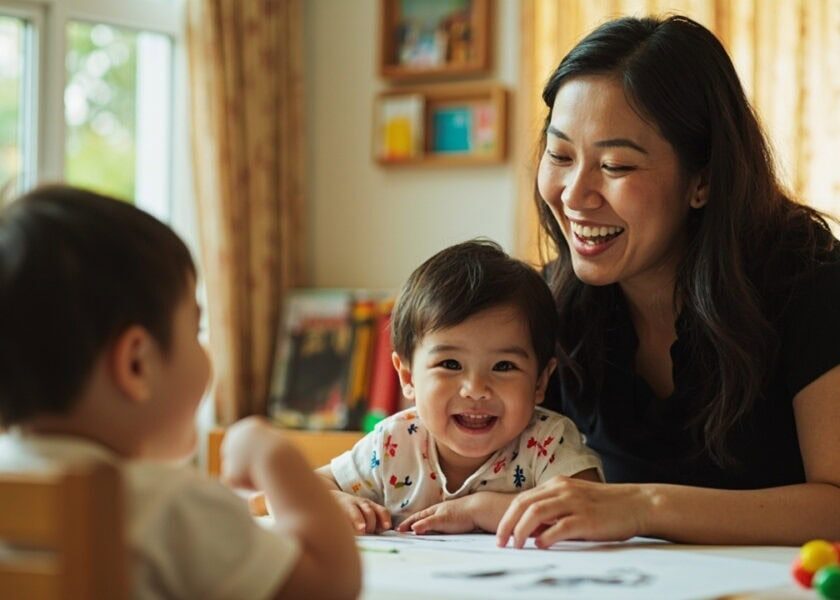
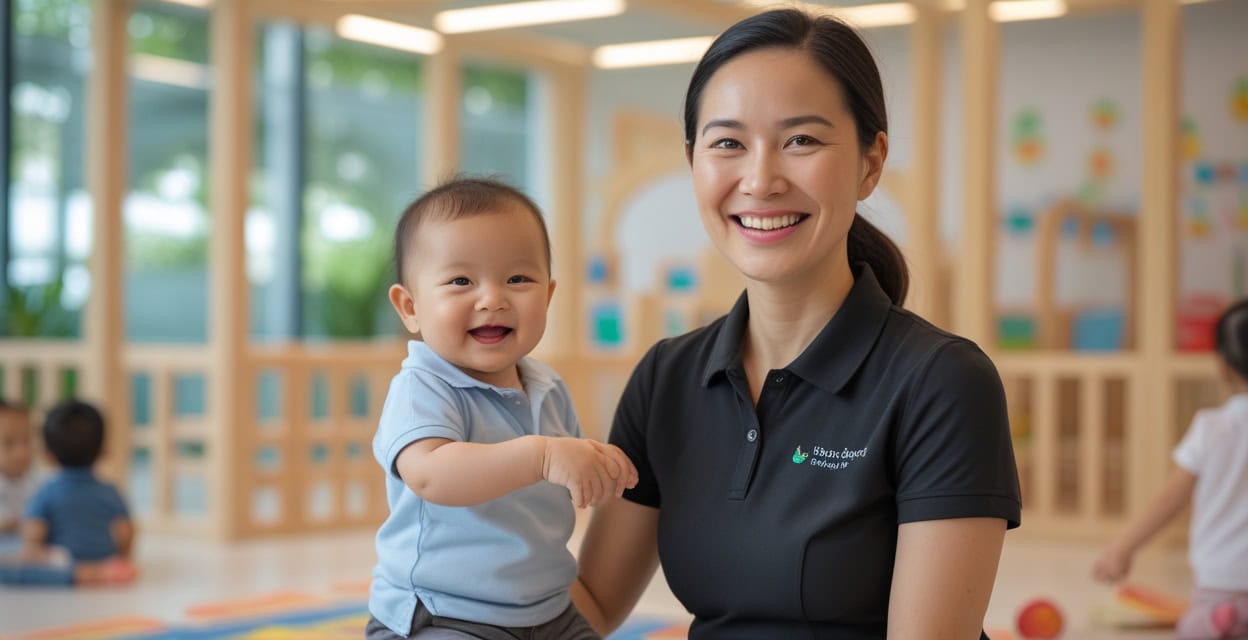
Good evening, families, educators, community partners, and all who believe that Singapore’s future begins in a gentle pair of hands. EduNanny is an attunement-led, science-grounded childminding movement built for Singapore’s first thousand days and beyond. We bring high-quality infant care to where life actually happens—near home, in thoughtfully designed centres and in licensed home-based settings—so that safety, learning, and love are not an occasional luxury, but an everyday standard. From Monday to Friday, 7am to 7pm, across the island, our promise is simple and profound: three seats, one carer, and one calm, confident start. That is our 1:3 covenant. That is EduNanny by BUTLER.
We are here to transform daily care into daily growth. We honour the insights of Montessori, Pikler, Bowlby, Erikson, Froebel, Piaget, and Vygotsky—not as quotations on a wall, but as practices in the room. We also honour Singaporean families—your rhythms, your languages, your hopes. We have designed EduNanny as a National Social Initiative under the ECDA Childminding Pilot, aligning superior standards with a Maximum Employment Mandate. Quality care should lift children—and the people who care for them.
Tonight, I’ll share five pillars of our approach, then close by answering, plainly, who, what, when, where, how—and why—childminding matters.
Pillar One: A Pedagogy You Can Feel at Floor Level
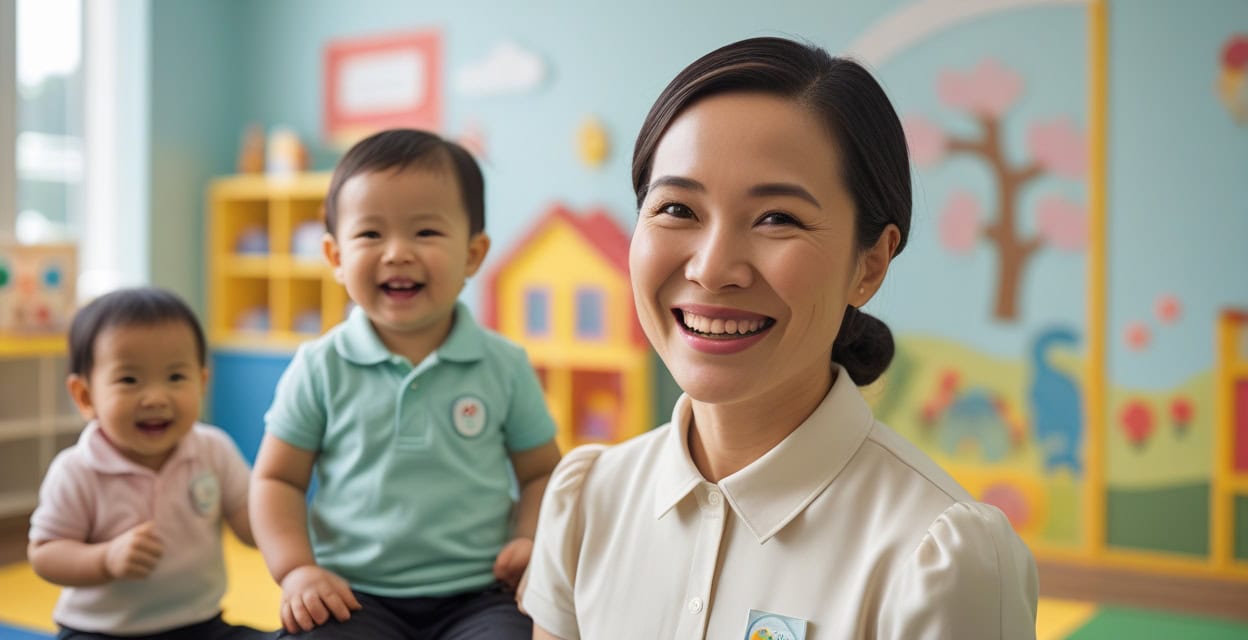
We begin on the floor, at eye level, because development is relational before it is instructional. For infants, the curriculum is connection.
- Serve-and-return is our first lesson plan. When baby looks, we meet the gaze. When baby coos, we answer. That repeated dance wires trust and primes the brain for language, self-regulation, and later learning.
- Respectful care, inspired by Emmi Pikler, turns caregiving moments—feeding, diapering, settling—into unhurried invitations for agency. We pause, tell the infant what comes next, wait for their tiny response, and then proceed. Consistency becomes security; participation becomes dignity.
- Montessori independence lives in everyday rituals: a low mirror for face discovery, an accessible basket of natural objects, a slow pour of water during weaning. We scaffold choice without overwhelm.
- Vygotsky’s zone of proximal development guides our timing. We step in—not too soon, not too late—so infants stretch, not strain.
- Bowlby and Erikson remind us: the foundation is secure attachment and the triumphant resolution of trust versus mistrust. Our educators are trained to be that secure base, day after day, minute by minute.
Practically speaking: how this looks in a day
- Daily floor-time blocks are planned but flexible, with adults tuned to infant cues—smiles, coos, and reached hands prompting new opportunities for exploration.
- Caregivers narrate moments of care and discovery to support language and social understanding, even during routines like diapering or feeding.
- Choice is offered in small, meaningful ways—grasping a textured toy, choosing a scarf during a song, or selecting a safe drink station—so independence grows without overwhelm.
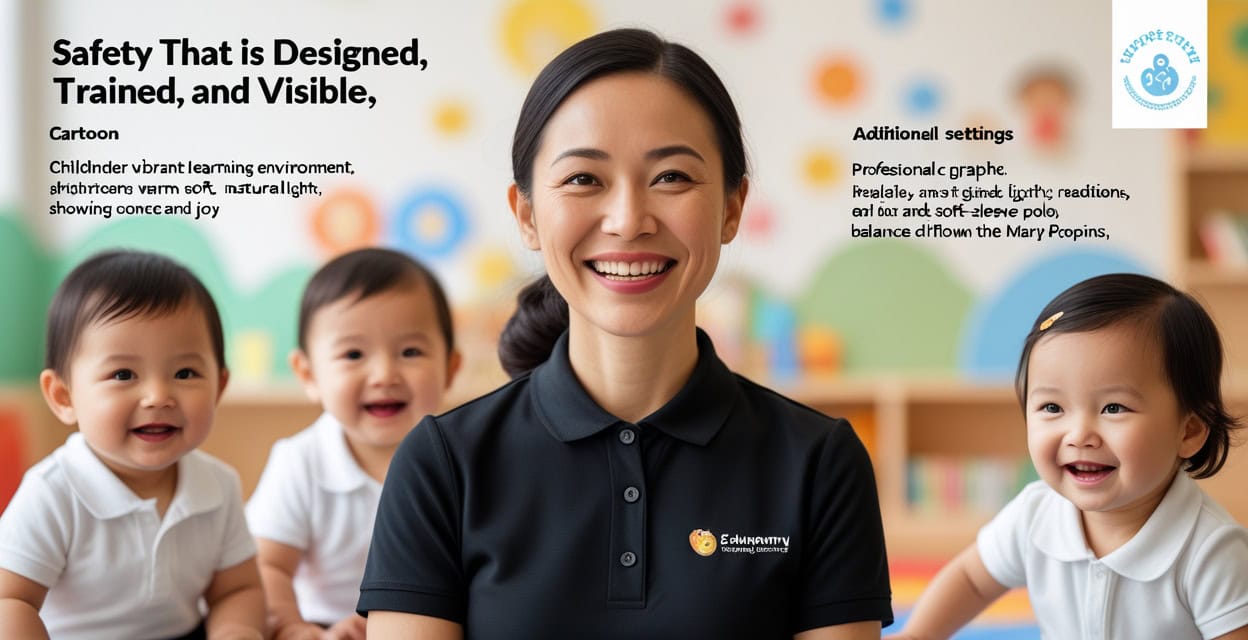
Pillar Two: Safety That Is Designed, Trained, and Visible
Safety is not a checklist at the door; it is architecture, culture, and transparency woven together.
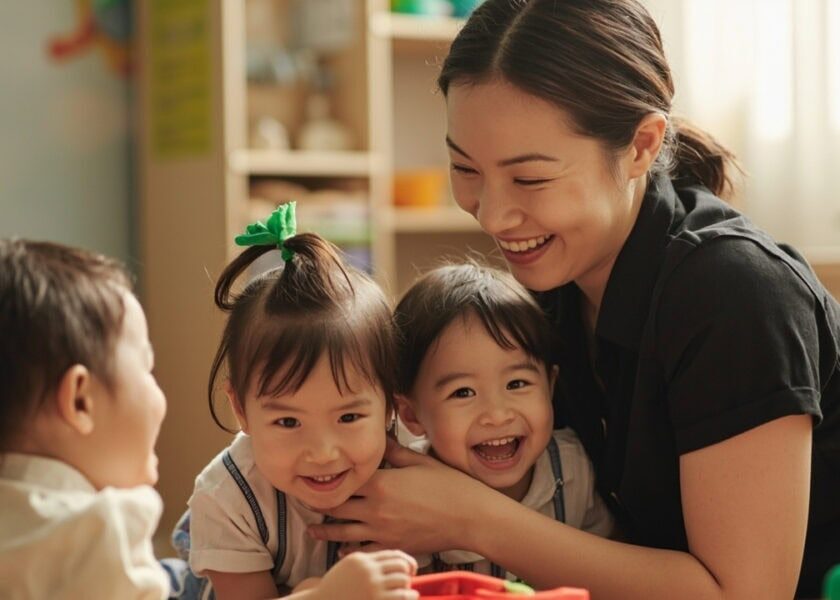
- The 1:3 ratio enables real supervision, calm transitions, and emotionally present care. It’s the difference between “keeping up” and “tuning in.”
- Spaces are designed with modern layouts—clear sightlines, soft surfaces, and natural materials. Safe sleep is non-negotiable—firm, flat surfaces; infants placed on their backs; no loose bedding.
- We practice a three-point safety rhythm every day: Begin-of-day environment check, pre-nap hazards sweep, end-of-day sanitation reset.
- All carers are trained in paediatric first aid and CPR. We conduct drills for everyday realities—choking response, evacuation, and allergy management.
- Hygiene is rigorous: hand hygiene before and after every caregiving task, sanitised high-touch surfaces, bottle-handling protocols, and illness response that protects community health.
- Because trust thrives in daylight, we offer secure innovation CCTV access for parents, strengthening transparency and peace of mind without distracting from attuned care.
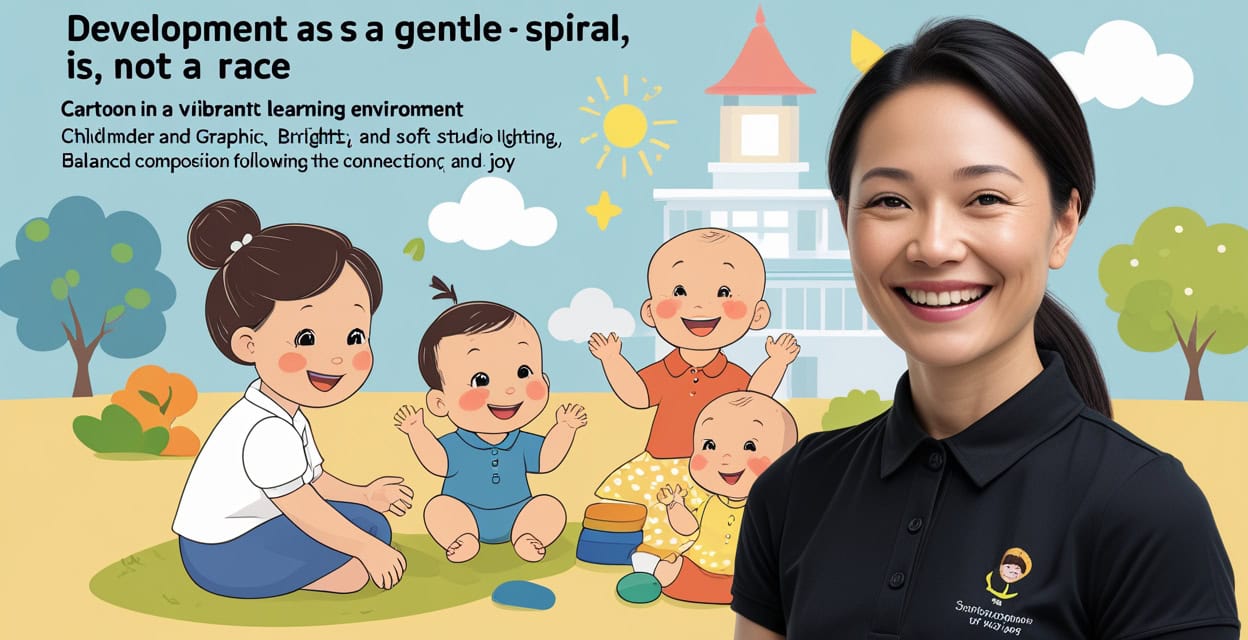
Pillar Three: Development as a Gentle Spiral, Not a Race
Healthy development is not a finish line—it’s a rhythm. We treat routines as the first curriculum and curiosity as the thread that pulls learning forward.
- Movement: Daily tummy time on firm mats; rolling and reaching supported by safe floor time; low bars and ramps for pulling to stand when ready; barefoot practice for sensory feedback.
- Language: Warm narration of caregiving routines; responsive reading of infant cues; songs in the family’s languages to honour home culture and seed phonemic variety.
- Senses: A curated rotation of textures, sounds, and light—not overstimulation. We prefer natural materials and open-ended objects, inviting exploration without noise or glare fatigue.
- Emotional regulation: We model co-regulation—slow breathing, soft voice, predictable sequences—so infants borrow our calm until they grow their own.
- Observation: We use a concise, strengths-based observation protocol—Spot it, Say it, Support it—to track progress and communicate with families. When needed, we partner early with health and developmental services; early support is a kindness.
Practical insights for parents
- Schedule blocks that mirror your child’s natural energy: active play in the morning, quiet exploration after a nap, and language-rich routines during feeding.
- Bring a small family object into the care setting (a blanket, a toy, or a piece of fabric) to create continuity and comfort between home and EduNanny.
- Encourage caregivers to narrate your child’s day; ask for a brief daily note highlighting a “new thing learned” and a “tiny step forward.”

Pillar Four: Happiness as a Health Metric
Joy is not an extra; it is evidence that the environment fits the child.
- We look for quiet alertness, settled sleep, steady feeding, and curiosity during wake windows. These are signs of a well-matched day.
- We protect unhurried transitions—arrivals and goodbyes are gentle, predictable, and never rushed. Rushing breaks trust.
- We bring neighbourhood life inside: familiar songs, local stories, textures of the season. Infants sense belonging long before they can name it.
- Outdoors, when available, is part of our week: shade walks, fresh air, and natural light—all linked to better sleep and calmer moods.
Pillar Five: The Purpose and Profession of the Childminder
Childminders are not stopgaps; they are nation-builders.
- Maximum Employment Mandate invests in training, coaching, and career ladders. Great jobs attract great carers—and great carers grow great children.
- Reflective practice is built-in. Weekly huddles ask simple, transformative questions: What moved the child forward this week? Where did we over-assist? What pattern of comfort did we honour?
- Family partnership is part of the role: respectful updates, photos with purpose (not performance), and practical tips that make evenings smoother at home.
- We also offer distance support when families need it—virtual check-ins, caregiver coaching, and guided home routines—so learning and calm travel with you.
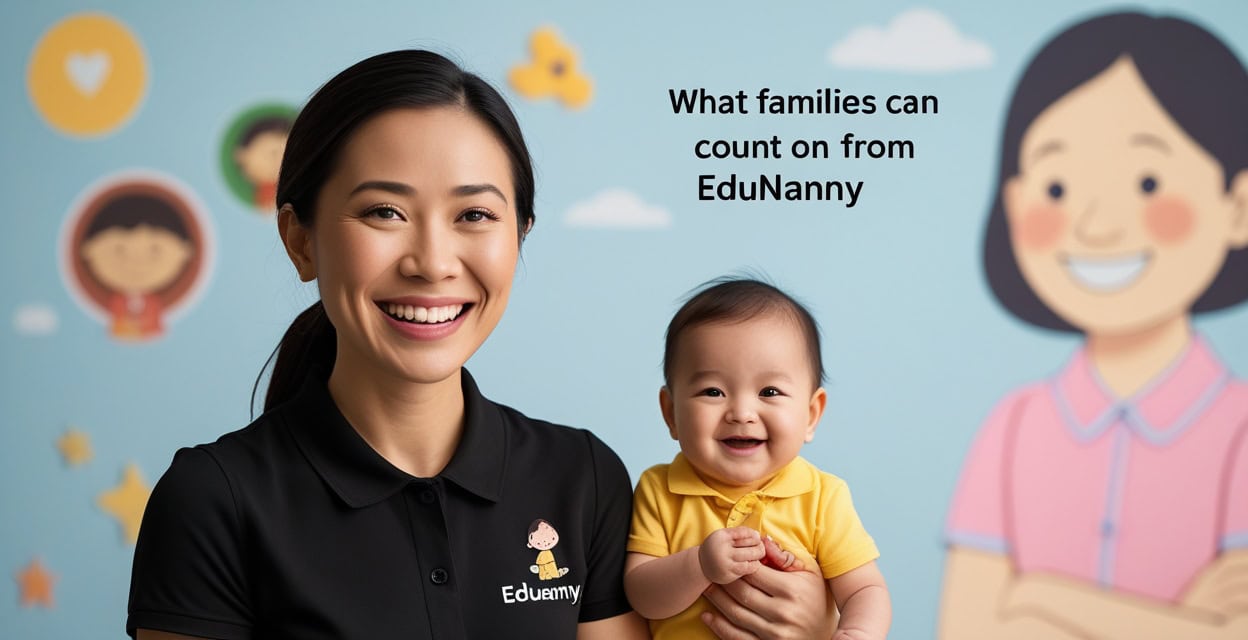
What families can count on from EduNanny
- Excellence and Quality: A science-led, heart-strong standard stewarded by EduNanny by BUTLER, operating under the ECDA Childminding Pilot as a National Social Initiative.
- Centre-Based, Home-Based, and Distance Options: Choose a modern centre layout, a licensed near-home setting, or add distance coaching for flexibility.
- Hours and Access: Monday to Friday, 7am–7pm, islandwide in community and home premises for genuine convenience.
- Ultra-Low Ratio: An exceptional 1:3 infant ratio—because attention is safety and learning.
- Transparency and Design: Innovation CCTV for secure parental visibility and thoughtfully designed environments for safe movement and rest.
- Affordability: Options from $33/day; fees payable by CDA/Baby Bonus for eligible families.
- Easy Next Steps: Visit EduNanny.com or Childminding.EduNanny.com to tour, reserve a place, or speak to a care advisor.
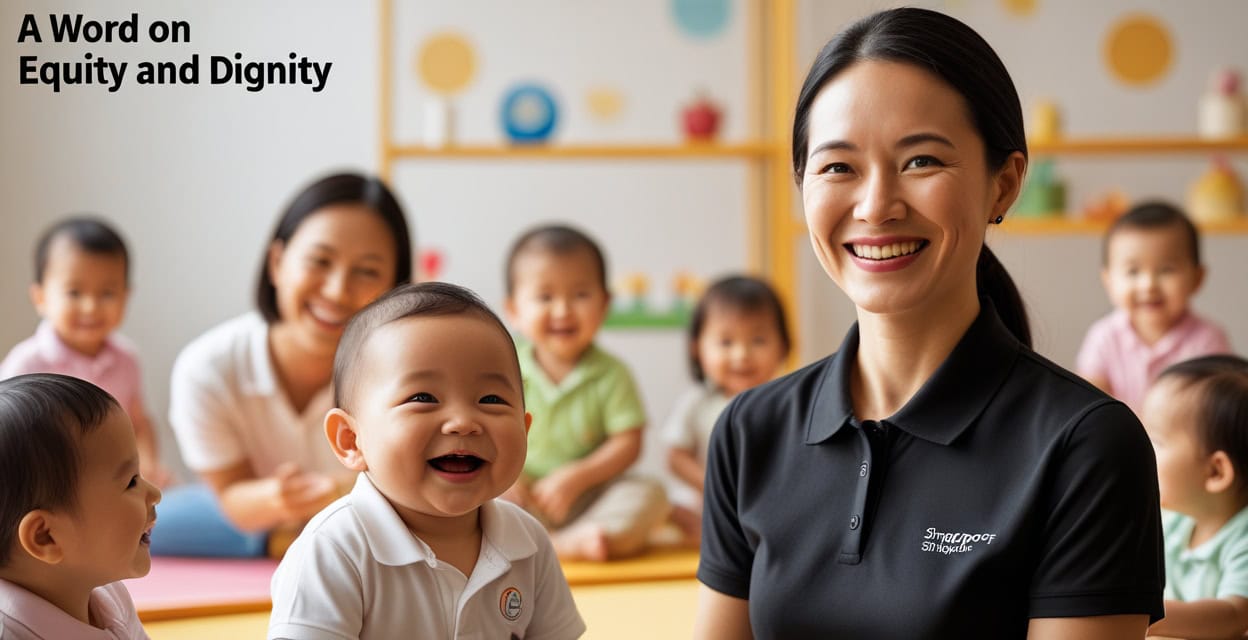
A Word on Equity and Dignity
When care is both excellent and accessible, society gets stronger. Affordable, high-quality childminding near home lightens the load on parents, keeps infants in stable, loving routines, and unlocks employment—especially for women—without sacrificing standards. That is what we mean by a public-minded model: children first, families supported, and carers respected.

The Everyday Picture
It is 7:48am. A father kneels, kisses his daughter’s forehead, and hands her to a carer who already knows the morning nap will need a 15-minute delay because two teeth are due. By 9:30am, she is on her mat, exploring a wooden ring with two hands, watching light dance on the wall. At noon, a gentle feed in arms. At 2:10pm, a song her grandmother sings in Hokkien at home. At 6:05pm, she leaves content, with a brief note: “Longer floor time today; more stable side roll; one new consonant babble—‘buh.’ We’ll model it together tomorrow.” That is curriculum. That is care. That is the future taking root.
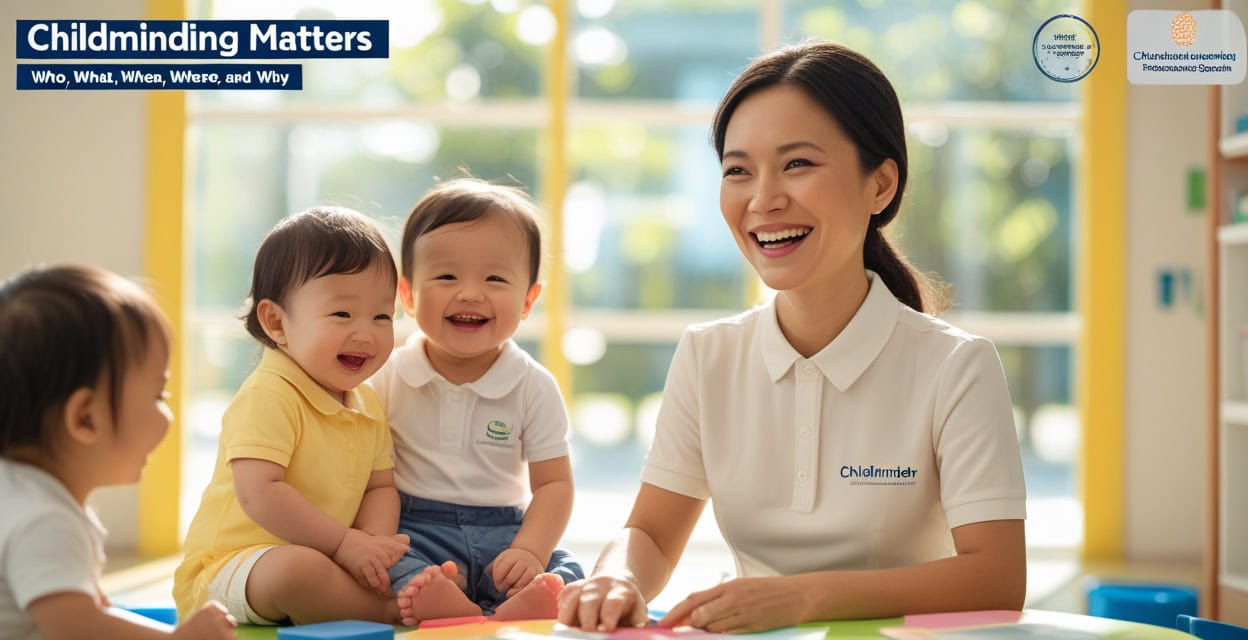
Childminding Matters: Who, What, When, Where, How, and Why
- Who: Infants and families of every neighbourhood; childminders who choose care as a profession; the Singaporean community that benefits when both thrive.
- What: Attuned, evidence-based daily care that turns feeding, sleep, and play into secure attachment and steady development.
- When: The first thousand days—and every weekday, 7am–7pm—because habits and neural pathways are forming right now.
- Where: Across Singapore, in modern centres and licensed home premises, close enough for drop-offs that don’t add stress to the day.
- How: An exceptional 1:3 ratio; trained carers; safe sleep; designed environments; secure CCTV; family partnership; affordability through options from $33/day and CDA/Baby Bonus support; and a civic commitment to employment quality.
- Why: Because a steady beginning reduces later remediation, grows resilience and empathy, and honors the truth that every infant is a citizen in the making.
Closing
What we build in the cradle, Singapore stands on tomorrow. EduNanny exists to make that beginning worthy of every child—safe, warm, stimulating, and near home. We invite you to visit, to ask hard questions, to see the simplicity of care done well. It is calm. It is focused. It is joyful. And it is within reach.
To tour a centre, meet a home-based pod, or speak with a care advisor, visit EduNanny.com or Childminding.EduNanny.com. Join us as we turn the everyday into the extraordinary—three infants at a time, one trusted carer, and a nation that grows stronger because we chose to listen, to slow down, and to care with precision and heart.
Thank you.
SEO keywords: [#EduNannySingapore, #EarlyChildhoodDevelopment, #InfantCareSingapore, #MontessoriInCare, #FamilyCenteredCare]
Ready to Experience Excellence?
Transform Your Family’s Journey
Discover Singapore’s leading infant care and childminding services. Expert guidance for your little one’s first thousand days.