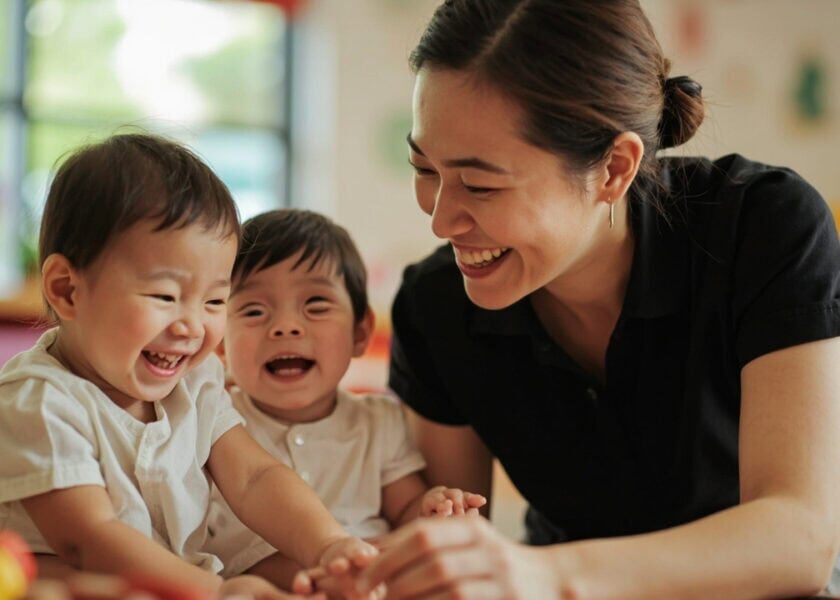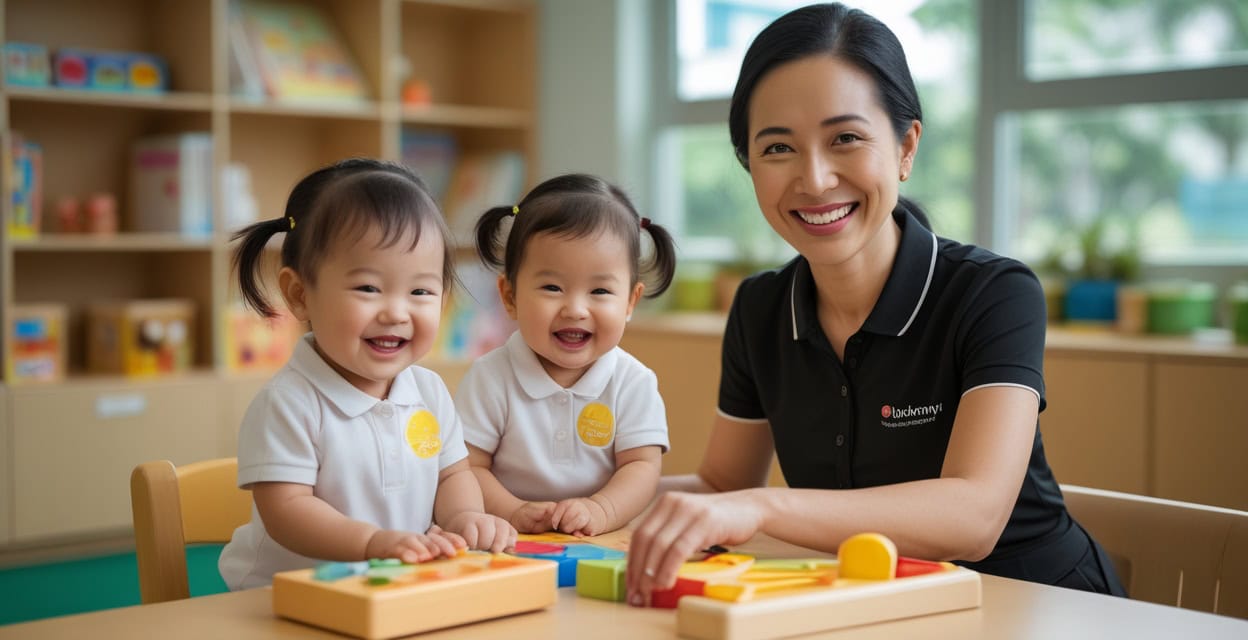
Near Home Attunement at Scale and the One to Three EduNanny Blueprint for Singapore First Thousand Days

Introduction to EduNanny
Thank you for gathering to consider a simple, powerful idea: the first thousand days of life deserve the same care, design, and public commitment we bring to our best roads, hospitals, and schools. EduNanny was created for that promise. Not as a slogan, but as a daily practice—seven to seven, Monday through Friday—close to home, attuned to each infant, and accountable to every family.
EduNanny by BUTLER is a national childminding and infant‑care movement that blends world‑class developmental science with Singaporean reliability and community spirit. We offer centre‑based and home‑based childminding, with distance support for families who need flexible options. We operate islandwide, in neighbourhood centres and carefully prepared home premises; we keep an ultra‑low 1:3 infant ratio; we design modern, calm layouts you can see on secure CCTV; we open early and close late so families can breathe. We are a Childminding Pilot under the ECDA framework and a National Social Initiative with a Maximum Employment Mandate—elevating professional childminding as a dignified career and expanding quality care access at scale. And we do all this affordably, from $33 per day, with fees payable by CDA/Baby Bonus.
That is the infrastructure. But the heart of EduNanny is our way with infants: a pedagogy of attunement, safety, and joy rooted in the wisdom of Montessori’s prepared environment, Piaget’s discovery, Vygotsky’s guided participation, Froebel’s play, Malaguzzi’s “third teacher,” Bowlby’s secure attachment, Pikler’s respectful care, Spock’s common sense, and Erikson’s trust.
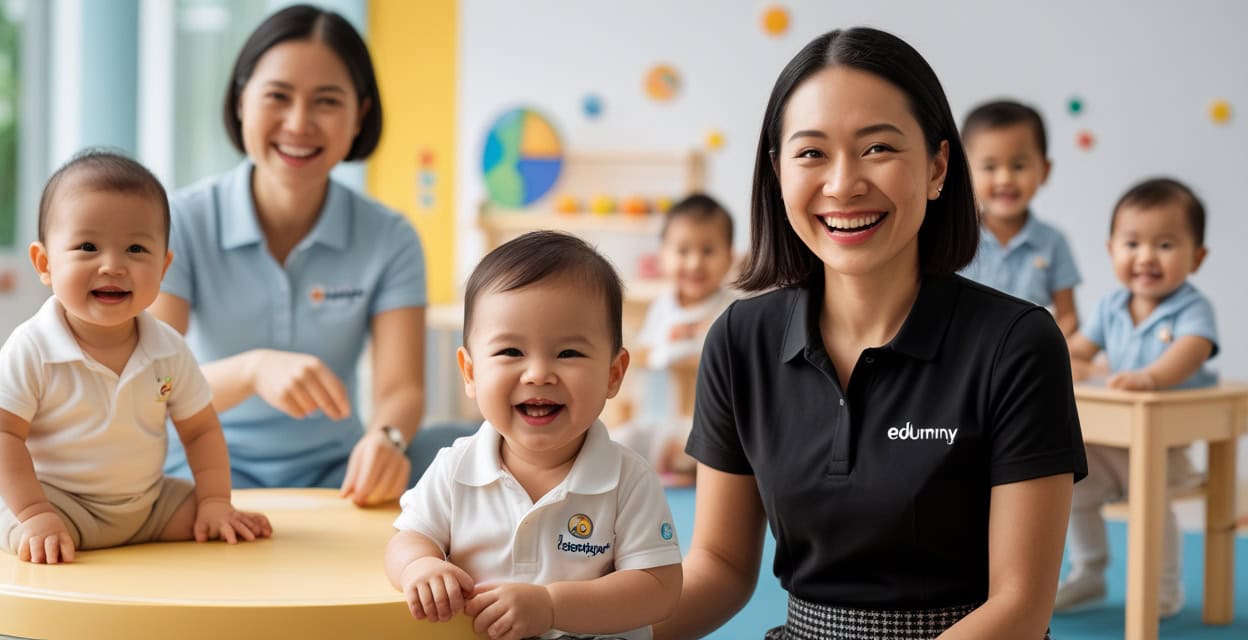
How EduNanny makes infant care and childminding great for Singapore
- Proximity: Close‑to‑home pods and centres reduce daily friction. When care is nearby, transitions are calmer, drop‑offs are shorter, and infants feel anchored. Practical steps for families: map your commute, visit two nearby pods, and observe how staff greet families and handle transitions during peak times.
- Ratio: A true 1:3 infant ratio is small enough for a caregiver to notice micro‑cues—breath, gaze, muscle tone—and respond in seconds. That responsiveness builds safety and the early brain. Actionable checklists for parents: ask prospective centres to share daily infant observation notes and example cue‑response pairs observed by caregivers.
- Prepared environments: We craft spaces that invite movement and choice—low mirrors for body awareness, soft ramps for gross motor exploration, baskets of real‑world objects for rich sensory mapping. The room teaches before an adult speaks. Home‑based setups you can replicate: create a dedicated play corner with age‑appropriate objects, safe mirrors, and accessible materials at child height; rotate objects weekly to sustain curiosity.
- Transparent partnership: Parents can see, ask, review, and decide. Our secure CCTV, daybooks, and end‑of‑day handovers make care visible and trustworthy. Practical guidance for families: schedule regular short video check‑ins, request weekly summary notes, and participate in quarterly family‑caregiver reviews to align on cues and routines.

Five unique topics for today’s conversation
1) The Learning Loop at 1:3: From Micro‑Cue to Mastery
Infants do not learn in lectures; they learn in loops—signal, response, repetition. At 1:3, a childminder can complete the loop every time:
- Signal: A baby’s hand reaches for a rattle, then pauses. That pause is a question.
- Response: The childminder moves to eye level, names the action, and waits. “You’re curious about the sound.”
- Repetition: The baby explores; the childminder mirrors and extends—“soft tap, loud tap”—and stops before overstimulation.
Across a day, thousands of these loops wire attention, language, and self‑confidence. The loop is our craft. Practical tips for parents: narrate micro‑cues at home, pause deliberately to allow the infant to respond, and repeat activities to build predictable patterns that strengthen attention and comprehension.
2) Safety by Design: The Four Rings of Protection
Safety is not a checklist; it is a culture. We practice four rings:
- Ring 1: Physical design: Sightlines across the room, no blind corners, low furniture anchored, cords concealed, non‑toxic materials, controlled entry. Design examples: modular, child‑scale furniture that still allows staff to observe every corner.
- Ring 2: Protocol: A seven‑second scan during every transition; hands washed, surfaces sanitised; safe sleep verified by two eyes and breathing checks; incident drills practiced, not promised.
- Ring 3: Relationship: Secure attachment reduces risk. A baby who feels seen signals distress early; a childminder who reads signals accurately builds rapid, empathetic responses.
- Ring 4: Transparency: CCTV with privacy‑by‑design, daily logs, open‑door dialogue. Families see the day; trust compounds; safety deepens.
Practical parent takeaways: inquire about how transitions are managed, request a written safe‑sleep policy with sleep‑cue signs, and review CCTV access policies and privacy protections.
3) The Seven Daily Invitations: Development That Feels Like Play
Piaget gave us schemas; Montessori gave us the prepared environment; Froebel gave us play. We translate these into seven gentle invitations, offered to every infant each day:
- Move free: Floor time over screen time—rolling, creeping, cruising. Movement builds body awareness and balance.
- Touch real: Natural textures and household objects—wood, steel, cloth—so the brain maps the world honestly.
- Mouth safely: Supervised oral exploration with age‑appropriate foods; tasting supports oral motor development and curiosity.
- Hear human: Songs, simple narration, responsive turn‑taking. Language grows through conversation, not background noise.
- See faces: Eye‑level interactions—smiles, imitation, labelled feelings—to seed social understanding.
- Try small: Finger plays, large knobs, chunky puzzles—small challenges build early self‑efficacy.
- Rest well: Predictable nap cues, dim spaces, and unhurried wind‑down; sleep consolidates learning.
Practical implementation: design a daily rhythm that interleaves movement, exploration, social interaction, and rest; document a few key cues and responses each day to refine responsiveness with your childminder.
4) The Climate of Joy: Measuring What Matters
Happiness in infancy is co‑regulation: the child borrows the adult’s calm. We tend to this climate deliberately:
- Gentle starts: Begin each day with a slow hello and the child’s home cue—a blanket, a phrase, a song.
- Predictable rhythms: A day that flows reduces cortisol and opens attention.
- Micro‑rituals: The way we change a diaper—pause, explain, invite a lift of the hips—teaches dignity and cooperation.
- Joy indicators: Track shared smiles, sustained engagement, and quick recoveries from frustration. These signals reflect a nervous system learning safety.
Practical guidance: parents can keep a simple joy log—note moments of mutual calm, moments of successful signaling, and moments when re‑establishing a calm was needed. Share these with your childminder weekly to strengthen alignment.
5) The Quiet Profession: Childminders as Civic Stewards
Great childminding is not a fallback job; it is a skilled public service. EduNanny invests in people and purpose:
- Professional pathway: Training in infant development, health, safety, and family partnership; mentoring; observed practice; continuous learning.
- Maximum Employment Mandate: Dignified roles across neighbourhoods, uplifting caregivers—many of them parents or mature workers—with fair pay and growth.
- Community fabric: Near‑home care strengthens streets: parents meet, caregivers collaborate, neighbourhoods look out for their youngest.
Practical action: explore local professional development opportunities, ask about mentorship programs during visits, and inquire how EduNanny supports caregiver advancement, certification, and wage progression.
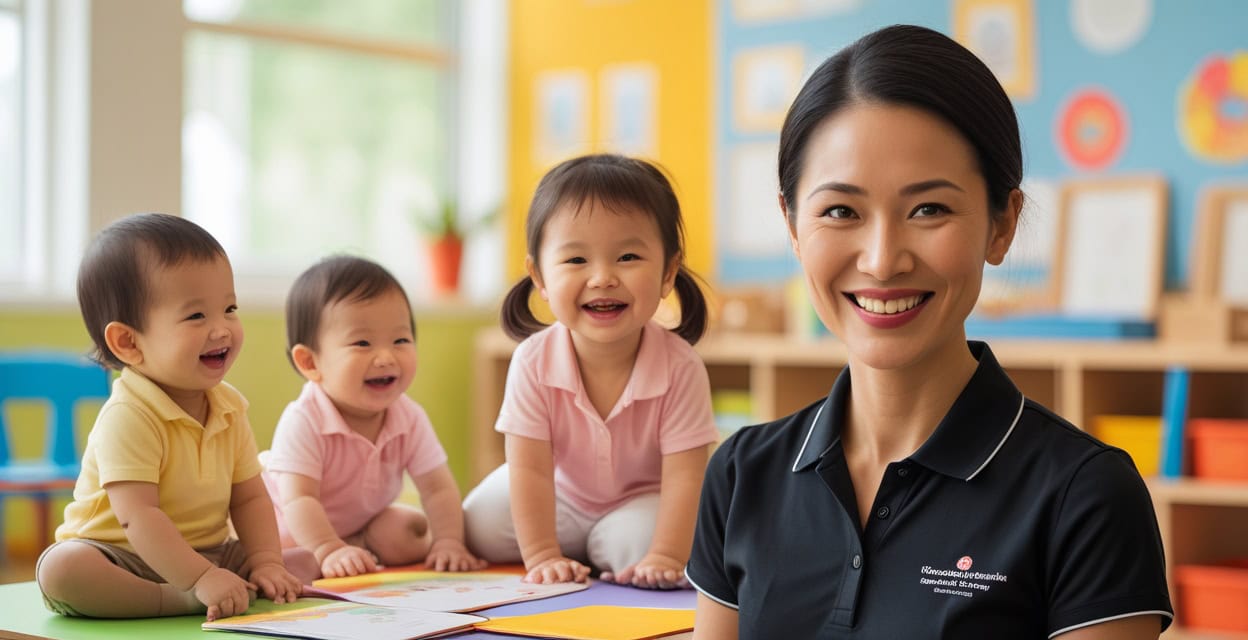
What this means for your family—practical benefits
- Access, islandwide: Centre‑based and home‑based childminding near MRTs and neighbourhood hubs. Distance supports and parent coaching available for families who blend care at home.
- Hours that match real work: Monday to Friday, 7am to 7pm.
- Affordability: From $33 per day, with fees payable via CDA/Baby Bonus.
- Ultra‑low ratio: A true 1:3 infant ratio, not an aspiration.
- Modern layouts: Child‑scale, light‑filled rooms designed for movement, safety, and visibility.
- Innovation in transparency: Secure CCTV and daily digital daybooks so you are never out of the loop.
- A living curriculum: The Seven Daily Invitations adapted to your child’s cues, not a one‑size schedule.
- A partner you can reach: EduNanny.com and Childminding.EduNanny.com for information, enrolment, and conversation.
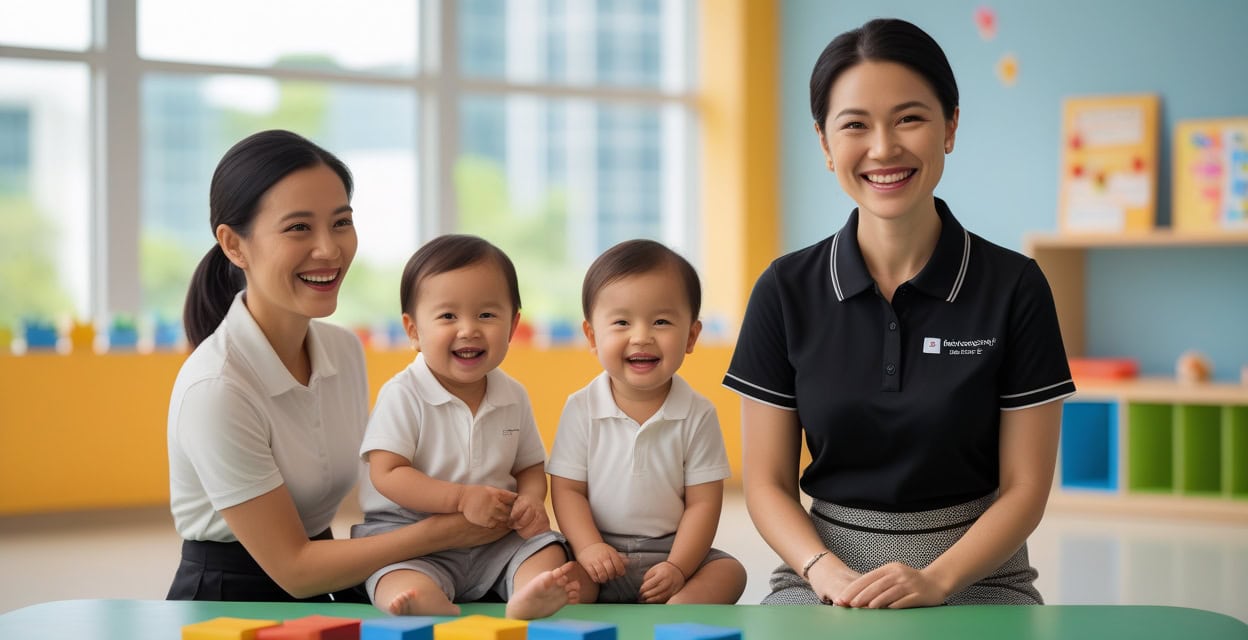
An explainer in relation to Singapore today
Singapore thrives on precision and trust. Families need care that is reliable and reachable; employers need stability; infants need time, attention, and attunement. EduNanny aligns these needs. By putting micro‑pods and centres close to home, we cut commute stress. By opening 7am–7pm, we reduce the daily squeeze. By keeping 1:3 ratios, we protect developmental quality. By training and employing childminders across estates, we build a resilient workforce and a stronger social fabric. This is infant care as civic infrastructure—human‑scale, science‑led, and neighbourhood‑rooted.
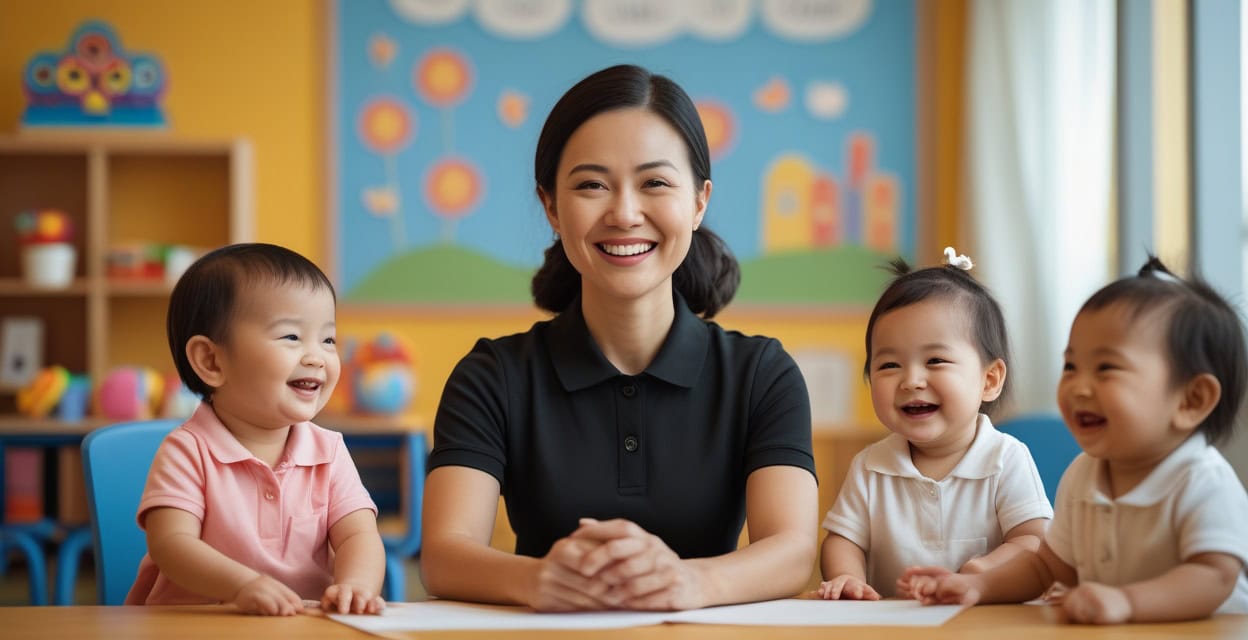
Who, what, when, where, and how—why childminding matters
- Who: Your infant, your family, and a trained, attuned childminder supported by a professional team and national standards.
- What: Daily care that is safe, respectful, and intentionally developmental—feeding, changing, playing, resting, and learning woven into a calm rhythm.
- When: The first thousand days, when the brain is most plastic; every weekday from 7am to 7pm, with consistency that steadies home and work.
- Where: In centre‑based and home‑based settings across Singapore, chosen for proximity, design, and oversight; in your pocket through secure digital windows and daybooks.
- How: With a true 1:3 ratio; prepared environments; the Four Rings of Safety; the Seven Daily Invitations; transparent CCTV; and a profession that is trained, mentored, and respected.
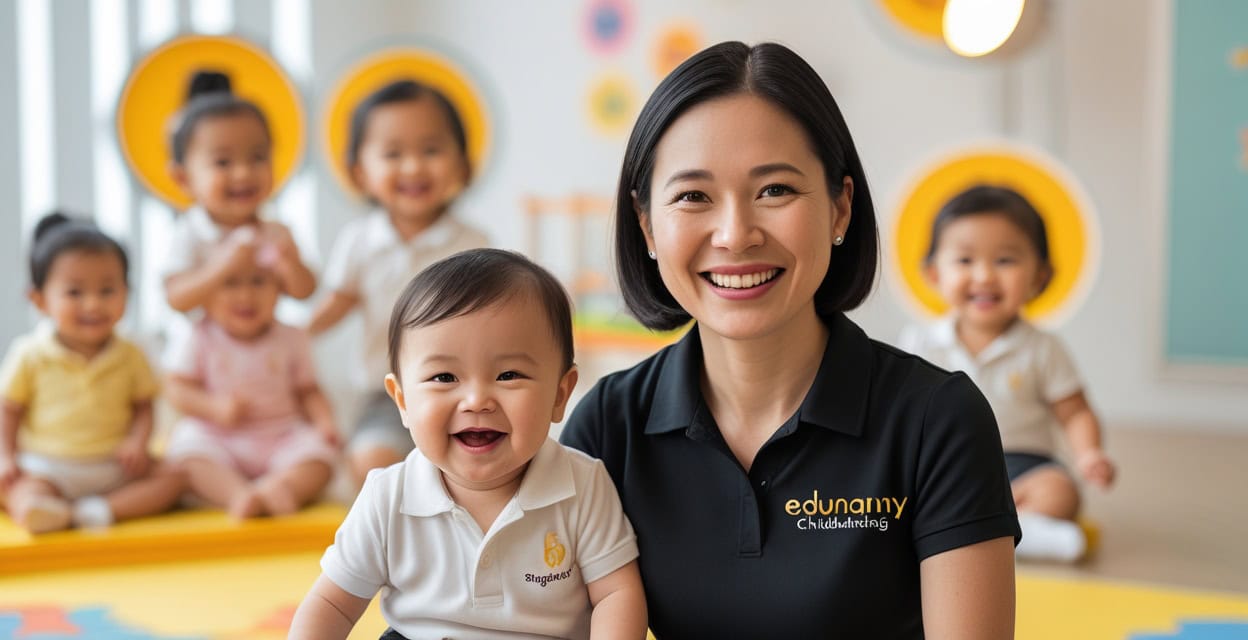
The philosophy and purpose of EduNanny Childminding
Our philosophy is simple:
- Every infant deserves dignity: Care is done with a child, not to a child.
- Attachment is the engine: A secure base supercharges development.
- Play is the pedagogy: Curiosity leads; adults follow and extend.
- Safety is a culture: Design, procedure, relationship, and transparency work together.
- Families are partners: You know your child best; we bring trained eyes and steady hands.
Our purpose is public: to make excellence in infant care normal, reachable, and affordable across Singapore. To raise the status and skill of childminders. To let parents work without worry. To convert ordinary minutes into lifelong confidence. To prove that infrastructure can be measured in human outcomes—calm infants, supported families, connected communities.

Closing
Parents, you should not have to choose between your child’s safety and your day’s demands. Caregivers, your craft should be recognised as the quiet backbone of a thriving nation. Policymakers and neighbours, the first thousand days deserve our finest design.
EduNanny stands ready—centre‑based, home‑based, and distance‑supported; Monday to Friday, 7am to 7pm; islandwide; affordable from $33 per day with CDA/Baby Bonus; with an ultra‑low 1:3 ratio; with modern layouts, secure CCTV, and a living curriculum; as part of a Childminding Pilot and a National Social Initiative with a Maximum Employment Mandate.
This is how we make childminding not simply available, but excellent. This is how we honour the science and the soul of early childhood. This is how we cradle a future—patiently, attentively, joyfully—one small loop of learning at a time.
Join us. Visit EduNanny.com or Childminding.EduNanny.com. Walk through a nearby pod or centre. Meet the childminder who will learn your child’s cues and celebrate their first discoveries. Let’s build Singapore’s future where it begins—in the quiet, brilliant work of infancy, made visible, dignified, and near to home.
[#keyword1, #keyword2, #keyword3, #keyword4, #keyword5]